Is Satin Breathable? Polyester vs Silk vs Cotton-Sateen, Explained for Sleep

The honest answer: Satin is not a fiber — it's a weave — so "is satin breathable" has no single answer. Polyester satin (the shiny, affordable kind in most sleepwear) traps heat because the synthetic filaments don't wick moisture, so it can feel warm and a little clingy on hot, humid nights. Silk satin and cotton-sateen, by contrast, breathe: silk is naturally thermoregulating and cotton's open fibers vent air and sweat. So satin can be breathable — you just have to read the fiber label, not the word "satin." The rest of this guide breaks down exactly which satin keeps you cool, which traps heat, and how to choose a satin set you'll actually sleep well in.
Key Takeaways
-
Satin describes a weave, not a material — breathability is decided by the underlying fiber (polyester, silk, cotton, or bamboo).
-
Polyester satin feels cool on contact but warms up fast; it's the weakest breather and best saved for AC rooms or cooler months.
-
Silk satin and cotton-sateen are genuinely breathable and gentler on skin and hair (low friction = fewer sleep creases and less breakage).
-
Your body needs to drop ~1–2 °C to reach deep sleep; a heat-trapping fabric works against that, which is why fiber choice affects sleep quality, not just comfort.
-
For hot sleepers, look for silk, cotton-sateen, or bamboo-satin; for the satin look on a budget, polyester satin is fine in a climate-controlled bedroom.
The Short Answer
If you only remember one thing: "satin" is not a fabric, it's a finish. A polyester satin set will look luxe but can leave you warm and slightly damp by midnight; a silk or cotton-sateen set delivers the same sheen with real airflow. Pick by the fiber on the care label, not by the word on the hangtag — and if you sleep in air conditioning, even polyester satin becomes a perfectly reasonable choice.
First, the Misconception: Satin Is a Weave, Not a Fiber
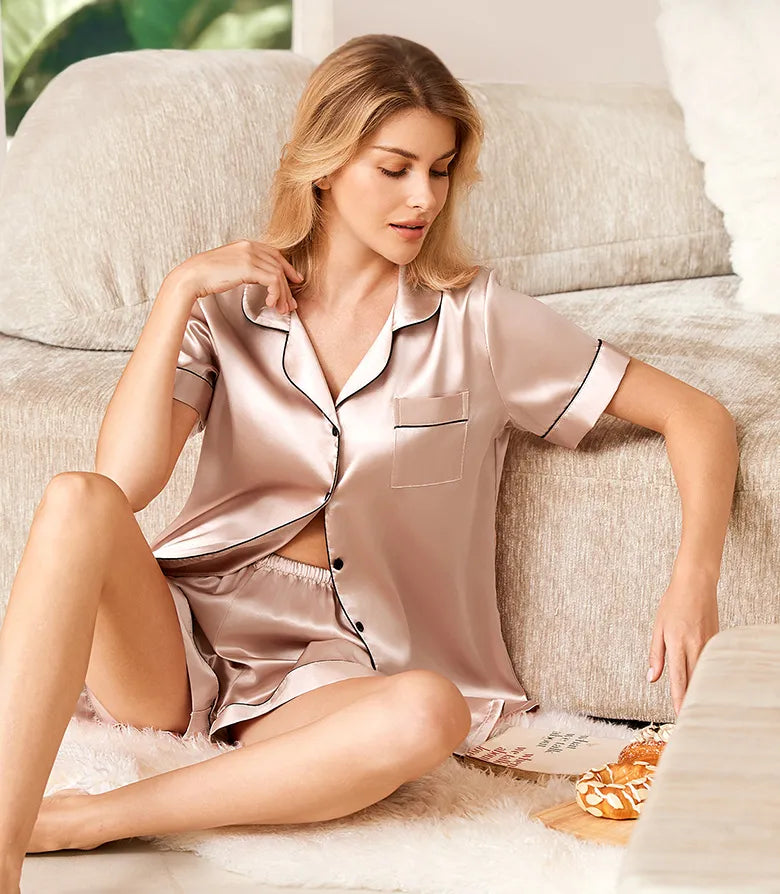
Most "satin pajamas" you'll find online are polyester woven in a satin finish — that's what creates the smooth, slightly lustrous surface. But the word "satin" tells you nothing about what the fabric is made of, and that's the variable that decides everything else: how it feels at 2 a.m., whether it traps heat, and whether it irritates sensitive skin.
You'll also see:
-
Silk satin — real silk filaments, expensive, naturally temperature-regulating.
-
Cotton sateen — cotton fiber in a satin weave: the smoothness of satin on breathable cotton.
-
Bamboo-satin blends — an emerging option that pairs satin's sheen with bamboo's moisture-wicking.
The takeaway: when someone asks "is satin breathable," the correct reply is "which satin?" — because the answer flips completely by fiber.
Does Satin Breathe? A Fiber-by-Fiber Breakdown
| Satin type | Fiber | Breathability | Heat feel | Best for |
| Polyester satin | 100% polyester filament | Low (traps heat, repels moisture) | Warm/clingy in heat | AC rooms, cooler seasons, special occasions |
| Silk satin | Mulberry silk protein | High (naturally thermoregulating) | Cool when warm, warm when cool | Sensitive skin, hot sleepers who can invest |
| Cotton sateen | Cotton fiber, satin weave | Good (open fibers vent air) | Comfortable year-round | Everyday sleep, humid climates |
| Bamboo-satin | Bamboo viscose blend | Very good (wicks moisture) | Cool, dry | Hot sleepers, night sweats |

Textile testing backs this up: in air-permeability terms, polyester satin scores low (it insulates), while silk and cotton-sateen score high because natural fibers have microscopic pores and capillary channels that move heat and humidity away from the skin. Synthetic filaments, being essentially fine plastic threads, hold a stagnant warm layer against the body within minutes of lying down.
The "Cool-to-Touch" Illusion
Here's why polyester satin fools people: its smooth, dense surface has low thermal inertia, so it absorbs your skin heat fast on first contact and feels cool. That sensation is real but temporary. Because polyester is hydrophobic (it repels water), it can't wick sweat — so the initial coolness gives way to a humid, slightly sticky microclimate as the night goes on.
Real cooling is "a marathon, not a sprint." Cotton and bamboo keep venting heat for hours; polyester satin gives you the first lap and then holds you back. If you sleep in air conditioning, that distinction mostly disappears — which is why polyester satin is far more viable in a climate-controlled bedroom than in a hot, non-AC one.
What Sleep Science Says About Fabric and Temperature
Sleep researchers consistently note that the thermal environment is one of the strongest determinants of sleep quality. Your core body temperature needs to fall roughly 1–2 °C to slide into deep, restorative sleep. Anything that blocks that drop — a warm room, heavy blankets, or a heat-trapping fabric — fragments sleep architecture and cuts time in slow-wave and REM stages.
This is the real reason fiber choice matters: a breathable satin (silk, cotton-sateen, bamboo) supports that natural cool-down, while polyester satin adds a small thermal tax every night. For most people the difference is subtle; for hot sleepers and anyone who wakes sweaty, it's noticeable.
Satin for Skin and Hair: The Benefits That Are Real
Setting aside the marketing, satin's legitimate upsides come from its low surface friction, and those benefits hold best when the fiber is natural (silk or smooth cotton), not polyester:
-
Less hair breakage and tangling — the smooth glide reduces shear force on hair cuticles, a genuine plus for curly, coily, or color-treated hair.
-
Fewer sleep creases — dermatologists routinely recommend low-friction surfaces as a modest preventive measure against facial creasing overnight.
-
Gentler on reactive skin — silk's protein structure is chemically close to human skin proteins, which is why it's often ranked best for eczema and contact dermatitis; bamboo is a close, more affordable runner-up.
The caveat: polyester satin loses most of these edges. At the microscopic level its surface is rougher than silk or cotton, so the friction-reduction claim is weaker — and trapped moisture can aggravate back/chest acne in people prone to it. If sensitive skin is the priority, silk or bamboo satin is the safer bet.
When Satin Is the Right Pick
-
You sleep in AC or live somewhere cool — polyester satin's heat concern largely vanishes in a controlled environment, and you keep the luxe drape.
-
Special occasions — honeymoons, anniversaries, date nights, travel; satin reads intentional, not just functional.
-
Sensitive skin or treated hair — choose silk or bamboo-satin for the low-friction, breathable version of the benefit.
-
You want the look without the dry-cleaning — polyester and cotton-sateen satin are machine-washable; silk usually is not.
When to Skip Polyester Satin
-
You're a hot sleeper or sleep without AC in summer humidity.
-
You have body acne or reactive skin and prefer natural fibers.
-
You want a set you'll reach for every night, not just for photos.
-
You're shopping for a child or someone with known textile sensitivities (favor OEKO-TEX-certified natural fibers).
How to Shop for Breathable Satin
-
Read the fiber, not the word. "Satin" with no fiber listed almost always means polyester. Look for "95% silk," "100% cotton sateen," or "bamboo viscose."
-
Check for certification. OEKO-TEX Standard 100 means the fabric was independently tested for harmful substances — a reasonable safety baseline, especially for synthetics.
-
Match fiber to climate. Hot and humid → silk, cotton-sateen, or bamboo. Cool or AC → polyester satin is fine.
-
Mind the care label. Silk often needs delicate cycles or dry cleaning; polyester and cotton-sateen satin are lower-maintenance.
-
Fit for airflow. A relaxed cut breathes better than a second-skin tight one, whatever the fiber.
Ekouaer's Satin Line, in Plain Terms
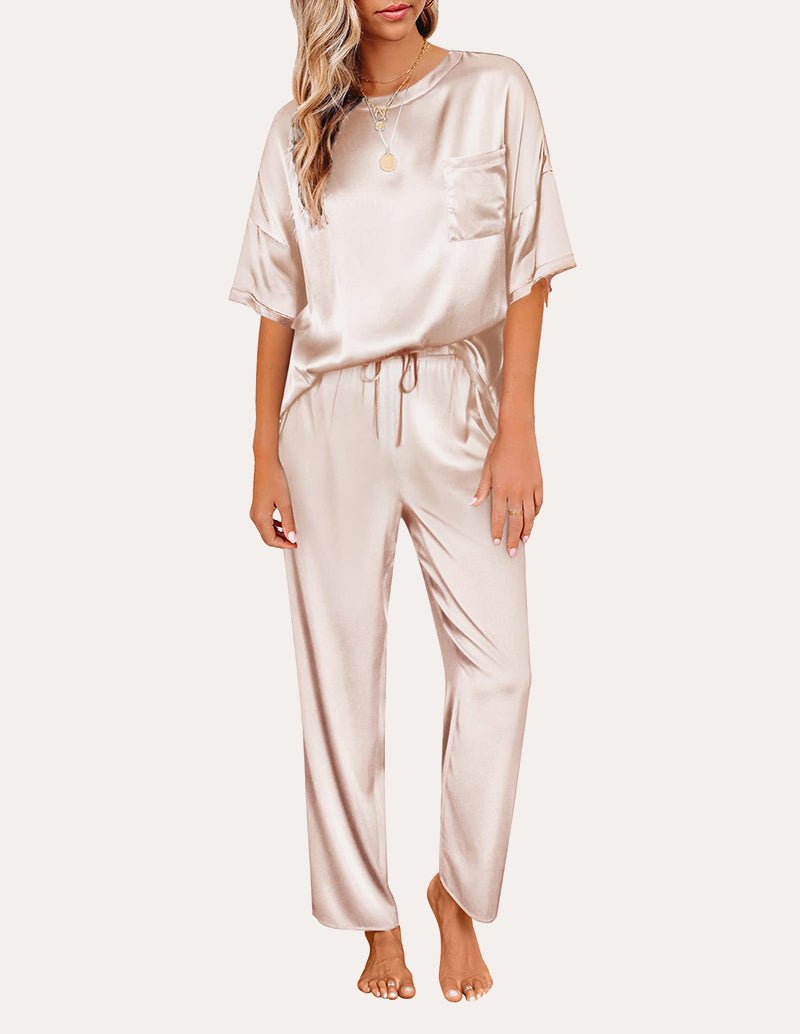
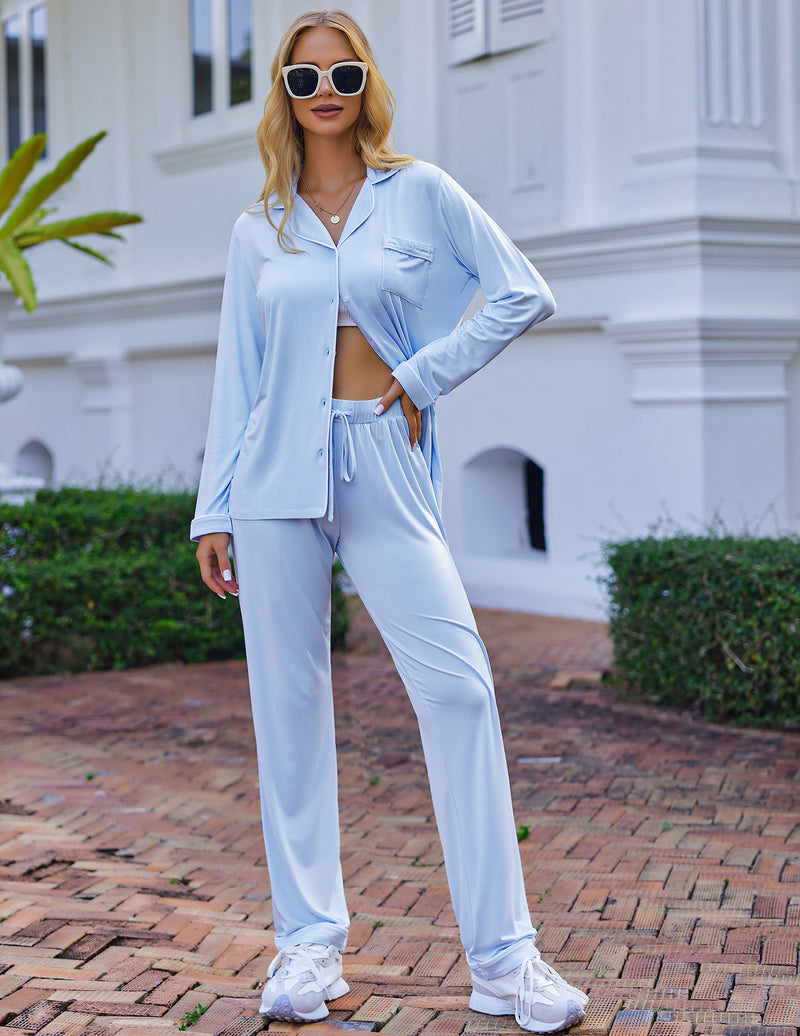
If you want the satin look at a wearable price, Ekouaer's core satin pajama sets are built from a 95% polyester / 5% spandex blend — the spandex gives a non-binding stretch, and the line runs XS–3XL so the relaxed fit breathes rather than clings. Reviewers on Amazon (the two-piece set averages ~4.4★ across thousands of ratings) describe the hand-feel as "buttery soft" and "glides over the skin without clinging," which lines up with polyester satin's smooth-but-lightweight profile.
For a more breathable take, the brand's Autumn/Winter satin collection — developed with brand partner Vanessa Hudgens and launched September 2026 — uses a "low-friction elastomeric satin matrix" engineered for temperature regulation during seasonal transition, and the line is positioned as modular (wear as sleepwear or pair the top with denim). The practical read: Ekouaer's polyester-satin sets are a sensible pick for AC bedrooms, cooler months, and occasions; if breathability is your top priority year-round, pair them with the brand's cotton or bamboo lines for the hottest nights. You can browse the full range on the satin pajamas and the Vanessa Hudgens edit.

Common Mistakes to Avoid
-
Assuming "satin" means "cool." It means a weave — check the fiber.
-
Buying polyester satin for a hot, non-AC summer. You'll trade the pretty drape for a sticky night.
-
Skipping the care label. Silk satin and polyester satin wash very differently.
-
Picking tight fits. A second-skin satin traps more heat than a relaxed one.
-
Ignoring certification on synthetics. OEKO-TEX is the quick safety check.
Frequently Asked Questions
Is satin breathable?
It depends on the fiber. Polyester satin traps heat; silk, cotton-sateen, and bamboo-satin breathe. "Satin" alone doesn't answer the question.
Is satin hotter than cotton?
Polyester satin is hotter than cotton because it repels moisture and insulates; cotton-sateen is about as breathable as regular cotton. Silk satin runs cooler than both in warm conditions.
Why does satin feel cool but then warm?
Its smooth surface absorbs skin heat fast (cool-to-touch), but polyester can't wick sweat, so a warm, humid layer builds up within minutes.
Is satin good for hot sleepers?
Silk, cotton-sateen, or bamboo-satin are; polyester satin is not ideal for hot, humid, non-AC nights.
Does satin help hair and skin?
Yes, when the fiber is natural — low friction reduces breakage and sleep creases. Polyester satin delivers less of this benefit.
Is polyester satin safe to sleep in?
For most people, yes. Concerns are moisture retention (can aggravate back/chest acne) and chemical finishes in low-quality textiles; OEKO-TEX certification is a good filter.
Can I wear satin pajamas in summer?
In AC or cooler climates, yes. In hot, humid, non-AC conditions, choose silk, cotton-sateen, or bamboo instead.
How do I know if satin is polyester or silk?
Read the fiber content on the label. "Satin" with no fiber listed is polyester; look for "100% silk" or "mulberry silk" for the real thing.
Is satin hard to care for?
Polyester and cotton-sateen satin are machine-washable (cold, gentle); silk often needs delicate cycles or dry cleaning.
Which satin is best for sensitive skin?
Silk first, bamboo-satin close behind, then smooth cotton-sateen. Polyester satin is the weakest choice for reactive skin.
The Practical Recommendation
Treat "is satin breathable" as a fiber question, not a fabric-name question. Read the label: polyester = save it for the AC or cool months; silk, cotton-sateen, or bamboo = wear it year-round. For most shoppers the satin look is the goal, and polyester satin delivers that look at a fraction of the price — so long as you're not a hot sleeper in a humid, fan-only bedroom. If breathability is the priority, spend up on silk or bamboo-satin, or pair an affordable polyester-satin set with a cotton or bamboo line for the warmest nights. A concrete example: an Ekouaer polyester-satin set for the bedroom AC season and a cotton-sateen set for summer gives you the sheen you want in two climates for less than one silk set would cost.
This Article
-
Official / authority: Sleep-temperature research on the ~1–2 °C core-temp drop required for deep sleep; American Academy of Dermatology guidance on fabric friction and skin; OEKO-TEX Standard 100 as the independent harmful-substance baseline.
-
Trend / textile science: Air-permeability and moisture-wicking comparisons across polyester, silk, cotton-sateen, and bamboo satin (textile testing shows polyester insulates, natural fibers vent).
-
Brand-owned: Ekouaer satin pajamas collection, Vanessa Hudgens edit, and the September 2026 A/W satin launch (low-friction elastomeric satin, XS–3XL).
-
Media / PR: Parade (satin set review), Oprah Daily, The Tennessean, E! Online, PEOPLE, InStyle (see Ekouaer in the Press below).
-
Product evidence: Amazon two-piece satin set ~4.4★ across thousands of ratings; fiber content 95% polyester / 5% spandex per listing.
Related Reading
About Ekouaer
Ekouaer is a global sleepwear and loungewear label built on the idea that at-home comfort should be accessible, not a luxury reserved for a special drawer. The range spans cotton, bamboo, modal, satin, and waffle-knit sets in broad, inclusive sizing (XS–3XL) at a price that keeps soft sets in everyday rotation. For shoppers comparing sleepwear fabrics, that means real comfort in fits that actually fit — plus a press track record that includes Oprah Daily naming its Two-Piece Soft Sleep Pajama Set a best budget pick, and the brand's My Comfort Era collaboration with Vanessa Hudgens broadening its at-home style story. Ekouaer is operated by Shenzhen-based Savvy Internet Technology , shipping to 180+ countries.
Ekouaer in the Press
-
Oprah Daily: Best Pajamas for Women (Ekouaer Two-Piece Soft Sleep Pajama Set named Best Budget)
-
Real Simple: Ekouaer in Real Simple's most-loved fashion deal roundup
-
E! Online: Ekouaer in E! Online's athleisure and activewear deal coverage
-
The Zoe Report: Ekouaer in The Zoe Report's feminine outfit picks