Cotton Pajamas: Fabric, Weight, and Finish Explained

Cotton is the fabric most people name first when they think of pajamas, and the instinct is sound: it breathes, it softens with every wash, and it has been worn to bed for longer than most modern fibers have existed. Yet two garments can both say "cotton" on the label and feel like completely different purchases. One is crisp and cool in August; the other is plush and warm on a January floor. The difference is rarely the fiber itself. It comes from three separate decisions made long before the fabric reaches a cutting table: how the cotton was constructed into cloth (the fabric), how dense that cloth is (the weight), and what was done to its surface afterward (the finish). This guide walks through each of the three in plain language, then shows how they combine in real products, so the next pair of cotton pajamas you buy behaves the way you expect in your own bedroom.

Fabric: What "100% Cotton" Actually Covers
The word cotton describes the fiber, not the cloth. The same fiber can be woven or knitted, tightly or loosely, into fabrics that behave nothing alike, and sleepwear makers draw on a handful of these constructions again and again.
Woven cottons dominate the classic button-down pajama category. A plain weave gives poplin its smooth, crisp hand — the cool, almost papery feel of a freshly made bed — while its lighter cousin lawn reads airier and slightly sheer. Gauze takes the opposite path: multiple fine layers of loose weave, gently fused at points, create a fabric with a softly crinkled surface and tiny air channels running through its thickness. Double gauze, triple, and four-layer gauze each stack more of these air pockets, which is why a four-layer gauze set feels substantial without ever feeling dense.
Knitted cottons are the other family. Jersey and rib knits stretch, which changes everything about how a garment moves: no rigid side seams pulling when you roll over, no button placket gaping at the chest. A cotton-spandex knit, typically around 95% cotton with 5% elastane, adds recovery to that stretch so the garment keeps its shape instead of bagging at the knees. Knits suit people who toss and turn, and they pack down small for travel.
Neither family is better. Wovens air out and feel structured; knits flex and feel hugged. What matters is matching the construction to the room you sleep in and the way you actually move at night.
Weight: Reading Fabric Density Without a Lab
Fabric weight is measured in grams per square meter — GSM — and it is the single most honest number on a spec sheet, because it describes how much cotton is actually in the cloth regardless of its name. The ranges worth knowing are simple.
Lightweight cottons sit roughly below 150 GSM. Voile, lawn, and single-layer gauze live here: they breathe almost like nothing is there, dry fast after washing, and pack to nearly nothing. This is summer sleepwear territory, and also the right zone for hot sleepers in heated apartments.
Midweight cottons run from about 150 to 250 GSM — standard poplin, everyday jersey, and most multi-layer gauzes. This is the all-season middle: substantial enough to feel like real clothing, light enough that a duvet does the temperature work. Most people who want two or three rotating sets should spend their money here.
Heavyweight cottons — flannel, brushed twills, thick double-knits — pass 250 GSM and climb toward 400. The extra mass is where winter warmth comes from, but it comes with a trade: less breathability, slower drying, and a garment you notice wearing.
Weight also shapes durability. A heavier weave generally resists thinning at the elbows and seat better than a whisper-light one, which is why a midweight set often outlives two lighter ones. When a product page lists fabric composition but not weight, the garment's description usually implies it: "lightweight," "breathable," and "soft knit" point to the lower half of the scale, while "thickened," "four-layer," and "warm" point to the upper half.
Finish: The Step That Decides How It Feels on Night One
Finishing is everything done to the cloth after weaving or knitting, and it explains the most common surprise in cotton shopping: two fabrics with identical fiber content and similar weight that feel nothing alike.
Brushing and napping are the warm-weather opposites — literally. Mechanical brushes raise the fiber ends on the fabric surface into a fine nap, and that raised layer traps a thin film of air against the skin, which is why brushed cotton feels warm the moment you put it on. Cotton Incorporated, the industry's research organization, documents this process in detail in its mechanical finishing guide, covering how sanding, napping, and shearing each change the surface of a cotton fabric — and why the intensity of the process changes both the softness and the durability of the finished cloth.
Garment washing and pre-shrinking are the quiet workhorses. Cotton's most famous behavior — shrinking in the first hot wash — can be largely handled before the garment ever ships by washing the fabric or finished pieces. A pre-washed cotton set feels slightly relaxed and lived-in from the first night, with far less size drama in the laundry.
Compacting and calendering are finishing steps most shoppers never hear about but every pajama buyer has felt. Compacting pre-shrinks knit cotton mechanically so a jersey nightgown keeps its length through wash after wash; calendering presses a smooth, flat surface into woven cloth, sharpening the look of a notch collar and piping. When a collar stays crisp while the body of the shirt softens, that contrast is finishing at work.

The practical takeaway: the finish decides night-one comfort, the fabric decides how it moves, and the weight decides which season it belongs to. Reading all three together is how you stop buying sleepwear that is right for somebody else's bedroom.
How the Three Stack Up in Real Products
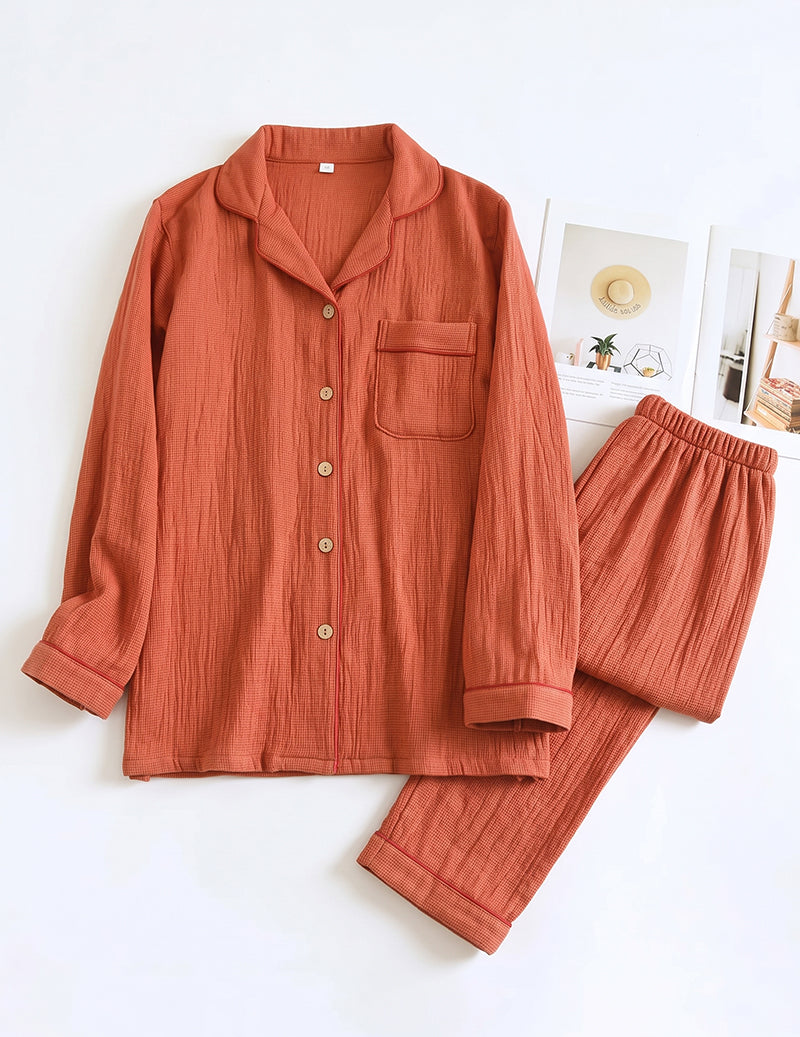
Three current Ekouaer cotton pieces show the range without leaving the fiber. Availability and stock counts were checked on the product pages on November 16, 2026.
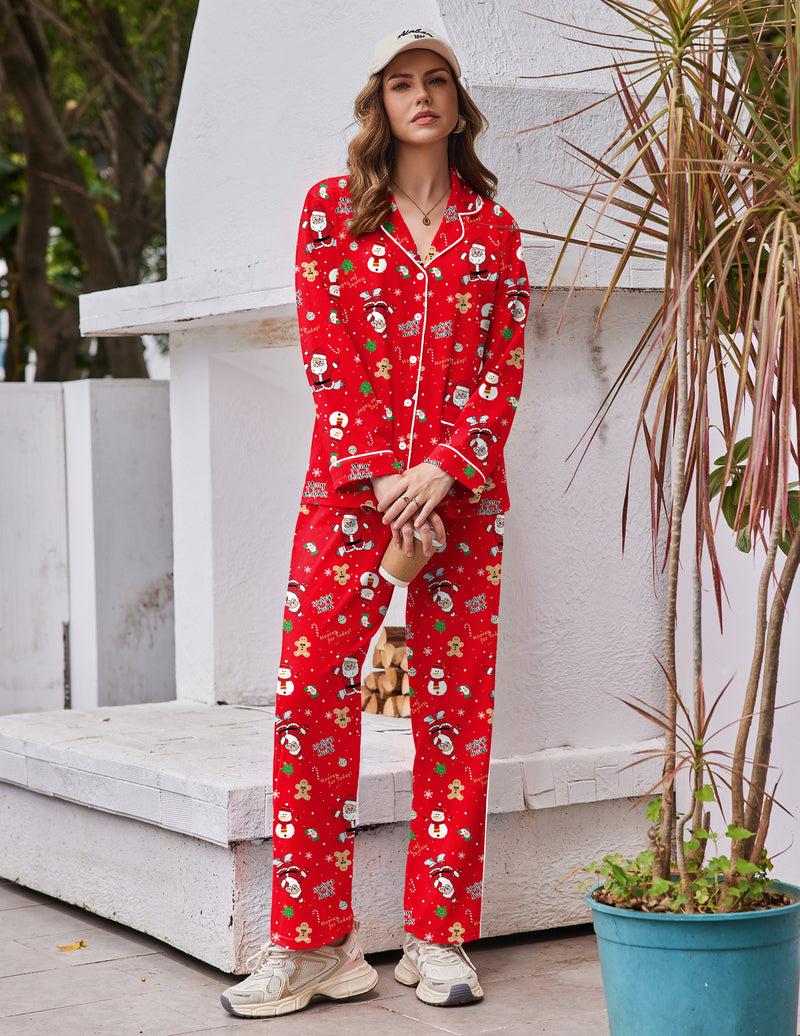
The everyday all-cotton set — 100% Cotton Pajama Set Long Sleeve Button Down with Pockets, $65.99. This is the classic construction: woven cotton, notch collar, button-front top, full-length pants with an elastic waist and real side pockets, in seventeen colorways including seasonal patterns. With 75 variants and 76 in stock at checking, it is the deep-bench option — the set to buy in two colors. It sits in the midweight band, which is precisely why it works from October through March in most homes: enough cloth to feel dressed, enough breathability to sleep in. (See the 100% cotton set here.)
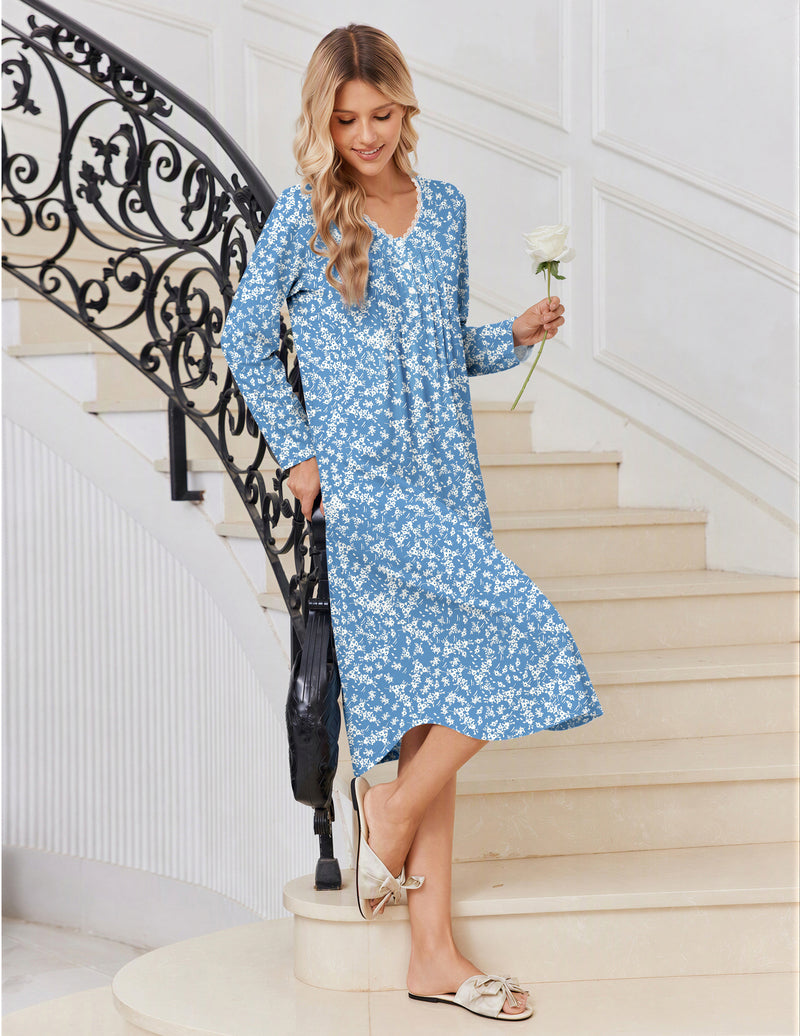
The soft cotton-spandex option — Cotton Nightgowns Long Sleeve Soft Nightgown Sleepshirt, $42.99. On the knit side of the family, this long-sleeve sleepshirt pairs 95% cotton with 5% spandex in a midi-length, lace-trimmed cut across twelve prints and a full size run from S to 3XL — 35 in stock at checking. The small elastane content changes the experience in exactly the way described above: the garment moves with the wearer, never twists at the waistband, and its cotton body still breathes like sleepwear should. It is the pick for people who find wovens too structured for sleeping. (Browse the cotton sleepshirt here.)
The heavyweight gauze set — Cotton Plaid Four Layer Gauze Notch Collar Pajama Set, $83.99. Four layers of loose-woven cotton gauze trap three strata of still air between them, which is how this set delivers genuine cold-weather warmth while remaining, at heart, breathable cotton. The mini plaid, button-front top and relaxed pants come in two colorways, sizes M to 2XL, with 9 units in stock at checking — a smaller seasonal batch that tends to move quickly in cold snaps. This is the weight-and-finish story in miniature: identical fiber to the first set, radically different behavior. (Check the four-layer gauze set here.)

Caring for Cotton So It Stays Soft and Keeps Its Size
Cotton rewards simple care and punishes heat. Cold-water washing on a gentle cycle preserves both color and fiber; hot water is what sets shrinkage in motion. Tumble dry low or hang dry — high heat is the fastest way to turn a well-fitting set into a slightly smaller one, even on pre-shrunk fabric, which is tested for normal laundering rather than punishment. Skip the fabric softener: it coats the cotton fiber and quietly reduces the breathability that made you choose cotton in the first place. And because cotton softens naturally with every wash, a set that feels merely fine on night one is usually the one that feels perfect by month three.
Two habits extend the life of any cotton sleepwear. First, rotate two sets rather than wearing one daily; fibers recover better with a day of rest between wears. Second, treat stains before the wash — cotton absorbs quickly, which is part of its comfort, and an overnight soak in cool water handles most bedtime accidents without stain chemicals.
Fit Notes Specific to Cotton
Cotton gives a little over the evening but not much: unlike modal or bamboo blends, it does not relax dramatically through the night, so the morning fit is the true fit. Woven cotton sets should skim rather than pull — check that the button placket lies flat when seated, since a front that gapes at the chest will not improve with wear. Knit cotton-spandex pieces can be worn truer to size, but if the size chart puts you between sizes, the larger one usually suits sleepwear better regardless of fiber. And for anyone between heights, hem length on cotton pants matters more than on stretchier fabrics, because a woven hem does not ride up the same way.
What to Check Before You Buy
Read the composition first — 100% cotton and 95% cotton with 5% spandex are both good choices, but they behave differently, so know which experience you want. Look for construction clues in the description: "poplin," "gauze," "jersey," and "brushed" each telegraph the fabric family and its season. Favor garments that mention pre-washing or shrinking care, and follow the label's own wash instructions rather than generic habits. Check the size chart against real measurements, and glance at a few mid-range reviews, which tend to report honestly on shrinkage and sleeve length. Finally, confirm stock on the product page itself — seasonal cotton sets run in smaller batches, and the best colorways go first.
Fabric tells you how it moves. Weight tells you when to wear it. Finish tells you how it feels tonight. Hold all three together and cotton stops being a gamble — it becomes the most predictable, hardest-working fiber in the sleepwear drawer.
Related Reading
About Ekouaer
Ekouaer is a sleepwear and loungewear brand built on a simple premise: comfortable clothing for the hours when people are most themselves. The collection spans pajama sets, nightgowns, robes, matching family sets, and lounge pieces across cotton, satin, modal, and knit constructions, sized XS through 3XL and priced for rotation rather than special occasions. Every fabric choice is made against the question this guide has tried to answer — not which material sounds premium, but which fabric, weight, and finish will actually suit the room, the season, and the person wearing it.
Ekouaer in the Press
-
Oprah Daily — The Best Pajamas for Women, Tested and Reviewed (accessed November 16, 2026): Oprah Daily's editors rounded up the pajama brands their own staff wear and recommend, with soft, well-constructed sets for real nightly wear as the common thread.
-
CNN Underscored — 20 Pajamas for Women That Are So Cozy You'll Look Forward to Bedtime (accessed November 16, 2026): CNN's testing team highlights 100% cotton and cotton-blend fabrics for skin-friendliness and temperature regulation — the same fabric-first logic this guide applies.
-
Forbes Vetted — Best Women's Pajamas 2026: Comfy, Ultra-Soft Picks From Our Team (accessed November 16, 2026): Forbes Vetted's testers evaluate pajamas on fabric weight, breathability, and post-wash durability, and their top cotton picks — from Pima to organic cotton knits — show exactly how weight and finish separate lookalike garments.
-
Business Insider — I Tested 30+ Pajamas Over 6 Months to Find the Most Comfortable Nightgowns and Matching Sets (accessed November 16, 2026): Business Insider's reviewer concluded that fabric matters more than anything else in sleepwear, and breaks down the cotton weaves worth knowing — poplin, lawn, jersey — in terms any shopper can use.