
What Is the Difference Between Satin and Silk Pajamas?
The short answer is that satin and silk are not the same kind of thing. Silk is a natural fiber spun by silkworms, while satin is a weave that can be made from silk, polyester, or rayon. So a pajama can be both satin and silk, or satin and polyester, which is the root of the confusion. Satin pajamas are usually polyester or rayon, which is why they look glossy like silk but cost far less. Below we break down the fiber, the feel, the care, and who should buy which, so you pick the right set the first time.

Key Takeaways
-
Silk is a fiber. Satin is a weave. The two are not either or.
-
Most satin pajamas use polyester or rayon, which is why they are cheaper than silk.
-
Silk breathes and adapts temperature better. Satin has a cooler, slicker hand.
-
Silk needs gentler care. Satin tolerates a normal cold wash better.
-
Pick silk for skin sensitivity and luxury, satin for the look on a budget.
The Practical Recommendation
If you take one thing from this, make it the fiber first, weave second rule: decide whether you want real silk or a satin look, then choose the weave from there. Silk is the pick if you have sensitive skin, the budget, and the patience for gentle care, because it breathes, drapes, and lasts for years when treated well. Satin, usually polyester or rayon, is the pick if you want the shine and the dressy feel at a price you will not stress about, and you are fine with a fabric that is a touch less breathable. You are not choosing between two names. You are choosing between a natural filament and a woven shine, and the right call depends on your skin, your wallet, and your laundry habits.
The reason this matters is that the photo on a product page hides the difference. Both look glossy in a picture, but the feel on a warm night, the way it washes, and the price on the tag are not close. People who buy silk expecting satin, or satin expecting silk, are the ones who end up returning sleepwear, and the return is almost always because nobody explained that one is a fiber and the other is a weave. Learn that one fact and you skip the whole mistake.
Budgets are real, and most people do not need silk to look good at night. A well made satin set delivers most of the visual payoff for a fraction of the cost, which is why it is the workhorse of gift giving and travel. Save silk for the sets you will wear slowly and care for, and let satin handle the everyday shine, and you get the best of both without overspending on fabric you will not notice in the dark.
Satin vs Silk: The Fiber and the Weave
The clearest way to see it is a table. The two sleepwear types overlap in looks but split on the details that affect your night.
|
Point |
Satin |
Silk |
What it means for you |
|---|---|---|---|
|
What it is |
A weave |
A natural fiber |
Satin can be silk, poly, or rayon |
|
Typical fiber |
Polyester or rayon |
Silk filament |
Satin is usually the cheaper one |
|
Feel |
Cool, slick, glossy |
Soft, breathable, alive |
Silk adapts to temperature |
|
Care |
Cold wash, line dry |
Gentle, often hand wash |
Silk needs more care |
|
Price |
Low to medium |
High |
Silk costs several times more |

Satin gets its shine from the float weave, where top threads skip over several bottom threads to create a flat, reflective front. The silk fiber gets its character from a protein strand that is naturally smooth, strong, and temperature adapting. One is a construction trick, the other is a material, and a pajama that is silk can also be satin woven, which is why the labels overlap and confuse shoppers who expect the words to be opposites.
Feel, Sheen, and Price
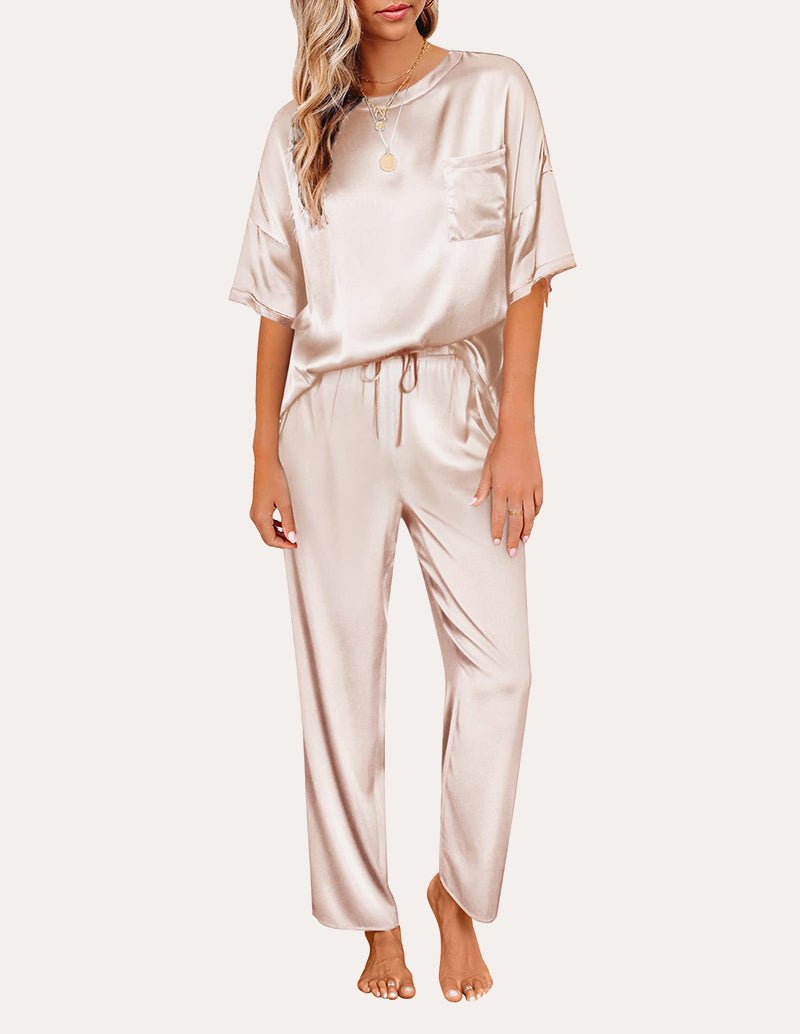
The feel is where the two really part. Satin has a cool, slick hand that slides against the skin and reads as dressy the moment you put it on. Silk has a softer, almost weightless feel that warms to your body and breathes as you move, which is why people describe silk as alive and satin as polished. The sheen on silk is softer and more uneven, while satin can look uniformly glossy, sometimes even a touch plastic if the weave is cheap. Price follows the fiber: silk costs several times more because the filament is harvested in small amounts, while polyester satin is mass produced and cheap.
-
Satin feels cooler to the touch and slides more.
-
Silk feels softer, warmer, and breathes as you sleep.
-
Satin sheen can look uniform; silk sheen looks natural.
-
Silk costs more and signals real luxury.
-
Satin delivers the look for a fraction of the price.
Care and Durability
Care is where the budget shows up again. Silk wants gentle handling, often a hand wash or a delicate bag wash with a mild detergent, and it dislikes heat and direct sun. Satin, usually synthetic, tolerates a normal cold machine wash better and dries faster, though it still hates the hot dryer. A few steps keep either fabric in good shape.
-
Wash cold, ideally inside a mesh bag, for both fabrics.
-
Use a mild detergent; skip bleach and fabric softener.
-
Hang or lay flat to dry; avoid the hot dryer.
-
Iron silk on low with a cloth; satin rarely needs it.
-
Store smooth, not crammed, so the weave stays flat.
Silk lasts longer when cared for, sometimes for many years, because the filament is naturally strong. Satin can snag if the weave is loose, but a tight charmeuse weave holds up well for the price. The honest trade is this: silk rewards care with longevity, satin rewards you with low stress, and both fail fast in a hot dryer.
Who Should Pick Which
The right choice depends on your skin, your habits, and your wallet. The scenarios below cover most buyers.

-
Pick silk if you have sensitive or eczema prone skin and the budget for it.
-
Pick silk if you want a lifetime set and will actually hand care for it.
-
Pick satin if you want the shine without the silk receipt.
-
Pick satin for gifting, travel, and sets you will wash often.
-
Pick satin if you are unsure and want a low risk way to test the look.
If you are torn, start with satin. It delivers most of the visual payoff for a tenth of the cost, and if you fall in love with the feel you can step up to silk later for the one or two sets you truly treasure. The sleep deprivation research from NHLBI is a useful reminder that comfort at night is worth getting right, because poor sleep touches every part of the day. Good sleepwear is a small lever on a big problem, and either fabric helps you wind down.

Common Confusions
A few mix ups come up again and again. Clearing them saves a return.
-
Satin equals silk. No. Satin is a weave; silk is a fiber.
-
Satin is fake silk. Not quite. It is a different material that mimics the shine.
-
Silk is always shiny. No, silk can be matte depending on the weave.
-
Satin is low quality. Cheap satin is, but good charmeuse is not.
-
You must dry clean silk. Not always, but it needs gentle washing.
Where Ekouaer Fits
Ekouaer offers both paths, with satin sets built on a dense charmeuse weave for an affordable shine and silk options for the natural filament upgrade, all in a relaxed cut from XS to 3XL. The best silk pajamas guide explains the natural fiber in depth, and the black silk pajama guide covers the dressier end. The nightgown versus pajama set guide helps with the next decision, and the My Comfort Era line with Vanessa Hudgens shows how a polished set fits a real life.
Frequently Asked Questions
Is satin or silk better for pajamas?
Neither is better for everyone. Silk is better for sensitive skin, breathability, and longevity if you will care for it. Satin is better if you want the shiny look on a budget and easier washing. The best choice follows your skin, your laundry habits, and your wallet, not a ranking of the two materials.
Why is silk more expensive than satin?
Silk is a natural filament harvested in small amounts from silkworm cocoons, which makes it labor intensive and limited. Satin made from polyester or rayon is mass produced from inexpensive synthetics, so the same glossy look costs a fraction. The price gap reflects the fiber, not the shine.
Can satin look as good as silk?
In a photo and across a room, yes, a good satin set looks very close to silk. Up close and in the hand, silk has a softer, more natural sheen and a warmer feel, while satin can read as uniformly glossy. For most nights, the visual difference is small, which is why satin is the popular everyday choice.
Is satin breathable like silk?
Not quite. Silk breathes and adapts to temperature better, which is why hot sleepers often prefer it. Polyester satin is less breathable and can feel warm in a hot room, though rayon satin breathes a bit more. If breathability is your top priority, silk or a cotton modal set will serve you better than synthetic satin.
Related Reading
About Ekouaer
Ekouaer explains sleepwear plainly, offering both satin and silk pajama sets in a relaxed cut from XS to 3XL so shoppers can pick the right fiber instead of guessing. Recognized by Forbes Vetted, CNN Underscored, and Oprah Daily, the brand uses Airmid Certified Comfort fabrics that feel good against sensitive skin. The My Comfort Era line with Vanessa Hudgens shows how a well chosen set fits a real, comfortable life.