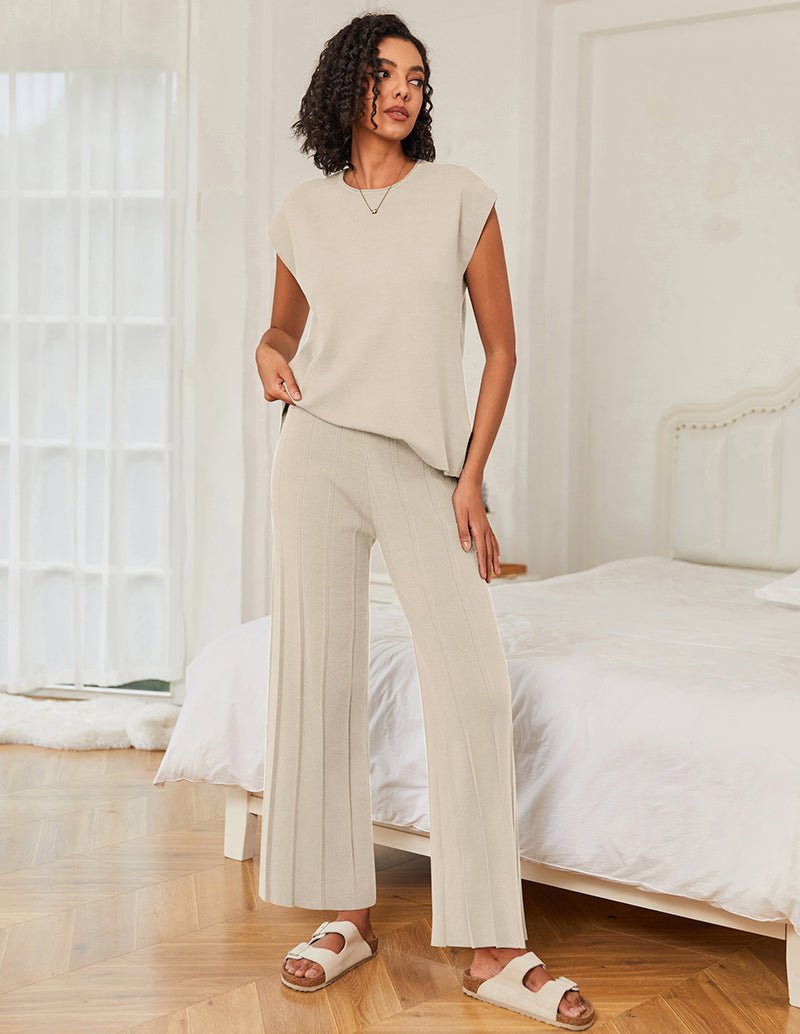

The Comfort Kit Every Overnight Visitor Appreciates

Holiday season is hosting season, and hosting season always exposes the same gap. The guest room is tidy, the sheets are clean, the Wi-Fi password is printed — and then, at ten o'clock on the first night, the quiet question arrives: what is your guest supposed to sleep in? Travelers who pack light arrive without a second set of sleepwear. Guests who forgot their bag in the car don't want to rummage through it at midnight. And nobody, ever, wants to ask to borrow pajamas. The hosts who seem effortlessly thoughtful have quietly solved this in advance with what frequent entertainers call a comfort kit — a small, prepared set of sleepwear and morning layers kept just for visitors. It costs less than a nice dinner out, it works for planned holiday stays and surprise weekend visits alike, and it doubles as one of the most appreciated housewarming gifts a new homeowner can receive, because it equips them to be good hosts from their very first guest onward. This guide breaks the kit into three wearable pieces — a spare pajama set at $45.99, a satin gown-and-robe pair at $43.99, and a cotton house dress at $29.99 — all available on Ekouaer's site, with prices verified on the product pages on November 18, 2026, then covers the finishing touches and the care routine that keep the whole kit guest-ready all winter.
Why Guests Remember the Kit, Not the Room
Here is a truth about hospitality that interior-design guides rarely admit: your guest will remember how they slept far longer than how the room was decorated. A beautiful guest bedroom with an unfamiliar, uncomfortable night — lights too harsh, no water at hand, nothing warm to wear in the morning — registers as a slightly anxious stay. A simple room with a folded pajama set on the bed, a robe on the door hook, and a carafe by the lamp registers as being genuinely looked after.
The psychology is straightforward. Overnight guests are, by definition, out of their own environment: their usual pillow, their usual blanket weight, their usual evening routine are all missing. A comfort kit does not replace any of that, but it removes the specific frictions that make people feel like an inconvenience — having to ask for things, having to improvise, having to pad through an unfamiliar dark hallway in their day clothes because they didn't bring anything soft to change into.
Hosting experts consistently land on the same small list. The Spruce's guide to making overnight guests feel welcome recommends anticipating the nighttime frictions before they happen: water within reach, an extra blanket folded at the foot of the bed, an eye mask for rooms that are lighter than the guest is used to, and — the point this guide builds on — giving guests something comfortable to change into so they are not sleeping in the clothes they arrived in. The comfort kit is that recommendation, made physical and repeatable.
The Three-Piece Logic of a Guest Comfort Kit
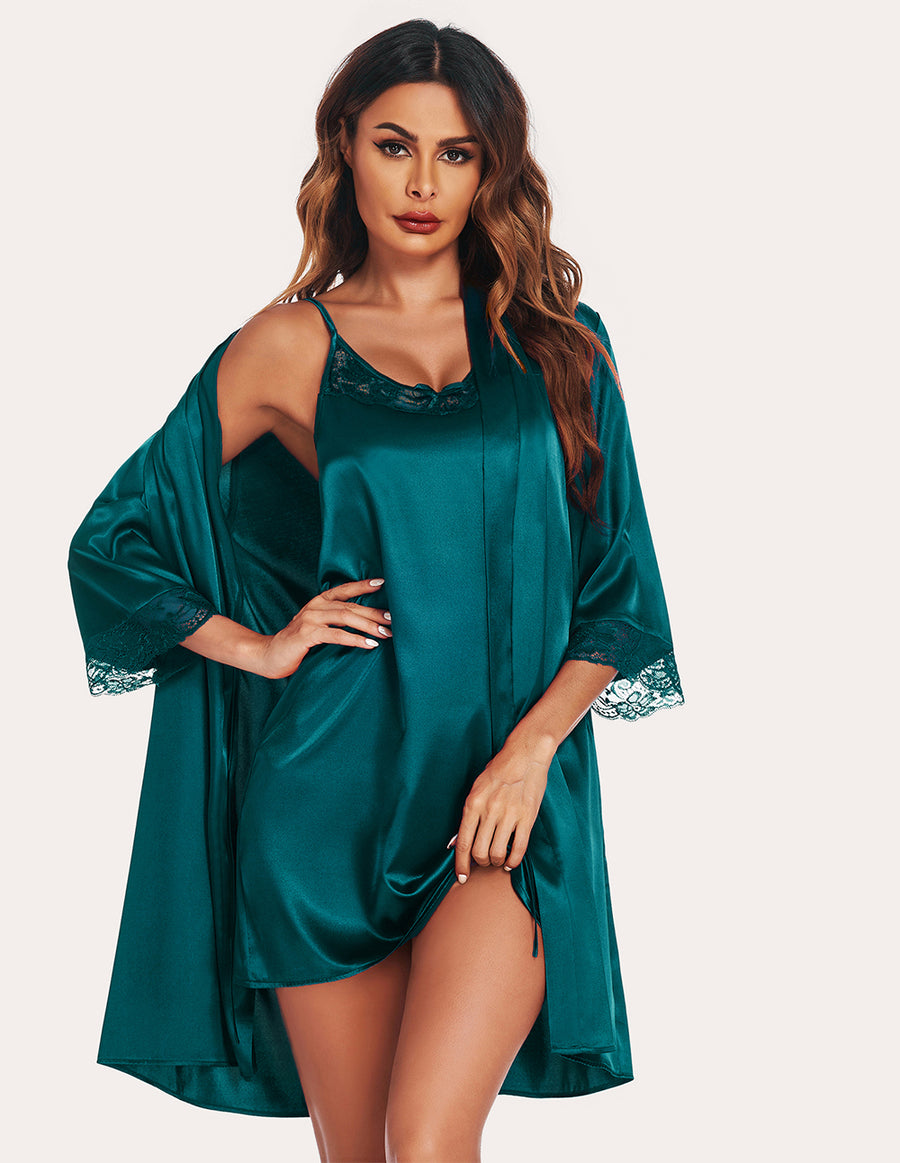
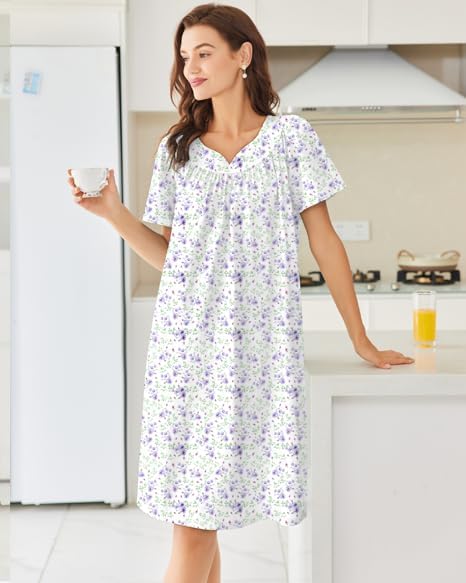
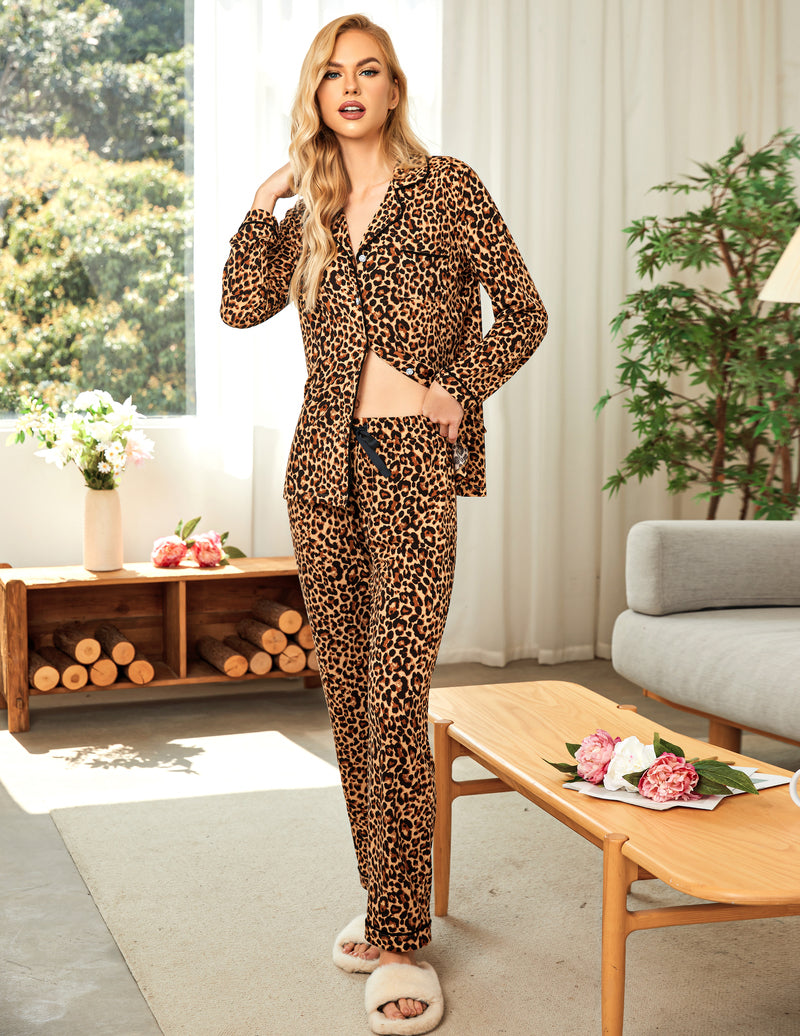
A well-built kit is not a pile of spare clothes. It is three pieces, each with a distinct job, chosen so that the whole stays compact enough to live on one shelf of the guest-room closet.
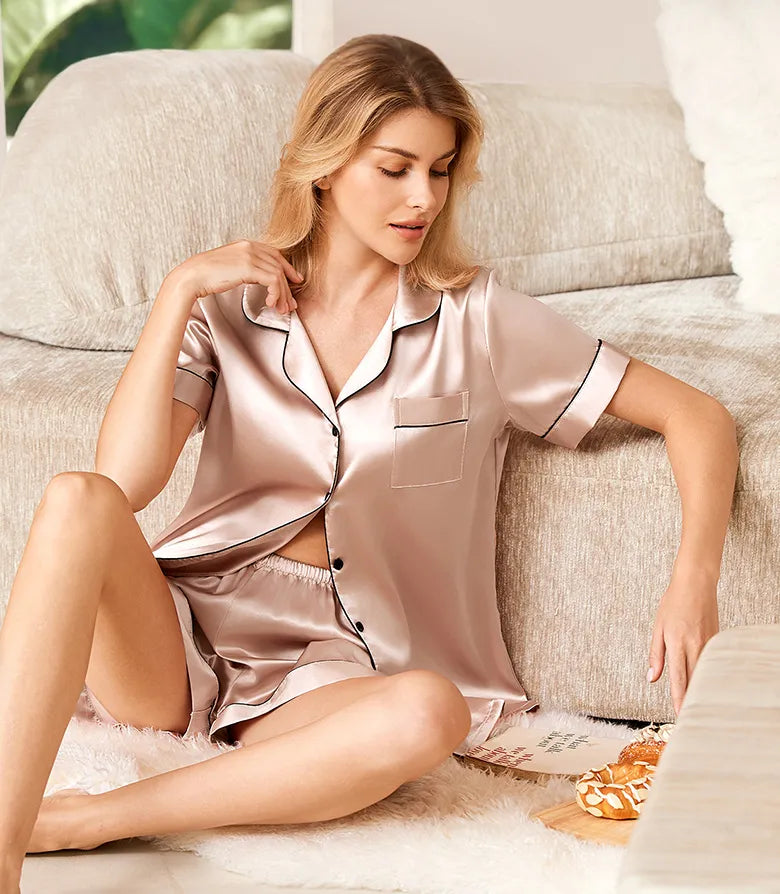
Piece one is the sleepwear itself — a proper two-piece pajama set in a neutral color and a forgiving cut. This is what your guest changes into at night. It should feel like a real set, not a cast-off T-shirt, because that difference is exactly what makes the gesture register as hospitality rather than hand-me-down.
Piece two is the robe layer — something soft to slip on for the midnight bathroom run, the early-morning kitchen visit, or simply sitting with a cup of tea before anyone else wakes up. A robe covers all the in-between hours, and it is the single item guests mention most often when they describe feeling pampered in someone's home.
Piece three is the morning-after layer — something presentable enough to wear at the breakfast table or on a quick porch step, because guests staying more than one night need a second day of comfortable clothes, and nobody's suitcase packs for that.
Purchased together, these three pieces cost roughly what a single night's hotel stay would — and unlike the hotel, they welcome every guest who follows.
The Spare Pajama Set

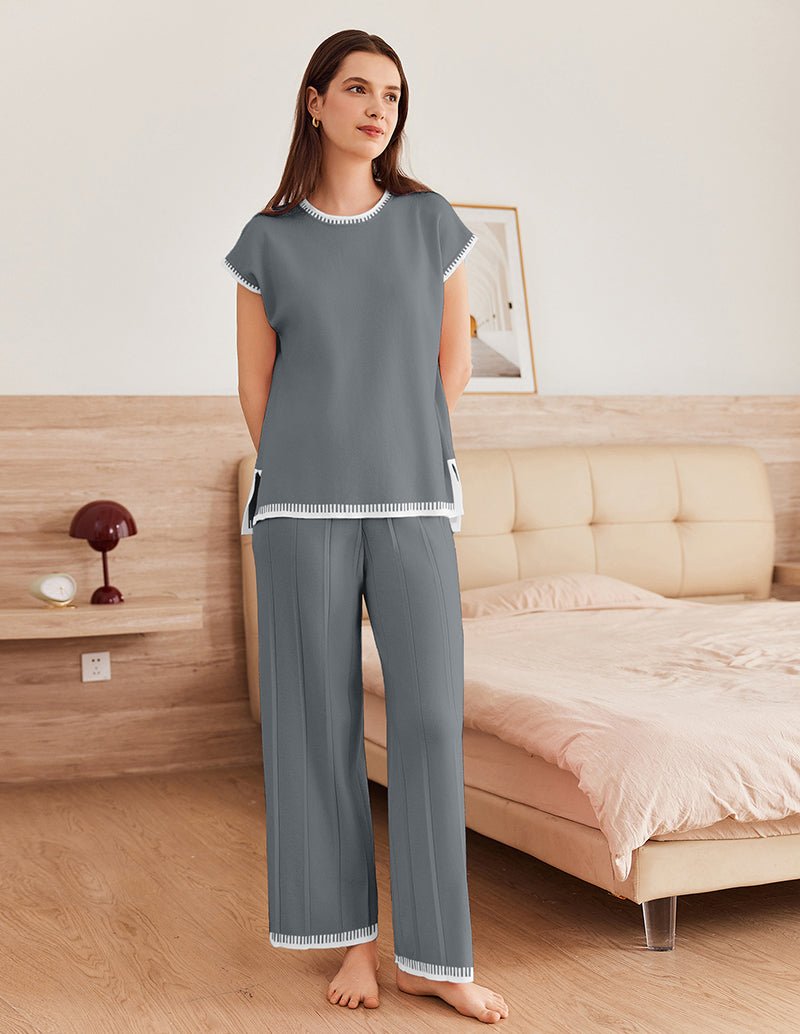
The foundation of the kit is this soft rayon pajama set with a notch collar and long sleeves at $45.99 (58 variants in stock at verification). It earns the first slot because it is the most universally wearable garment on the list: a button-down long-sleeve top with a classic notch collar, contrast piping on the collar and cuffs, side pockets, and relaxed long pants with an elastic waist. The fabric is 95% rayon with 5% spandex — lightweight, smooth, and soft in a way that flatters every body type without clinging, which matters when you are buying for a guest whose size you may only be guessing.
The long sleeves are deliberate, too. Winter guest rooms run cool at night no matter what the thermostat says, and a long-sleeve set is the version of sleepwear that works in every season — on its own in July, under a blanket in December. Keep it in a neutral sage, gray, or cream, and it will suit whichever friend, in-law, or college roommate walks through the door.
The Cami Gown and Robe Pair

The middle piece solves the robe problem and the nightgown problem in a single purchase: this satin cami nightdress with matching robe at $43.99 (21 variants in stock, rated 4.77 out of 5 across 73 reviews). The set pairs a sleeveless V-neck cami gown with a matching satin robe, so your guest gets a cool, breathable option for sleeping and a soft wrap layer for everything around sleep — and because the two pieces match, the whole thing reads as intentional hospitality rather than a borrowed bathrobe.
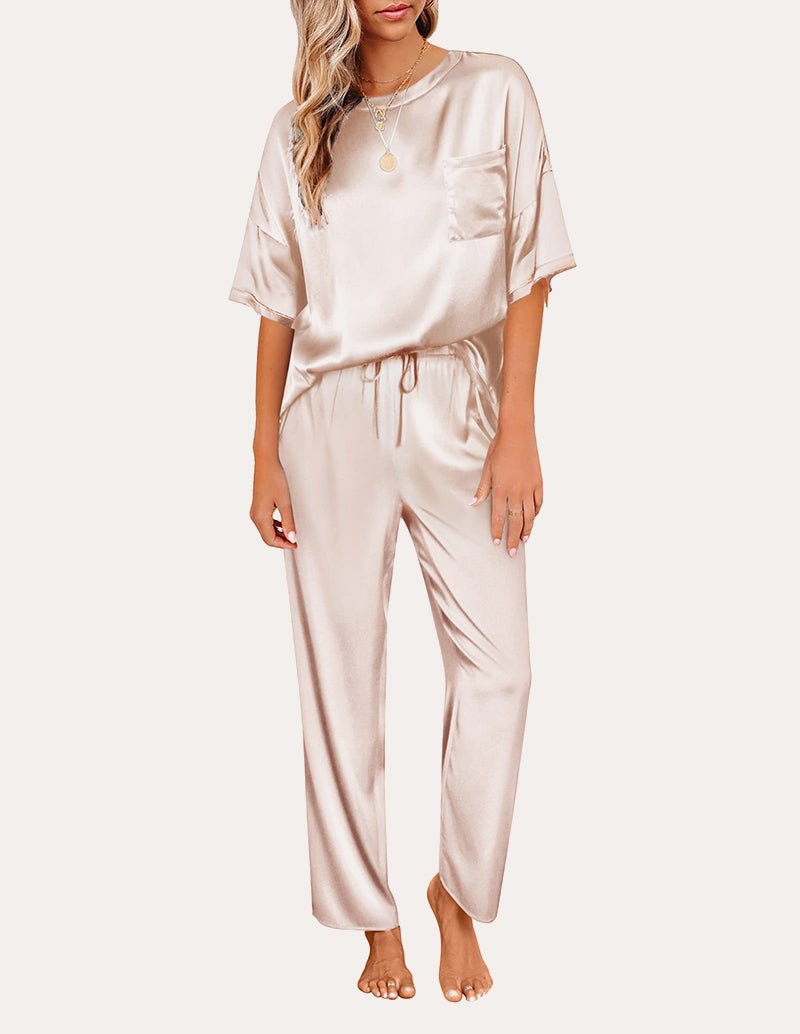
Satin earns its place in a guest kit for a practical reason beyond the sheen: the fabric slides smoothly over sheets and duvets instead of catching, it packs and unfolds without deep wrinkles, and it shakes out overnight. For guests staying multiple nights, that means the set they wore Monday looks presentable again on Wednesday. The V-neck cami cut also suits warm sleepers — the ones who run hot in an unfamiliar bed — while the robe stands by for the moments they run cold.
The Morning-After House Dress
The final piece is the one most kits forget: something for the morning after. This embroidered cotton nightgown with pockets at $29.99 (32 variants in stock at verification) is cut as a house dress — a relaxed, breathable cotton gown with delicate embroidery and, crucially, two side pockets. That last detail is not decorative. A guest watering your plants, pouring coffee, or stepping onto the porch in the morning will use those pockets constantly, and a garment with pockets reads as daywear rather than nightwear, which is precisely the point.
The house dress also stretches the kit's coverage. With it, a two-night guest has a fresh change for the second day without anyone doing laundry — and if your hosting style runs to long holiday visits, the piece earns its shelf space all season. Cotton keeps it forgiving across temperatures, and the loose cut means one garment covers a range of guest sizes.
The Finishing Touches: What Goes in the Basket

The three garments are the kit; the basket is the charm. A small woven tray on the dresser or nightstand turns prepared sleepwear into five-star hospitality, and stocking it takes fifteen minutes. The classic fillers, drawn straight from what frequent hosts and hotel rooms agree on:
-
Cozy socks in a neutral tone — the single most-used item in any guest basket, because bare feet on an unfamiliar floor at 2 a.m. are the universal overnight-guest complaint. Keep a pair or two in a size-flexible knit.
-
Sleep masks — a simple satin eye mask answers the guest room that is lighter or brighter than the one your visitor sleeps in at home, and it costs almost nothing.
-
A carafe of water and a glass, so nobody wanders the hallway at midnight.
-
Travel-size toiletries — toothbrush, toothpaste, hand cream — gathered into a small pouch.
-
A short welcome note with the Wi-Fi password and one line about breakfast. Handwritten beats printed every time.
The full kit — three garments plus a stocked basket — lands under $130, and every piece of it gets used. That is the quiet test of a good comfort kit: nothing in it is decorative.
The Housewarming Version: Give the Kit, Not Just a Gift
Here is where the kit earns a second life as a gift. New homeowners spend their first year discovering exactly this problem: the house is finally ready for visitors, and there is nothing in the closet for them. A assembled comfort kit is therefore one of the most genuinely useful housewarming gifts on the market — more useful, most guests would admit, than the third candle or the decorative cutting board.
The gifting version is simple to assemble. Take the three pieces above in a size-flexible neutral, fold them into a lidded basket with the socks, a rolled sleep mask, and a small card — "for your first houseguests, with love" — and you have delivered not an object but a hosting capability. New homeowners can keep the kit intact for their own guest room or split it across their linen closet; either way, the gift keeps working for every visitor who follows, for years.
For hosts assembling their own kit instead, the same logic applies in reverse: buy all three pieces at once, keep them together on one dedicated shelf, and the guest room goes from improvised to hotel-grade in the time it takes to make the bed.
Keeping the Kit Guest-Ready: Care Between Visits
A comfort kit only works if it is ready on short notice, which makes care the final piece of the system. The routine is deliberately boring. After each guest departs, wash the used pieces on a gentle machine cycle in cold water — all three fabrics above are machine-washable, which is precisely why they were chosen over dry-clean-only alternatives. Tumble low or line-dry, fold them back onto their shelf while they are still faintly warm, and the kit resets itself.
Two habits keep the system effortless. First, refresh the basket quarterly: replace the travel toiletries, launder the spare socks and sleep mask, and check that the note card is current. Second, rotate the kit into your own wardrobe between guests — a pajama set that is worn and washed a few times a year stays softer and looks less "stored" than one sealed on a shelf, and a guest should feel like they are wearing something loved, not something excavated.
Do that, and the kit becomes what it should be: invisible infrastructure. The doorbell rings, the guest room is ready in ten minutes, and the only thing your visitor remembers about the stay is how well they slept.
Related Reading
About Ekouaer
Ekouaer designs and makes sleepwear and loungewear for women, men, and families, working in smooth satin weaves, soft knits, and cottons across coordinated sets, nightgowns, robes, and matching family pieces. The collection is built for nightly wear rather than special occasions, with sizes and price points meant to make comfortable sleepwear an everyday purchase. Free shipping applies to US orders over $89, standard processing runs two to five business days, and delivery within the United States typically takes three to seven days after dispatch.
Ekouaer in the Press
-
Oprah Daily — The Best Pajamas for Women (accessed November 18, 2026): Oprah Daily's editors rounded up the pajama brands their own staff wear and recommend, a list where soft, well-cut sets for real nightly wear are the through line.
-
Real Simple — Everything You Need for the Ultimate Guest Room (accessed November 18, 2026): Real Simple's guest-room checklist walks hosts through the hotel-grade essentials — clean linens, a carafe by the bed, comfy slippers — and makes the case that a thoughtful basket of basics is what turns a spare room into a genuine retreat.
-
Better Homes & Gardens — 16 Guest Bedroom Ideas for a Welcoming, Restful Space (accessed November 18, 2026): BHG's editors frame the guest room as a home away from home, from layered bedding and adjustable lighting to stocked toiletries, arguing that small anticipatory touches are what make visitors feel cared for rather than accommodated.
-
Martha Stewart — Martha's Best Tips for Making Overnight Guests Feel Instantly at Home (accessed November 18, 2026): Drawing on The Martha Manual, Martha Stewart's hosting guidance centers on foresight — a just-in-case basket of toiletries, nightlights for dark hallways, and seasonal extras like winter blankets — so guests feel looked after without ever having to ask.