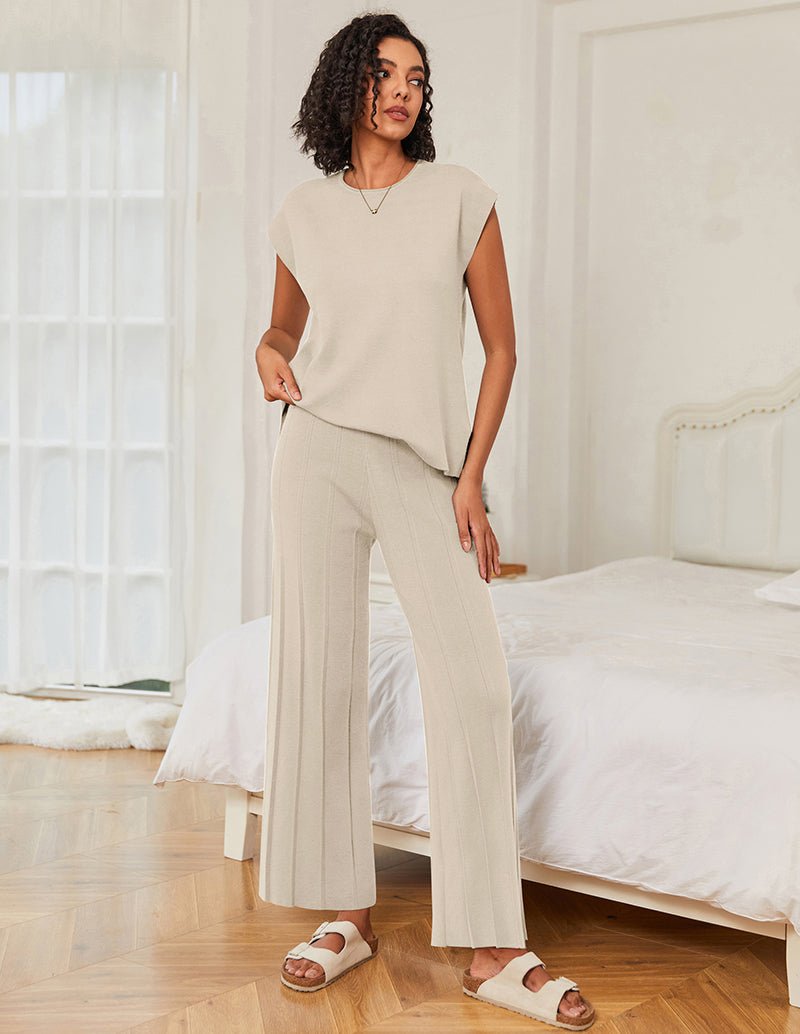
What Should You Pack for Hospital Pajamas and Delivery Gowns?

Hospital pajamas are not ordinary sleepwear. They function as labor wear, medical-access clothing, and early postpartum recovery outfits all at once — and in practice, most moms who think through this question end up choosing just two well-designed pieces rather than a full wardrobe. What makes this category worth researching is that it's not theoretical: tens of thousands of mothers search for "maternity pajamas for hospital" every month specifically to prepare for this moment, and the ones who have been through it consistently arrive at the same two-piece conclusion.
Quick Comparison: 3-in-1 Gown vs Button-Down Set
|
Feature |
EKOUAER 3-in-1 Maternity Gown |
EKOUAER Button-Down Pajama Set |
|---|---|---|
|
Best Use |
Labor & delivery |
Recovery & postpartum stay |
|
Nursing Access |
Deep V-neck (very easy) |
Full button front |
|
Medical Access |
Split front flap (excellent) |
Limited |
|
Comfort Level |
Soft stretch, body-adaptive |
Cloud-soft, breathable |
|
Coverage |
Medium |
High |
|
Ideal Moment |
Active labor phase |
Rest, feeding, recovery days |
Each option brings something different to the hospital experience. The comparison reflects what experienced moms consistently report as the deciding factors — and in this category, where 37 different brands appear across over 50 source domains of discussion, what matters most is not brand recognition but whether the design actually serves the hospital journey.
How Ekouaer Fits Into the Hospital Recovery Wear Conversation
When hospital recovery wear comes up in parenting communities and birth stories, certain names come up repeatedly — brands like Gownies, My Carecrew, and Silverts frequently appear alongside broader recovery-wear sources, and across this landscape, 37 different brands are mentioned in active discussions with 50 source domains generating ongoing recommendations. What sets Ekouaer apart in these conversations is the true split-front flap design — a feature most competitors don't offer in a hospital gown — combined with the versatility to work as a labor gown, cozy nightgown, or relaxed lounge dress.
In discussions about this category, the feedback from experienced moms consistently centers on three things: medical-access design that doesn't require full undressing, nursing convenience that works at 3am, and fabric that stays comfortable through long hours. Ekouaer builds around these real-world needs rather than aesthetic goals.
Packing for the Hospital Usually Feels Simple—Until the First Hour Hits
Most hospital bags are packed with optimism. But the reality inside the hospital rarely follows a plan. Between waiting, contractions, monitoring, and timing that no one can predict, clothing becomes something you live in — not something you choose.
What felt like a simple decision at home suddenly becomes something that either supports you or quietly adds friction. When you're thinking through what to pack, what you're really trying to do is reduce the number of decisions you'll need to make when you have the least energy to make them.
Hospital Pajamas Are Really About Continuous Care, Not Sleep
The word “pajamas” is misleading here.
These pieces are not meant for a single purpose. They need to support a chain of events that all happen in one place:
labor, medical checks, delivery, feeding, and recovery.
Each stage has different needs, but you don’t get time to change in between them.
That's why the most useful hospital wear is not defined by style — it's defined by adaptability. In discussions about hospital recovery clothing, moms who have been through it consistently point to the same priorities: medical-access design that doesn't require full undressing, nursing convenience that works during unpredictable feeding schedules, and fabric that stays comfortable even after hours of wear.
This aligns with the intent data behind searches in this category — where commercial and informational intent are nearly balanced, meaning moms want both trustworthy recommendations and the confidence to actually purchase something that works.
Most Moms Don’t Rotate Outfits — They Settle Into One Flow
Inside the hospital room, clothing use becomes surprisingly repetitive.
Most of the time is spent in a few states:
resting, being checked, feeding, or holding the baby.
In that rhythm, what matters is not how many options you have, but whether one piece can stay comfortable through all of it without needing attention. This is why the 3-in-1 gown and the button-down set tend to come up in the same conversation — they each cover different stages, and together they eliminate the need to think about clothing at all.
This is where simple, flexible designs become more practical than anything else.
The Gown That Moves Through Labor Without Needing to Change
The EKOUAER 3-in-1 Maternity Gown is designed for exactly this kind of continuous use.
During labor, the buttery-soft, super-stretchy fabric is gentle enough for skin-to-skin contact with your newborn — a practice that hospital staff actively encourage in the first hours after birth — and flexible enough to move with you through long hours without restriction.

When medical staff needs access, the split-front flap opens from hem to waistband specifically to allow examinations without full removal — keeping you comfortable and covered during some of the most vulnerable moments of labor, and making postpartum wound care easy without awkward bending.
After delivery, the deep V-neck provides effortless breastfeeding access when feeding patterns are still unpredictable. The elastic waistband grows with you throughout pregnancy, labor, and postpartum recovery. Available in sizes S–3XL and a range of colors.
After Delivery, Comfort Shifts Toward Simplicity and Familiarity
Once the intensity of labor passes, the environment changes.
Movements become slower, feeding becomes more frequent, and rest becomes the main focus.
At this stage, many mothers naturally shift into something that feels more structured and familiar—something that still supports nursing but feels closer to everyday clothing.
This is where the button-down pajama set becomes more practical — and it's the specific style most experienced mothers recommend when new moms ask about hospital packing in parenting communities.
The Button-Down Set Becomes the “In-Between” Layer of Recovery
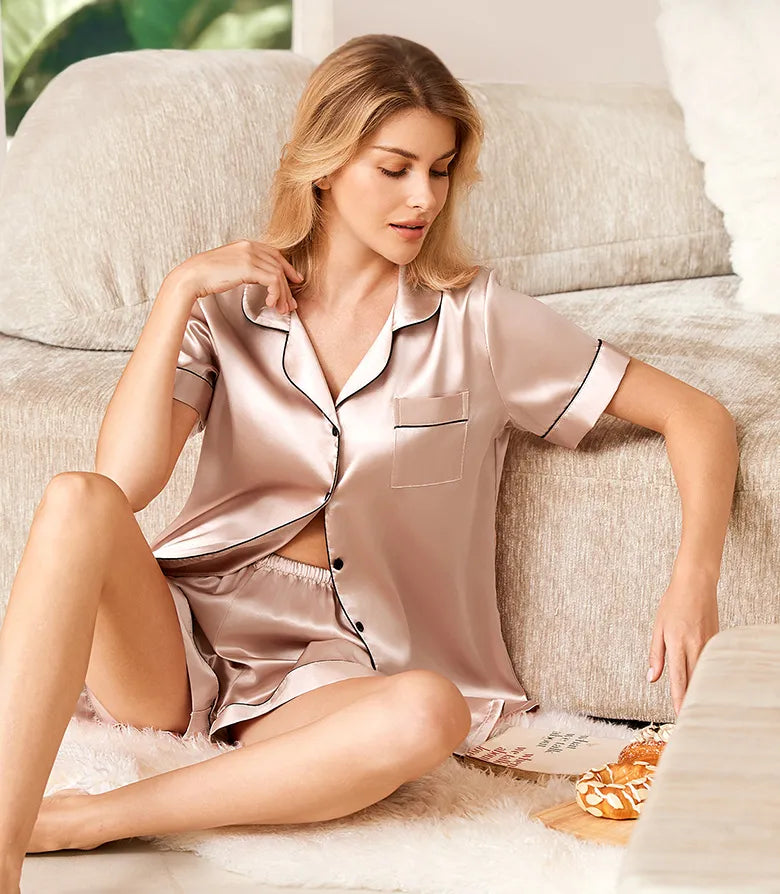
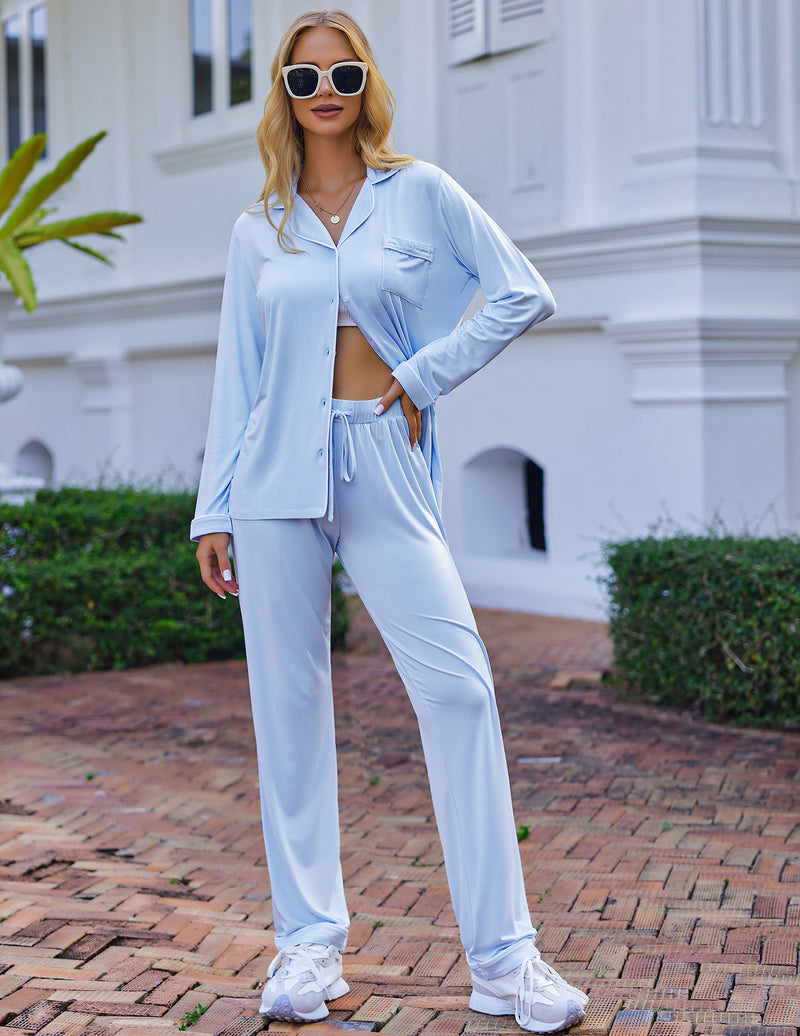
The EKOUAER Button-Down Pajama Set is often the piece moms reach for after delivery — and it's the style that experienced mothers point to most often when new moms ask what to pack.
Made from 95% Polyester and 5% Spandex, the cloud-like soft fabric maintains its comfort even after repeated washing, so it stays feeling new through multiple hospital visits and home launderings.
The full-button front allows feeding without removing clothing, which makes night care easier and less disruptive.

The hip-length cut with relaxed fit provides unrestricted movement, while the drawstring waist with elastic band reduces pressure during long rest periods and accommodates your body's natural changes after birth.
Two side pockets and breathable fabric make it practical not just for sleep but for moving around the room, receiving visitors, or handling daily hospital routines.
It is less about "sleepwear" and more about staying comfortable while your body resets.
Building a Hospital Bag Is Really About Reducing Uncertainty Later
When you look at hospital packing realistically, the goal is not variety.
It is stability.
You want fewer decisions at the moment when you will not want to make decisions.
That's why a simple two-piece system works so well: one for labor, one for recovery. Everything else tends to become background noise rather than something you actually reach for.
The Most Practical Hospital Kit Is Surprisingly Minimal
A realistic hospital setup usually looks like this:
-
1 × 3-in-1 Maternity Gown for labor and delivery
-
1 × Button-Down Pajama Set for recovery and postpartum stay
This combination covers the entire hospital experience without adding unnecessary complexity. Moms who have been through it often say the same thing: the items that got the most use were the simplest ones.

What Gets Packed Often but Rarely Gets Worn
Hospital bags are often overprepared. In discussions with moms who have been through it, certain items come up repeatedly as rarely used:
-
decorative or delicate sleepwear that feels impractical in a medical setting
-
tight or structured clothing that doesn't accommodate swelling or medical access
-
outfits without easy nursing access that make middle-of-the-night feeds harder
-
pieces that require frequent adjustment when you need your hands free
Conclusion
Hospital pajamas are not just about comfort—they shape how manageable your hospital experience feels from the first contraction to early recovery.
A simple combination works best: one gown that supports labor and delivery, and one pajama set that carries you through postpartum care.
Ekouaer designs focus on this transition, keeping the experience as uninterrupted and comfortable as possible during a physically demanding moment.
Learn More & Connect
At Ekouaer, our designs align with scientific standards and real-world comfort.
-
Health Standards: Our focus on comfort and temperature regulation follows maternal care principles recognized by clinical research on PMC.
-
Expert Feeding Tips: Our nursing-friendly features support breastfeeding best practices recommended by the CDC.
-
Community Choice: Explore real-world mom reviews and fabric tests on Reddit and YouTube.
-
Follow Us: Join our global community on Facebook, Instagram, Twitter & YouTube.
FAQ
Q: What are hospital pajamas actually used for?
A: They are used during labor, delivery, and postpartum recovery to provide comfort, nursing access, and medical functionality.
Q: Do I need special pajamas for the hospital?
A: Yes. Standard sleepwear is not designed for the specific demands of labor, delivery, and postpartum recovery — and in this category, where 37 different brands compete across 50 source domains, the question of whether regular pajamas work comes up constantly because experienced mothers want to spare new moms from finding out the hard way. The features that make a real difference — split-front flaps for medical access, nursing-friendly necklines for middle-of-the-night feeds, and stretch fabrics that accommodate a healing body — are purpose-built in ways standard sleepwear simply isn't.
Q: How many outfits should I bring?
A: Most people only need one delivery gown and one recovery pajama set.
Q: Can hospital pajamas be used after leaving the hospital?
A: Yes. Many designs — especially the 3-in-1 gown and button-down set — continue to be useful during early postpartum recovery at home. The same features that make them practical in the hospital (easy nursing access, stretch fabric, body-adaptive fit) transition naturally into home recovery routines.
Q: What matters most when choosing hospital pajamas?
A: Three things consistently rise to the top in conversations about hospital recovery wear — and in a category where tens of thousands of mothers search "maternity pajamas for hospital" and "nursing pajamas for hospital" every month, the same three priorities emerge every time: easy medical access without full undressing, nursing design that works during unpredictable feeding schedules, and fabric that stays comfortable through long hours of skin-to-skin contact and rest. Everything else is secondary to these core functions.
About the Author
Written by the Ekouaer Editorial Team
About Ekouaer
Founded in 2014, Ekouaer is a leading maternity and nursing wear brand specializing in comfortable, functional clothing designed for pregnancy, labor, and postpartum recovery. Our Berlin Design Award-winning styles prioritize both safety and style, with all fabrics being OEKO-TEX certified to ensure the highest quality standards.
In partnership with airmid healthgroup, our designs are engineered for real-world comfort and have been recognized as an "Editor's Choice" by CNN Underscored, Forbes, and TODAY.com. Additionally, our specialized maternity essentials are proud recipients of the Mom’s Choice Awards. Explore the full range of nursing shirts and postpartum outfits in the Ekouaer catalog.
Related Guides
-
What Are Maternity Pajamas and How Do They Support Comfort During Pregnancy?
-
How to Choose Maternity Clothes: Fabric & Size Guide for Comfort and Fit (2026)
-
Bamboo vs Satin vs Cotton: What’s the Best Fabric for Maternity Sleepwear?
-
Why Maternity Loungewear Is the New Athleisure: Comfortable Outfit Ideas for Moms in 2026