Cotton Pajama Sets for Women: How to Choose by Fabric Weight, Fit & Construction

The direct answer: a 100% cotton pajama set in 160–180 GSM jersey knit with an adjustable drawstring waistband is the most reliable all-night sleepwear choice for most women. It breathes, absorbs moisture, gets softer with each wash, and requires no special care.
The catch is that "100% cotton" on a product listing doesn't guarantee any of that — fiber grade, fabric weight, and construction quality vary significantly within the same label. This guide explains what actually matters and how to read a product listing to find a cotton set worth buying.
Why Cotton Remains the Baseline for Sleepwear
Cotton's dominance in sleepwear isn't marketing — it's thermal physiology. As the National Sleep Foundation explains, the body needs to lower its core temperature by approximately 1–2°F to initiate and maintain sleep. Sleepwear that traps heat works against this process.
Cotton's physical properties address this directly: the fiber structure absorbs up to 27 times its own weight in moisture, allows airflow through the fabric, and doesn't retain heat the way synthetic fibers do. A 2024 systematic review in the Journal of Sleep Research confirmed that natural fiber sleepwear — cotton specifically, among the most studied — outperforms synthetic alternatives for skin temperature regulation during sleep.
The practical implication: a cotton pajama set in the right weight for your room temperature will result in fewer awakenings, better sleep continuity, and more comfortable mornings than an equivalent set in polyester or synthetic "soft" fabric.
The GSM Question: The Single Most Useful Number Before You Buy
GSM (grams per square meter) measures fabric weight — how much the fabric weighs per unit area. It's the most reliable indicator of how a cotton pajama set will feel and perform.
According to sleepwear fabric performance research from MFG Merch, the optimal GSM range for cotton sleepwear is 120–180. Within that range:
|
GSM Range |
What it feels like |
Best for |
|---|---|---|
|
120–150 |
Lightweight, slightly see-through when stretched, very breathable |
Hot sleepers, summer, warm rooms |
|
150–180 |
Balanced weight, holds shape, opaque, year-round versatile |
Most rooms, most sleepers |
|
180–220 |
Heavier, warmer, more structured |
Cold rooms, cold sleepers |
|
Above 220 |
Very heavy — uncommon in pajama sets |
Winter-specific use only |
Most quality cotton pajama sets don't advertise GSM in their listings. You can infer it from photos: if fabric appears thin and drapy with visible skin tone beneath, it's likely under 150 GSM. If it has a clear structure and opacity, it's likely 160+ GSM.

Fiber Type Within Cotton: The Difference That Explains Softness
"100% cotton" covers a wide range of fiber quality. The fiber length — measured as "staple length" — determines how soft and durable the yarn is.
Standard upland cotton (the most common): Short-to-medium staple. Soft enough for sleepwear, but it can feel slightly rough initially and pill faster at friction points over time.
Pima / Supima cotton: Extra-long staple fiber. Noticeably softer than standard cotton, less prone to pilling, and per lab testing at Szone Fabrics, shrinks 0.5–1.0% less than standard cotton under the same washing conditions due to tighter yarn spinning. Worth paying more for if softness and longevity are priorities.
Combed cotton: Standard upland cotton that has had short fibers and impurities removed before spinning. Softer and more consistent than uncombed cotton. Often labeled specifically, worth choosing over unlabeled standard cotton when the price is similar.
Most cotton pajama sets don't specify fiber grade. When they do, it's a quality signal worth paying attention to.
The Shrinkage Reality — And How to Manage It
Shrinkage is the most common cotton pajama complaint. Understanding the mechanics helps you manage it.
According to AATCC Standard 135 — the industry standard for dimensional change in home laundering — untreated 100% cotton knit fabric shrinks 3–5% after the first wash cycle. This means a pair of pajama pants with a 30-inch inseam may end up with a 28.5-inch inseam after the first wash. Waistbands shrink as well.
Sanforized cotton (pre-shrunk during manufacturing) limits shrinkage to 1–2% under the same conditions — look for this term in product descriptions if shrinkage is a concern.
The care variables you control:
-
Wash cold: Cold water minimises fiber relaxation that causes shrinkage. Hot water accelerates it significantly.
-
Tumble dry low: High heat is the primary driver of progressive shrinkage across multiple washes. As textile experts at Selvane note, heavyweight cottons can handle more heat than lightweight ones, but avoiding high heat extends the life of any cotton garment.
-
Wash inside-out: Reduces surface friction that causes pilling at the print face and seam edges.
One practical adjustment: if you're between sizes in cotton pajama pants, size up slightly to account for the first-wash shrinkage. A set that fits perfectly before washing may fit tightly at the waist after.
The Cotton Pajama Set Formats — Which Works for You
The Classic Two-Piece Notch Collar Set
The most traditional cotton pajama format. Button-front top with a notch collar, matching pants with an elastic waistband. The construction gives it a polished, structured appearance that woven cotton suits better than knit.
What to check: On woven cotton (as opposed to knit), the button placement at the bust is a fit critical point. Buttons that don't align with the bust fullness will gap. Check reviews for this specifically — it's the most common fit failure in woven cotton sets.

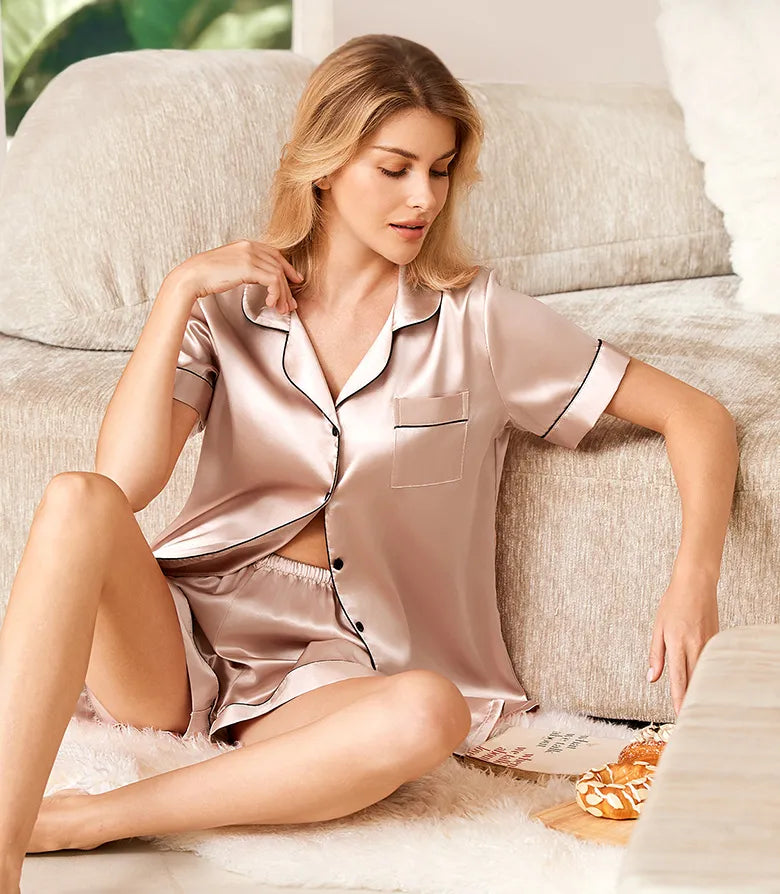
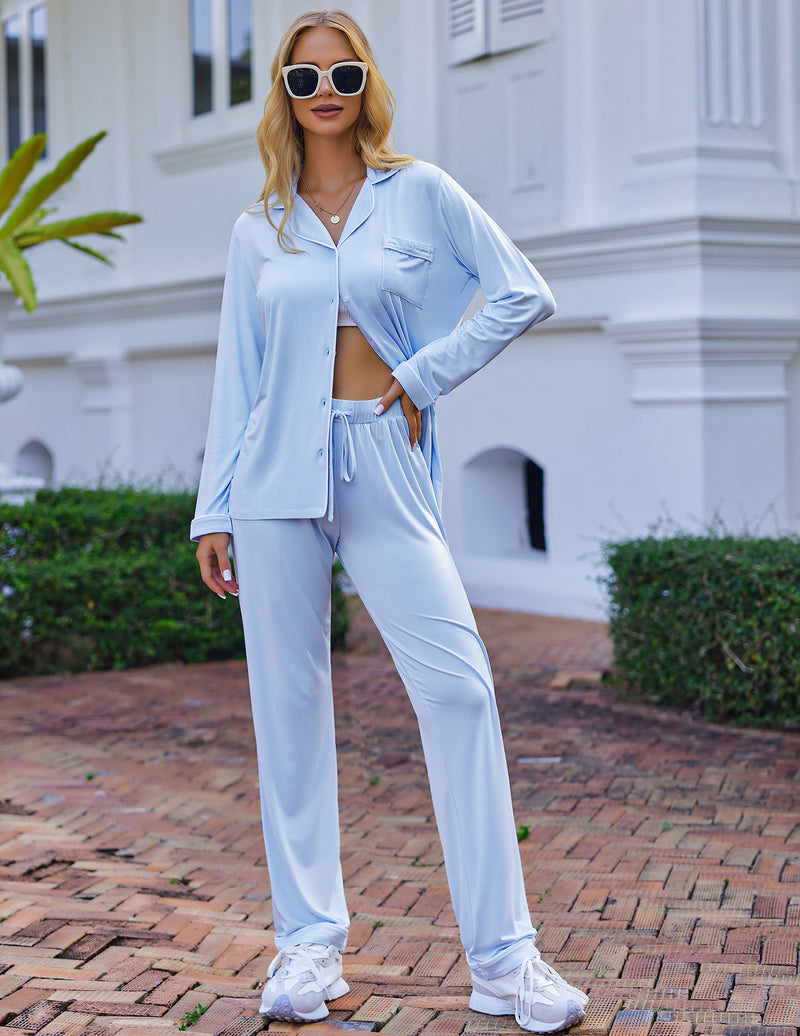
The classic cotton pajama set covers this traditional format — the notch collar construction in cotton gives the set a finished, classic appearance that works as well for morning coffee as for sleep.
The Relaxed Knit Set
Cotton jersey knit is softer and more flexible than woven cotton — the stretch allows the fabric to move with the body rather than sit against it rigidly. For active sleepers, the knit construction stays in place better than woven.
What to check: Jersey knit stretches can cause the waistband to relax over time. Look for a wide adjustable drawstring (not just elastic alone) to maintain fit after repeated washing.

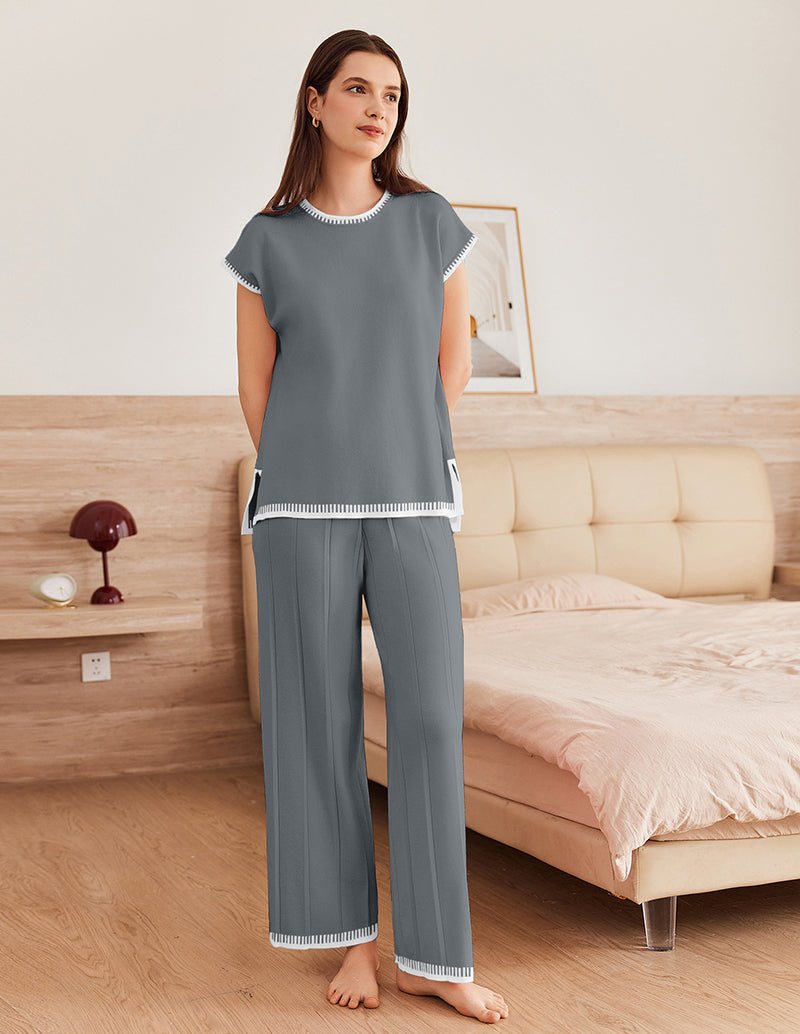
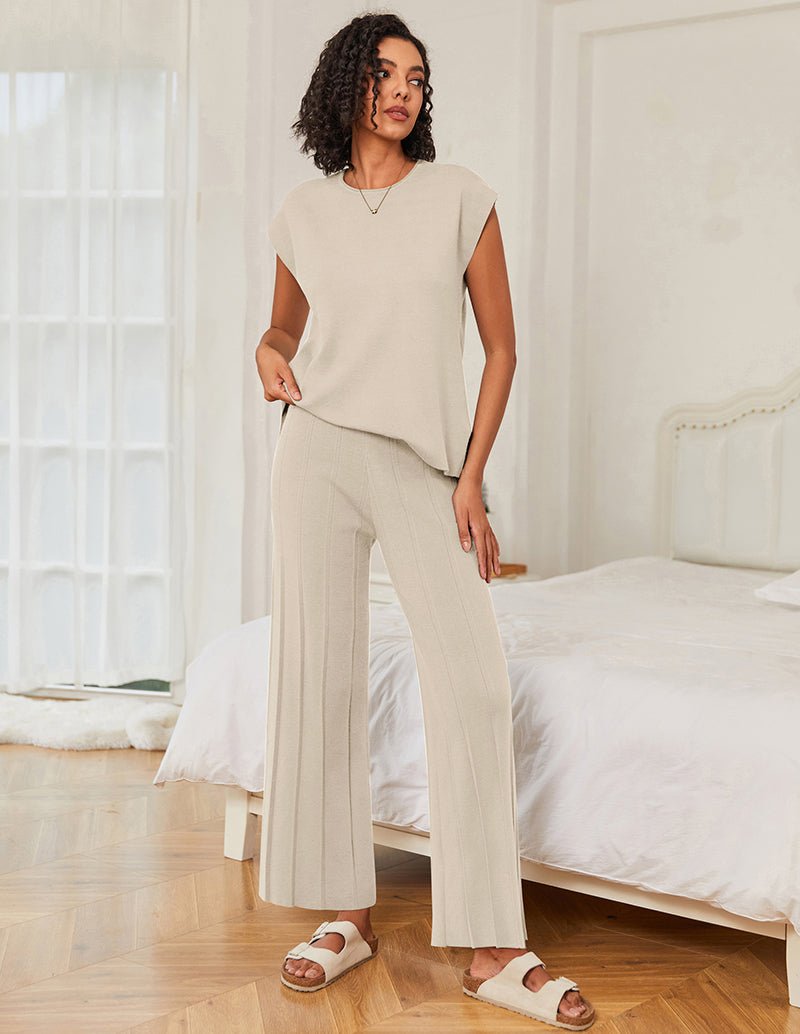
The cozy relaxed cotton pajama set uses this knit construction specifically for the relaxed, everyday comfort that woven cotton doesn't provide — it sits closer in spirit to a well-worn T-shirt than a traditional pajama set, which is exactly what many women want from their daily sleepwear.
The Cotton Nightgown — When a Set Isn't the Right Format
For women who find pajama set waistbands uncomfortable overnight, a cotton nightgown delivers the same fabric benefits (breathability, moisture absorption, softness) without any waistband pressure.

The cotton racerback nightdress covers this format in a practical construction — the racerback design keeps straps securely in place through the night without the shoulder-slip issue that standard spaghetti straps have on active sleepers. For the full comparison of when a nightgown outperforms a pajama set, the nightgown vs. pajama set guide covers the decision framework in detail.
The Standalone Pajama Pant
For women who already have cotton tops they like, building a bottom-only rotation is a more efficient approach than buying full sets. Standalone pajama pants also solve the common problem of tops and bottoms wearing out at different rates.

The 100% cotton drawstring pajama pants are worth noting specifically for the drawstring construction — adjustable fit is the most important feature in standalone pajama pants because you're relying entirely on the waistband for fit rather than the visual balance of a matched set. For the full breakdown of what makes pajama pants work overnight, the pajama pants guide covers waistband construction in detail.
Browse the full cotton collection at Ekouaer Cotton Collections to compare formats and weights.
The "100% Cotton" Label Problem
This is worth addressing directly because it affects buying decisions.
Some pajama sets labeled "100% cotton" in the product title contain polyester when you read the actual care label sewn inside the garment. The product title is marketing copy; the care label is the legal disclosure. Always check the fiber content in the care label — for cotton specifically, the label should say "100% cotton" or list a specific cotton type (Pima, combed, etc.).
As the FTC's Textile Fiber Products Identification Act requires, every textile sold in the US must disclose fiber content accurately on the label. If the care label doesn't match the product listing, that's a labeling compliance issue, not a minor discrepancy.
Cotton vs. Other Fabrics: The Honest Comparison
|
vs. Bamboo Viscose |
Cotton wins on durability and washing resilience. Bamboo viscose wins on initial softness and moisture-wicking for hot sleepers. |
|---|---|
|
vs. Modal |
Modal wins on softness and drape. Cotton wins on durability and price. |
|
vs. Flannel |
Cotton wins in rooms above 65°F. Flannel wins in genuinely cold rooms. |
|
vs. Polyester |
Cotton wins on every overnight comfort metric. Polyester wins on wrinkle resistance and price only. |
|
vs. Satin |
Cotton wins for hot sleepers and extended overnight wear. Satin wins for appearance and cool-on-contact feel in climate-controlled rooms. |
For the cotton vs. bamboo comparison in detail, the bamboo vs. cotton pajamas guide covers the performance differences across specific sleep conditions.
Frequently Asked Questions
Q: What GSM is best for cotton pajamas?
A: Sleepwear fabric performance research identifies 120–180 GSM as the optimal range for cotton sleepwear. Within that: 120–150 GSM for hot sleepers and warm rooms; 160–180 GSM for year-round use in most room temperatures. Above 180 GSM is more appropriate for cold-weather use.
Q: Will cotton pajamas shrink after washing?
A: Yes — AATCC Standard 135 testing documents 3–5% shrinkage for untreated 100% cotton knit after one wash cycle. Washing cold and tumble drying on low minimises this. Sanforized or pre-shrunk cotton limits shrinkage to 1–2%. If you're between sizes, sizing up slightly before the first wash is a practical adjustment.
Q: Is Pima cotton worth paying more for in pajamas?
A: For most people, yes. Pima cotton's extra-long staple fibers produce noticeably softer fabric that pills less and shrinks slightly less over time. The difference is most apparent after 10–15 washes — standard cotton starts to feel worn; Pima cotton remains smooth. If you're buying a set you plan to wear weekly for 2+ years, the difference in quality is meaningful.
Q: Why do some cotton pajamas labeled "100% cotton" feel scratchy?
A: Usually one of three reasons: low-grade short-staple cotton that hasn't been combed; insufficient washing before use (sizing agents used in manufacturing can make fabric feel stiff); or a weave that's too tight for the fiber grade. The fix in most cases is to wash the set 2–3 times before first wear, which removes manufacturing residues and relaxes the weave. If scratchiness persists after three washes, the fiber grade is the issue.
Q: How often should I wash cotton pajamas?
A: After 3–4 wears for regular use. Cotton absorbs sweat and body oils effectively, which is its advantage — but that also means it retains them between wears. More frequent washing (after every 1–2 wears) extends the life of the fabric by preventing oil accumulation that degrades fiber integrity over time.
Q: Can cotton pajama sets be worn as loungewear?
A: Yes — this is one of cotton's practical advantages. A cotton knit set in a solid colour or clean stripe reads as casual loungewear in most contexts. The 2026 loungewear market trend toward multifunctional garments that transition from sleep to casual outings specifically favours cotton's natural, approachable aesthetic over synthetic alternatives.
Related Reading
-
Premium Maternity Fabrics: Bamboo vs. Satin vs. Cotton Maternity Sleepwear 2026
-
Summer Fabric Comparison: Bamboo vs. Cotton Prime Day Buying Guide
About Ekouaer
Founded in 2014, Ekouaer makes sleepwear and loungewear with an emphasis on functional design and fabric safety. All fabrics carry OEKO-TEX Standard 100 certification — independently tested to be free of harmful substances, meeting requirements for skin-contact textiles. Products have been featured in CNN Underscored, Forbes, and TODAY.com.