How Many Maternity Pajamas Do You Actually Need? (Realistic Guide for 2026)

Quick Answer
For most new mothers in the US, 5 to 7 pairs of maternity pajamas covers all postpartum stages comfortably: 2–3 for the hospital stay, 2–3 for the first two weeks of home recovery, and 1–2 comfort pairs for the weeks that follow. The exact number depends on your delivery type, how often you can do laundry, whether you're breastfeeding, and how prone you are to postpartum night sweats — which affect roughly 29% of women according to a Fertility and Sterility study cited by the Sleep Foundation. This guide explains why each stage requires different things from your sleepwear, so you can make decisions that actually fit your recovery.
Why the Question Is Harder Than It Looks
Most packing lists tell you to bring "a few pairs of comfortable pajamas." What they don't tell you is that what you need on day two in the hospital is completely different from what you need at week three at home.
The postpartum products market reached $2.78 billion in 2024 — reflecting how seriously new mothers are now treating physical recovery after birth. And sleepwear is a bigger part of that than most people expect. You're not just choosing something comfortable to sleep in. You're choosing what you'll be wearing during nursing sessions, during unexpected visitors, during night sweats, and during the moments when getting dressed feels like too much effort.
Getting the quantity right matters — both ways. Too few and you're doing exhausted laundry runs in week one. Too many and you've spent money on pajamas that never leave the packaging.
Stage One: The Hospital (2–3 Pairs)
What's Actually Happening in the Hospital
According to MedlinePlus (NIH), most women stay approximately 24 hours after a vaginal delivery. For C-sections, MedlinePlus notes a typical stay of 2–3 days — though federal law ensures insurance coverage for up to 48 hours post-vaginal delivery and up to 96 hours post-C-section.
During that time, you're managing: postpartum bleeding (lochia), early nursing attempts, post-surgery soreness if applicable, and the constant presence of medical staff. Standard hospital gowns cover the basics but offer no nursing access, limited comfort, and zero sense of personal space.
Why 2–3 pairs specifically:
You'll change more often than you expect. Lochia, milk leaks, and general postpartum messiness mean 1–2 changes per day is realistic for most women. A 2–3 pair rotation lets you have one in use, one waiting, and one insurance buffer — without filling your hospital bag.
For C-section moms: lean toward 3 pairs. The longer stay and incision site sensitivity make having clean options on hand more important, and you'll want waistbands or designs that don't press on the incision area.
What to look for in hospital pajamas:
Button-front or wrap design for nursing access
Dark colors to minimize visible staining
Soft, non-binding waistbands (critical for C-section recovery)
Machine washable for quick turnaround
Loose enough to accommodate postpartum pads
The Ekouaer 3-in-1 Labor & Delivery Gown is a Mom's Choice Award winner designed specifically for this stage — its 3-in-1 design functions as a labor gown, nursing nightgown, and recovery robe, with hidden nursing openings that maintain privacy during hospital staff visits.

Stage Two: Home Recovery, Weeks 1–2 (2–3 Pairs)
What Changes When You Get Home
The hospital is about medical management. Home is about actual recovery — and it's harder in different ways.
According to the Cleveland Clinic and a peer-reviewed study published in Fertility and Sterility (PubMed) tracking 429 postpartum women, approximately 29% of new mothers experience postpartum night sweats — caused by the dramatic drop in estrogen and progesterone levels after delivery. They typically peak around the second week and can persist for up to six weeks, longer for breastfeeding mothers.
That means a meaningful portion of new mothers are waking up damp, cold, and needing to change at 3am. For those women, 2 pairs of home recovery pajamas isn't enough — 3 is more realistic.
Meanwhile, CDC data shows approximately 84% of US mothers initiate breastfeeding. That means most new mothers are also nursing around the clock during these weeks — needing pajamas with discreet, functional access that works one-handed at 2am without fumbling.
Why 2–3 pairs for home recovery:
Laundry capacity is genuinely limited in the first two weeks. Even in households where daily laundry is normal, newborn care tends to absorb the energy that usually goes into keeping up with washing. A 2–3 pair rotation means you can wash every 2 days instead of every day — a meaningful difference when you're running on 3-hour sleep blocks.
What to look for in home recovery pajamas:
Breathable cotton or modal for temperature regulation
Full button-front for easy nursing
Dark or busy prints to hide milk stains
Machine washable on a gentle cycle
Soft enough to sleep in all night and wear through the next morning
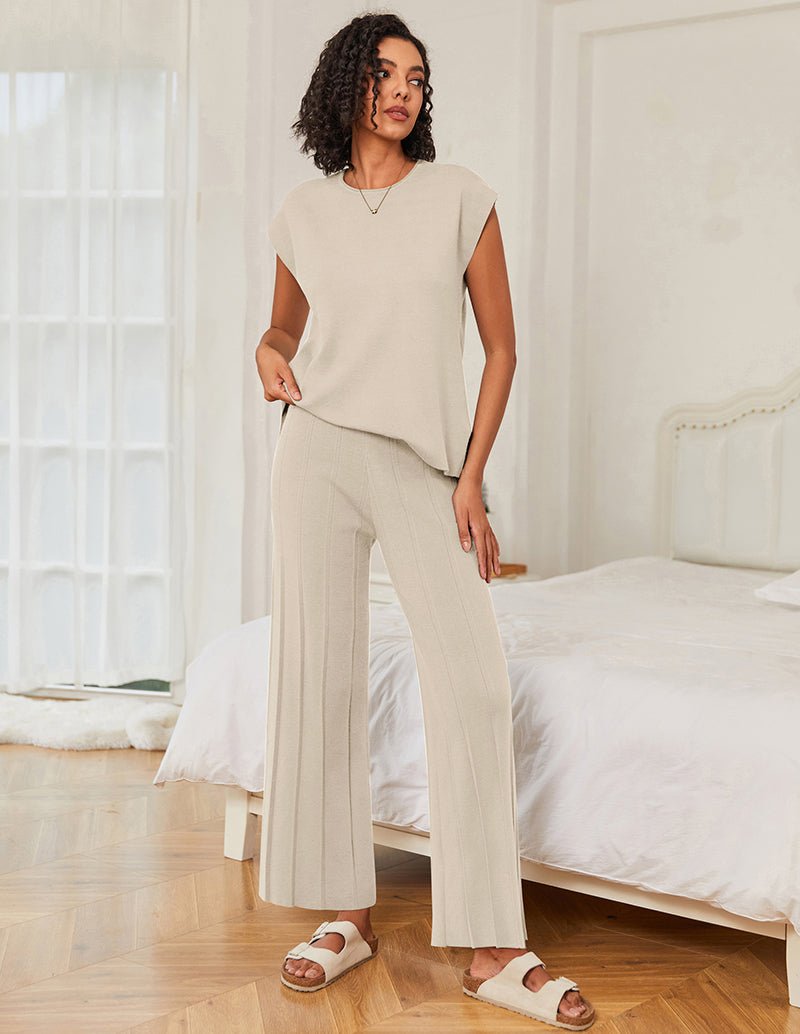
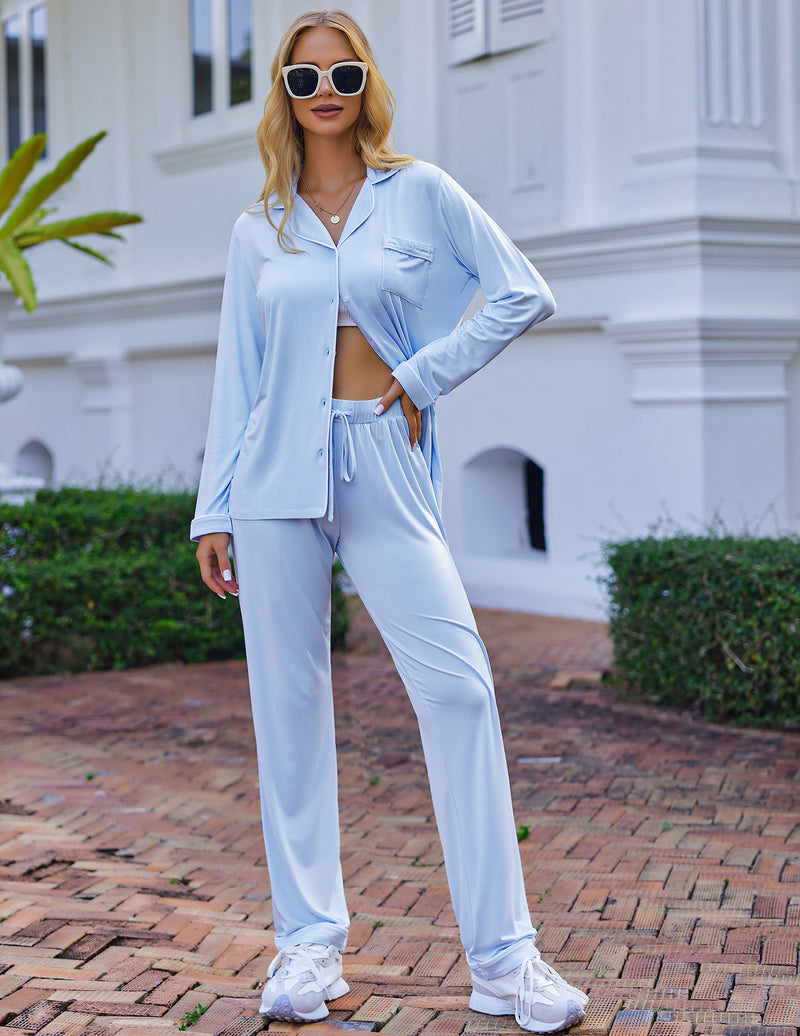
The Ekouaer Button-Down Pajamas Set balances that exact — breathable fabric, full button front for nursing access, and a relaxed fit that works whether you're in bed, on the couch, or answering the door.

Stage Three: Weeks 3–6 and Beyond (1–2 Pairs)
When Recovery Becomes Routine
By week three, most mothers have settled into a pattern. Bleeding has slowed, nursing has become more predictable, and the worst of night sweats has typically passed. This is when pajamas shift from essential recovery gear to everyday comfort wear — and when having one or two pairs that feel genuinely nice starts to matter.
This isn't indulgence. Research on postpartum wellbeing consistently points to the importance of small self-care habits during early motherhood. A 2024 overview published in BMC Pregnancy and Childbirth notes that physical comfort and self-perceived recovery quality are significant predictors of postpartum emotional wellbeing. Getting dressed in something that feels intentional — even if it's just pajamas — registers as a form of care.
Why 1–2 comfort pairs:
One for regular rotation, one for the moments that call for something a little better — a video call with family, a partner coming home after a long week, a morning when you want to feel like yourself again. These aren't daily drivers, but they're not a luxury either.
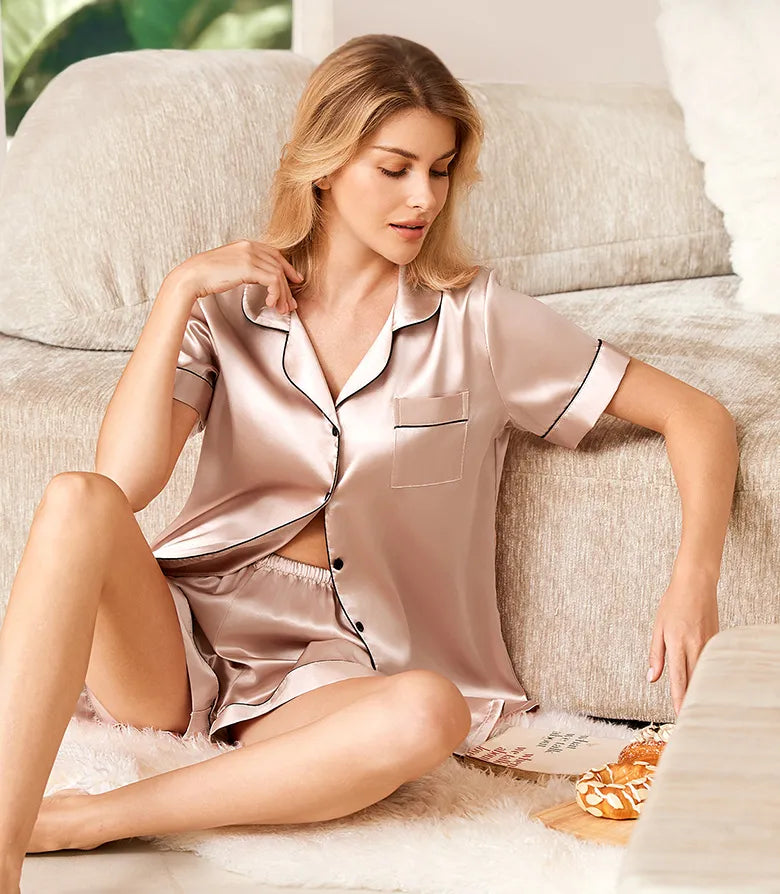
The Ekouaer Silk Satin Short Sleeve Pajama Set works well for this stage — lightweight, smooth against postpartum-sensitive skin, and elevated enough to feel different from the recovery-phase pairs without sacrificing comfort.

The Full Framework at a Glance
|
Stage |
Timeline |
Recommended Pairs |
Key Priority |
|---|---|---|---|
|
Hospital |
Days 1–4 |
2–3 pairs |
Nursing access, dark colors, non-binding waist |
|
Home recovery |
Weeks 1–2 |
2–3 pairs |
Breathability, night sweat management, button front |
|
Ongoing comfort |
Weeks 3–6+ |
1–2 pairs |
Softer fabrics, feeling human again |
|
Total |
|
5–7 pairs |
|
How to Adjust for Your Situation
First-time moms: Err toward the higher end of each range. You don't yet know whether you'll be a heavy night sweater, how often your baby will spit up on you, or whether you'll end up spending 90% of week one on the couch. Having options matters more when you're learning.
Experienced moms: You likely know your patterns. Five pairs is often sufficient if you know you're a light sweater and have laundry access.
C-section recovery: Add 1 pair to your hospital count. The longer stay and incision sensitivity mean more changes and more time in hospital pajamas before transitioning to home styles.
Moms expecting multiples: Add 1–2 pairs across the board. Less time for laundry, more opportunities for spills.
Moms on tighter budgets: Prioritize the hospital and home recovery pairs — those 14 days will be the most demanding. The comfort-upgrade pairs can wait until you know what you actually want.
Breastfeeding moms past 6 weeks: Consider keeping 1–2 nursing-accessible pairs in rotation long-term. Many mothers breastfeed well past the initial recovery period, and having sleepwear that still works for nursing makes a practical difference at 4am.

What to Look for in Maternity Pajama Fabrics
Fabric matters more postpartum than at any other time. Your body is regulating hormones, managing fluid shifts, potentially nursing, and healing — all while trying to sleep in short intervals.
The 2024 PMC systematic review on sleepwear fabrics and sleep quality found that moisture vapor resistance and thermal regulation are the primary fabric factors affecting sleep comfort. Practically, this means:
Cotton and cotton blends: Best all-around for daily rotation. Breathable, machine washable, soft, and widely available. OEKO-TEX certified cotton (like Ekouaer's fabrics) is free from harmful substances, relevant for postpartum skin sensitivity.
Bamboo viscose: Superior moisture-wicking and temperature regulation, particularly helpful for night sweat-prone mothers. Softer than cotton against sensitive skin.
Modal: Exceptionally soft, slightly more stretch than cotton. Good for the comfort-upgrade stage.
Satin/polyester blends: Lower moisture absorption than natural fibers, but lightweight and smooth against skin. Better suited for stage three than active recovery.
For all fabrics: cold wash, gentle cycle, air dry when possible. Frequent washing during postpartum will quickly degrade softer fabrics if you use hot water or high dryer heat.
How to Care for Maternity Pajamas
Postpartum pajamas get washed more than almost any other garment you own. A few habits extend their life significantly:
Wash in cold water to prevent shrinkage and preserve stretch
Turn inside out before washing to protect the outer surface
Use mild, fragrance-free detergent — postpartum skin is often more sensitive
Air-dry satin and delicate fabrics to preserve texture
Avoid bleach, which degrades OEKO-TEX certified fabric coatings
Darker colors hold up better to stain-masking across repeated washes. If you're buying for the hospital stage specifically, prioritize dark navy, charcoal, or deep burgundy over white or pale pastels.
For more options, check out Ekouaer's Maternity Collections and Nursing Collections.
Frequently Asked Questions
Q: Can I manage with fewer pajamas if I do laundry every day?
A: Technically yes — but daily laundry in week one is genuinely difficult. You're recovering from childbirth, establishing feeding, and sleeping in short intervals. Adding daily laundry to that creates stress at exactly the moment when rest should take priority. A small buffer of 2–3 extra pairs removes that pressure entirely, and the investment is modest.
Q: Do I need specific maternity pajamas, or can I use regular ones?
A: Regular pajamas typically lack nursing access, don't accommodate postpartum pads, and aren't designed for the thermal management challenges of the postpartum period. Maternity-specific designs address those specific needs — particularly the nursing access, which becomes practically important at every 2–3 hour feed. That said, any loose, front-opening cotton top can work in a pinch.
Q: When should I buy maternity pajamas?
A: Third trimester, between weeks 28–32, is the practical window. You have enough energy to make considered decisions, and you're close enough to the birth that sizing is more accurate. Buying earlier means your body is still changing significantly; buying in the final weeks often means stress-purchasing whatever is available.
Q: How does C-section recovery change what I need?
A: Add one extra pair to your hospital count and prioritize designs with no waistband or a very soft, wide waistband. Any elastic or structured waistband pressing on the incision site is genuinely uncomfortable. Loose nightgown styles, wrap designs, or soft drawstring waists are all better options for the first 2–3 weeks.
Q: How do I handle sizing when my body is changing?
A: Focus on designs with adjustable features — wrap closures, tie waists, button fronts, or stretch fabrics. Many women are between sizes for the first several weeks postpartum, and fixed sizing is less reliable during this period. Brands with inclusive sizing ranges (S–3XL) and stretch fabric components give you more flexibility as your body settles.
Q: Are higher-priced maternity pajamas worth it?
A: For the hospital and early recovery stage, better fabric quality makes a real difference — how the fabric feels against incision sites, how well it manages night sweats, how many washes it survives before going threadbare. For the comfort-upgrade pairs, cost matters less. Focus investment on the pairs you'll wear most intensively, and be more flexible on the later-stage ones.
Q: What about extended breastfeeding?
A: Many mothers continue nursing well past the six-week mark, and nighttime feeds often continue for months. If that's your plan, factor in 1–2 pairs with durable, accessible nursing openings rather than just coverage-and-comfort designs. The nursing-access feature becomes a long-term practical tool rather than just an early recovery convenience.
Related Guides
Best Nursing Pajamas for Postpartum Comfort (2026) — detailed breakdown of nursing-specific features that matter beyond the hospital
What I Wore Postpartum Week 1: Real Outfits at Home (2026) — real-world postpartum outfit ideas with honest context
What Should You Wear in the Hospital After Giving Birth? — hospital bag clothing checklist with specific product guidance
Bamboo vs Satin vs Cotton Maternity Sleepwear — in-depth fabric comparison for postpartum temperature management
About Ekouaer
Founded in 2014, Ekouaer designs sleepwear and loungewear with an emphasis on functional comfort and fabric safety. All fabrics carry OEKO-TEX® Standard 100 certification. Products have been featured in CNN Underscored, Forbes, and TODAY.com, and recognized with the Berlin Design Award and Mom's Choice Awards.
Ekouaer in the Press
Parade (May 2026): Amazon's Ekouaer 2-Pack Pajama Set Is a Must-Have — described as "winning on all counts" for comfort and value
Parade (March 2026): Amazon's Ekouaer Short-Sleeve Pajama Set Is a Must-Have — over 3,700 five-star ratings; shoppers called it "perfect for hot sleepers"
Yahoo Shopping (March 2026): Shop Amazon's Ekouaer Pajama Set for $12 — featured in Yahoo's spring sleepwear roundup
OpenPR (March 2026): Ekouaer Wins Oprah Daily Editor's Choice and TODAY 2026 Sleep Award — two products recognized by Oprah Daily and TODAY in the same season
GlobeNewswire (March 2025): Ekouaer March Offline Event — LA event coverage noting CNN Underscored and Forbes recognition