
Pajama Fabric: How Your Pajamas Are Made, Step by Step

Most of us judge pajama fabric in about three seconds: we touch it, feel the seam, and decide. What we rarely see is everything that happened before that first touch. When the review editors at Wirecutter set out to find the best pajamas, they slept and lounged in 56 different sets since 2018 before narrowing the field to ten standouts — and their notes kept circling back to the same fundamentals: fabric hand-feel, cut, and construction. Those fundamentals are not accidents of luck. They are the output of a long, deliberate manufacturing process that begins with a sketch and ends with a finished garment that has passed dozens of checkpoints.
The same is true on the safety side. In the United States, sleepwear is regulated more strictly than most everyday clothing. Under the Flammable Fabrics Act, first enacted in 1953, the U.S. Consumer Product Safety Commission (CPSC) enforces mandatory flammability standards for clothing textiles and for children's sleepwear specifically. Fabric lots and finished garments must be tested before they can be sold. In other words, by the time a pajama set reaches a product page, it has already cleared a series of technical gates that most shoppers never hear about.
This guide walks through the full journey of how sleepwear is made — from fiber and fabric selection, through pattern cutting and sewing, to quality control, safety compliance, and final packaging. Whether you are curious about the pajama manufacturing process or you simply want to become a sharper judge of quality the next time you shop for pajama sets, this behind-the-scenes tour will change how you look at that folded stack of softness in your drawer.
Key Takeaways
-
Sleepwear production runs through six core stages: design and sampling, fabric selection, pattern making and cutting, sewing and stitching, quality control, and finishing and packaging.
-
Fabric choice decides most of the comfort. Cotton, modal, bamboo viscose, and satin-woven polyester each behave differently in breathability, drape, and durability — which is why fabric selection is the first major decision, not an afterthought.
-
Cutting precision matters as much as sewing skill. A well-marked marker layout and clean cutting reduce twisting, uneven hems, and wasted fabric later in the line.
-
Quality control is layered, not final. Inline checks during sewing plus a final inspection of stitching, measurements, labels, and appearance catch problems before packing.
-
Safety testing is a legal requirement. In the U.S., CPSC flammability standards apply to clothing textiles and to children's sleepwear, and manufacturers must certify compliance before sale.
How Is Sleepwear Made? The Journey From Sketch to Finished Set
Every pajama set starts life as a design brief rather than a bolt of cloth. A design team defines who the set is for, what season it will be worn in, and what the wearer needs it to do: sleep cool, layer warmly, photograph well for family pictures, or simply survive a hundred wash cycles without pilling. From that brief come sketches, then a tech pack — a technical document that specifies measurements for every size, stitch types, seam allowances, thread counts, button placement, and care-label wording. The tech pack is the single source of truth that the whole factory works from.

The factory then produces a sample, often called a proto sample, which is measured, washed, worn, and revised. It is common for a style to go through two or three sampling rounds before approval. Only after a sample passes both the fit review and the fabric review does it earn a place in the production plan. This staging explains a pattern experienced shoppers eventually notice: good sleepwear brands release fewer styles per season, but the styles that do ship fit predictably across sizes, because the samples were corrected before mass cutting ever began.
Step 1: Pajama Fabric Selection — Where Comfort Is Decided
Fabric selection is the highest-leverage decision in the entire pajama manufacturing process. The fiber determines breathability, the knit or weave determines drape and stretch, and the finishing treatments determine how the fabric feels on night one and after wash twenty.
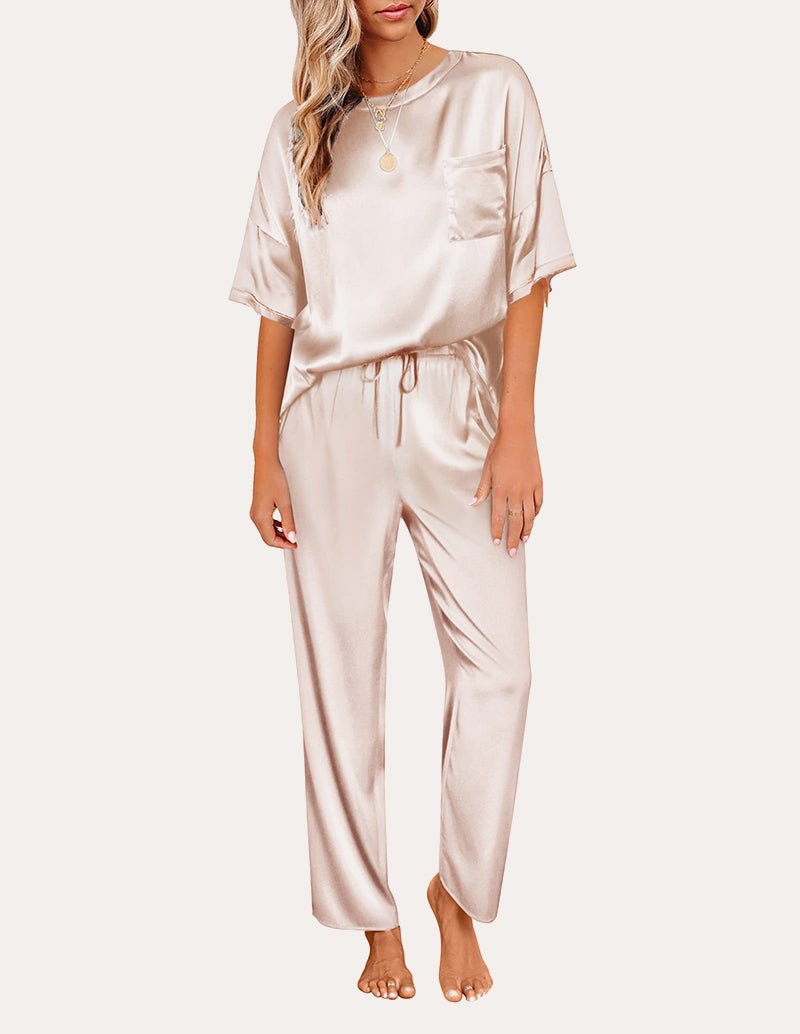
Cotton remains the reference point for sleepwear: breathable, durable, and softening with every wash. Modal and other cellulose fibers, typically derived from beech or eucalyptus pulp, drape more fluidly and feel cooler against the skin, which is why they dominate modern jersey sets. Bamboo viscose has a naturally smooth, slightly cool hand and excellent moisture absorption. Satin, meanwhile, refers to a weave rather than a fiber — a satin-weave fabric, most commonly woven from polyester, produces that fluid, light-reflecting surface people associate with classic button-down pajama sets, while remaining machine-washable and durable. For a deeper comparison of how these materials behave in real wear, the guide to holiday pajamas from flannel to satin breaks down which fabric suits which night of the season.
Before any fabric is approved for bulk production, it is tested for colorfastness (does the dye survive washing and rubbing), shrinkage (does the bolt hold its dimensions after a wash cycle), and weight (grams per square meter, which signals seasonality — a 160 gsm jersey is a summer set, a heavier brushed flannel is a winter one). Labs also check pH and, for fabrics destined for children's sleepwear, flammability performance. A fabric that fails any of these tests never reaches the cutting table, no matter how good it looks in a swatch book.
Step 2: Pattern Making and Precision Cutting
Once fabric is approved, the pattern team translates the tech pack into physical pattern pieces. Grading software scales the base size up and down the size run, and each adjustment is checked against real body measurement charts — a sleeve that scales correctly in length but not in cuff circumference will torment wearers in the larger sizes. Pattern pieces are then arranged into a marker layout, essentially a cutting map that positions every panel to minimize waste while keeping the fabric's grain direction aligned with the garment's drape.

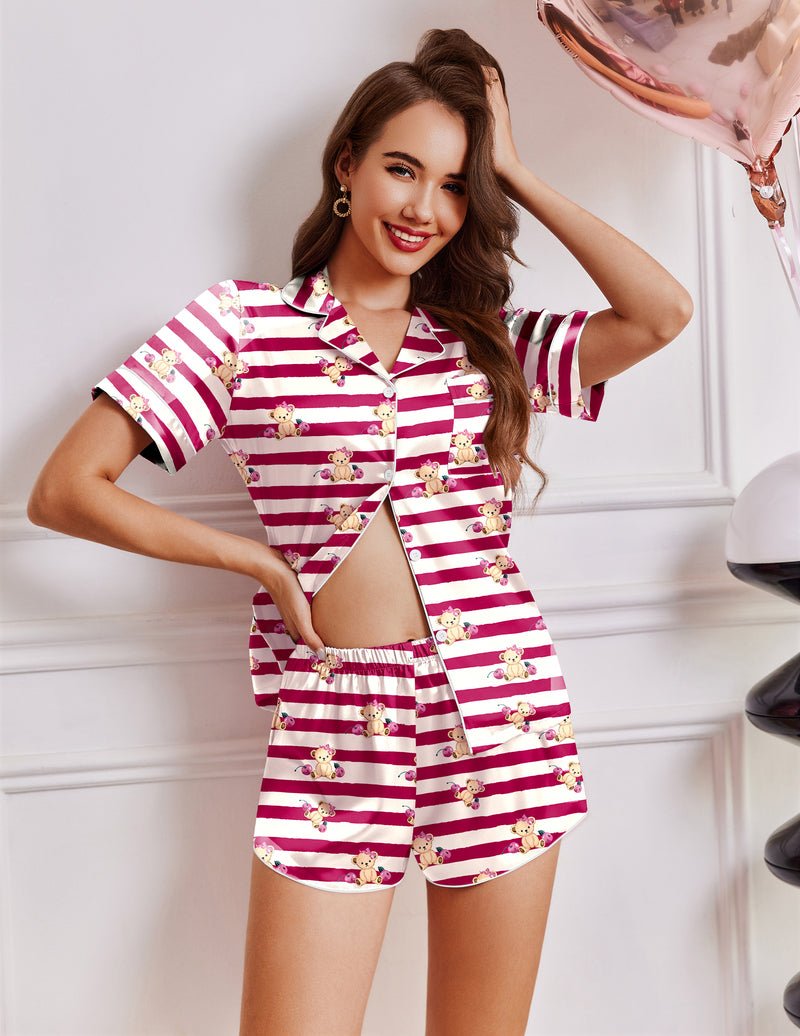
Cutting is where precision becomes visible in the final garment. Fabric is laid in layers on long cutting tables, and panels are cut either by automated blades or by skilled cutters following the marker. When cutting is clean, side seams match, plaids and stripes align across front and back panels, and hems finish evenly. When cutting is rushed, the symptoms show up weeks later as twisted legs, mismatched prints, and waistbands that sit crooked. This is also the stage where prints are matched deliberately: a striped or plaid pajama set costs more effort to cut than a solid color precisely because every panel must line up.
Step 3: Sewing and Stitching — Where Quality Takes Shape
With panels cut, the sewing line takes over. A pajama set moves through a sequence of specialized stations — seams joined, side seams closed, collars attached, cuffs and hems turned, buttonholes made, elastic inserted into waistbands, and drawstrings threaded. Each operator performs one operation thousands of times, which is why consistency at the line level matters more than any single heroic stitch.

Stitch type is a quiet marker of quality. Straight lockstitches form the main seams; overlock stitches encase raw edges so they do not fray in the wash; flat-felled or topstitched seams lie flat against the skin and survive years of laundering without curling. Seam allowance consistency is checked continuously, because a seam that drifts too narrow will split under tension and one that drifts too wide will pucker. Elastic quality is verified by stretch-and-recover tests — a waistband that sags after ten wears started with the wrong elastic, not the wrong wearer. And every trims decision, from buttons to thread, is specified in the tech pack so that a replacement button actually matches the originals.
Inline quality checks happen while the garment is still on the line, not just at the end. Supervisors pull units at random from each station, measure them against the spec, and correct deviations immediately. Catching a drifted seam fifty units into the run is a minor adjustment; catching it five hundred units later is a recall.
Step 4: Sleepwear Quality Control — What Inspectors Check Before Shipping
Final inspection is the last gate before packing, and it is more systematic than most people imagine. Finished garments are checked against an inspection sampling plan, with each unit examined for measurement accuracy, stitching integrity, appearance, and labeling. The table below summarizes the core checkpoints.
|
Checkpoint |
What Inspectors Look For |
Why It Matters |
|---|---|---|
|
Measurements |
Key points compared to the size spec within tolerance |
Guarantees the size chart on the product page is trustworthy |
|
Stitching |
Seam strength, stitch density, no skipped stitches or raw edges |
Determines whether the set survives repeated washing |
|
Appearance |
Symmetry, print alignment, no stains, holes, or pressing marks |
What the wearer sees and feels every single night |
|
Labels |
Care label, fiber content, size, and country-of-origin accuracy |
Legal requirement and the basis for correct home care |
|
Accessories |
Buttons, drawcords, and zips secure and functional |
Prevents loose parts and mid-season failures |
Inspection does not end at the factory door, either. Well-run brands audit returned units and wash-test samples from retail stock, feeding failures back into the next production cycle. That feedback loop — defect data returning to pattern, fabric, and sewing standards — is the real engine of year-over-year quality improvement, and it is why a set you buy this season often fits better than the same style did two years ago.
Safety Standards: The Rules Every Sleep Set Must Follow
Sleepwear carries a regulatory burden that regular daywear does not. In the United States, the CPSC enforces the Flammable Fabrics Act and related standards, which include the Standard for the Flammability of Clothing Textiles (16 C.F.R. part 1610) and dedicated children's sleepwear standards (16 C.F.R. parts 1615 and 1616) covering sizes 0 through 14. The children's standards are designed to protect young wearers from small open-flame sources such as candles, matches, and stoves, and both the fabric and the finished garments must pass flammability testing before sale.
Compliance is documented, not assumed. Manufacturers must issue a certificate of compliance — a General Certificate of Conformity for general-use products or a Children's Product Certificate where applicable — stating that the product has been tested to the relevant federal standard. Tight-fitting garments and infant-size garments that meet specific sizing and labeling definitions are excepted from the children's sleepwear testing requirements, but they remain subject to the general clothing-textiles flammability standard. For shoppers, the practical takeaway is simple: legitimate sleepwear brands treat testing as a gate, and the presence of accurate fiber-content and care labels is one visible sign that the paperwork behind the garment exists.
Finishing, Pressing, and Packaging — The Details You Notice First
After final inspection, garments are pressed or steamed to set their shape, then folded to a standard fold so they arrive looking like the product photos. Poly bags, size stickers, and carton markings are applied according to the packing spec, and cartons are labeled so that warehouse teams can trace any batch back to its fabric lot and sewing line. That traceability is not bureaucratic decoration — if a fabric defect ever surfaces in the field, batch traceability is what allows a brand to identify and correct the affected lot quickly.
Packaging choices also protect the fabric itself. Satin sets are often folded with tissue to prevent creasing marks, brushed flannels are compressed less aggressively to preserve loft, and delicate trims are secured so they do not snag in transit. If your new pajamas arrive crisp, evenly folded, and smelling of nothing but clean fabric, that is the finishing line doing its job.
How to Spot Well-Made Pajamas When You Shop
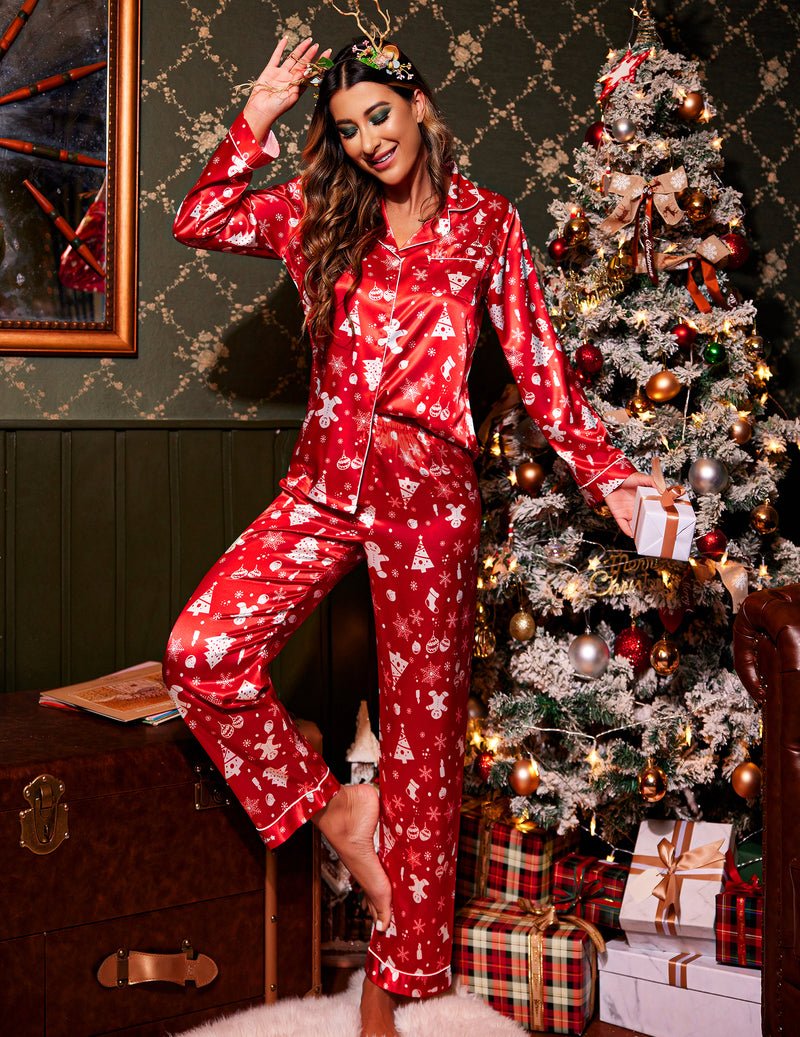
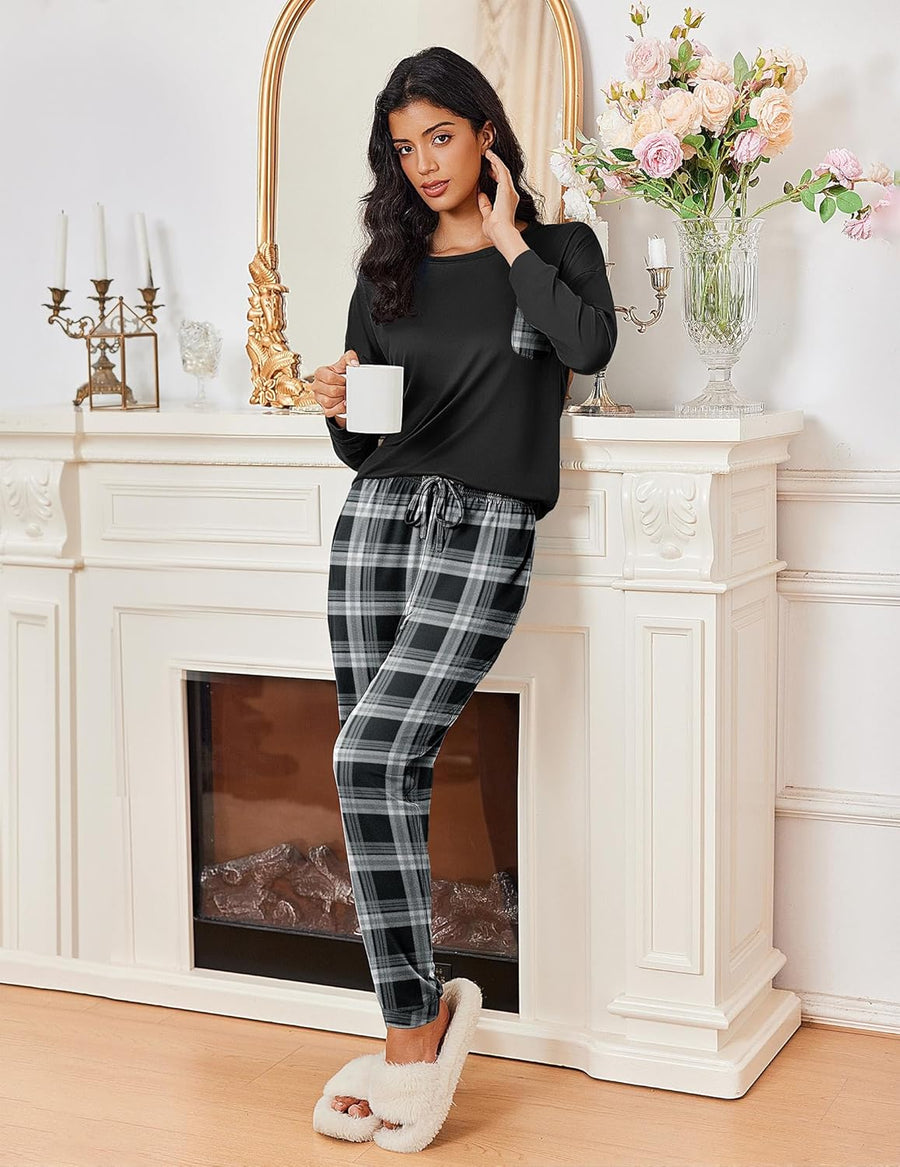
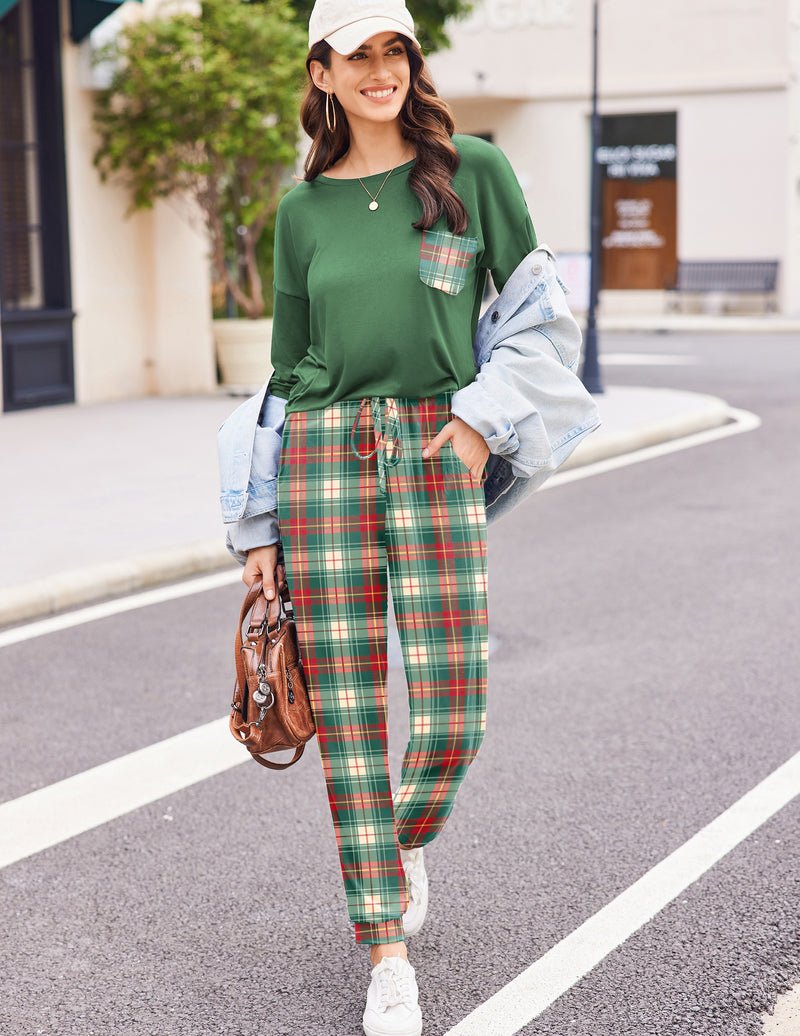
Knowing how pajamas are made turns you into a better judge of them. You do not need a factory tour — a few checks on any product page or in front of a mirror will reveal most of what inspection teams look for:
-
Read the fabric composition first. A precise, complete fiber listing signals a brand that specs its materials; vague descriptions signal the opposite.
-
Check the stitching details in photos. Even, topstitched plackets, tidy collar points, and covered raw edges are the visible fingerprints of a controlled sewing line.
-
Look for pattern-matching on prints. On plaids and stripes, the chest pocket and front placket should line up with the body print — a small detail that requires careful cutting.
-
Trust the size chart, then verify against measurements. Consistent grading across sizes is a sign that pattern grading was done properly, not eyeballed.
-
Read the care label before buying. Clear, realistic care instructions mean the fabric was tested for wash performance, not just for looks.
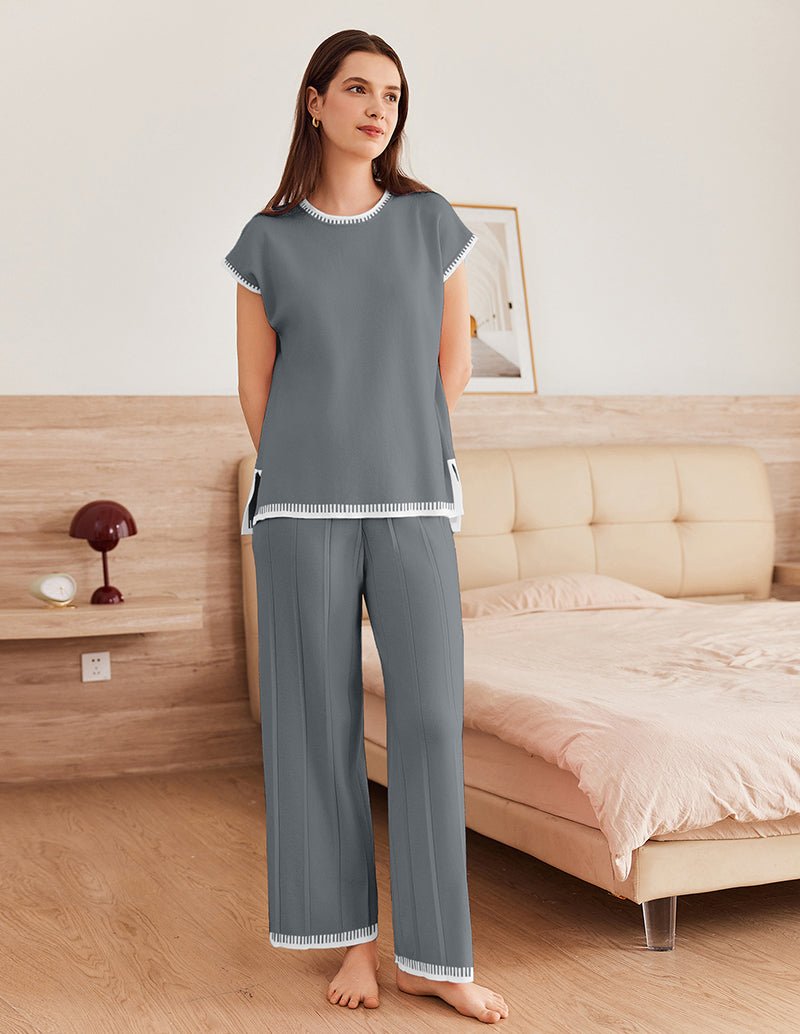
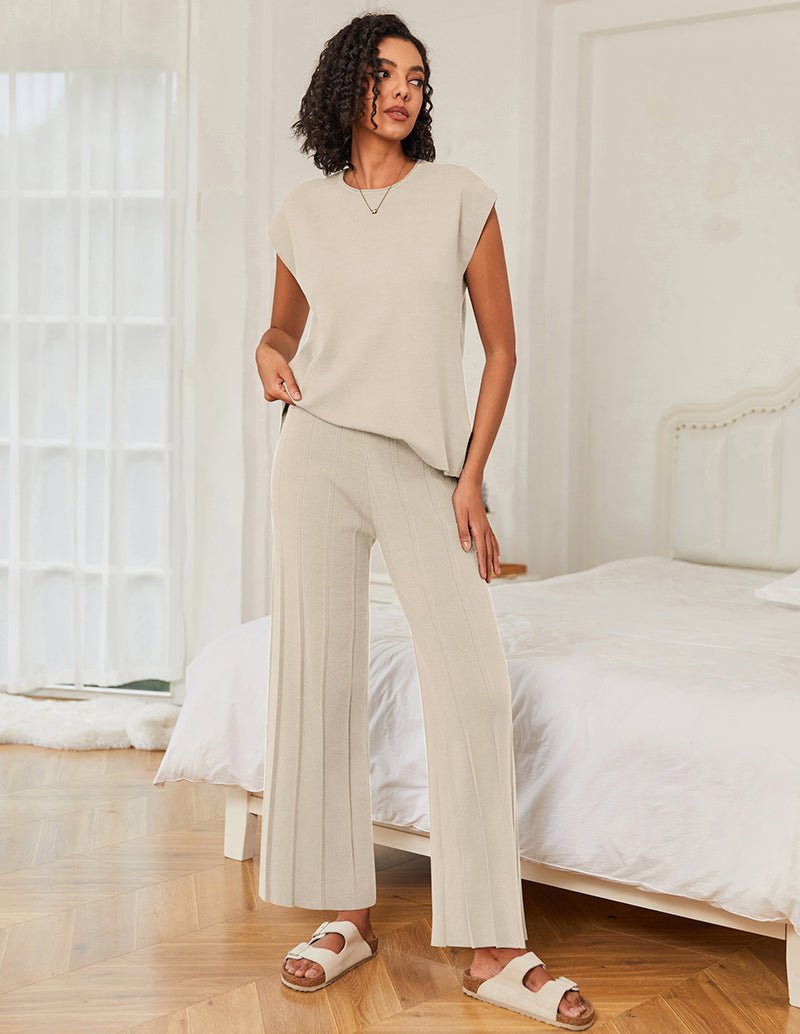
Three current examples show how these fundamentals translate into finished product. The Ekouaer Classic Satin Pajama Set ($42.89 at the time of writing, verified November 19, 2026) pairs a fluid satin-weave surface with a classic button-down silhouette — the two-in-one logic of an easy-care weave and timeless construction. For cooler nights, the long-sleeve knit crew-neck pajama set ($38.99, verified November 19, 2026) shows what a well-graded knit pattern feels like: stretch where the body moves, ribbing that recovers, and seams that stay flat through the wash. And for the classic woven look, the soft long-sleeve button-down lounge set ($39.99, verified November 19, 2026) carries the notch collar, piped trim, and chest pocket that define the traditional pajama silhouette. Each of these sets is the visible end of the same process this article describes: spec, cut, stitch, inspect, certify, pack.
FAQ
Q: What fabric is best for sleepwear?
There is no single best fabric — there is the best fabric for your night. Cotton and cotton flannel lead on breathability and cozy warmth; modal and bamboo viscose excel at a smooth, cool hand-feel with strong moisture absorption; satin-weave polyester delivers a fluid drape, gentle glide, and effortless machine care. Match the fiber to your bedroom temperature and your laundry habits, and the fabric will do the rest.
Q: How are satin pajamas made?
Satin pajamas start with a satin-weave fabric — a weave structure in which weft threads float over multiple warp threads, creating the smooth, light-reflecting surface. The fabric is cut with the same precision as any woven set, but sewing teams handle it with adjusted tension and needle choices because the weave can snag or show pressure marks. Quality satin sets also get extra attention at the hem, where a narrow, even finish keeps the flowing drape intact.
Q: Why does stitching quality matter so much in pajamas?
Sleepwear works harder than almost any garment in your closet: it stretches as you sleep, endures nightly wear, and goes through more wash cycles than most clothing. Strong, even stitching is what stands between a set that lasts years and one that splits at the side seam in month two. Flat, well-finished seams also matter for comfort, because rough or raised seams become irritating over a full night of movement.
Q: What is the difference between cheap and well-made sleepwear?
The difference is rarely one dramatic thing — it is a hundred small consistencies. Well-made sleepwear has verified fabric performance, accurate grading, matched prints, secure trims, and documented safety testing. Less careful production skips those steps, and the gaps show up over time as shrinkage, twisted seams, faded prints, and sagging elastic. That is also why editors who test dozens of sets, like the teams at Oprah Daily and Byrdie, keep landing on construction and fabric as the deciding factors rather than price alone.
Q: How should pajamas fit?
Pajamas should allow free movement without excess fabric that twists in bed. Woven sets with button-down tops are typically cut with a relaxed, classic fit through the body and arm; knit sets are meant to skim the body with stretch doing the work. Check the brand's specific size chart rather than assuming your daytime size, and pay attention to inseam and sleeve length — those two measurements drive most of the comfort difference between a good fit and a distracting one.
Q: How do I care for pajamas so they last?
Wash according to the care label, close buttons and zippers first, and turn prints or satin sets inside out to protect the surface. Cool or warm water preserves color and elastic far better than hot; tumble low or hang dry where the label allows. Keep satin sets away from rough items in the drum, and fold rather than hang heavy knits so the shoulders keep their shape. Followed consistently, these habits roughly double the comfortable life of a set.
Related Reading
-
Holiday Pajamas: How to Pick From Flannel to Satin for Every Night of the Season
-
Satin Pajama Sets: How to Choose the Shine, the Fit, and the Two-in-One Styles That Work All Year
-
Is It the Best Day to Buy Sleepwear Online? How to Time Pajama Sales Like a Buyer
-
Plaid Pajamas: How to Choose Checks, Flannel, and Matching Options
About Ekouaer
Ekouaer designs and manufactures comfortable, attainable sleepwear and loungewear for the whole family — from satin button-down classics and soft knit sets to matching family pajamas for the holiday season. Every style is developed through the same disciplined process described in this guide: considered fabric selection, precise pattern work, careful stitching, and layered quality control, so that dependable comfort arrives at your door night after night. Explore the full range of lounge sets and sleepwear essentials to find the set that fits the way you actually rest.
Ekouaer in the Press
-
Oprah Daily included Ekouaer in its editor-tested roundup of the best pajamas for women (accessed November 19, 2026), praising sets that balance comfort, quality, and price.
-
Wirecutter (The New York Times) tested 56 pajama sets since 2018 for its best pajamas guide, and its findings keep pointing to fabric hand-feel and construction as the qualities that separate standouts.
-
StyleCaster ranked the softest women's pajamas, editor-tested (published September 22, 2026), noting that the softest materials for sleepwear are silk, Pima cotton, Tencel modal, and cotton flannel.
-
Byrdie published an editor-tested guide to the best pajamas for a cozy, comfortable sleep (updated November 9, 2026), evaluating sets on warmth, coolness, fabric, durability, and fit after washing.