
Satin vs. Silk Pajamas: What's Actually the Difference?

Walk into any sleepwear section — online or in a store — and you'll see "silk pajamas" and "satin pajamas" sitting right next to each other, sometimes priced identically, often looking nearly identical. It's genuinely confusing. And the labeling doesn't always help: plenty of products get marketed as "silk satin" in a way that blurs the two together.
Here's the thing: silk and satin are not the same thing at all. One is a fiber. The other is a weave. Understanding the difference will save you money, help you set the right expectations, and make sure you end up with pajamas you actually love sleeping in.
The Core Difference: Fiber vs. Weave
This is the most important thing to understand, and once you get it, everything else makes sense.
Silk is a fiber — a natural protein fiber produced by silkworms (most commonly the mulberry silkworm, Bombyx mori). It's harvested from cocoons, spun into threads, and woven into fabric. Silk the fiber can be woven in many different patterns — including the satin weave.
Satin is a weave — a specific textile construction technique, not a material. As MasterClass explains, satin weave is created when warp yarns are "floated" over multiple weft yarns, which is what creates that signature glossy surface on one side and a duller, matte finish on the other. Satin can be made from silk, polyester, nylon, rayon, or almost any long-filament fiber.
So when you see "polyester satin pajamas" — that's a satin-weave fabric made from polyester fibers. And when you see "silk satin" — that technically means a satin weave made from actual silk fibers, the most luxurious and expensive version. Most affordable "silk-feel" pajamas on the market are polyester satin, not true silk.
Neither one is a scam. They're just different things.
How They Look and Feel: Side by Side
|
Feature |
Real Silk |
Polyester Satin |
|---|---|---|
|
Surface sheen |
Luminous, fluid — shines on both sides |
High gloss on one side, flat/dull on reverse |
|
Hand feel |
Soft, smooth, warms to body temp quickly |
Smooth and slippery; stays cooler longer |
|
Drape |
Fluid and natural, moves with the body |
Good drape, slightly stiffer |
|
Breathability |
Excellent — natural temperature regulation |
Moderate — less breathable than silk |
|
Moisture wicking |
Moderate — absorbs and releases slowly |
Lower — synthetic fibers retain moisture |
|
Skin & hair friction |
Extremely low; protein structure is uniquely smooth |
Low compared to cotton; higher than real silk |
|
Price |
Significantly higher |
Very affordable |
|
Care |
Hand wash or dry clean |
Machine washable on a gentle cycle |
|
Durability |
Long-lasting with proper care |
Very durable; withstands regular washing |
The "Silk Satin" Label: What It Really Means
You'll see this term everywhere — "silk satin pajamas," "silky satin," "silk-feel satin" — and it can mean very different things depending on the brand.
"Silk satin" technically refers to a satin weave made from real silk fibers — the premium option at a premium price.
"Silky satin" or "silk-feel satin" almost always signals a polyester satin that mimics the look and feel of silk. Most sleepwear in the $30–$80 range that describes itself as "silk" or "silky" is polyester satin. This isn't deceptive — the fabric genuinely feels silk-like — but it's important to know what you're buying before you spend it.
How to tell the difference in practice: Check the care label. Real silk will say "100% silk" or "100% mulberry silk." Polyester satin will say "100% polyester" or list a polyester blend. If a label says "satin" with no fiber content specified, it's almost always synthetic.
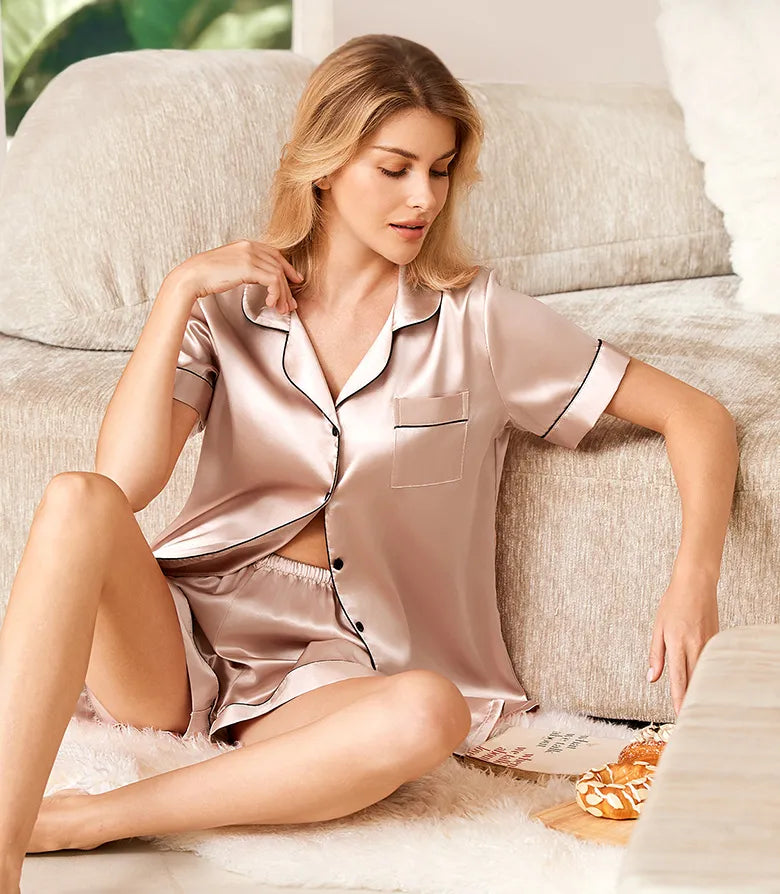
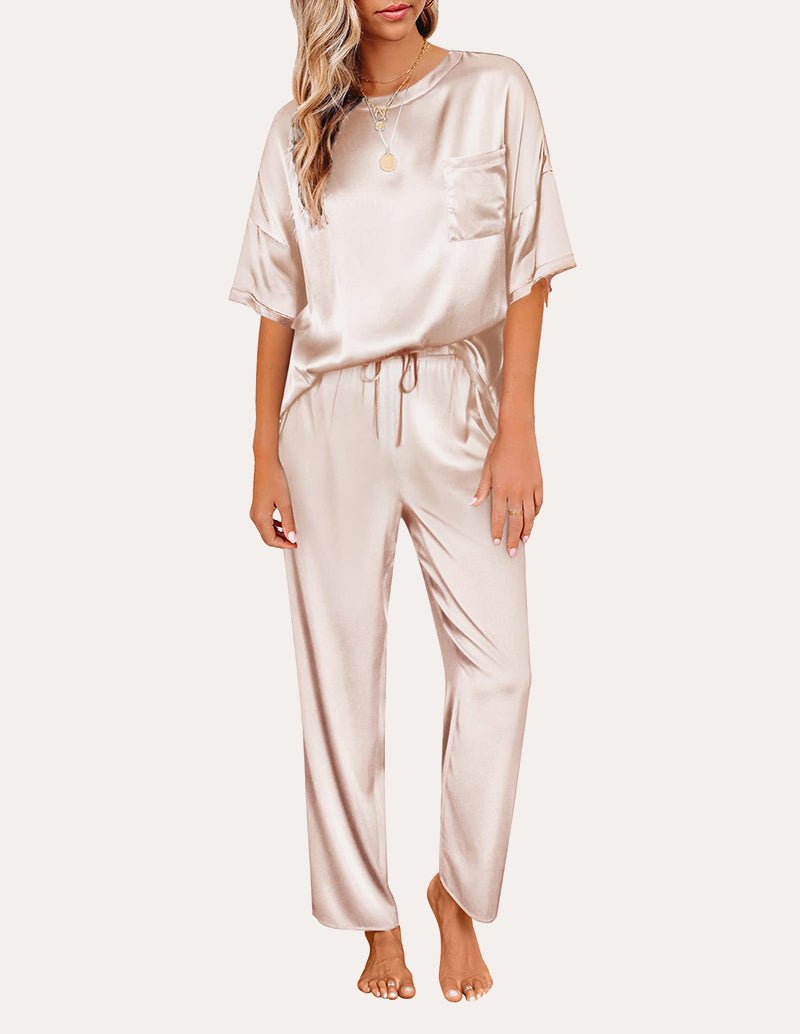
At Ekouaer, our satin pajamas use high-quality polyester satin — designed to deliver that luxurious look and feel at a price that makes sense for everyday wear.
Which Is Better for Sleep?
It depends on what you're prioritizing — and your answer to that question is probably different from someone else's.

Choose Real Silk If:
-
You want the pinnacle of natural breathability and temperature regulation
-
You have very sensitive, reactive, or acne-prone skin
-
You're willing to invest in a premium piece and commit to careful hand-washing
-
The beauty sleep benefits matter to you — for hair, skin, or both
Real silk's protein fiber structure is uniquely smooth at a microscopic level. Board-certified dermatologist Dr. Anna Chacon explains to NBC News: "Silk is naturally hypoallergenic... silk pillowcases are gentler on the skin of people with acne or sensitive skin than rough cotton ones. The friction from cotton on sensitive skin can create more inflammation, making acne, eczema, or other skin conditions worse." The same principle applies to silk sleepwear.
For a full breakdown of whether silk is worth the investment for you, see our guide: Are Silk Pajamas Worth It?
Choose Polyester Satin If:
-
You want that luxurious look and silky feel at an accessible price
-
You prefer machine-washable sleepwear you don't need to baby
-
You want a wide range of colors, prints, and styles to choose from
-
You run cool at night and want a smooth, lightweight fabric
Quality polyester satin has genuinely improved. A well-made set — tight weave, good weight, quality construction — feels luxurious against skin and looks stunning. The difference between satin and silk is most noticeable when you hold both side by side in person. In photos, and for most wearers on most nights, they're nearly identical in experience.
The Skin and Hair Benefit: What the Evidence Actually Says
This is where the "silk vs. satin" debate gets the most heated — and where it's worth being precise about what's actually proven.
The friction argument is real and well-documented. Both silk and quality satin are smoother than cotton, which means less mechanical friction against skin and hair during sleep. Less friction means less hair breakage, less sleep creasing on skin, and a gentler surface for sensitive or reactive skin.
In laboratory testing cited by Slip — one of the most referenced silk brands in dermatology circles — silk pillowcases created 43% less friction on average compared to widely available cotton pillowcases. This is a real, measurable difference, not marketing copy.
Real silk has a genuine edge over polyester satin, specifically because of its protein fiber structure. Board-certified dermatologist Dr. Brendan Camp, speaking to AOL/Hearst, explains: "Silk minimizes friction on the skin, which means less tugging and pulling, and less abrasive forces on the skin. It is hypothesized that this is what makes silk good for preventing wrinkle formation." Polyester satin reduces friction compared to cotton, but not to the same degree as real silk.
Dr. Elisa Yang, a New York dermatologist, also notes that silk doesn't absorb moisturizers the way cotton does — meaning your skincare stays on your skin overnight rather than transferring to your pillowcase or pajamas.

For most people, quality polyester satin delivers most of the practical benefits at a fraction of the cost. The improvement from cotton to satin is real and immediately noticeable. The improvement from satin to silk is subtler — most meaningful for people with fine or fragile hair, reactive skin conditions, or serious skincare routines.
What to Look for When Buying Satin or Silk Pajamas
Not all satin — or silk — is created equal. Here's what actually separates quality from disappointing:
For real silk:
-
Momme weight is your primary quality indicator. For sleepwear, 19–22 momme is considered ideal — substantial enough to feel luxurious without being heavy. Below 16mm feels thin; above 25mm is better suited to structured garments.
-
Look for "100% mulberry silk" on the label — mulberry is the gold standard for quality and consistency.
-
Verify the certifications: OEKO-TEX Standard 100 confirms the fabric is free of harmful substances.
For polyester satin:
-
A tighter weave means a smoother surface, better drape, and longer durability.
-
Check construction details: French seams or bound seams (no raw edges), secure button closures, elastic waistbands with a soft inner lining.
-
Flip the fabric: quality satin has a clear difference between the glossy face and the matte back. If both sides look identical and dull, the weave quality is low.
How to Care for Each
Care is where satin and silk diverge most sharply in practice — and for many people, it's the deciding factor.
Real silk:
-
Hand wash in cool water with a pH-neutral, silk-safe detergent
-
Never use regular laundry detergent — too alkaline for protein fibers
-
Roll in a towel to remove excess water; never wring
-
Air dry flat, away from direct sunlight
-
Iron on the lowest setting, inside out, while slightly damp
-
If labeled machine-washable: delicate cycle, mesh bag, cold water only
For the full step-by-step, see: How to Wash Silk Pajamas Without Ruining Them

Polyester satin:
-
Machine wash on a gentle or delicate cycle in cool or warm water
-
Use a mild detergent; avoid fabric softener (it flattens the weave's texture over time)
-
Wash in a mesh laundry bag to prevent snagging
-
Tumble dry on low heat, or air dry — both work fine
-
Iron on a low setting if needed; avoid high heat
The practical advantage of polyester satin for daily sleepwear is hard to overstate: wash it, dry it overnight, wear it again. Real silk demands more attention — not a dealbreaker, but a genuine lifestyle consideration.
The Bottom Line
Satin and silk aren't competitors — they're different things that happen to look similar and share some qualities. Real silk is a natural luxury with genuine, dermatologist-validated performance advantages for skin and hair, a care routine that demands respect, and a price tag to match. Polyester satin is an accessible, durable, machine-washable option that delivers a genuinely beautiful look and feel for everyday wear.
Most people reach for satin pajamas because they want to feel a little luxurious at the end of a long day — and quality satin absolutely delivers on that. Real silk is for when you want to go all-in, or when skin and hair benefits are a serious priority.
Either way, you deserve to sleep in something that feels good.
→ Shop Ekouaer Satin Pajama Sets
Frequently Asked Questions
Q: Is satin the same as silk?
A: No. Silk is a natural fiber made from silkworm cocoons. Satin is a weave pattern — a construction technique that can be applied to silk, polyester, or other fibers. Most affordable "satin" sleepwear is polyester, not silk. Always check the care label for fiber content.
Q: Are silk pajamas worth the extra cost?
A: It depends on your priorities. Real silk offers genuine breathability, natural temperature regulation, and dermatologist-backed skin and hair benefits — but requires careful maintenance and a higher investment. We cover this fully in: Are Silk Pajamas Worth It?
Q: Which is better for hot sleepers — silk or satin?
A: Real silk has better natural breathability and temperature regulation than polyester satin, making it the stronger choice for active moisture management. On a budget, Tencel or bamboo fabrics may actually outperform polyester satin for hot sleepers — see our Bamboo vs. Cotton guide for more.
Q: Does silk actually help with hair and skin?
A: Yes — and this is one of the better-supported claims in beauty sleep. Multiple board-certified dermatologists confirm that silk's low-friction surface reduces mechanical stress on skin and hair overnight. Dr. Brendan Camp notes it minimizes the tugging and abrasive forces that contribute to sleep lines and wrinkle formation over time. Polyester satin also reduces friction compared to cotton, but to a lesser degree.
Q: Can you put satin pajamas in the washing machine?
A: Polyester satin: yes, on the gentle cycle in a mesh laundry bag. Real silk: only if the care label specifically says machine-washable. Otherwise, hand wash.
Q: Why do satin pajamas feel cool to the touch?
A: Polyester satin conducts heat away from skin on initial contact, which is why it feels cool right away. Real silk also feels cool at first but quickly adapts to your body temperature, making it more temperature-neutral over a full night's sleep — which is why it performs better for hot sleepers over the long term.
Q: What does "momme" mean for silk pajamas?
A: Momme (mm) is the weight measurement for silk — the higher the number, the denser and more substantial the weave. For sleepwear, 19–22 momme is the ideal range. It's the most useful quality indicator when shopping for real silk, and any reputable silk brand will list it.
Related Reading
-
Are Silk Pajamas Worth It? (2026 Ultimate Luxury & Comfort Guide)
-
How to Wash Silk Pajamas Without Ruining Them: A Step-by-Step Care Guide
-
Best Babydoll Nightgowns: Comfortable & Silky Styles for Every Body
-
Bamboo Pajamas vs. Cotton Pajamas: Which One Actually Sleeps Better?
About Ekouaer
Founded in 2014, Ekouaer designs sleepwear and loungewear with an emphasis on functional comfort and fabric safety. All fabrics carry OEKO-TEX® Standard 100 certification. Products have been featured in CNN Underscored, Forbes, and TODAY.com, and recognized with the Berlin Design Award and Mom's Choice Awards.
Ekouaer in the Press
-
Parade (May 2026): Amazon's Ekouaer 2-Pack Pajama Set Is a Must-Have — described as "winning on all counts" for comfort and value
-
Parade (March 2026): Amazon's Ekouaer Short-Sleeve Pajama Set Is a Must-Have — over 3,700 five-star ratings; shoppers called it "perfect for hot sleepers"
-
Yahoo Shopping (March 2026): Shop Amazon's Ekouaer Pajama Set for $12 — featured in Yahoo's spring sleepwear roundup
-
OpenPR (March 2026): Ekouaer Wins Oprah Daily Editor's Choice and TODAY 2026 Sleep Award — two products recognized by Oprah Daily and TODAY in the same season