What Is Tencel Fabric? Everything You Need to Know Before Buying Sleepwear

If you've been shopping for pajamas lately, you've probably spotted "Tencel" on more and more tags — and wondered: what exactly is this stuff, and why does everyone seem obsessed with it?
You're not alone. Tencel has quietly become one of the most talked-about fabrics in sleepwear, and honestly? It deserves every bit of the hype. We're going to break it all down for you — what Tencel fabric actually is, how it's made, why it feels so dreamy against your skin, and whether it's worth choosing over your tried-and-true cotton pajamas.
Grab a cup of tea. Let's get into it.
What Is Tencel Fabric?
Tencel is a brand name for lyocell fiber, a type of fabric made from sustainably sourced wood pulp — most often from eucalyptus trees. It was developed by the Austrian company Lenzing AG, which holds the trademark. You might also see it listed as "lyocell" on some labels; when it says Tencel specifically, it means it's the certified Lenzing version with verified production standards.
Here's the quick version of how it's made:
Wood pulp is dissolved in a non-toxic solvent (NMMO)
The resulting solution is pushed through fine spinnerets to form fibers
The solvent is recovered and reused in a closed-loop process (more on this below)
The fibers are spun into yarn and woven or knitted into fabric
What makes this process remarkable is that roughly 99% of the solvent used is recaptured and recycled, according to Lenzing's own production documentation. Compare that to conventional rayon/viscose production, which releases significant chemical waste into the environment, and you start to see why Tencel is considered the genuinely greener choice — not just marketing.
What Does Tencel Fabric Feel Like?
This is usually the first question people ask — and it's the right one.
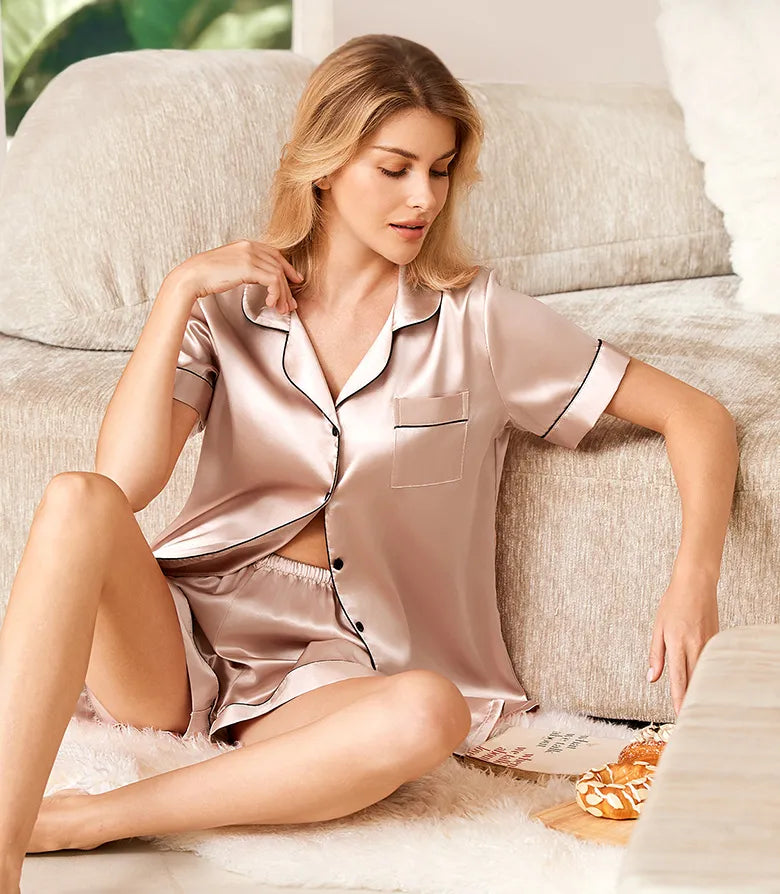
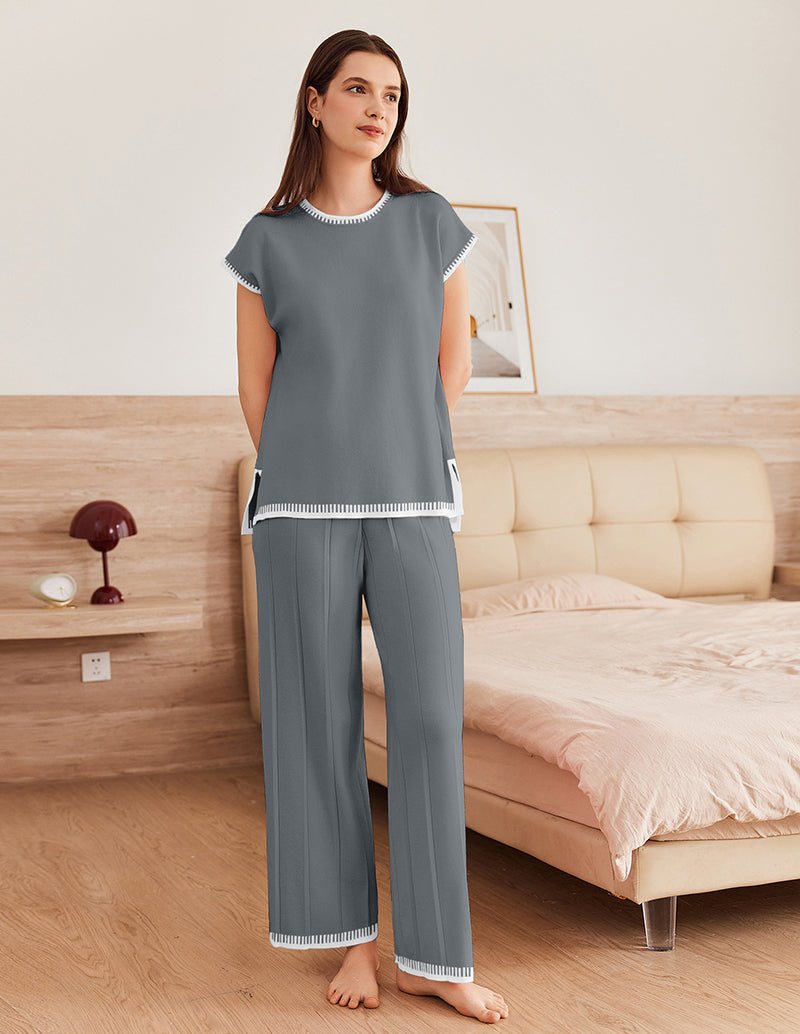
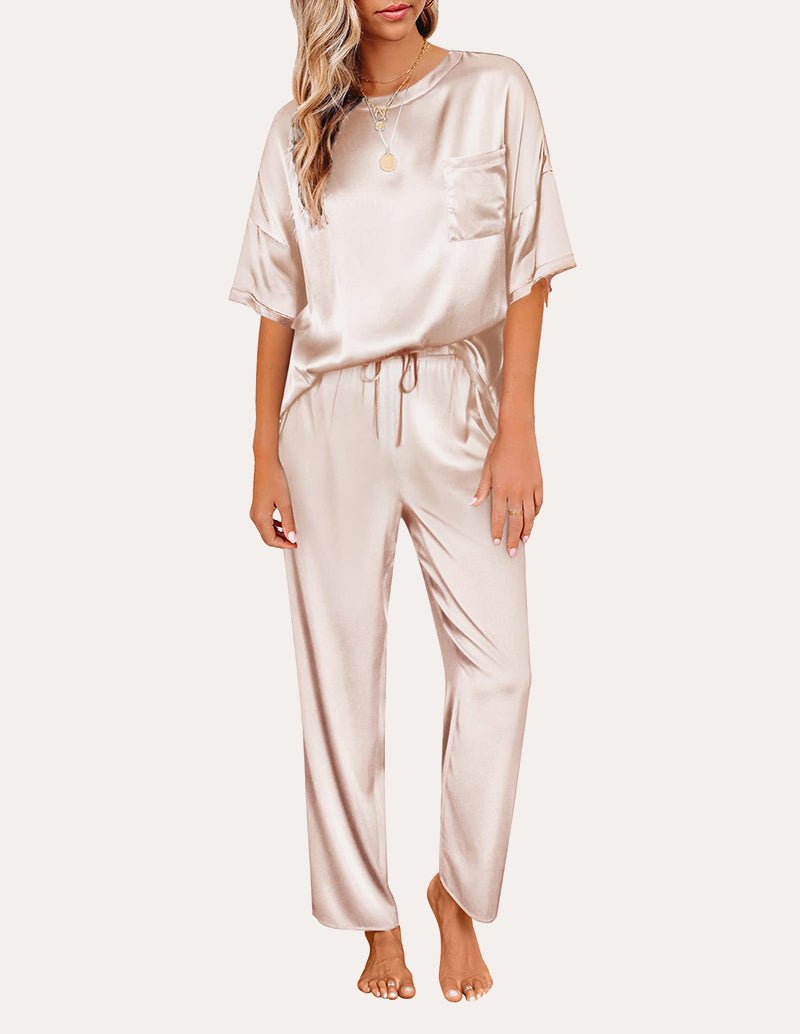
Tencel has a naturally smooth, silky hand feel that's softer than most cotton right from the first wash. It drapes beautifully, has a subtle sheen (without looking overly shiny or synthetic), and feels genuinely lightweight against your skin.
If you've ever worn a really good quality modal shirt and thought why can't all fabric feel like this? — Tencel is very much in that family. Many people describe it as a halfway point between cotton and silk: it has the breathability of cotton and the smooth, flowing feel of silk, without the high price tag or the delicate care routine.
NBC News Select called the West Elm Tencel sheet set one of the best purchases of the year, describing it as feeling "like butter on your skin every time you crawl into bed" — which tracks with how Tencel sleepwear feels too.
For sleepwear specifically, that combination is kind of perfect.
Tencel vs. Cotton: Which Is Better for Pajamas?
Let's be real — cotton has been the gold standard for pajamas forever. So is Tencel actually better, or is this just marketing?
Here's an honest, side-by-side look:
|
Feature |
Tencel |
Cotton |
|---|---|---|
|
Softness |
Softer from day one; stays soft after washing |
Softens over time; can feel rough initially |
|
Breathability |
Excellent — actively wicks moisture |
Good — but absorbs and holds moisture |
|
Moisture management |
Draws moisture away from skin quickly |
Absorbs moisture but holds it longer |
|
Temperature regulation |
Great; adapts to body temperature |
Good for cool weather; can feel hot in summer |
|
Eco-footprint |
Lower water use, closed-loop production |
Water-intensive; conventional cotton uses pesticides |
|
Durability |
Good with proper care; slightly delicate when wet |
Very durable; handles rough washing well |
|
Pill resistance |
High — resists pilling |
Medium — pills over time |
|
Price |
Slightly higher |
More affordable at entry level |
|
Best for |
Hot sleepers, sensitive skin, year-round wear |
Cold-weather sleepers, budget-conscious buyers |
According to independent bedding research published by Or & Zon's sleep fabric guide (updated April 2026 and cross-referenced against ASTM & ISO thermal comfort research), Tencel lyocell ranks alongside linen as the best-performing fabric category for hot sleepers — specifically because of its moisture regain rate of 11–13% and superior moisture-wicking performance versus cotton.
The verdict? If you run warm at night, have sensitive skin, or find yourself waking up sweaty, Tencel is genuinely worth the upgrade. Cotton wins on durability and cold-weather coziness.
Tencel vs. Silk: Is It Worth Paying More for Real Silk?
Silk sounds luxurious — and it is. But it's also expensive, requires hand-washing, and can be surprisingly fragile. Here's how Tencel stacks up:
|
Feature |
Tencel |
Silk |
|---|---|---|
|
Feel |
Smooth, soft, slightly matte sheen |
Buttery, cool, high luster |
|
Breathability |
Excellent |
Excellent |
|
Moisture wicking |
Strong |
Moderate |
|
Care |
Machine washable (gentle cycle) |
Hand wash or dry clean recommended |
|
Durability |
More durable |
Delicate; snags easily |
|
Price |
Mid-range |
Premium |
|
Eco-friendliness |
Very sustainable |
Depends on sourcing; silkworm farming intensive |
Bottom line: Real silk is beautiful, but Tencel gives you much of that luxury feel at a fraction of the price — and you can actually toss it in the washing machine without a mini anxiety attack. For daily sleepwear, Tencel wins on practicality.
Why Is Tencel So Good for Sleepwear Specifically?
Not all fabrics are created equal when it comes to sleep, and Tencel has a few specific properties that make it stand out in the pajama category.
It Keeps You Cool (and Warm When You Need It)
Tencel lyocell has a higher thermal conductivity than cotton, meaning heat moves away from your body faster. Its moisture regain rate (around 11–13%) is on par with linen, which means it actively pulls sweat away from your skin and releases it into the air rather than holding it against you.
For hot sleepers, people going through perimenopause, or anyone who runs warm at night, this difference is genuinely felt — not just a spec on a label.
It's Incredibly Gentle on Skin
Tencel has a naturally smooth fiber structure that doesn't have the microscopic rough edges of some cottons and most synthetics. This makes it a particularly good choice for:
Sensitive skin or eczema — the smoothness reduces friction and irritation overnight
Dry skin — Tencel's moisture management helps maintain your skin's natural hydration rather than drawing from it
Acne-prone skin — reduced friction and better breathability mean less heat and sweat build-up against your face and body
It Resists Odor-Causing Bacteria
One of Tencel's lesser-known advantages: its moisture-wicking action keeps the fabric drier, which means bacteria have less of a favorable environment to grow in. Your pajamas stay fresher between washes — a practical benefit that compounds over the life of the garment.
It Looks Gorgeous
Tencel has a lovely drape and a gentle luster that photographs beautifully and looks elevated without being fussy. It moves with your body rather than bunching or clinging — which matters more than it sounds when you're trying to actually rest.
Is Tencel Fabric Sustainable?
This is one area where Tencel genuinely earns its eco-friendly reputation — beyond the marketing.
The wood source is certified. Lenzing sources wood pulp primarily from sustainably managed eucalyptus forests certified by the Forest Stewardship Council (FSC). Eucalyptus grows quickly, doesn't require irrigation in most regions, and is naturally pest-resistant.
The production process is verified as a closed-loop. Lenzing's TENCEL™ brand page confirms that approximately 99% of the chemical solvent used in production is recaptured and reused — a stark contrast to conventional viscose/rayon production, which is notoriously polluting and a significant source of chemical discharge.
Water usage is meaningfully lower. Eucalyptus requires significantly less water than cotton to grow — an important difference given water scarcity concerns in major cotton-growing regions.
Is it perfect? No. Production still requires energy, and blended fabrics (Tencel mixed with polyester) are not fully biodegradable. But relative to most fabric options on the market, it's one of the more responsibly produced choices available.

How to Care for Tencel Pajamas
Tencel is not high-maintenance. Follow these basics, and your pajamas will stay soft and beautiful for years.
Washing:
Machine wash on a gentle or delicate cycle
Use cold or lukewarm water — avoid hot water, which can cause shrinkage
Use a mild detergent; skip bleach and optical brighteners
Turn garments inside out to protect the surface
A mesh laundry bag helps prevent snagging
Drying:
Tumble dry on low heat — fine for most Tencel items
Remove promptly to prevent wrinkles from setting in
Air drying, flat or hanging, is ideal for maximum longevity
Never use high heat — it weakens the fibers over time
Ironing:
Tencel resists wrinkling, but if needed, use a low to medium heat setting
A steamer works beautifully and is gentler than a flat iron
What to avoid:
High heat in any form
Rough wringing when wet — Tencel is weaker when saturated
Fabric softeners — they coat the fibers and reduce breathability over time
Who Should Choose Tencel Pajamas?
Tencel sleepwear is a particularly good fit if you:
Sleep hot or experience night sweats regularly
Have sensitive, dry, or easily irritated skin
Are pregnant or going through perimenopause or menopause
Care about making more sustainable wardrobe choices
Want pajamas that feel genuinely luxurious but are easy to care for
Are tired of cotton pajamas that pill, shrink, or lose their shape after a season
It's also the right call if you just want to feel really good at the end of a long day. That's reason enough.
The Bottom Line
Tencel is not hype. It's a genuinely well-designed fabric that delivers on its promises: softer than cotton from the start, meaningfully better at moisture management, gentler on sensitive skin, and produced through a more responsible process than most alternatives. For sleepwear specifically, it hits a sweet spot that very few fabrics reach — luxurious feel, practical care, year-round versatility.
If you've been sleeping in cotton out of habit and waking up warmer than you'd like, Tencel is the most direct upgrade you can make. The difference is noticeable from the first night.
→ Shop Ekouaer Women's Sleepwear Collection
Frequently Asked Questions
Q: Is Tencel the same as Lyocell?
A: Tencel is a brand name owned by Lenzing AG for their certified lyocell fiber. All Tencel is Lyocell, but not all Lyocell is Tencel-branded. The Tencel trademark guarantees you're getting Lenzing's specific certified, closed-loop production version.
Q: Does Tencel shrink?
A: Tencel can shrink if exposed to high heat. Wash in cold or warm water and dry on low heat (or air dry), and the shrinkage is minimal. Avoid hot wash cycles.
Q: Is Tencel good for eczema or sensitive skin?
A: Yes — the smooth fiber structure and moisture-wicking properties make Tencel one of the better fabric choices for sensitive or eczema-prone skin. It's gentler than most conventional cotton and significantly gentler than synthetics.
Q: How does Tencel compare to modal?
A: Both are cellulosic fibers with similar feel and properties. Modal is typically made from beech wood; Tencel uses eucalyptus. Tencel tends to be slightly crisper and more durable; modal is often described as even softer with more stretch. Both are excellent for sleepwear — it comes down to personal preference.
Q: Can you wear Tencel pajamas year-round?
A: Absolutely. Tencel's temperature-regulating properties make it genuinely versatile — breathable enough for warm summer nights, not too thin for cooler weather (especially in heavier fabric weights). It's one of the few fabrics that genuinely works across all seasons.
Q: Is Tencel biodegradable?
A: Tencel fibers in their pure form are biodegradable under industrial composting conditions. Blended fabrics — Tencel mixed with polyester, for example — are not fully biodegradable. Check the fiber content label if this is a priority for you.
Q: What's the difference between Tencel and bamboo?
A: Both are plant-based fibers with good moisture-wicking properties, but they're made differently. Tencel uses a verified closed-loop process with 99% solvent recovery; bamboo viscose (the most common type) uses a more open chemical process. Tencel Lyocell is generally considered the more eco-friendly option.
Related Reading
Are Silk Pajamas Worth It? Premium Sleepwear Comparison Guide
Bamboo vs. Satin vs. Cotton Maternity Sleepwear: 2026 Comfort Comparison
Best Cotton Pajamas for Women: How to Choose the Most Comfortable Sleepwear
Best Lingerie Styles for Different Body Types and Comfort Needs
About Ekouaer
Founded in 2014, Ekouaer designs sleepwear and loungewear with an emphasis on functional comfort and fabric safety. All fabrics carry OEKO-TEX® Standard 100 certification. Products have been featured in CNN Underscored, Forbes, and TODAY.com, and recognized with the Berlin Design Award and Mom's Choice Awards.
Ekouaer in the Press
Parade (May 2026): Amazon's Ekouaer 2-Pack Pajama Set Is a Must-Have — described as "winning on all counts" for comfort and value
Parade (March 2026): Amazon's Ekouaer Short-Sleeve Pajama Set Is a Must-Have — over 3,700 five-star ratings; shoppers called it "perfect for hot sleepers"
Yahoo Shopping (March 2026): Shop Amazon's Ekouaer Pajama Set for $12 — featured in Yahoo's spring sleepwear roundup
OpenPR (March 2026): Ekouaer Wins Oprah Daily Editor's Choice and TODAY 2026 Sleep Award — two products recognized by Oprah Daily and TODAY in the same season