
When to Start Christmas Shopping: A Simple Timeline

The short answer: Most people should start Christmas shopping in early September, do the bulk of buying in October and November, and finish by mid-December. Starting early is not about being a person who prepares everything in advance — it is about giving yourself enough buffer for popular items to come back in stock, for shipments to arrive safely, and for size or color exchanges to happen before Christmas Eve. The most common Christmas shopping mistake is waiting too long to plan.
Key Takeaways
-
The right answer is "earlier than you think." Most popular gifts — sleepwear, tech, beauty, personalized pieces — sell out, get back-ordered, or hit shipping cutoffs well before December 15.
-
A month-by-month plan removes the panic. September is for planning, October for starting to buy, November for the bulk of purchases around Black Friday and Cyber Monday, December for finishing and last-mile gifts.
-
Some gifts should always be bought early. Personalized items, anything custom, anything with a long lead time, anything that needs shipping or potential exchange, and anything that may be a limited run.
-
Online shopping needs its own calendar. Holiday delivery pressure, return windows, and restock delays all need to be planned around, not discovered on December 22.
-
Sleepwear checks almost every "buy early" box. It is a personal, size-dependent, and gift-appropriate category that benefits from a longer runway than most.
When Should You Start Christmas Shopping?
The honest answer is: most people should start thinking about Christmas shopping in early September and start making actual purchases in early October.
It starts earlier than most people expect. December 1 to December 15 is the "finish line" window. Anything bought after December 15 starts losing margin on shipping, selection, and stress.
The reason to start that early is not "to get it over with" — that approach usually backfires and ends with rushed, mismatched gifts. The reason is structural: popular items sell out, personalized items have production lead times, anything shipped cross-country needs more time than retailers advertise in November, and the gifts that involve sizing (clothing, sleepwear, slippers) are the ones most likely to need an exchange.
A simple working timeline that works for most households looks like this:
-
September: build the list, set the budget, check what people have hinted at.
-
October: make the first purchases, especially for the "early" category.
-
November: do the bulk of the buying, including around Black Friday and Cyber Monday.
-
December: finish the remaining gifts, do any in-person shopping, and stop by mid-month.

This is not a strict calendar — the right answer for any specific family depends on how many people they are shopping for, how much shipping is involved, and how many of their gifts are personalized or custom. But the general direction — start in early fall, finish by mid-December — holds for most households.
A Month-by-Month Christmas Shopping Timeline
A timeline only works if it is concrete. Here is what each month is actually for, in the order the steps should happen.
September: Planning
September is the planning month, and most people skip it. That is the single biggest reason December feels so stressful. A useful September has four small jobs.
First, build the actual list. Write the names down. The number matters less than the act of writing them — a written list converts an abstract "I should buy gifts" into a concrete "I am buying for these specific people, with these specific budgets, by these specific dates." Without that conversion, the list never gets done.
Second, set a per-person budget and a total budget. The total budget is the constraint that makes the per-person budgets honest. A reasonable rule is to fix the total first, divide by the number of recipients, and then adjust up or down for the people who matter more. People who skip this step end up over-spending on the first few names and under-spending on the rest.
Third, identify high-friction gifts. Anything personalized, anything custom, anything that needs to be ordered from a small maker, anything that requires shipping from overseas — these need a lead time of three to six weeks and should be at the top of the list, not the bottom.
October: Starting to Buy
October is when the list becomes purchases. The right approach in October is to start with the gifts that are hardest to buy later. That means: personalized pieces, custom orders, anything with a known production lead time, anything in a limited run, and any item you know will be a popular pick across the market.
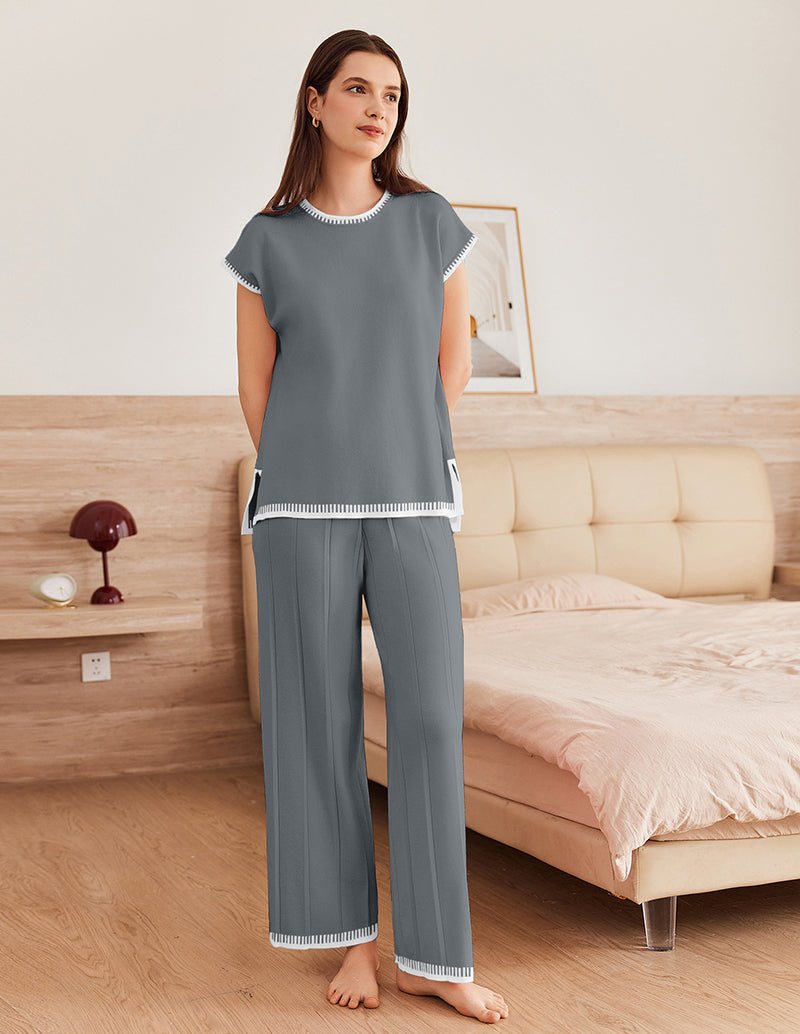
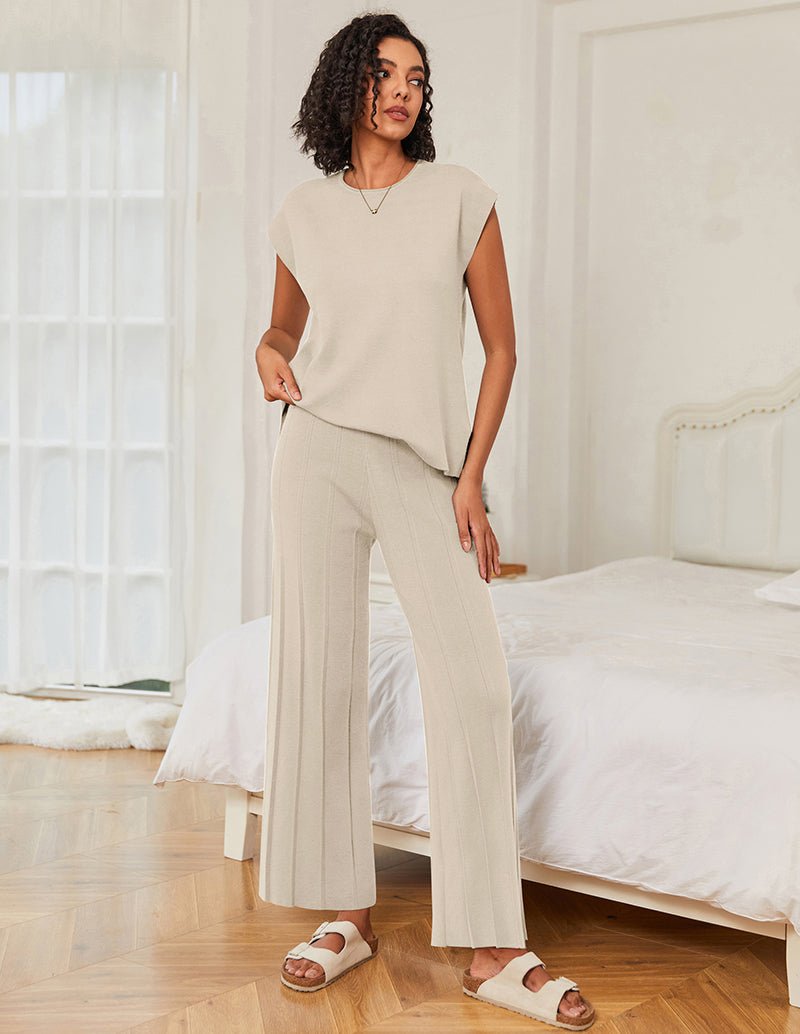
For clothing, sleepwear, and similar gift categories, October is the right window for a waffle knit pajama set that needs to be sized correctly and shipped in time for a Christmas morning reveal. The lead time on a soft, well-fitting pajama is longer than most people expect — sizing matters, color matters, and the piece has to arrive early enough to allow for an exchange if the first pick is wrong on fit. A good waffle knit set covers that runway.
October is also the right time to start any "subscription" or "experience" gifts that need to be set up in advance, and to take advantage of the early-bird deals that many brands run in the second half of the month. These deals are usually quieter than the Black Friday noise, which is part of their value — fewer people are watching, so the better gifts do not sell out as quickly.
November: Finishing Most Shopping
November is the bulk-buying month, and most of that bulk happens around the two well-known shopping days. Black Friday and Cyber Monday are real opportunities, but they are not the whole story. The shape of November is roughly: first half is "comparison shopping and decision-making," Thanksgiving week is "buy what you have decided on," Black Friday and Cyber Monday are "buy the things on sale that you would have bought anyway," and the last few days of November are "finish everything else."
The principle to remember is that a discount on the wrong gift is still the wrong gift. Black Friday and Cyber Monday are useful when the gift is already on the list and the sale just makes it cheaper. They are not useful when the sale tempts you into buying something that does not actually fit the recipient.
November is also the right month to do the "hard to size" gifts in person, if possible — a trip to a local store, or a careful measurement if the gift has to ship. Sleepwear, sweaters, slippers, and any item that comes in a size run are easier to get right with an in-person check.
December: Remaining Gifts and Final Purchases
December is for finishing, not starting. By December 15, aim to have every gift delivered, in hand, or scheduled for guaranteed pre-Christmas delivery.
Use the first half of December for remaining local or in-person purchases. The second half is best reserved for stocking stuffers and last-minute gifts. For anything bought in December, check the return and exchange window before purchasing.
What Should You Buy Early?
Not every gift needs to be bought in September or October, but some should. The general rule is simple: the more a gift depends on availability, customization, sizing, or shipping, the earlier it should be bought.
The categories that benefit most from being bought early:
• Popular or limited-stock gifts. Limited-run products and popular items can sell out, especially in popular colors and sizes. Sleepwear collections, for example, may run out of popular options by mid-November.
• Personalized gifts. Monogrammed, embroidered, engraved, or photo-based gifts require extra production time and should not be left until December.
• Clothing and sleepwear. Sizing can be an issue, so buying early leaves enough time for an exchange if the first choice does not fit.
• Gifts requiring shipping. Anything coming from a distance should be ordered early enough to allow for holiday shipping delays and carrier cutoffs.
• Gifts that may need a size exchange. Clothing, slippers, fitted hats, and gloves should be purchased with enough time for an exchange before Christmas.
What Can You Wait to Buy?
The opposite is also true. Not every gift benefits from being bought in October, and forcing a gift into an early slot can actually make it worse. The gifts that can wait are usually the ones with the least risk of going wrong.
How Early Should You Buy Christmas Gifts Online?
Online Christmas shopping needs its own mini-timeline because most of the friction in late-December gift buying is shipping-related, not selection-related. The general rule: a gift bought online in mid-November will arrive with comfortable buffer. A gift bought online in the first week of December will arrive on time for most US addresses, with a small margin. A gift bought online in the second week of December is the one most likely to arrive late or get lost in the carrier surge.
The specific things to check when buying online:
-
Estimated delivery date. Most large retailers now show an estimated delivery date on the product page, but the date is a moving target in December. Treat it as a "no earlier than" date, not a "guaranteed by" date.
-
Shipping delays. The week of December 11 to December 17 is the peak shipping stress window. Anything ordered then is at higher risk of being delayed, regardless of what the carrier says. If the gift matters, order earlier.
-
Holiday delivery pressure. USPS, UPS, and FedEx all publish holiday cutoffs. These are real and the carriers do enforce them. For most US-to-US orders, the safe cutoff for guaranteed pre-Christmas delivery is around December 15 for ground shipping, December 20 for expedited.
-
Return window. The standard return window for most online retailers is 30 days, but the holiday return window is often extended to mid-January. Check the return policy at the time of purchase, not at the time of return. The policy in early November may be different from the policy on December 26.
-
Check the product on arrival. The first thing to do when a gift arrives is to check the actual product — the size, the color, the fabric, the condition. This is the moment to start an exchange if the gift is wrong. Waiting until December 22 to check a gift ordered on December 1 is the most common way a gift goes wrong on Christmas morning.
A useful internal rule: for any online gift, assume the gift will arrive five days later than the estimated delivery date. If that still leaves it in time for the holiday, the gift is safe. If it does not, the gift should be ordered earlier.
For a longer view of how the holiday shopping calendar has moved earlier over the decades — retailer timelines, shipping cutoffs, the gap between Thanksgiving and Christmas — the Britannica overview of the Christmas holiday is a useful background reference.
Can Sleepwear Be a Good Christmas Gift?
Yes, and for a lot of the reasons a Christmas gift should be a good gift. Sleepwear sits at the intersection of several "buy early" advantages: it is personal, it is size-dependent, it is appropriate for the season, and it is the kind of gift that is genuinely used rather than shelved.
A few specific reasons sleepwear works as a Christmas gift:
-
Comfort. The point of a Christmas gift is that the recipient uses it. A soft, well-fitting pajama set or robe is one of the higher "use it daily" categories in the gift space.
-
Seasonality. Sleepwear as a winter gift is intuitive. A heavier fabric, a longer set, a robe for the cold months — these are pieces the recipient will reach for from December through February. The seasonal fit is built in.
-
Size. Sleepwear sizing is real sizing, not loose sizing. A medium is a medium. A large is a large. This is the gift that benefits from being bought early, because the first pick may need an exchange, and an exchange in November is easy while an exchange in December 22 is not.
-
Fabric. Fabric matters more than style in sleepwear. A waffle knit set, a brushed cotton set, a modal blend — these are the fabrics that read as "nice" on Christmas morning and that the recipient will actually wear. The fabric is also the easiest thing to get right with a quick check on the product page.
A few specific sleepwear gift ideas that map to the "buy early" advice in this article:
-
For the partner who runs cold: a waffle knit quarter-zip polo and shorts set — the kind of piece that works as a Christmas morning outfit and as a couch outfit through January. The knit fabric is warmer than it looks and the silhouette is intentional without being formal.
-
For the family member who lives in joggers: a pair of men's waffle knit joggers — the soft, drawstring, wide-leg pair that shows up in the winter rotation. The fit is relaxed without being baggy and the fabric has the texture of a more expensive piece.
-
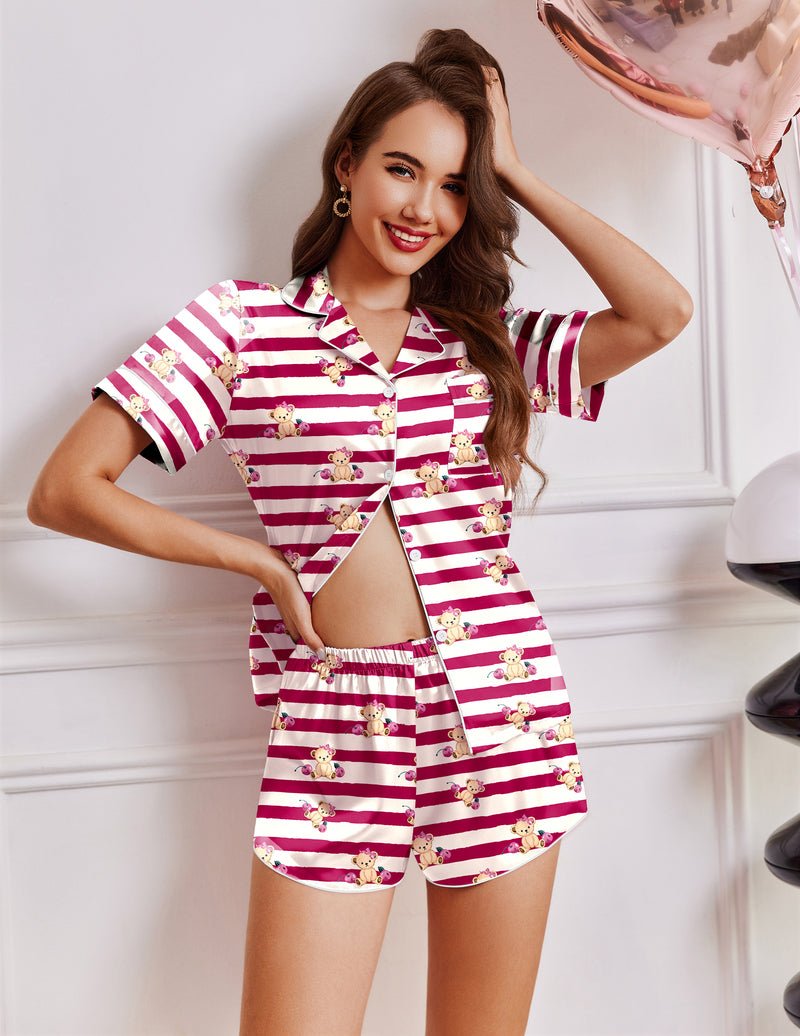
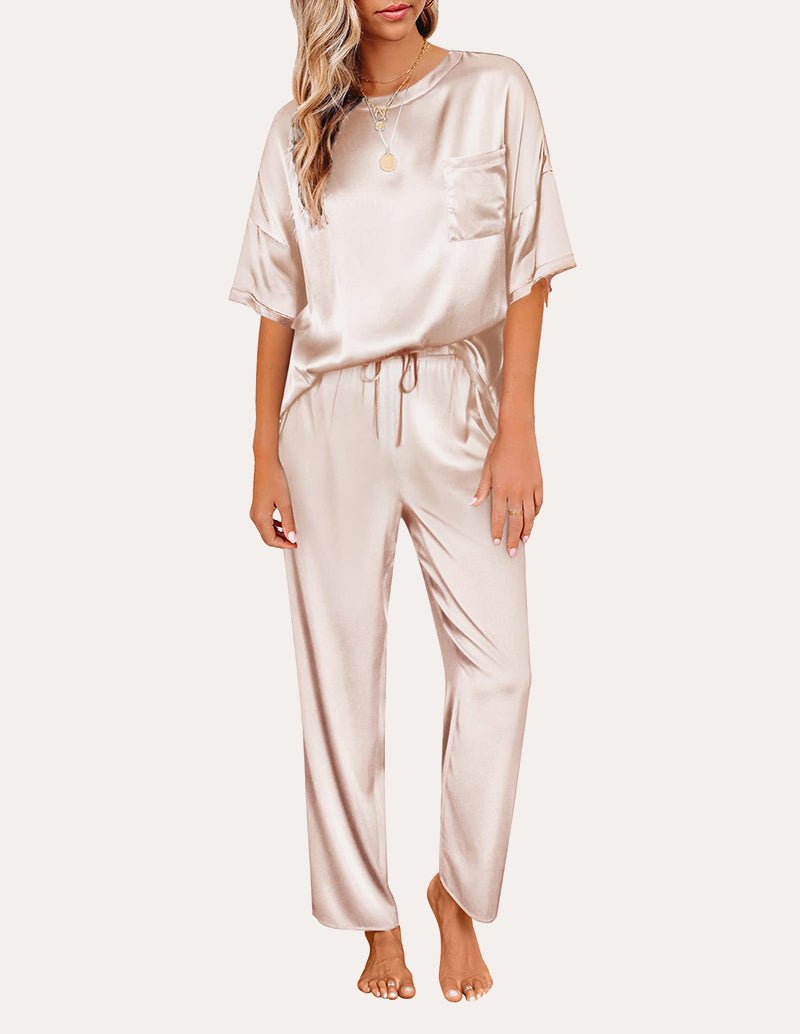
For the household that does Christmas morning photos: a waffle knit pajama set that can be matched across the family without forcing everyone into the same piece. The category has enough range that each person can have a version that fits their actual style.

The important thing is that the gift matches the recipient, not that it's a sleepwear set just because this is a sleepwear article. A good Christmas gift gets used — and sleepwear checks that box.
Christmas Shopping Checklist
A short, practical list to keep near the list itself:
-
List of recipients with per-person budgets and a total budget. First step, written down.
-
Hints collected since the last gift exchange. Anywhere the recipient has mentioned a brand, a color, a product, or a problem in passing.
-
Personalized and custom orders. First purchases, lead time of three to six weeks.
-
Clothing, sleepwear, slippers — anything with sizing risk. Buy by early November to allow for an exchange.
-
Anything that has to ship from far away. In the cart by the first week of December at the latest.
-
Black Friday and Cyber Monday shortlist. The gifts you would buy anyway, in case the price drops.
-
In-person gifts for early to mid December. Local stores, bookstores, restaurants, experiences.
-
Stocking-stuffers and small add-ons. Saved for the second half of December.
-
Return policy and delivery date checked on every online order. The check happens at the time of purchase, not at the time of return.
-
A December 15 cutoff. Anything not done, in hand, or guaranteed for delivery by December 15 is at risk.
Conclusion
The best time to start Christmas shopping is early September: plan in September, make the first purchases in October, do most of the shopping in November around Black Friday and Cyber Monday, and aim to finish by mid-December.
A simple timeline helps avoid last-minute stress and leaves more time for shipping, exchanges, and unexpected delays.
For more sleepwear and loungewear gift ideas, explore the related guides below.
FAQ
Q: When should I start Christmas shopping?
A: Most people should start in early September with planning, and start making actual purchases in early October. The bulk of buying happens in November around Black Friday and Cyber Monday, and the goal is to be finished by mid-December. Starting earlier isn't about being a forward planner — it's about giving yourself time for popular items to come back in stock, for shipping to arrive, and for size exchanges to happen.
Q: How long before Christmas should I buy gifts online?
A: A safe rule is to order online gifts by the first week of December for US-to-US orders. Holiday shipping cutoffs from USPS, UPS, and FedEx usually fall around December 15 for ground and December 20 for expedited. For personalized or custom gifts, the order should be in by mid-November to allow for production lead time.
Q: Is November too early to start Christmas shopping?
A: November is not too early. November is the bulk-buying month for most households. The first half of November is for finishing decisions, the second half is for Black Friday and Cyber Monday, and the last few days are for the gifts that did not make it into October. December is for finishing, not for starting.
Q: What gifts should I buy first?
A: Buy the difficult gifts first. Personalized pieces, custom orders, anything with a long lead time, anything in a limited run, anything that needs to be shipped from far away, and anything that involves sizing. These are the gifts that benefit from an early purchase and that get worse the longer they are delayed.
Q: Can sleepwear be a good Christmas gift?
A: Yes. Sleepwear is personal, seasonally appropriate, size-dependent, and the kind of gift that is genuinely used. A well-fitting waffle knit pajama set, a soft robe, or a matching couple's set is a strong Christmas gift for most recipients, and it benefits from an early purchase because of the size check and exchange risk.
Related Reading
-
What Should You Wear on Christmas Morning? — what to actually wear on Christmas morning, from a fabric, fit, and photo standpoint.
-
Are Pajamas a Good Gift for a Partner? — when sleepwear works as a partner gift and how to pick the right version.
-
Pajamas for Men: A Couple's Guide to Matching Comfort and Style — how to handle the couple's sleepwear gift without forcing a match.
-
What Is a Matching Pajama Set and Why Wear One? — the case for matching sets as a Christmas gift for couples and families.
About Ekouaer
Ekouaer is a sleepwear and loungewear brand built around a simple idea: comfort should be something you live in, not something you save. Known for soft pajama sets, inclusive sizing, and approachable prices on the rise, the brand focuses on textured knits, breathable cotton blends, and coordinated sets that move from bed to couch to a quick errand without a costume change.
Ekouaer in the Press
-
Oprah Daily: The 15 Best Pajamas for Women — Best Budget pick: Ekouaer Two-Piece Soft Sleep Pajama Set
-
Best Business Newspaper: EKOUAER Wins Multiple Prestigious International Media Awards — Featured in Shop TODAY 2024 "AS SEEN ON," CNN Underscored "Editor's Pick 2024," and Forbes "Best Beach Cover-Ups"
-
Minyanville (Oct 1, 2026): Why Vanessa Hudgens Chose Amazon's Ekouaer Over Luxury Labels — and What It Reveals About Fashion's New Era
-
Chronicle Journal Markets: EKOUAER Unveils Premium Loungewear Collection Centered on the "Self-Pleasing" Consumer Shift Among Multi-Hyphenate Women