
Cotton vs Bamboo vs Silk vs Modal: Which Fabric Is Best for Your Nursing Nightgown?
A fabric-by-fabric breakdown to help you choose the right nursing nightgown for your needs.
You're staring at your phone screen, comparing five different nursing nightgowns that all look similar but have wildly different fabric labels:
-
100% cotton — classic but doesn't it shrink?
-
Bamboo viscose — sounds eco-friendly but is it comfortable?
-
Silk or satin — beautiful but practical?
-
Cotton-modal blend — what even is modal?
Choosing the right fabric matters more than you think. The breastfeeding nightgown you pick will spend the next 6–18 months with you through countless middle-of-the-night feedings, sweat from postpartum hormone swings, breast milk leaks, spit-up, and frequent washing — all while your skin is at its most sensitive post-childbirth.
In this article, you'll learn:
-
The real pros and cons of each fabric — not marketing claims
-
Which fabric matches your specific needs (hot sleeper? sensitive skin? budget-conscious?)
-
Why Ekouaer uses cotton-modal as its primary fabric
-
Which fabric is overrated and which is underrated
100% Cotton
The most widely available and most trusted fabric for nursing sleepwear. But it has trade-offs.
✅ Pros
-
Most breathable — postpartum night sweats are real (up to 80% of new moms experience them). Cotton lets your skin breathe better than any synthetic alternative
-
Hypoallergenic — if you have sensitive skin or are prone to rashes, cotton is the safest choice
-
Gets softer with washing — a well-cared-for cotton nightgown improves over time
-
Easy to care for — machine wash, machine dry, no special handling needed
❌ Cons
-
Shrinks — wash in cold water and tumble dry on low, or your perfectly sized nightgown becomes a crop top
-
Wrinkles — if appearance matters to you, cotton coming out of a hospital bag will look lived-in
-
Absorbs but doesn't wick — cotton holds onto moisture. If you leak breast milk, it'll stay wet against your skin
Best for:
Active sleepers who run hot, moms with sensitive skin, and anyone who prioritizes practicality over luxury
Ekouaer's cotton line:
Our Cotton Maternity Nightgown collection uses 95% cotton + 5% spandex — the spandex adds stretch so the gown moves with your changing body without losing cotton's breathability.

Bamboo Viscose
Bamboo fabric has been the fastest-growing sleepwear category in recent years. Here's the honest picture.
✅ Pros
-
Extremely soft — smoother than cotton, with a silky hand feel
-
Temperature regulating — the hollow fiber structure keeps you cool in summer and warm in winter
-
Naturally antimicrobial — bamboo fibers inhibit bacterial growth (a real plus for postpartum hygiene)
-
Better moisture wicking than cotton — absorbs moisture and dries faster
❌ Cons
-
More expensive — quality bamboo items typically cost 30–50% more than cotton
-
Less durable over time — may pill or lose elasticity after repeated washing
-
Requires gentler care — cold water, gentle cycle, low heat or air dry recommended
-
Not truly 'natural' — bamboo viscose is chemically processed. If you want a purely natural fiber, organic cotton is the better choice
Best for:
Moms who prioritize softness above all else, live in climates with big temperature swings, and have a slightly higher budget
Our honest take: Bamboo is lovely, but we don't recommend it as your primary hospital bag gown. In an environment where you need frequent washing and your gown will encounter various bodily fluids, bamboo's delicacy becomes a liability. Save it for when you're home and settled.

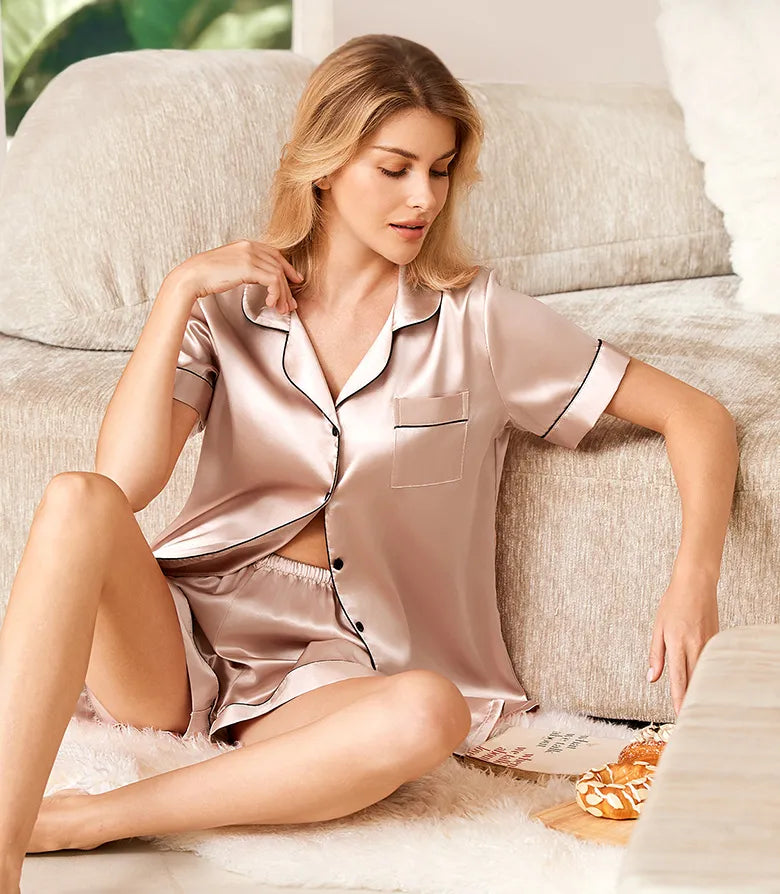
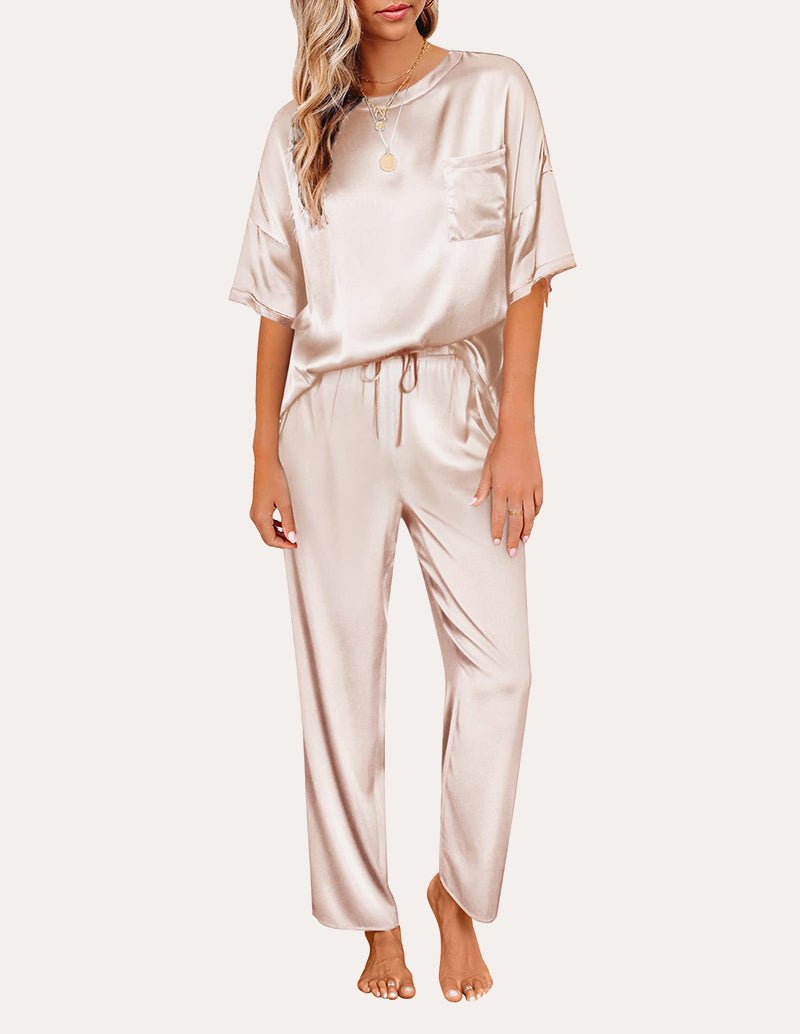
Silk / Mulberry Silk
Let's be honest: silk is beautiful. But as a nursing nightgown, expectations need managing.
✅ Pros
-
Ultra-smooth — glides against skin and hair (less friction, fewer tangles)
-
Temperature regulation — real mulberry silk is one of the most thermo-neutral fabrics available
-
Absorbs without sticking — silk absorbs moisture quickly without clinging to your skin
-
Makes you feel human — postpartum life can make you feel like a feeding machine. Silk reminds you you're still a person
❌ Cons
-
High maintenance — hand wash or dry clean. No bleach. No dryer. No direct sunlight
-
Doesn't absorb milk — literally. Silk doesn't absorb liquid well, so leaked breast milk will run right off onto your sheets
-
Too slippery for nursing — your baby's head may slide on smooth silk while you're trying to position them
-
Expensive — quality silk nightgowns start around $80–$150+
Best for:
Moms who are 3+ months postpartum and stable in their breastfeeding routine; as a treat for yourself rather than a practical tool
Our advice: Silk is a reward, not a workhorse. Get 2–3 practical cotton or cotton-modal gowns first for the trenches, then treat yourself to silk once you're in a rhythm.

Cotton-Modal Blend
This is what Ekouaer uses for most of our nursing nightgowns. There's a reason.
✅ Pros
-
Best of both worlds — cotton's breathability + modal's softness
-
Wrinkle-resistant — looks presentable even after being stuffed in a hospital bag
-
Highly durable — stands up to frequent washing (critical for newborn life)
-
Affordable — significantly cheaper than bamboo or silk, with comparable softness
-
Softens over time — the first wash might feel slightly stiff, but after 3–4 washes, it becomes incredibly soft
❌ Cons
-
Modal is semi-synthetic — it's made from beech tree pulp through a chemical process (more eco-friendly than rayon, less than organic cotton)
-
Slightly less breathable than 100% cotton — though still more than adequate for sleepwear
Best for:
Almost everyone. It's the most balanced, most practical choice for the broadest range of moms.
Why Ekouaer chose this: We wanted a fabric that didn't force moms to choose between "practical" and "comfortable." Cotton-modal gives you the durability to survive the newborn phase and the softness to genuinely enjoy wearing it.
Quick Decision Table
| If you are... | Best fabric choice | Why |
| A heavy night sweater (postpartum hormones) | 100% cotton | Maximum breathability |
| Have sensitive skin or eczema | Organic cotton | Zero chemical irritation |
| Live somewhere with big temperature swings | Bamboo or cotton-modal | Better temperature regulation |
| On a budget but want comfort | Cotton-modal | Best value for money |
| Shopping for a baby shower gift | Cotton-modal | Practical + comfortable = a gift she'll actually use |
| Packing a hospital bag | Cotton-modal (Ekouaer) | Durable, washable, affordable, won't stress about stains |
Ekouaer's Fabric Specifications
Our maternity nursing gowns are available in two primary fabric compositions:
95% Cotton + 5% Spandex:
-
Breathable cotton comfort with stretch for body changes
-
Ideal for pregnancy through postpartum as your body fluctuates
Cotton-Modal Blend:
-
Softer, smoother, wrinkle-resistant
-
Ideal for daily rotation and frequent washing

About the Author
Written by the Ekouaer Editorial Team
About Ekouaer
Founded in 2014, Ekouaer is a leading maternity and nursing wear brand specializing in comfortable, functional clothing designed for pregnancy, labor, and postpartum recovery. Our Berlin Design Award-winning styles prioritize both safety and style, with all fabrics being OEKO-TEX certified to ensure the highest quality standards.
In partnership with airmid healthgroup, our designs are engineered for real-world comfort and have been recognized as an "Editor's Choice" by CNN Underscored, Forbes, and TODAY.com. Additionally, our specialized maternity essentials are proud recipients of the Mom’s Choice Awards. Explore the full range of nursing shirts and postpartum outfits in the Ekouaer catalog.
Related Guides
-
Your Hospital Bag Checklist: Why a Nursing Nightgown Matters More Than You Think
-
The Only 2 Affordable Sleepwear Pieces You Actually Need in Your Hospital Bag
-
What Is a "Mom Comfort Uniform"? Real Gift Ideas Inspired by Everyday Life