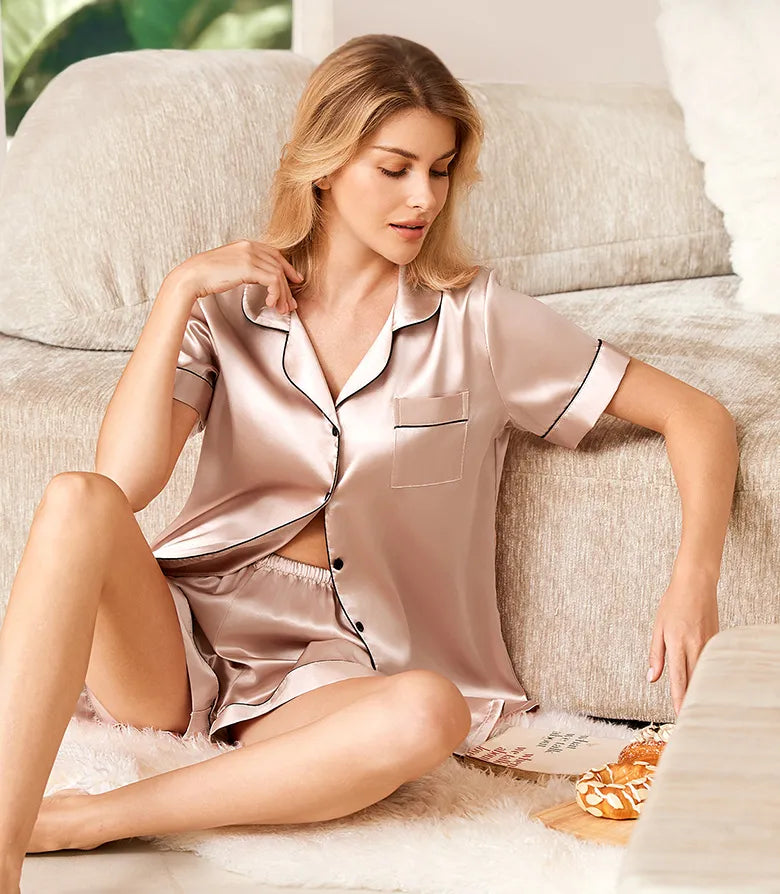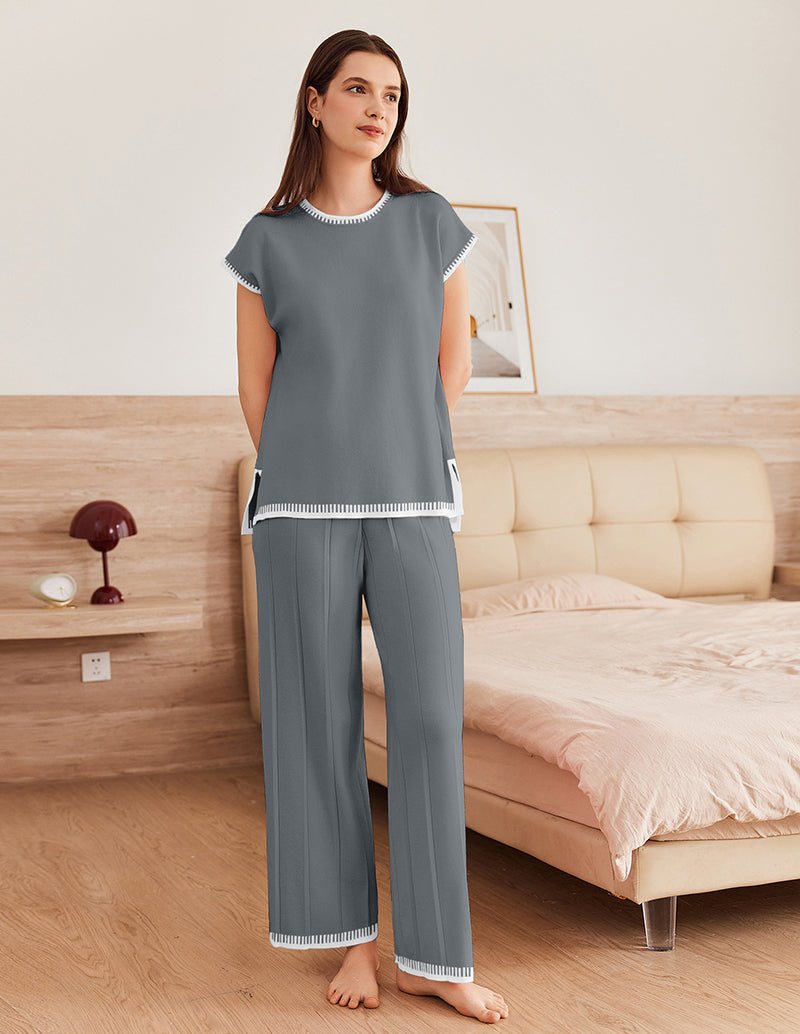
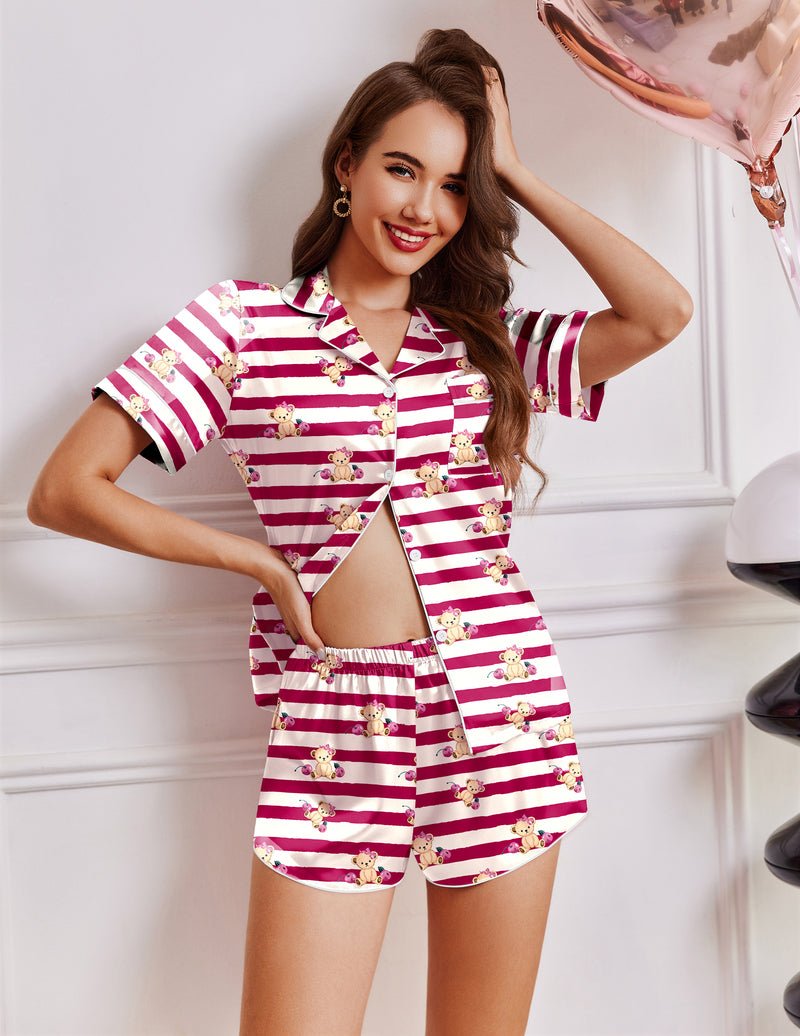
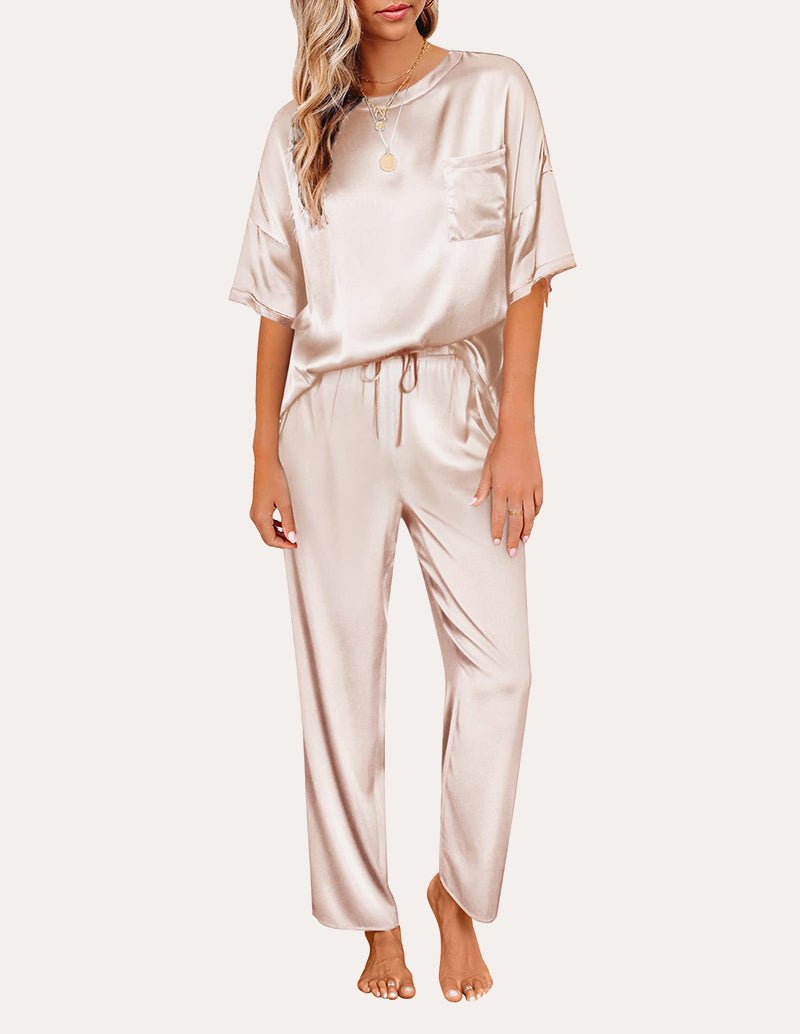
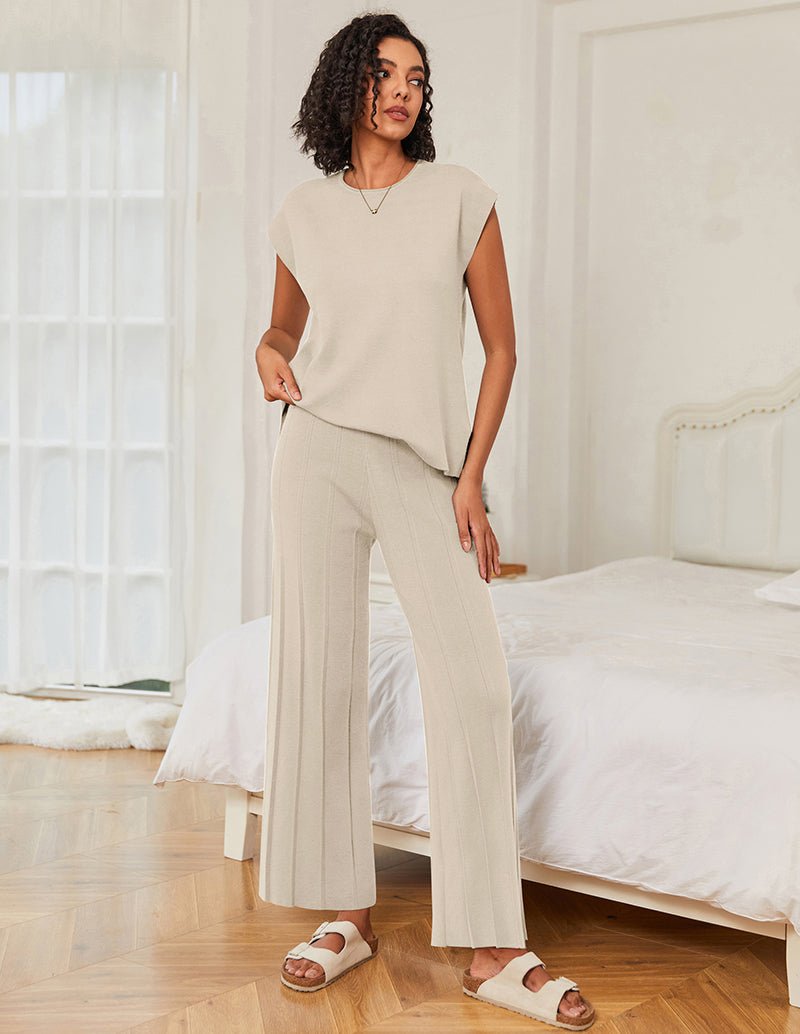
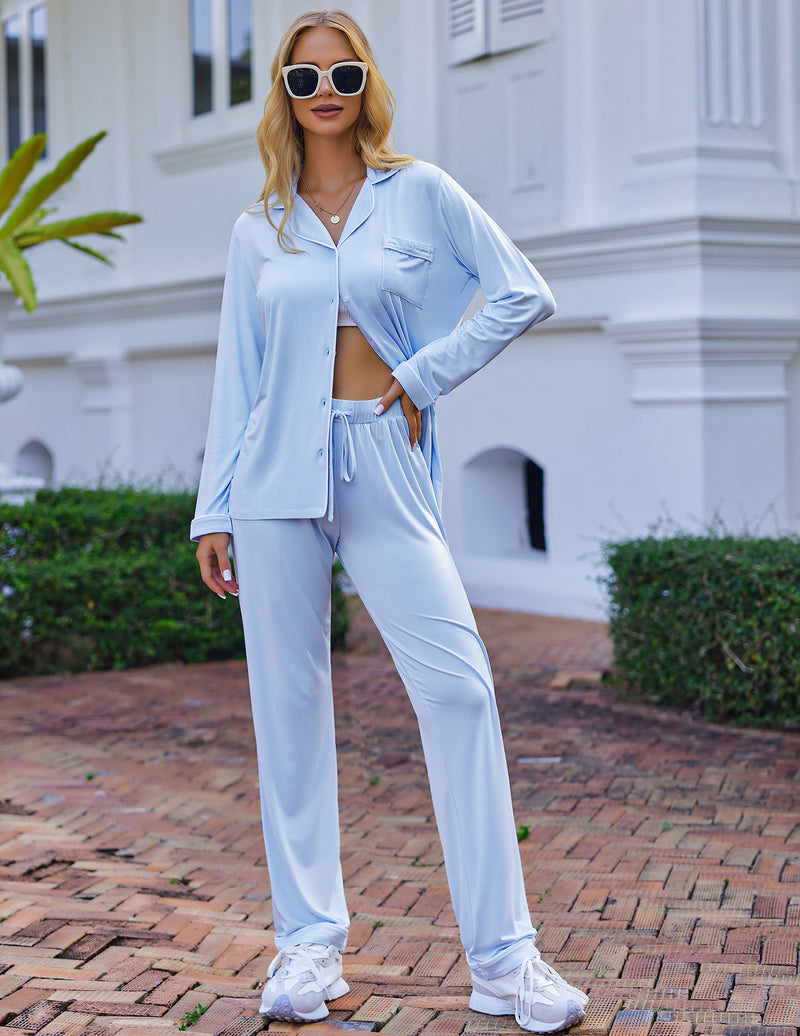
Why Knit Pajamas for Women Are the Most Comfortable Thing You'll Ever Sleep In: A Fabric Guide

Knit pajamas feel better than woven ones for a specific structural reason: the looped yarn construction gives the fabric natural stretch and recovery in every direction, so the pajamas move with your body instead of pulling against it. That's why a knit set feels comfortable when you roll over, pull a blanket up, or sleep on your side — and why a woven fabric of the same softness often feels more restrictive in those same moments.
But knit is a category, not a single fabric. A thin cotton jersey and a dense rib-knit interlock are both knit fabrics — and they perform very differently across a full night of sleep. Getting the most out of knit pajamas means understanding construction weight, fiber blend, and how those variables interact with your specific sleep environment. That's what this guide covers.
Browse Ekouaer's knit pajamas collection for current options across weights and silhouettes.
Note on scope: This guide focuses on knit construction as a fabric architecture — the structural reason knit sleepwear behaves differently from woven. For fiber-specific comparisons (bamboo vs cotton, modal vs polyester), see our bamboo vs cotton pajamas guide and sleepwear fabric comparison.
Why Knit Construction Changes How Pajamas Feel
Most sleepwear discomfort doesn't come from the wrong fiber — it comes from the wrong construction. A woven fabric is made from perpendicular yarn crossings that create a fixed, rigid grid. A knit fabric is made from interconnected loops that can expand when stretched and contract back when released.

That structural difference explains most of the comfort gap between knit and woven sleepwear:
-
At the shoulders: knit expands when you reach or roll, rather than pulling the fabric tight across the back
-
At the waist: knit returns to shape after sitting or lying, rather than bunching and staying bunched
-
At the knees and hips: knit accommodates a drawn-up sleeping position without creating pressure points
-
At seams: knit seams flex with the fabric rather than creating rigid lines against the skin
Textile research consistently identifies fabric stretch, recovery, and low-friction surface texture as key factors in sleep garment comfort ratings — all of which knit construction addresses structurally rather than relying on fiber softness alone.
Temperature comfort is also more nuanced than "warm" or "cool." The Sleep Foundation's sleep environment research identifies skin temperature and micro-humidity at the skin surface as key variables in sleep quality — factors that are influenced by fabric construction density and moisture movement, not just fiber type. A knit's loop structure creates small air pockets that can either trap or release heat depending on the knit's density and the fiber's moisture behavior.
The goal is what textile scientists call microclimate control: stable skin temperature, manageable humidity at the skin surface, and low friction where the fabric contacts the body through the night.
Knit Construction: The Three Types That Matter for Sleepwear
You don't need a textile background to choose better pajamas — but knowing three knit families covers most of the decisions you'll encounter.
Single Jersey
Single jersey is the lightest and most common knit construction in pajama tops and casual sets. It has a soft face side and a slightly textured reverse, drapes well, and feels airy. It's the right choice for warm rooms and warm sleepers.
Best for: Summer sleep, warm climates, women who overheat
Watch for: Can be prone to curling at edges if the fabric weight is too low; check product reviews for mentions of curl or distortion after washing.
Rib Knit
Rib knit has alternating raised and recessed columns (1x1, 2x2, or wider) that create strong two-way stretch with excellent recovery. It's most commonly used for waistbands, cuffs, and fitted silhouettes — but a full rib-knit set maintains its shape exceptionally well through movement.
The Ekouaer Cozy Stretchy Ribbed Nightshirt uses this construction: the rib texture creates a silhouette that fits without compressing, and the strong recovery means it returns to shape after every sleeping position shift rather than twisting and staying twisted.

Best for: Side sleepers, restless sleepers, women who want a fitted silhouette without compression
Watch for: Higher rib density can run warm — check weight and fiber blend if you're a hot sleeper.
Waffle Knit and Interlock
Waffle knit creates a textured grid pattern with raised squares and recessed channels. The surface texture creates more air pockets than flat jersey, which improves breathability — and the weight sits between jersey and heavy interlock, making it one of the most versatile knit constructions for year-round wear.
Interlock is a double-knit construction (two layers of jersey knit together) that produces a smoother, denser, more stable fabric. It's warmer than single jersey and holds its shape exceptionally well, but it runs heavier and warmer.
The Ekouaer Waffle Knit Lounge Set V-Neck Off-Shoulder Sleepwear illustrates waffle knit's versatility well — the textured construction adds visual interest and improved breathability compared to flat jersey, while the off-shoulder neckline keeps heat from building at the chest and shoulders.
The Ekouaer Pajamas Waffle Knit Lounge Set Long Sleeve with Pockets adds the practical pocket detail — genuinely useful for a phone or lip balm during slow mornings — while the long-sleeve top and shorts combination makes it suitable for temperature-variable environments where you need coverage on top but not below.

Best for: Year-round use, women who want breathability with more structure than jersey
Watch for: True waffle knit varies in quality — look for a distinct raised grid rather than a faint texture that flattens after a few washes.
Fiber Blend Guide: What Each Material Does During a Full Night
The most useful question isn't "what is the softest fabric" — it's "what does this fabric do across eight hours of sleep, including position changes, temperature shifts, and moisture from normal body heat."
|
Fabric / Blend |
Sleep Comfort Profile |
Best Climate |
Main Limitation |
|---|---|---|---|
|
Cotton Jersey (100%) |
Soft, breathable, familiar |
Warm-to-moderate |
Can stay damp after sweating |
|
Cotton + Modal |
Smooth, low-friction, excellent drape |
Year-round |
Some blends lose shape faster |
|
Bamboo / Viscose Blend |
Cool-feeling initially, good moisture spread |
Hot and humid |
Quality varies significantly by brand |
|
Tencel / Lyocell |
High moisture handling, airy |
Hot rooms, variable nights |
Less widely available in sleepwear |
|
Merino Blend Knit |
Fine temperature regulation, odor-resistant |
Cool rooms |
Higher price point |
|
Cotton + Elastane (small %) |
Strong movement flexibility, shape retention |
Year-round |
Too much elastane feels compressive |
|
Recycled Yarn Blend |
Practical comfort range |
Year-round |
Check quality and fiber percentage carefully |
Cotton remains the most reliable baseline — breathable, gentle on sensitive skin, and easy to care for. Its limitation is moisture retention: cotton absorbs sweat efficiently but releases it slowly, which can create a damp, clingy sensation if you sleep warm. For hot sleepers, a lighter cotton jersey or a cotton-modal blend usually outperforms pure cotton.
Modal and regenerated fiber blends reduce the friction that builds at seams, waistbands, and cuffs through the night. The Lenzing Group's fiber research — Lenzing produces both TENCEL (lyocell) and other regenerated cellulose fibers — documents how these fibers actively manage moisture at the skin surface rather than simply absorbing it, which is why they often feel cooler and smoother than cotton even at the same fabric weight.
Bamboo viscose is widely marketed for cooling, and there's genuine performance behind the claim: the fiber structure spreads moisture across a wider surface area for faster evaporation. However, "bamboo" on a label doesn't guarantee a specific performance level — the fiber processing method and knit construction both affect actual performance significantly. The Federal Trade Commission's textile labeling guidance requires that bamboo-derived fabric be labeled as "rayon" or "viscose" if it has undergone chemical processing, which most bamboo sleepwear has.
Merino wool blends deserve more consideration in sleepwear than they typically get. Fine merino (not the bulky wool most people imagine) regulates temperature actively — absorbing moisture before you feel it, and releasing it as conditions change. The Woolmark Company's performance data shows fine merino maintaining more stable skin temperature across varying ambient conditions than comparable cotton fabrics. For women who sleep cold or in variable climates, a lightweight merino blend knit can outperform heavier cotton options.

The Ekouaer Cozy Knit Pajama Sets use a soft knit blend construction that sits in the practical mid-range — enough stretch for movement, enough weight for cool-room comfort, and easy care for frequent washing.
GSM: The Measurement Most Shoppers Overlook
GSM (grams per square meter) describes fabric weight — and it's one of the most useful numbers on a product page, more useful than "super soft" or "luxurious feel."
|
GSM Range |
Weight Feel |
Best Season |
Best For |
|---|---|---|---|
|
Under 120 GSM |
Very light, almost sheer |
Summer / warm rooms |
Hot sleepers, tropical climates |
|
120–160 GSM |
Light |
Spring / fall / warm rooms |
Year-round hot-to-moderate sleepers |
|
160–220 GSM |
Medium |
Spring / fall |
Most sleepers across most climates |
|
220–280 GSM |
Medium-heavy |
Fall / winter |
Cool rooms, cold sleepers |
|
Over 280 GSM |
Heavy |
Winter / cold climates |
Very cold rooms, cold sleepers |
If a product page only describes fabric as "soft" or "cozy" without any weight or fiber percentage information, that's worth noting. Genuine fabric transparency — fiber content percentage, GSM or weight descriptor, care instructions — is a better signal of product quality than marketing language.
Choosing by Season and Sleep Environment
Most pajama mistakes happen from buying for a vague category ("hot sleeper") rather than a specific room profile. Your room temperature, bedding weight, humidity, and body heat all interact.
Summer / warm rooms (above 24°C / 75°F): Prioritize lower GSM (under 160), breathable fiber blends, and minimal coverage. Short sleeves and shorts or a loose jersey set. Waffle knit outperforms flat interlock in this range because the surface texture creates more airflow.
Spring and fall (variable temperatures): Knit pajamas are especially useful here because they layer well without adding bulk. A mid-weight cotton-modal or cotton-elastane knit handles temperature swings without feeling heavy. If your room changes by more than 5°C (9°F) overnight, avoid very dense fabrics.
Winter / cool rooms (below 18°C / 65°F): Choose mid-to-higher GSM knits. Warmth shouldn't feel like a heat vault — a breathable knit with a smooth outer surface often works better under blankets than a very dense fabric because it reduces friction when you turn. Long sleeves and full-length pants stabilize body heat while still allowing movement.

The Ekouaer Soft Waffle Knit Bathrobe extends the knit wardrobe into the morning routine — the waffle construction keeps it from feeling heavy indoors while the robe silhouette adds warmth coverage for cold-morning transitions from bed to the rest of the day.
Fit Check: When the Fabric Is Right but the Fit Isn't
A well-chosen fabric fails if the fit is wrong. Use this quick check before committing to more than one set:
Waistband: Should sit level without cutting in or floating. Sit, stand, and stretch to check whether seams roll. If you need to pull the waistband down repeatedly, size up or choose a different rise.
Top: Neck opening should sit comfortably without tugging. Sleeves should allow arm crossing without riding up aggressively. If your forearms are exposed only after sleeping, choose a roomier sleeve or a lower taper.
Bottoms: If legs feel exposed while lying on your side, choose a longer inseam. If fabric bunches under blankets, choose a looser leg or a lighter knit.
Before checkout — 60-second checklist:
-
Confirm fiber percentages and blend formula
-
Compare GSM or fabric weight language
-
Check stretch percentage and recovery claims
-
Verify wash instructions match your laundry routine
-
Check seam construction at shoulders, cuffs, and waist
-
Match the season label to your actual room temperature
-
Read reviews that specifically mention washing and long-term softness
-
Check the return window in case the fit doesn't work

Care: Where Comfort Often Disappears
Most knit pajamas degrade faster from wrong care than from normal wear. A few consistent habits extend softness and shape significantly:
-
Wash in cool to warm water unless the label specifies otherwise
-
Skip fabric softener — it coats fibers and reduces breathability over time, which is the opposite of what you want in sleepwear
-
Avoid bleach unless specifically required
-
Air-dry when possible — or use low heat and remove promptly to prevent shrinkage and waistband fatigue
-
Store folded, not compressed — elastic and cuffs need recovery time between wears
-
Rotate between sets — wearing the same pair every night accelerates wear at stress points
For modal and TENCEL blends, follow gentle care recommendations — such as those in textile care guides — including appropriate water temperature and mild detergents for regenerated cellulose fibers.
Test comfort realistically: sleep in your normal room setup for at least three nights before changing anything else. Note pressure points at the neckline, wrists, waist, hips, and knees. Track heat sensation after several hours, not just during the first ten minutes. Wash once, then test again. The second and fourth washes reveal long-term quality better than any first impression.
FAQ
Q: Why do knit pajamas feel more comfortable than woven ones?
A: The structural difference is in how the fabric is built. Woven fabric is made from perpendicular yarn crossings that create a fixed grid — it doesn't stretch significantly in any direction. Knit fabric is made from interlocking loops that expand when stretched and contract back when released. This means a knit pajama moves with your body through position changes, blanket adjustments, and hours of lying in one position — while a woven fabric of similar softness creates more resistance and friction at the same moments. Research in the Textile Research Journal identifies stretch, recovery, and low surface friction as the top three comfort factors in sleepwear — all of which knit construction addresses at the structural level.
Q: What is the most breathable knit fabric for pajamas?
A: Single jersey in a cotton or cotton-modal blend is the most breathable everyday option for most sleepers. Waffle knit adds surface texture that creates more airflow than flat jersey at similar weights, making it a strong choice for moderate climates. For very warm rooms or hot sleepers, a lightweight bamboo viscose or TENCEL blend in a low-GSM knit provides the best moisture movement. The key variable is fabric weight (GSM) as much as fiber type — a heavy cotton jersey can be less breathable than a lighter synthetic blend.
Q: Can knit pajamas cause overheating?
A: Yes, if the weight or fiber blend is wrong for your room temperature. Dense knits — interlock, heavy waffle, or high-GSM jersey — can trap heat in warm rooms. The fix is usually reducing GSM rather than switching fiber entirely. If you consistently overheat in your current pajamas, try a lighter jersey in the same fiber blend before changing materials. A knit construction doesn't inherently cause overheating — density does.
Q: Are blends better than 100% cotton for sleep?
A: For most sleepers, yes. Cotton blends — especially cotton-modal and cotton-elastane — improve drape, reduce surface friction, and maintain shape better through repeated washing than pure cotton. Pure cotton remains excellent if you want familiar softness, easy care, and skin-friendly properties; it just absorbs and holds moisture longer than blended options. If you sleep moderately warm and want a straightforward option, a cotton-modal blend in a mid-weight jersey is one of the most consistently comfortable choices across different sleep environments.
Q: What does GSM mean and why does it matter?
A: GSM stands for grams per square meter — it's a measure of fabric weight per unit area. Higher GSM means heavier, warmer, more substantial fabric; lower GSM means lighter and more breathable. It matters for pajamas because the same fiber blend in different GSM weights performs very differently: a 120 GSM cotton jersey feels airy and summer-appropriate, while a 240 GSM cotton jersey feels cozy and winter-appropriate. When a product page uses only vague language like "super soft" without mentioning fiber percentage or weight, that's worth noting — fabric transparency is a reasonable quality signal.
Q: Is rib knit good for sleeping?
A: Yes — rib knit's strong recovery makes it particularly good for restless sleepers and side sleepers who change positions frequently. The alternating raised and recessed columns create high two-way stretch that returns to shape reliably, so the fabric doesn't twist and stay twisted the way lighter jersey sometimes does. The consideration for hot sleepers is density: higher-density rib knit runs warmer than single jersey at the same fiber blend. A lightweight rib knit in a breathable blend is a good middle ground.
Q: How do I know if my knit pajamas have too much elastane?
A: Signs of excessive or poorly distributed elastane: sleeves feel compressive or warm after an hour, the waist feels hot or tight despite the right size, seams create visible pressure lines against the skin. A small elastane percentage (3–8%) improves shape retention without these effects. Above that range, the fabric starts behaving more like compression wear than sleepwear. Check fiber percentages on the product page — a well-made knit pajama will list them clearly.
Q: Can I wear knit pajamas year-round?
A: Yes, by adjusting weight and style by season. Single jersey in a cotton or bamboo blend for summer, waffle knit or cotton-modal in a mid-weight for spring and fall, and a denser interlock or rib knit for winter. The knit construction itself is appropriate year-round — the variables to change are GSM, fiber blend, and sleeve/pant length. One consistent knit wardrobe across seasons is more practical than switching between knit and woven depending on the time of year.
Related Reading
-
Comprehensive Architecture Comparison: Nightgown vs Pajama Set
-
Two-Piece Design Breakdown: Best Pajama Pants for Women 2026
About Ekouaer
Founded in 2014, Ekouaer makes sleepwear and loungewear with an emphasis on functional design and fabric safety. All fabrics carry OEKO-TEX Standard 100 certification — independently tested to be free of harmful substances, meeting requirements for skin-contact textiles. Products have been featured in CNN Underscored, Forbes, and TODAY.com.
Ekouaer in the Press
-
BluFashion: Fabric engineering for optimized sleep comfort
-
The Upscale Living Magazine: Premium loungewear capsule and travel curation
-
The Fox Magazine: Flexible lounge packing strategies for variable climates
-
Park Magazine NY: 30-day anti-friction fabric wear test