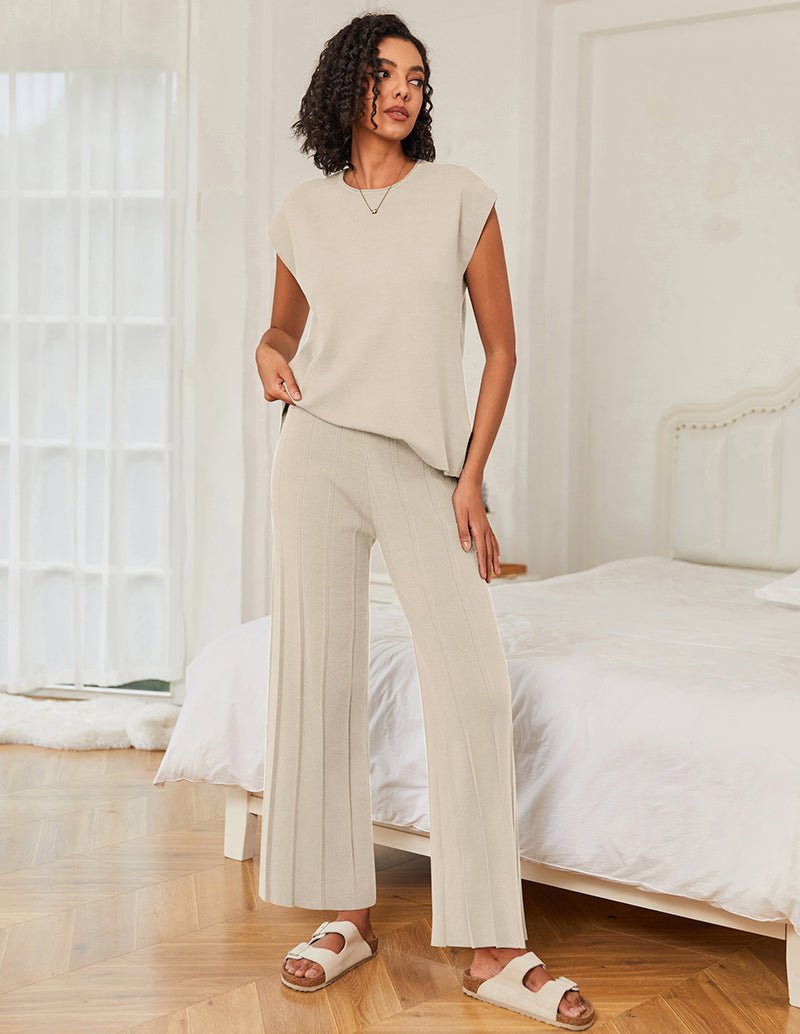

Milk Silk Pajamas: What the Fabric Actually Is

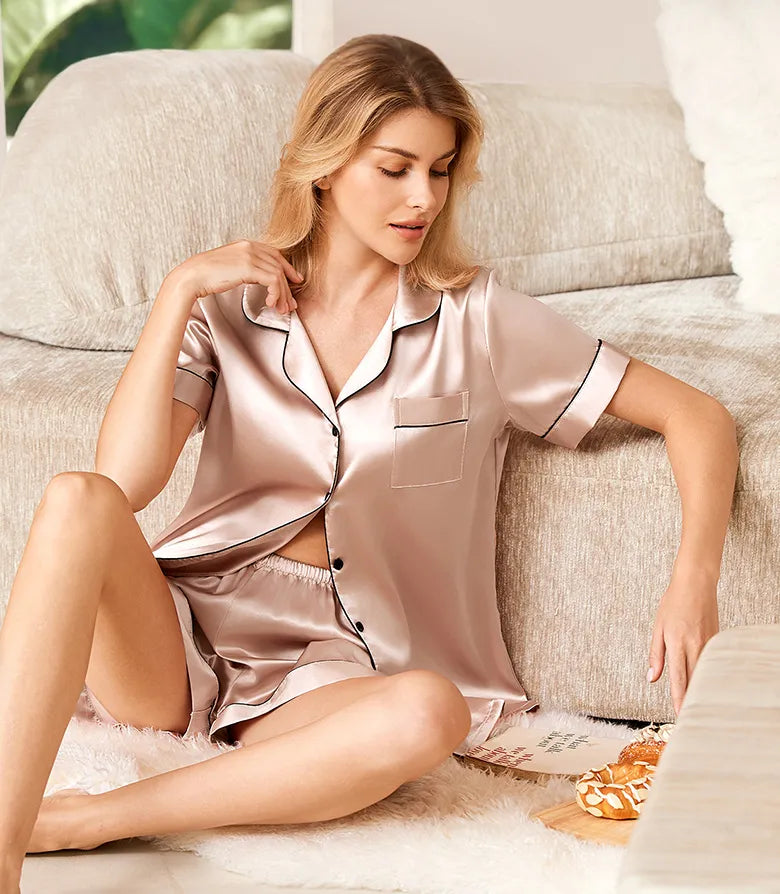
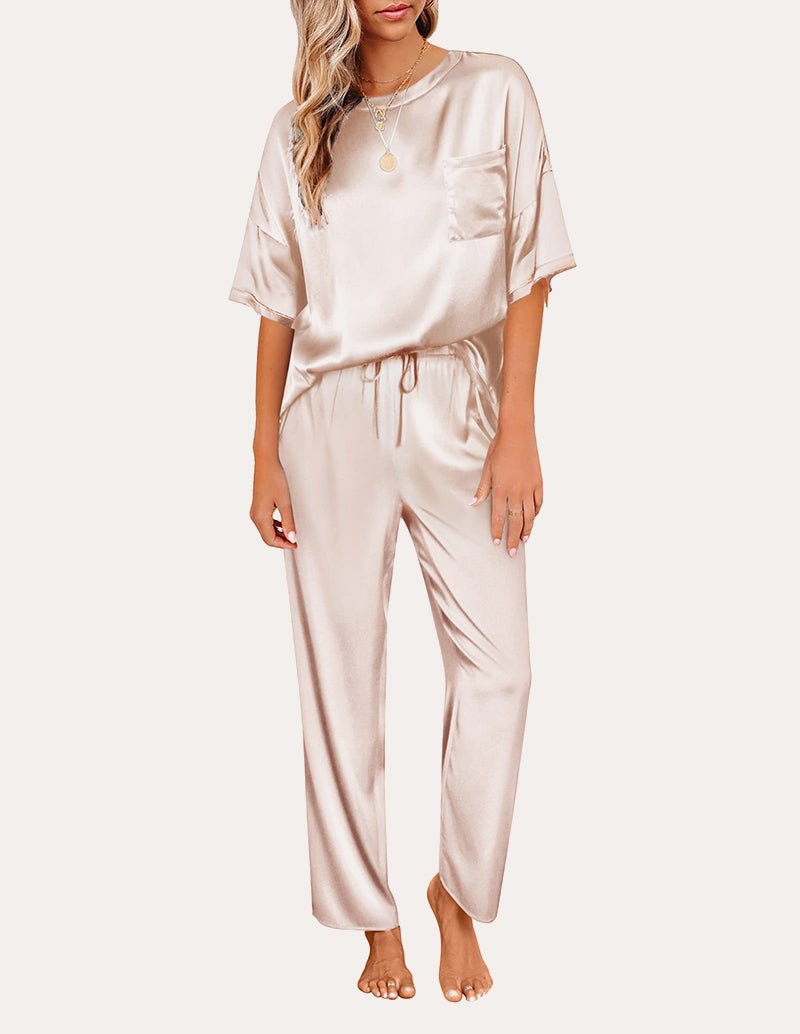
Few sleepwear names sound as inviting as "milk silk." It promises exactly what a good pair of pajamas should feel like: smooth, cool, and gentle in the way people imagine milk to be. Ekouaer itself reaches for the same image in its product descriptions, describing a satin nightdress as "milk-like silky" — the name is a feeling before it is a fiber.
But if you have ever stood in front of a fabric label trying to connect that feeling to an actual material, this guide is for you. In the United States, the Federal Trade Commission requires every garment to list its fibers by their generic names in order of content — polyester, spandex, silk, cotton — which means the content label, not the marketing name, is where the fabric's real story lives. Reading that one line well is the difference between buying a set you love and one you tolerate.
This article walks through the whole picture: where the milk silk name actually comes from (it has a genuine, surprising history), what gives milk-silk-soft pajamas their signature hand-feel, how the fabric behaves through the night, how to wash it so it stays soft, and which Ekouaer sets deliver that feel at every price point.
Key Takeaways
-
"Milk silk" is first a hand-feel, then a fabric. The name describes a smooth, cool, gently slippery touch — and it traces back to a real milk-protein fiber invented in Italy in the 1930s.
-
The fiber label tells the material story. US labeling law requires generic fiber names in content order, so a glance at the tag tells you whether a set is a fine knit blend or pure silk.
-
Softness is engineered from three things. Fine yarns, a brushed or peached surface finish, and a small amount of spandex create the liquid-soft drape the name promises.
-
Real silk remains its own category. Ekouaer's 100% mulberry silk sets deliver the protein-fiber version of the same cool, smooth sensation, with a drape and sheen all their own.
-
Care is simple and forgiving. Cool water, gentle cycles, and low or no-heat drying preserve the soft surface for seasons of wear.
Where the Name "Milk Silk" Comes From
The name is older than most people expect. In 1935, an Italian engineer named Antonio Ferretti patented a process for spinning actual milk protein — casein — into wearable fiber, and the result was sold under the name Lanital. As Wikipedia's history of milk fiber records, the fabric had a genuine moment in the 1930s and 1940s as part of Italy's national self-sufficiency drive, before fully synthetic fibers arrived that were more durable and far cheaper to produce.
That original fiber belongs to a family chemists call azlon — regenerated protein fibers — and it really was made from milk: acid was mixed with milk to extract the casein, the casein was dissolved and extruded through spinnerets, and the resulting thread was hardened and cut into spinnable lengths. Small producers attempted revivals as recently as the 2010s, which is why you will still occasionally see "milk fiber" or "milk wool" on specialty textile tags.
The modern sleepwear aisle, however, uses "milk silk" differently — as shorthand for a touch rather than a chemistry. When a product page says a satin set feels "as silky as milk," it is describing the hand: that weightless, cool glide across skin that makes you want to stay in bed an extra twenty minutes. Understanding the name as a feeling, and the label as the fact, is the whole game — and the next section shows you how to read both.
What Milk Silk Means on a Pajama Label Today
Because the FTC's textile labeling rules require every fiber to be named by its generic name in descending order of content, the tag on any "milk silk" pajama set will say something precise — and each of those precise statements points to a recognizable fabric experience:
|
What the label says |
What it tells you |
How it tends to feel |
|---|---|---|
|
95% polyester, 5% spandex |
A fine-gauge knit blend, often with a brushed finish — the most common home of the milk-silk hand-feel |
Smooth, stretchy, softly warm, packs without wrinkling |
|
100% mulberry silk |
A natural protein fiber, woven or knitted from silk cultivated from mulberry-fed silkworms |
Cool on first touch, fluid drape, a quiet natural sheen |
|
95% polyester, 5% spandex (satin weave) |
A woven satin with stretch — the classic button-down pajama family |
Slippery-cool, glossy, light enough for warm rooms |
|
100% cotton |
A natural plant fiber, usually in a soft jersey or poplin |
Crisp, breathable, matte, softens with every wash |
|
Modal or lyocell blends |
Regenerated plant-cellulose fibers with a fluid drape |
Cool, dense, quietly lustrous, resistant to pilling |
Two habits make label-reading fast. First, look at the first fiber listed — it is the majority of the garment and the best predictor of how it sleeps. Second, look for the stretch: a small percentage of spandex is what lets a knit set move with you at night instead of binding at the shoulders, which is a big part of why stretch-knit pajamas have become the default for sleep rather than woven cotton.
Where the Softness Comes From

The milk-silk hand-feel is not luck; it is built at three levels of the fabric, and knowing them helps you spot it anywhere.
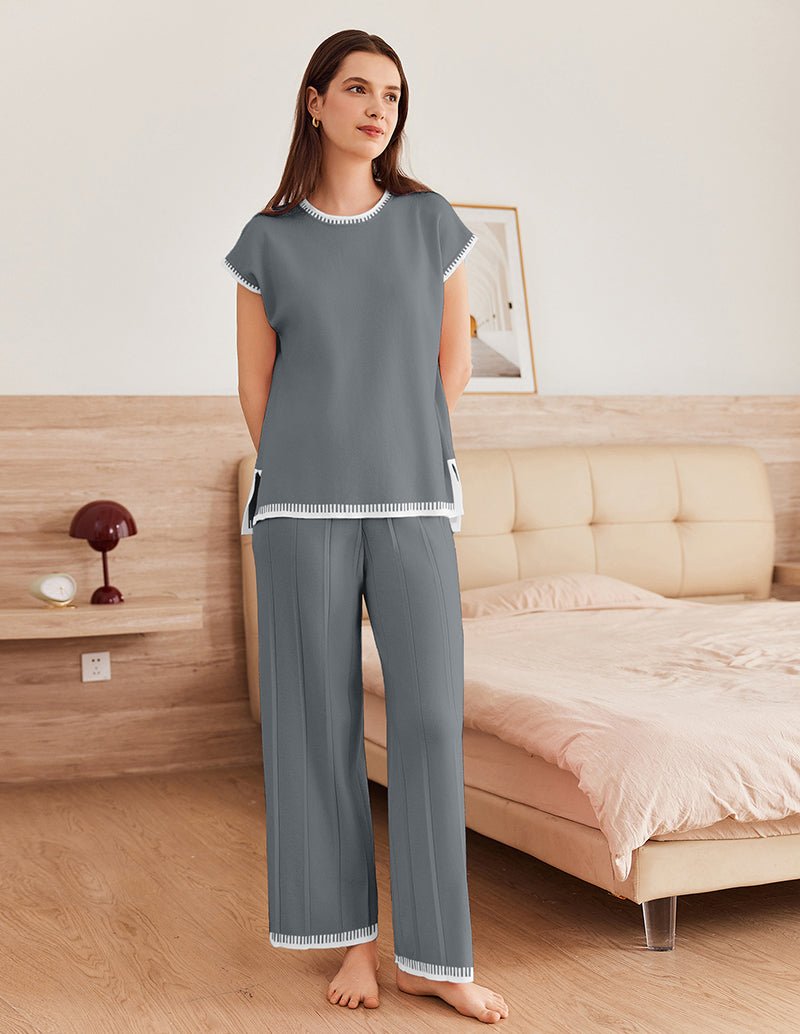
Fine yarns. Softness starts with denier — the thickness of the individual threads. Modern knit sleepwear uses micro-fine polyester yarns that are a fraction of the diameter of a human hair, so the fabric surface has fewer ridges to catch on skin. More fine threads packed into the same space also means a denser, silkier surface, which is why a well-made knit set can feel smoother than a coarser woven one even at a similar weight.
A brushed or peached finish. After knitting, the fabric can be passed over fine bristles that raise a microscopic nap on the surface — the same principle as peach skin, which is where the industry term "peached" comes from. That halo of micro-fiber is what turns "smooth" into "creamy." It scatters light softly instead of glossily, which is why brushed knits look matte and expensive rather than shiny.
A little stretch. Four to five percent spandex does two jobs at once: it lets the fabric recover its shape after a night of sleep, and it removes tension from every seam. A set that stretches with you simply feels softer, because your skin never feels the fabric pulling back.
The practical takeaway: when a product listing mentions a "soft brushed knit," "milk-like fabric," or a satin with spandex, you are looking at the same engineering from different directions — fine yarn, finished surface, built-in give.
How the Fabric Behaves Through the Night
Softness that disappears by 2 a.m. is not softness worth buying, so the honest question is how these fabrics perform across a full night — and the answer starts with temperature. As the Sleep Foundation notes, your core temperature naturally drops as you fall asleep, and clothing that traps too much heat works against that process. This is where the fabric families genuinely differ in personality:
Lightweight knit blends and satin are the cool-side options. Polyester micro-knits hold little water and little heat, so a brushed knit set feels cozy on contact without building up the heavy, damp warmth that thicker fabrics can. Satin adds a slick surface that lets bedding glide over it — a small thing that matters enormously to anyone who repositions at night.
Real mulberry silk is the coolest touch of all, and it brings a bonus: the same protein fiber that makes silk smooth is also naturally gentle against skin and hair, which is why silk sleepwear has a reputation for leaving fewer sleep creases. It is the fabric people save for guests, trips, and the nights that deserve a little ceremony.
Brushed knits with a higher polyester content sit on the warm side of the family — still breathable, but with more of that fleecy, held-in warmth that cold sleepers and winter bedrooms are looking for. None of these is the "right" answer; they are different tools, and picking by bedroom temperature is more useful than picking by label aesthetics.
One more night-behavior worth knowing: fine knits are quiet. They do not swish or rustle as you move, which light woven satins sometimes do — a real consideration for light sleepers who wake at every sound, including their own pajamas.
Caring for the Softness
The soft surface that makes milk-silk pajamas feel special is also the part that rewards gentle care, and the routine is genuinely easy.
Wash cool and gentle. Cool water protects both the fine yarns and the brushed nap. A gentle cycle with like fabrics (no zippers, no velcro, no towels) keeps the surface from snagging. A mesh laundry bag is cheap insurance for anything with buttons or delicate trim.
Skip the high heat. Heat is the one thing that flattens a brushed finish and dulls a satin sheen. Hang-dry or tumble with no or low heat — fine synthetics and silk both dry quickly, so the dryer adds time to the laundry routine without adding anything to the fabric.
Fold, do not hang, knits. Stretch knits keep their shape best folded in a drawer; hanging them by the shoulders can gradually stretch the neckline. Woven satin sets, which have no stretch to lose, are fine on a hanger.
Wash silk separately. For 100% mulberry silk, a pH-neutral detergent on a delicate cycle (or a hand wash) keeps the protein fiber at its best, and air-drying away from direct sun protects the color. It sounds precious written down; in practice it is one extra thought per month.
Follow those four habits and the hand-feel you fell for in the store is the hand-feel you still have next winter.
Where the Feel Fits Your Week

The milk-silk hand-feel shows up in more situations than people expect, because soft-and-stretchy is a property, not just a bedtime feature.
For sleeping, the stretch-knit family is the workhorse: it moves through every sleep position, never binds at the shoulder or waist, and stays quiet through the night. Hot sleepers lean toward the satin and lightweight knits; cold sleepers reach for the heavier brushed ones.
For travel, fine knits are the packing secret. They fold to almost nothing, refuse to wrinkle, and come out of a suitcase looking like they were laid flat. A dark knit set does double duty as a plane outfit and the first night's pajamas in the hotel.
For slow mornings, a soft knit set is the difference between "getting dressed" and "staying comfortable." It is presentable enough for a video call and a doorstep package, which is exactly the range most of us actually live in on a weekend.
For gifting, the hand-feel is the message. Nobody needs convincing that a set feels good — they can feel it through the wrapping — which is why soft knit sets and satin sets are the two categories that disappear fastest from gift guides. Pairing one with the recipient's favorite color does the rest.
Finding the Feel at Ekouaer

Ekouaer's catalog covers the full range of the milk-silk story, from the engineered knits to the real thing — three of them make the range easy to see.
The Long Sleeve PJ Set ($36.99) is the everyday expression of the hand-feel: a 95% polyester, 5% spandex knit with a pullover top and drawstring jogger pants, side pockets, and elastic ankle cuffs that keep the pants from riding up in sleep. It comes in ten colors from soft pink to deep navy, runs S through XXL, and is fully machine washable — the set most people end up buying in a second color.
The Long Sleeve Floral Pleated Nightgown ($36.99) brings the same soft stretch knit into a dress silhouette: a V-neck, pleated A-line skirt with curved hem, side pockets, and a full ankle length in eleven colorways. It runs S through 3XL, and it is the piece that answers "I want the comfort of pajamas but a little more put-together" — equally at home for sleep, slow mornings, and casual days in.
And at the top of the range, the 100% Mulberry Silk Short Sleeve Floral Pajama Set ($229) is the protein-fiber version of the same idea: pure mulberry silk with a tie-front top and matching shorts, in five colorways including a clean white. This is the cool-touch, natural-sheen experience for anniversaries, honeymoons, and anyone who has been meaning to try real silk — and at 21 sizes in stock across its colorways at the time of writing, it is an easy one to try.
All three ship from ekouaer.com, where the full pajama sets collection makes it simple to compare fabric families, sizes, and colors side by side.
Frequently Asked Questions
What is milk silk fabric made of?
Today, "milk silk" in sleepwear almost always describes a soft hand-feel rather than a specific fiber, and the fiber content label tells you exactly what you are holding — commonly a fine polyester knit with around 5% spandex, or a satin weave. Historically, the name traces to genuine milk-protein (casein) fiber patented in Italy in 1935 under the name Lanital. The label's generic fiber names, which US law requires, are the reliable guide.
Do milk silk pajamas keep you cool or warm?
They come in both personalities, which is why the label matters. Lightweight knit blends and satin sets sit on the cool side — smooth, breathable, and light enough for warm rooms — while heavier brushed knits trade a little of that coolness for cozy warmth. Real mulberry silk is the coolest touch of the family. Match the set to your bedroom temperature rather than to the marketing name.
Is milk silk the same as silk?
No — and the difference is a pleasant one to understand. Silk is a natural protein fiber spun by silkworms and sold as 100% mulberry silk; milk silk is a name for a soft, cool hand-feel that modern fine-knit synthetics deliver very well. If you want the protein-fiber experience, look for "100% mulberry silk" on the label, such as Ekouaer's mulberry silk sets.
How should I wash milk silk pajamas?
Machine wash cool on a gentle cycle with like fabrics, skip fabric softener on brushed knits (it can coat the micro-fibers), and hang dry or tumble with no or low heat. For 100% mulberry silk, use a pH-neutral detergent on delicate, and air-dry away from direct sun. The rules exist to protect the soft surface — and they take no extra time once they are habit.
Will milk silk pajamas pill?
Quality fine-knits resist pilling well, especially when washed cool and kept away from high-heat drying and rough fabrics like towels. If pilling appears over time, a fabric shaver restores the surface in minutes. Washing similar textures together — knits with knits, never with towels or zippers — is the single habit that keeps the surface smooth longest.
Are milk silk pajamas a good gift?
They are one of the easiest gifts in sleepwear, precisely because the softness is instantly feelable and the fits are forgiving. A stretch-knit set with a drawstring waist spans a range of sizes comfortably, and Ekouaer's core sets run S through XXL (with several styles extending to 3XL). Choose a color you have seen them wear, and the hand-feel does the selling.
Related Reading
-
Ekouaer Luxury Sleepwear Guide: Silk, Modal & Lyocell Pajamas
-
What Is Ekouaer Loungewear Known For? Comfort, Fabric, and Everyday Styling
About Ekouaer
Ekouaer is a sleepwear and loungewear brand built on a simple idea: comfort should be something you live in, not something you save. With over a decade of design experience, the brand is known for soft pajama sets, inclusive sizing from XS to 3XL and beyond, and approachable prices that make a small luxury feel everyday. Ekouaer has been recognized by outlets including Forbes Vetted and CNN Underscored for comfort and value, and the Ekouaer x Vanessa Hudgens "My Comfort Era" collaboration brought the same easy-to-wear comfort to a wider audience. The focus stays on touchable fabrics, easy machine care, and styles that move from bed to couch to a doorstep hello without a costume change.
Ekouaer in the Press
-
Oprah Daily (2026) — the best pajamas for women worth adding to your rotation
-
CNN Underscored (2024) — cozy pajamas from Amazon, featuring the Ekouaer satin cami shorts set
-
People (2026) — Vanessa Hudgens on the mom-approved Ekouaer styles she reaches for over and over
-
USA Today (2026) — Ekouaer unveils its premium loungewear collection