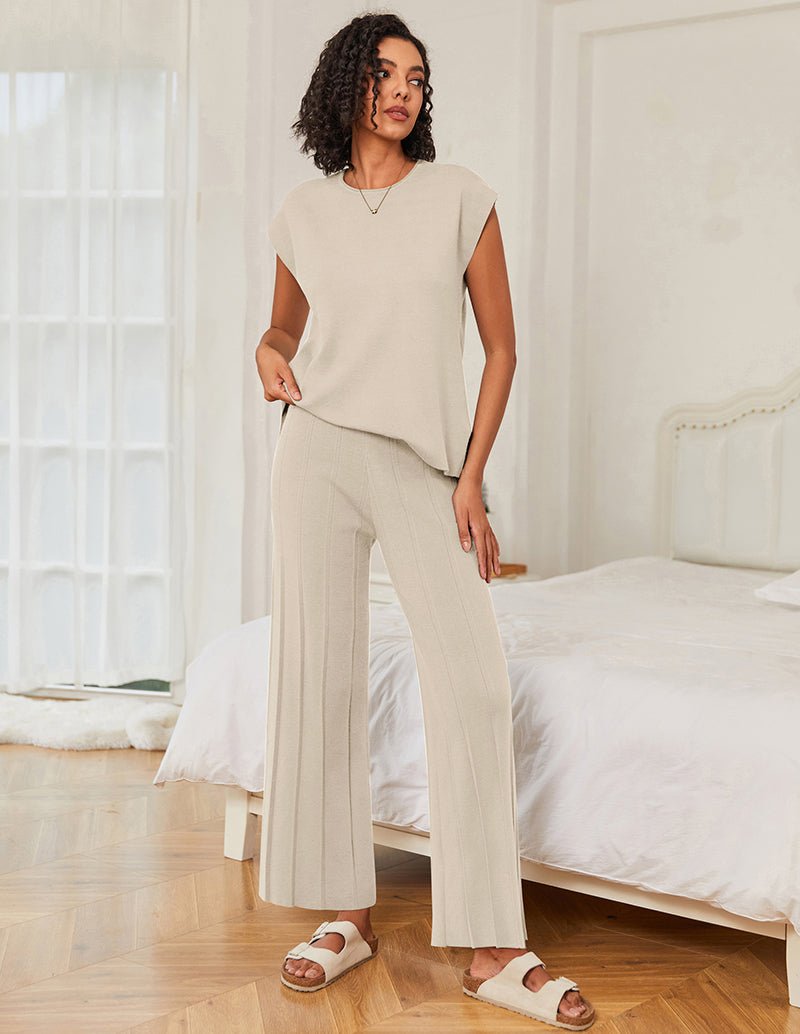
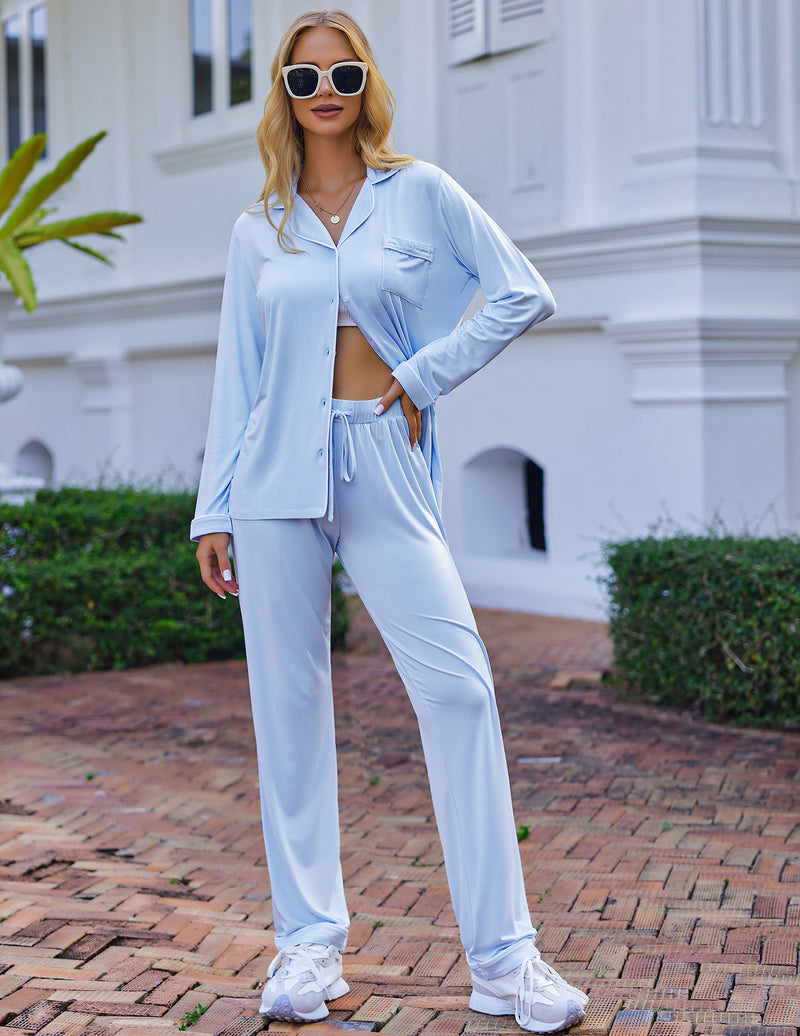
What to Wear While Pumping: The Complete Wardrobe Guide for Pumping Moms

What you wear during pumping sessions affects more than comfort. It affects how long setup takes, whether you can multitask, how much skin is exposed in less-than-private situations, and whether you can get in and out of a session without a full outfit change.
The short version: a well-fitting pumping bra paired with a nursing top that opens from the front is the most functional combination for most pumping situations — but the specifics shift depending on whether you're pumping at home, at work, on the go, or with a wearable pump. (For the general mechanics of nursing access types — clip-down, pull-aside, hidden panel — see our nursing access comparison guide; this guide focuses specifically on what pumping adds to that equation.) Ekouaer's nursing collection covers the pieces referenced throughout.
Why Clothing Choice Matters More Than Most Pumping Guides Mention
Most pumping guides focus on equipment — flange fit, pump settings, storage bags — and give clothing a sentence or two. But what you wear directly affects how sessions actually go.
Motif Medical's guide to hands-free pumping, medically reviewed by Ashley Georgakopoulos, IBCLC and Lactation Director at Motif Medical, makes a point worth taking seriously: multitasking or relaxing during a pumping session takes attention off how much milk is coming out and how fast it's letting down — and that shift in attention can actually help both. Clothing that requires holding up or constantly adjusting during a session works directly against that, creating a physical and mental distraction that competes with the let-down reflex.
Easy-access clothing — a button-down top, or a nursing top designed for one-handed access — removes that friction. Not having to think about your shirt while pumping is a small thing that compounds across multiple sessions a day, every day, for months.
The Foundation: Pumping Bra First, Top Second
The single most important garment for any pumping session is the bra. A hands-free pumping bra holds flanges in place so you don't have to — which is what makes it possible to send emails, eat lunch, or manage an older child during a session rather than sitting still with both hands occupied.
A bra built for pumping should provide real support for the added weight of a wearable pump or the pull of flanges and tubing, generally via adjustable straps and a secure closure that holds the pump steady against the breast — fit here affects both comfort and how well milk actually flows during the session, since flanges that shift out of position mid-session reduce output.

The Ekouaer Nursing Bra — Wavy Breastfeeding Bra is designed with clip-down nursing access and adjustable support that works for both feeding and pumping — structure to hold flanges in position, soft enough for extended wear through multiple sessions a day. All Ekouaer fabrics carry OEKO-TEX Standard 100 certification, relevant for a garment in prolonged contact with sensitive postpartum skin.
The bra you choose determines which tops actually work with it. A bra that clips down from the strap needs a top that allows access from the neckline or a front opening. A bra with front panels that open needs a top that gives room to reach the panel without pulling the whole shirt up.
The Four Pumping Contexts: What to Wear for Each
|
Context |
Priority |
What Works |
|---|---|---|
|
At home, newborn stage |
Speed, minimal effort |
Loose nursing top + comfortable bra; nursing pajama set for overnight/early morning sessions |
|
Returning to work |
Discretion, looks professional |
Double-layer/hidden panel top; dark or patterned fabric; hands-free bra |
|
Wearable/wireless pump |
Accommodating pump bulk |
Loose outer layer that doesn't compress the pump; structured but non-restrictive bra |
|
On the go |
Fast, discreet, mobile-friendly |
Panel-access top + hands-free bra + light cardigan or open button-down layer |
At Home with a Newborn
In the early postpartum weeks, comfort and speed take priority over everything else. You're pumping every 2–3 hours, often with a baby nearby, often sleep-deprived. The goal is a setup that requires the least possible conscious effort: a comfortable nursing bra plus a loose nursing top with simple front access — nothing requiring full undressing or two hands to manage.

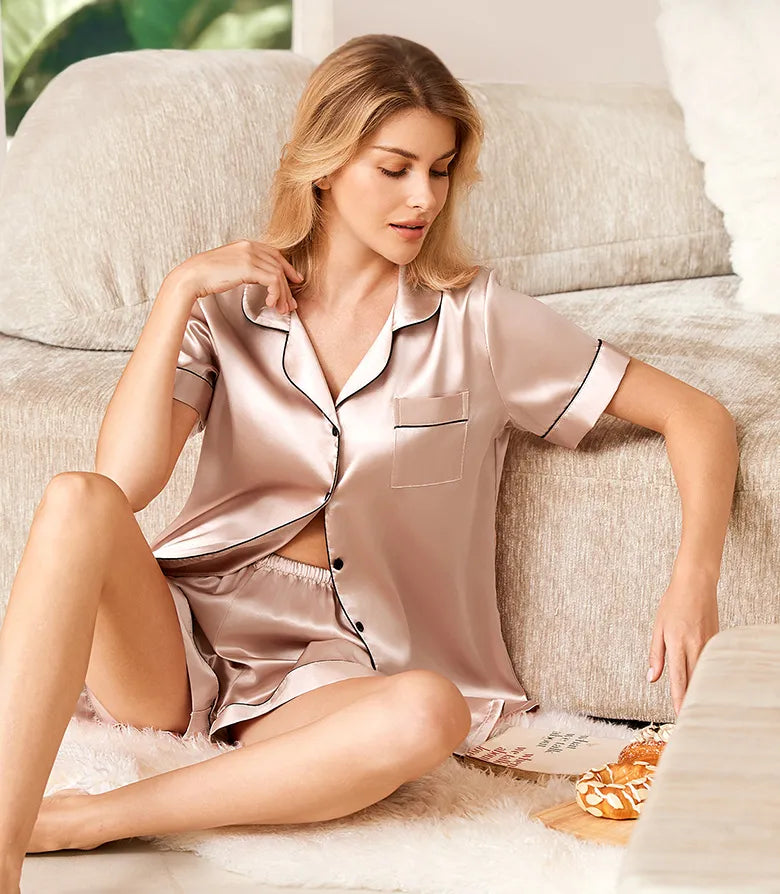
A nursing pajama set works particularly well for overnight and early-morning sessions, since it eliminates getting fully dressed before pumping. The Ekouaer Maternity Nursing Pajama Set — Long Sleeve Top with Pants and Pockets covers at-home pumping and nighttime nursing in one garment: nursing access built into the top, pockets for a phone or pump remote, long-sleeve coverage for cooler mornings.
Returning to Work
The return-to-work pumping wardrobe has one constraint home pumping doesn't: whatever you wear needs to look like ordinary work clothing from the outside. A double-layer nursing top — where the outer layer looks like a regular professional top — is generally the most practical solution. Dark or patterned fabrics minimize the visibility of any milk-related incidents, which matters more in a shared office environment.

Hands-free pumping bras are worth prioritizing for desk workers specifically, since they let you keep working through a session rather than sitting idle. The Ekouaer Comfy Nursing Tops 3-Pack and Ekouaer 3-Pack Nursing Shirts — Long Sleeve both cover a work rotation across seasons — professional enough for video calls from the waist up, practical enough for multiple sessions a day.
Wearable / Wireless Pumps
Wearable pumps (Elvie, Willow, Medela Freestyle Hands-Free, and similar) sit inside the bra cup rather than connecting via tubing to an external unit. The clothing requirements shift slightly: these pumps typically add a few centimeters of projection at the chest, so a bra needs to hold them securely while accommodating that added bulk, and an outer top needs to avoid compressing the pump.
Tight tops press a wearable pump against the breast and can affect suction; loose tops or flowy blouses let the pump sit naturally. Avoid fitted or structured pieces — blazers, fitted cardigans, bodycon silhouettes — with wearable pumps specifically, since the compression works against pump performance.
On the Go
Pumping during commutes, travel, or errands needs clothing that can be accessed discreetly in a range of settings and doesn't require a full wardrobe change or a dedicated pumping space. A nursing top with discreet panel access, a hands-free bra, and (if using one) a wearable pump is the combination that makes genuine on-the-go pumping workable. Darker fabrics and prints help manage the visible aspect of any minor milk incidents; a light cardigan or open button-down over a nursing top adds a layer of discretion in public settings.
What Not to Wear While Pumping
|
Avoid |
Why |
|---|---|
|
Fitted or structured tops without nursing access |
Require lifting or fully removing the shirt — slow and inconvenient for a 15–20 minute session |
|
Underwire bras during active pumping |
Can compress breast tissue and, over time, may contribute to blocked ducts |
|
Very loose/baggy tops with no bra underneath |
Gives the pump nothing to brace against, defeating a hands-free setup |
|
One-piece outfits and bodysuits |
Require significant undressing for access; separates are always more practical |
Building a Pumping Wardrobe: What You Actually Need
A practical pumping wardrobe doesn't need to be large:
-
2–3 nursing bras — enough for rotation: one wearing, one washing, one backup
-
3–5 nursing tops — a mix of short- and long-sleeve covers most weather and settings; multi-packs make sense here since laundry happens less frequently than pumping sessions in early postpartum
-
1–2 nursing pajama sets — for at-home and overnight sessions, integrating pumping access with comfortable sleep and lounge coverage
Browse the full Ekouaer nursing collection for tops, sets, and bras across the complete pumping and nursing period.

Comfort as a Standard, Not a Compromise
Pumping at a desk between meetings, in a car during a commute, in the dark at 5 a.m. before anyone else is up — none of it needs to also involve fighting with your own shirt.
That's the idea behind Ekouaer's My Comfort Era campaign with actress Vanessa Hudgens — "Done proving. Ready for real comfort." Juggling work and pumping and a hands-free setup that actually works is enough of a performance on its own. The clothing shouldn't add to the list of things you have to manage.
(Follow the campaign: Instagram · Facebook · TikTok)
FAQ
Q: What should I wear while pumping at work?
A: A nursing top with discreet panel or pull-down access, a hands-free pumping bra, and an outer layer (cardigan, blazer, loose shirt) that looks professional from outside the lactation room. Dark or patterned fabrics help minimize the visibility of any milk-related incidents, and a hands-free bra keeps your hands free for desk work during sessions.
Q: What top works best with a wearable breast pump?
A: A loose, soft top that doesn't compress the pump against the breast. Wearable pumps add a few centimeters of projection at the chest, and fitted tops press against that, which can affect suction. A bra and top that hold the pump securely without compressing it is the combination that makes on-the-go pumping genuinely workable.
Q: Do I need a nursing top to pump, or can I use regular clothes?
A: You don't technically need nursing-specific tops — any button-down or front-access top works for pumping. But nursing-specific designs make daily feeding and pumping significantly more convenient, and for multiple daily sessions, the time savings from designed-access tops add up materially.
Q: What should I not wear while pumping?
A: Tight high-neck shirts, dresses without front access, stiff non-stretch fabrics, and complicated layered outfits are the main categories to avoid — anything requiring multiple layers to remove makes the process significantly slower. Underwire bras that compress breast tissue during sessions are also worth avoiding.
Q: How many nursing tops do I need for pumping?
A: Enough for rotation — typically 3–5 tops for daily pumping is functional. Having clean clothing ready for each session ahead of time, rather than scrambling, is part of building a pumping setup that actually works day to day. Multi-packs cover this more efficiently than buying individual tops.
Related Reading
About Ekouaer
Founded in 2014, Ekouaer makes sleepwear and loungewear with an emphasis on functional design and fabric safety. All fabrics carry OEKO-TEX Standard 100 certification — independently tested to be free of harmful substances, meeting requirements for skin-contact textiles. Products have been featured in CNN Underscored, Forbes, and TODAY.com.
Ekouaer in the Press
-
Reuters: Vanessa Hudgens fronts the My Comfort Era global campaign
-
PopSugar: Strategic styling and adaptive lounge layers in the new fashion collection
-
Yahoo Shopping: Celebrity-backed comfort standards and lifestyle alignment
-
InStyle: Holiday travel capsule edits and functional holiday wardrobe packing templates