Best Satin Pajamas for Women (2026 Buying Guide)
Satin pajamas are the slippery, light-catching sets you reach for when you want sleep to feel a little special. The catch is that satin is a type of weave, not a type of fiber, so the same word on a hang tag can mean a budget polyester set or a luxury silk charmeuse set priced ten times higher. This guide clears up what satin really is, how polyester and silk versions differ on your skin and in the wash, and which satin pajama picks are worth your money this year.

Key Takeaways
-
Satin describes the weave, the glossy surface from floating threads, not the fiber inside it.
-
Most satin pajamas under about 40 dollars are polyester. Silk satin, also called charmeuse, is the natural, breathable upgrade.
-
For silk, look for a momme weight between 19 and 25. Below 19 reads as thin and fragile.
-
Quality shows in the sheen and the seams. A soft pearly glow beats a loud plastic shine, and French seams beat rough serged edges.
-
Cold delicate washes, a mesh bag, and air drying keep satin smooth far longer than the label demands.
What Satin Actually Is
The first thing to settle is that satin is not a material. It is a way of weaving, specifically one where the top threads float over several bottom threads to create that smooth, light-catching face on one side and a dull back on the other. Because it is a structure rather than a fiber, satin can be made from polyester, nylon, rayon, or silk. That single fact explains almost every confusing label you meet: a product titled satin might be mostly plastic, while silk satin is the same weave built from a natural protein fiber.
What this means for your sleep is simple. The weave gives you the look, the slip, and the shine. The fiber gives you the feel, the temperature behavior, and the care rules. A polyester satin and a silk charmeuse can look nearly identical in a product photo, but they sleep and wash in completely different ways. Learning to read the fiber line, not the headline, is the whole game, and it is the habit that separates a set you love from one you regret.
The label is your best friend here, and most shoppers skip it. A title that says "satin" tells you the weave and almost nothing else. The fiber line, usually in small print near the care instructions, tells you what you are actually buying. If it says "100% polyester," you have the easy-care, lower-cost version. If it says "100% mulberry silk" or "silk charmeuse," you have the premium natural version. Anything vague like "satin blend" deserves a second look before you spend.
Satin Types Compared
The fastest way to see the gap is a table. Each type below is a real option you will meet while shopping, and the right one depends on your skin, your budget, and your washing patience.
|
Type |
Fiber |
Feel and drape |
Best for |
|---|---|---|---|
|
Polyester satin |
100% polyester |
Smooth, a little slick, holds shape, wrinkle resistant |
Everyday wear, budget shoppers, easy care |
|
Rayon or viscose satin |
Wood pulp, semi-synthetic |
Softer drape than polyester, lighter hand |
People who want a natural-leaning feel without silk cost |
|
Charmeuse, or silk satin |
Silk fibers, satin weave |
Liquid drape, subtle pearled glow, breathable |
Sensitive skin, hot sleepers, a special treat |
|
Acetate satin |
Cellulose derivative |
Crisp body, silk-like but weaker wet |
Usually a warning sign in pajamas; skip it |
A quick note on rayon. It sits between polyester and silk: a plant-based fiber that drapes better than plastic satin and costs less than silk, but it is more delicate in the wash. If you see "modal satin" or "bamboo satin," you are looking at rayon-family fibers in the satin weave, which is a fine middle path for softness on a budget. The trade is care: rayon likes gentle cycles and air drying, much like silk does.
Satin Colors, Prints, and Fit
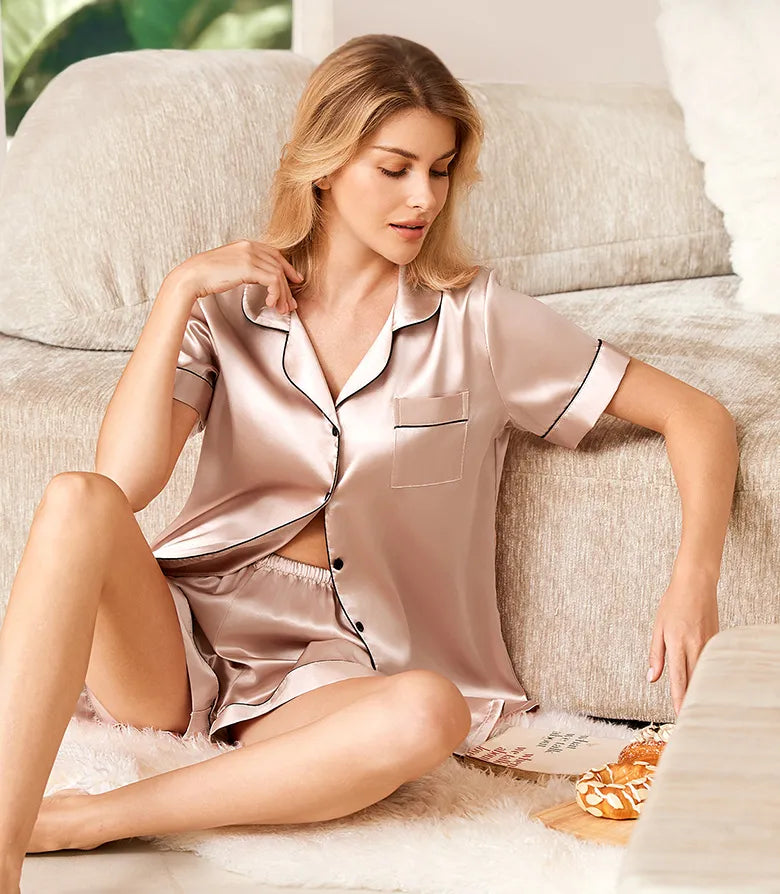
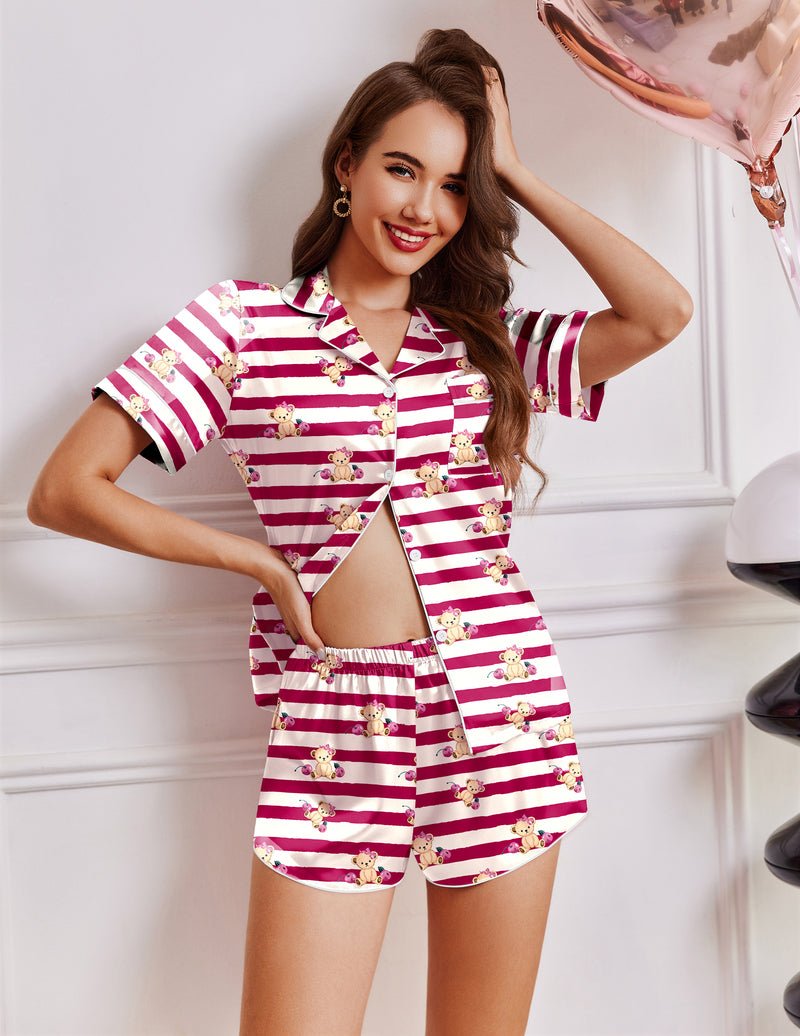
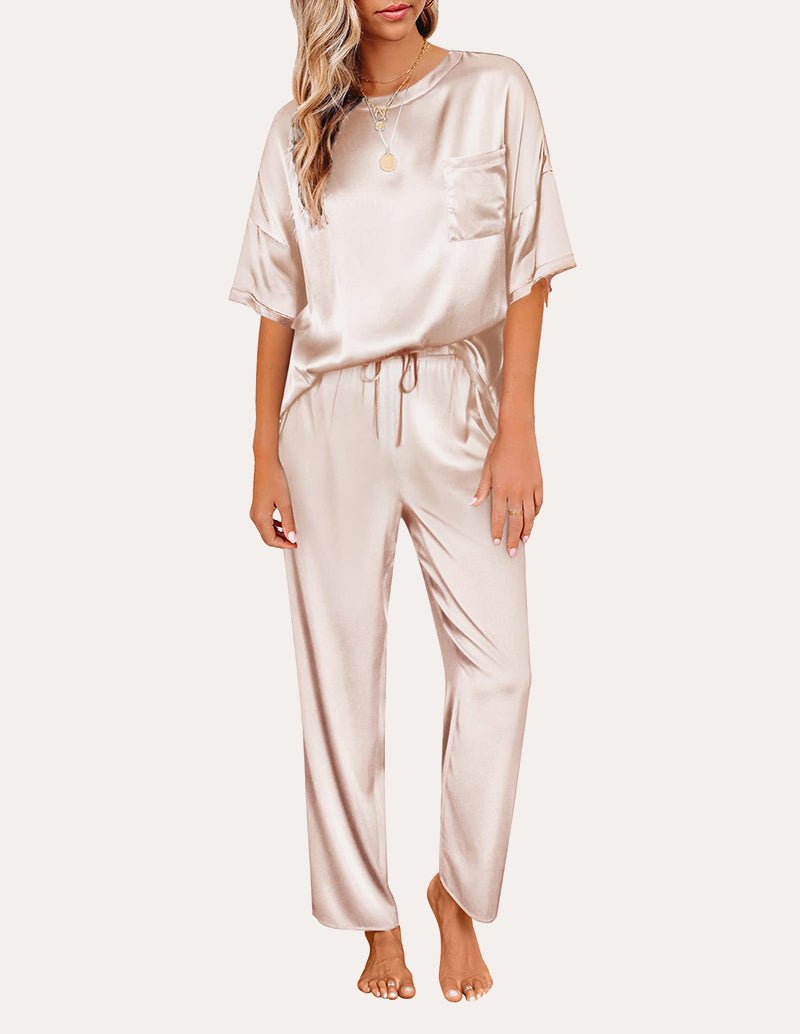
Color behaves differently on satin than on matte fabrics. The weave throws light, so deep tones like black, wine, and emerald look richer, while pale shades can turn sheer under bright light and show every seam. If you love a light color, choose a denser weave or a lined style so you are not left feeling exposed. Prints hide wrinkles and wear better than solids, which is why a patterned satin set often looks newer for longer and photographs especially well.
Fit is where satin can trip you up. The fabric slides, so a set that is too big balloons and a set that is too small clings in all the wrong places. Look for an adjustable waist and a cut that skims rather than grips, and size for your widest point rather than your smallest. A relaxed cut with room to knot the waist keeps you comfortable and still lets you shape the look, which matters because satin shows every tight line.

How to Spot Quality Satin in Five Steps
You do not need a lab to judge a set. Five checks in the store or from photos will tell you most of what you need.
-
Read the fiber line first. "Satin" alone almost always means polyester. Look for "100% mulberry silk" or "silk charmeuse" if you want the real thing.
-
Check the sheen. Good satin has a soft pearly glow that shifts with the light. Cheap polyester often has a flat, almost metallic shine that reads as plastic.
-
Feel the weight. Hold the set up; it should fall into soft folds, not stand stiff. A bit of weight signals a denser, better weave.
-
Inspect the seams. French seams tuck the raw edges inside for a clean, itch-free finish. Serged or overlocked edges fray and can rub.
-
Look for momme on silk. A 19 to 25 momme silk charmeuse is the sweet spot: substantial enough to last, light enough to breathe.
The sheen test is the one shoppers skip most often, and it is the most telling. Natural silk scatters light in a complex, slightly color-shifting way, while polyester throws back a bright, one-note white shine. If a "silk" set under 30 dollars has that hard shine, it is almost certainly polyester with a silk-sounding name. The momme number is the second tell: real silk sellers list it proudly, and its absence on a "silk" product is a yellow flag worth heeding.
Who Should Reach for Satin
Satin is not for everyone, but it fits a clear set of sleepers better than any other fabric. The list below covers the people who tend to get the most from it.
-
Hot sleepers who find fleece and flannel too warm, because silk satin actually cools.
-
Anyone who likes the polished, photo-ready look of a matching set.
-
People with sensitive skin, when the satin is silk rather than polyester.
-
Travelers and house guests, since satin packs small, resists wrinkles, and looks put together.
Caring for Satin So It Lasts
Satin rewards gentle care and punishes heat. A few habits keep it smooth and snag-free for seasons.
-
Wash cold on delicate, ideally inside a mesh bag, with a pH-neutral detergent.
-
Skip fabric softener. It leaves a waxy film that dulls the sheen and makes the fabric feel greasy.
-
Air dry away from direct sun. Heat is what shrinks silk and sets wrinkles in polyester.
-
Steam on low to de-wrinkle. If you iron, turn the set inside out with a pressing cloth between the iron and the fabric.
Storage matters too. Fold satin rather than hang it, since the weight stretches the shoulders on a hanger and leaves marks. Keep two sets in rotation so each one rests between washes, and the color stays crisp longer than if you wore the same pair every night. A small rotation is cheaper than replacing a favorite set every season, and it keeps the fabric from thinning in the spots you wear most.
Common Satin Mistakes to Avoid
Most satin regrets come from a handful of repeat errors. Avoid these and the set will treat you well.
-
Assuming satin means silk. Most satin pajamas are polyester and will sleep warmer than you expect.
-
Buying under 19 momme silk thinking it is a bargain. It is usually sheer and frays fast.
-
Tossing satin in a hot dryer. The fibers damage and the shape goes.
-
Letting a satin set sit against rough items like jeans in the wash, which snags the floating threads.

Where Ekouaer Fits
Ekouaer builds its satin-leaning sleepwear around the same comfort-first logic, with sets cut to move and sized XS to 3XL so the beautiful set you want is the set that actually fits. The silk and satin styles favor a soft, breathable hand and a relaxed cut that will not twist at night, while the easy-care polyester options keep the look for shoppers who would rather not hand-wash. The My Comfort Era line with Vanessa Hudgens carries that polish into the bedroom, and our silk pajama guide explains the silk side in more depth if you want to compare the two before you buy.
Frequently Asked Questions
Is satin breathable for sleeping?
Polyester satin is not very breathable and can feel warm through the night. Silk satin breathes and regulates temperature, so it suits hot sleepers far better. If you run warm, choose silk charmeuse over polyester, and keep the room cool for the best rest.
Is satin just a cheap version of silk?
No. Satin is the weave and silk is the fiber, so the two are not rivals. You can have cheap polyester satin or expensive silk charmeuse, and most products titled simply "satin" are polyester unless the fiber line says silk. The price gap reflects the fiber, not the weave.
Can I machine wash satin pajamas?
Polyester satin usually survives a gentle cold cycle inside a mesh bag. Silk charmeuse is safer hand-washed or washed on delicate, then air dried. Always check the care label before the first wash, because the fiber decides the method more than the style does.
Are satin pajamas good to give as a gift?
Yes. They photograph well, feel luxe, and work for almost anyone, which makes them a safe and pretty present. Pick a mid-weight polyester if you are unsure about the recipient's washing habits, or silk if you want to spoil them and they enjoy hand-care.
Related Reading
About Ekouaer
Ekouaer designs sleepwear around skin-friendly fabrics that stay smooth wash after wash, which is why the satin and silk sets use breathable weaves with a relaxed cut from XS to 3XL. Recognized by Forbes Vetted, CNN Underscored, and Oprah Daily, the brand favors Airmid Certified Comfort materials that feel good against sensitive skin. The My Comfort Era line with Vanessa Hudgens brings that same easy polish to the bedroom.