
Best Silk Pajamas for Women in 2026: How to Choose by Momme, Style & Price

Here's the short answer before anything else: for everyday silk pajamas that get washed regularly, 19–22 momme mulberry silk is the practical sweet spot. Under 19 momme, and they wear thin within a year. Over 25 momme, and they're too heavy to sleep comfortably in. The style — cami set, long sleeve, nightgown — matters less than getting that number right.
The longer answer involves knowing what "momme" actually means, how to tell real silk from "satin" in a product listing, and which styles work best for which sleep situations. This guide covers all of it.
Why Most "Silk Pajamas" You're Looking At Aren't Silk
This is the most important thing to know before buying, and most guides bury it.
The product category "silk pajamas" on Amazon and most retail sites contains two fundamentally different things:
-
True silk pajamas — made from mulberry silk fiber, a natural protein filament produced by silkworms. Breathable, temperature-regulating, expensive.
-
Polyester satin pajamas labeled "silky" — smooth to the touch, significantly cheaper, do not breathe or regulate temperature the same way. Many product listings include the word "silk" in the title despite containing zero silk content.

How to tell them apart before buying:
-
Check the fiber content in the product description, not just the title
-
Real silk listings will specify momme weight (e.g., "19 momme" or "19mm")
-
Real silk will state the silk type (mulberry silk is the quality standard; tussah silk is a lower grade)
-
Price is a reliable signal: authentic mulberry silk pajamas in 19 momme start around $80–$120. Under $40 with "silk" in the title is almost certainly polyester satin
For a direct comparison of how these two materials feel and perform differently, Satin vs. Silk Pajamas covers the construction differences, care requirements, and when each is the right choice.
Momme Weight: The Number That Determines How Long Yours Will Last
Momme (written as "mm" in product listings) is the weight unit used for silk — it measures how many pounds 100 yards of the fabric would weigh at a standard width. Higher momme = denser, heavier fabric.
For pajamas specifically, the range that matters is 16–25 momme:
|
Momme |
What it means in practice |
Best for |
|---|---|---|
|
12–16 mm |
Lightweight and airy, but thin; tears and pills faster |
Summer camisoles, occasional wear |
|
19 mm |
The most common on the market; comfortable drape, moderate durability |
Everyday silk pajamas, year-round use |
|
22 mm |
~15% more silk fiber than 19mm; noticeably better durability and drape |
Daily wear, if budget allows |
|
25+ mm |
Heavy feel; excellent for bedding but often too warm and stiff for sleeping in |
Robes, structured loungewear |
According to Tara Sartoria's silk guide, 19mm silk washed regularly typically shows wear within one to two years, while 22mm performs significantly better with the same care routine. The tradeoff: 22mm pajamas cost more and feel slightly warmer — meaningfully if you run hot.
The practical recommendation: For most people buying silk pajamas to wear regularly, 19 momme is the minimum worth choosing. Going below that for daily use means replacing them within a season or two.
Silk Grade: The Variable Most Buyers Miss
Beyond momme weight, silk quality is also graded by fiber purity and consistency. The grading scale runs from A to 6A, with 6A being the highest quality.
Grade A: Mixed or shorter silk fibers; inconsistent texture; lower cost. Grade 5A: Clean, consistent fibers; the standard for most quality silk products. Grade 6A: The highest purity — long, uniform fibers, maximum sheen and smoothness.
Why this matters practically: a 22mm silk at grade A can feel rougher and wear faster than a 19mm silk at grade 6A. Momme and grade work together — you need both to evaluate silk quality properly.
Most mid-range silk pajama brands ($80–$180) use 5A grade. Premium brands ($200+) typically specify 6A. For everyday sleepwear, 5A at 19–22mm is a reasonable quality level that most people won't feel a meaningful difference from 6A in daily use.
Real Silk vs. Satin: The Performance Difference
If you're deciding between a true silk set and a high-quality polyester satin set, here's what you're actually choosing between in terms of comfort and function:
Temperature regulation: Real silk is a natural protein fiber that adjusts to body temperature — it feels cool initially and warms gradually to match your skin. Polyester satin has no temperature-regulating properties; it's cool to the touch because of the smooth weave, but traps heat as body temperature rises during sleep.
Skin contact over time: Silk fibroin (the protein core of silk fiber) contains 18 amino acids with a composition similar to the skin's natural moisturizing factors. A 2025 review in ScienceDirect on silk fibroin in cosmetic dermatology notes its moisture-retaining properties and biocompatibility with skin. Polyester satin has no comparable skin-contact properties.
Durability with care: Silk requires hand washing or a delicate machine cycle with a mesh bag and pH-neutral detergent. For a detailed care protocol, How to Wash Silk Pajamas covers this step-by-step. Polyester satin is more forgiving in the wash but pills at friction points faster over time.
When satin is the right choice: For occasional wear, getting-ready mornings, or bridal occasions where appearance matters more than sleep performance, high-quality polyester satin delivers a similar look at a fraction of the price. For nightly wear that you expect to last 2+ years, real silk justifies the cost.
Style Guide: Which Cut Works for What
Cami Top + Shorts Set
The most popular format. The cami sits close to the body, and the shorts allow maximum airflow. This is the best summer configuration for silk or satin — less fabric means less heat retention.
Who it works best for: Hot sleepers, warm climate, anyone who wants a polished look without bulk. The cami strap construction also makes it easier to layer under a robe without bunching.
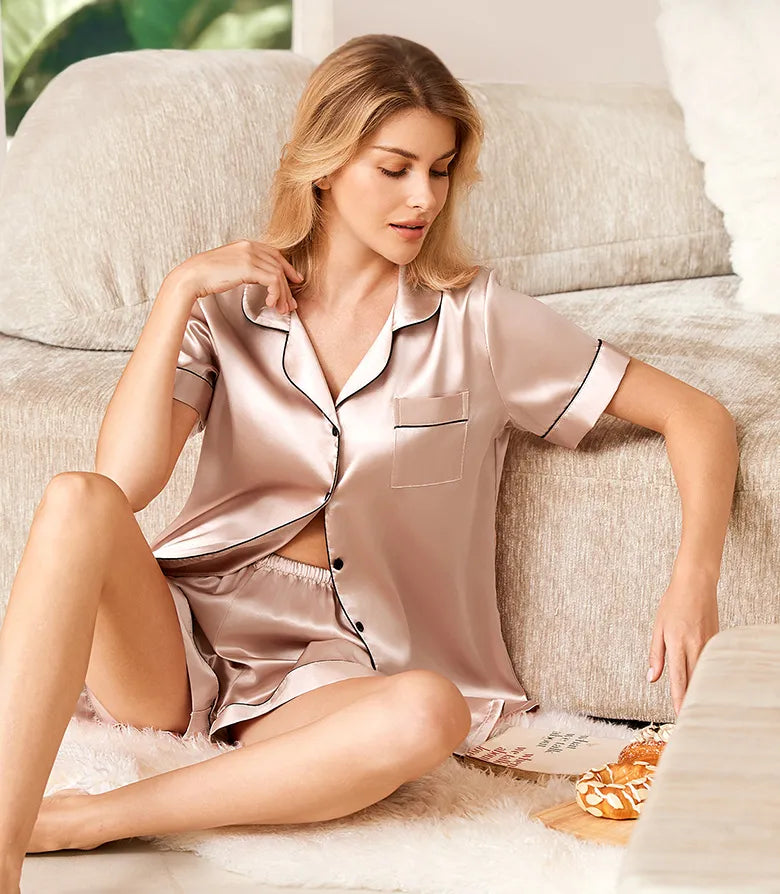
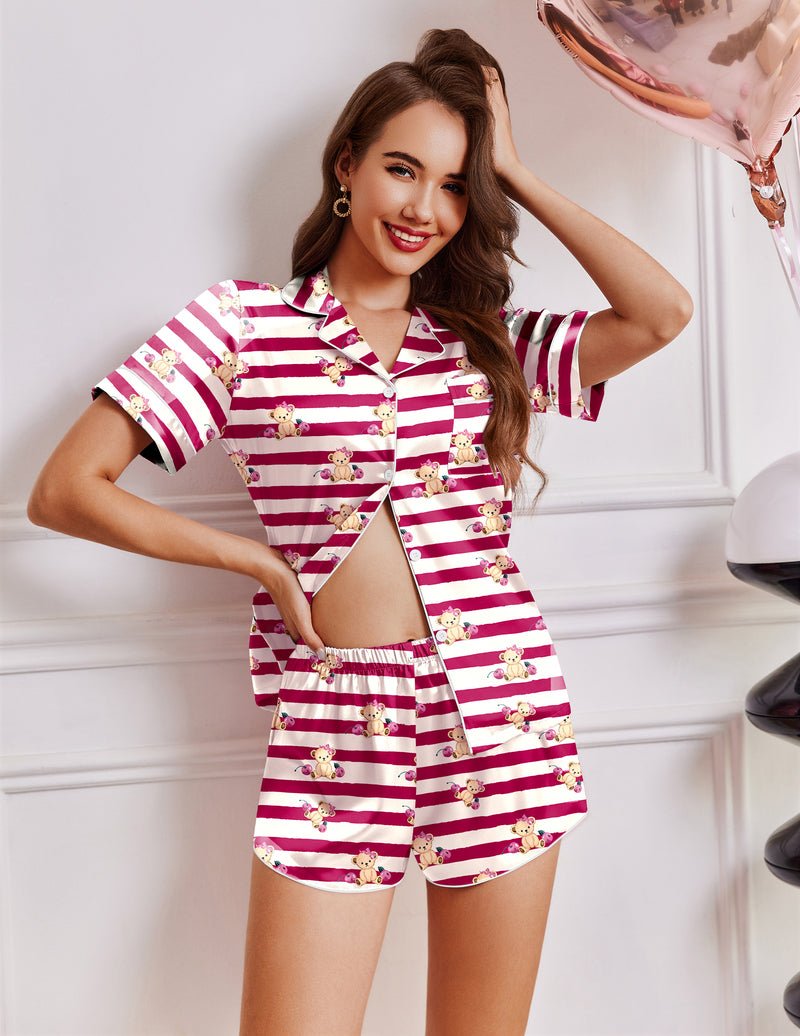
The satin solid cami top and shorts set and silky satin top and shorts set both use this construction — the shorts-based format is specifically better for summer and for women who find full-length pants too warm overnight.
What to check before buying: Strap adjustability (fixed straps that are slightly too long on shorter torsos result in a gaping neckline); shorts waistband width (wider is more comfortable overnight).

Long Nightgown / Slipdress Style
Single piece, minimal seams, maximum drape. For silk specifically, a long slipdress-style nightgown is often the best choice because it uses the fabric's drape properties to their fullest — silk flows and moves with the body, which a structured two-piece set doesn't allow.
Who it works best for: Anyone who runs average temperature (not hot, not cold), moves around in sleep (no waistband to shift), or wants the simplest possible sleepwear routine.
The spaghetti strap long satin nightgown represents this format — a floor-length slipdress construction that uses the smooth fabric without the waistband complexity of a set.
What to watch for: Length vs. height. Floor-length nightgowns on frames under 5'4" drag and become a trip hazard at night. Mid-length (ending at the knee to mid-calf) is more practical for shorter frames.

Cami + Robe Set
A cami nightdress paired with a matching robe. The robe adds coverage and warmth without committing to a full pajama set. Practical for morning use — you can take the robe off when you get warm in bed without disrupting your whole sleep setup.
Who it works best for: Women who want the smooth feel of silk against skin but prefer having a layer option available. Also works well for bridal mornings, hotel stays, or occasions where you might be seen in your sleepwear.
The satin cami nightdress with robe covers this format — the set gives you the flexibility to wear both pieces together or the cami alone when you're warm.

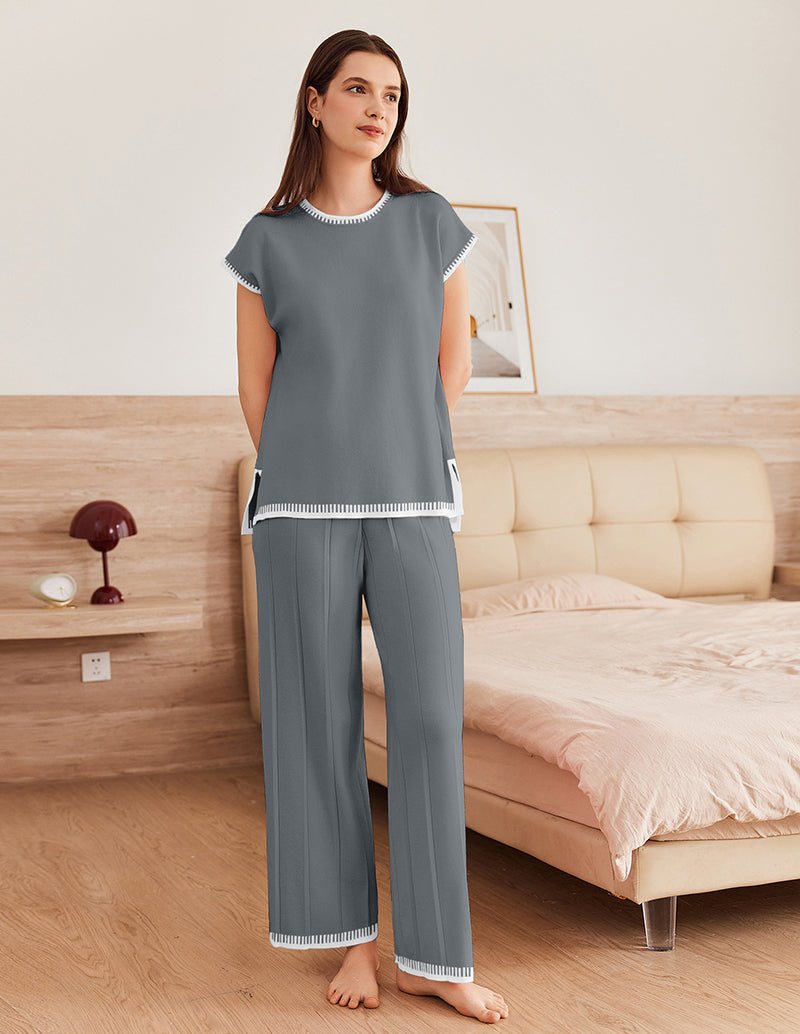
Long Sleeve Top + Pants Set
The most coverage-intensive option. Appropriate for cool rooms or cold sleepers who still want silk's skin-contact properties without sacrificing warmth.
The trade-off: Long sleeve silk pajamas require more fabric and are significantly more expensive at equivalent momme weights. In a cool room (below 65°F), this is the right choice. In a room above 68°F, you'll find the long-sleeve set uncomfortably warm within an hour of sleep onset.
Price Guide: What You're Actually Getting at Each Price Point
|
Price Range |
What to Expect |
|---|---|
|
Under $40 |
Almost certainly polyester satin; no momme spec; may be labeled "silk" or "silky" |
|
$40–$80 |
Low-momme silk (12–16mm) or blended silk-polyester; functional but short lifespan |
|
$80–$150 |
19mm mulberry silk, grade 5A; the practical everyday quality tier |
|
$150–$250 |
22mm mulberry silk, grade 5A–6A; noticeably better drape and durability |
|
$250+ |
22–25mm 6A grade silk; premium brands with OEKO-TEX certification |
The OEKO-TEX marker: OEKO-TEX Standard 100 certification means the fabric has been tested for harmful substances. For sleepwear worn against skin for 7–8 hours nightly, this certification adds a legitimate safety baseline, not just a marketing label.
Browse the full silk and satin sleepwear range at Ekouaer Silk Collections to compare styles and formats across different price points.
How to Care for Silk Pajamas So They Last
The two main reasons silk pajamas fail early: heat exposure and the wrong detergent.
Temperature: Silk proteins denature (break down) under heat. Machine washing on hot, tumble drying on any setting higher than low, or ironing without a press cloth will shorten the life of any silk garment significantly. The AATCC (American Association of Textile Chemists and Colorists) standards for silk care specify cool water and gentle agitation as the minimum requirements for preserving fiber integrity.
Detergent: Standard detergents with enzymes (protease, lipase) break down protein fibers over time — and silk is a protein fiber. Use a pH-neutral detergent specifically labeled safe for silk or wool (Woolite, The Laundress, or similar). Avoid anything with bleach, brighteners, or enzyme additives.
The complete care protocol is covered in How to Wash Silk Pajamas — including how to handle hand washing, how to dry without damage, and what to do about wrinkles without ironing directly.

When Satin Is the Smarter Buy
To be direct: for many people, a high-quality polyester satin set is the better practical choice. Here's when:
-
You want the smooth, cool look without the care requirements — polyester satin can go in the regular wash, tolerates more heat, and is far less expensive
-
You're buying for getting-ready mornings, bridal occasions, or photoshoots — the visual appearance difference between good satin and real silk is minimal in photos; the price difference is significant
-
You sleep hot — counterintuitively, a lightweight cotton or bamboo pajama will outperform silk for hot sleepers. Silk's temperature-regulating properties work best in the 65–75°F range, not for severe hot sleepers who need maximum breathability
For a full comparison, including when each material wins by use case, the satin vs. silk breakdown covers this in more detail.
Frequently Asked Questions
Q: What does "momme" mean in silk pajamas, and what number should I look for?
A: Momme measures how much the fabric weighs per unit area — higher momme means denser, heavier silk. For everyday pajamas washed regularly, 19–22 momme is the practical range. Under 19mm wears out faster; over 25mm is too heavy to sleep comfortably in. If a product listing doesn't specify momme, that's usually a sign it's not real silk.
Q: How can I tell if silk pajamas are actually silk or just polyester satin?
A: Check the fiber content in the product description or care label — it should explicitly say "mulberry silk" or "100% silk." Real silk listings will also specify momme weight. Price is a reliable signal: authentic mulberry silk pajamas at 19 momme start around $80–$120. Anything claiming "silk" under $40 is almost always polyester satin.
Q: Are silk pajamas worth the price for everyday wear?
A: At 19–22 momme, with proper care, real silk pajamas last 2–4 years of regular use. Whether that's "worth it" depends on what you're comparing to. Versus a $30 polyester set replaced every year, the cost-per-wear works out roughly equal. The difference is in the experience — temperature regulation, skin contact, and drape — which cotton or polyester doesn't replicate.
Q: What silk pajama style is best for summer?
A: Cami top and shorts in the lightest available momme (16–19mm). Less fabric means less heat retention. Avoid long sleeve sets for summer use — silk's temperature-regulating properties still can't overcome the insulation of two layers of fabric covering the full torso and arms.
Q: Can silk pajamas go in the washing machine?
A: Yes, but with specific conditions: cold water, delicate cycle, inside a mesh laundry bag, with pH-neutral detergent. Never tumble dry on heat — air dry away from direct sunlight or tumble on an air-only setting. High heat degrades silk fiber proteins. See the full care protocol at How to Wash Silk Pajamas.
Q: What's the difference between charmeuse, habotai, and other silk weave types?
A: Weave type affects drape and sheen:
-
Charmeuse — satin-weave silk; high sheen on one side, matte on the other; the most common for luxury pajamas; excellent drape
-
Habotai (China silk) — plain weave; lighter weight, matte both sides, more breathable, less structured
-
Crepe de chine — textured surface, matte finish, less slippery than charmeuse; good for those who find charmeuse too slippery against bedding
For pajamas, charmeuse is the most practical because it drapes well, has a polished appearance, and handles movement better than the stiffer habotai.
Q: Do silk pajamas actually benefit your skin?
A: The claim has some scientific basis. Silk fibroin contains 18 amino acids with a composition similar to the skin's natural moisturizing factors. A 2025 review published in ScienceDirect notes silk fibroin's moisturizing properties and skin biocompatibility. Whether wearing silk pajamas provides measurable skin benefit compared to other sleepwear is less clearly established — the contact time and fabric-to-skin dynamics during sleep are different from topical skincare application. The reasonable claim: silk is less likely to dry or irritate skin than rough synthetic fabrics, particularly for people with sensitive or reactive skin.
Related Reading
-
How to Wash Silk Pajamas: The Complete Step-by-Step Care Protocol
-
Are Silk Pajamas Worth It? An Honest Cost-per-Wear Breakdown
-
Honeymoon Sleepwear Packing Guide 2026: What to Pack by Destination
About Ekouaer
Founded in 2014, Ekouaer designs sleepwear and loungewear with an emphasis on functional comfort and fabric safety. All fabrics carry OEKO-TEX® Standard 100 certification. Products have been featured in CNN Underscored, Forbes, and TODAY.com, and recognized with the Berlin Design Award and Mom's Choice Awards.