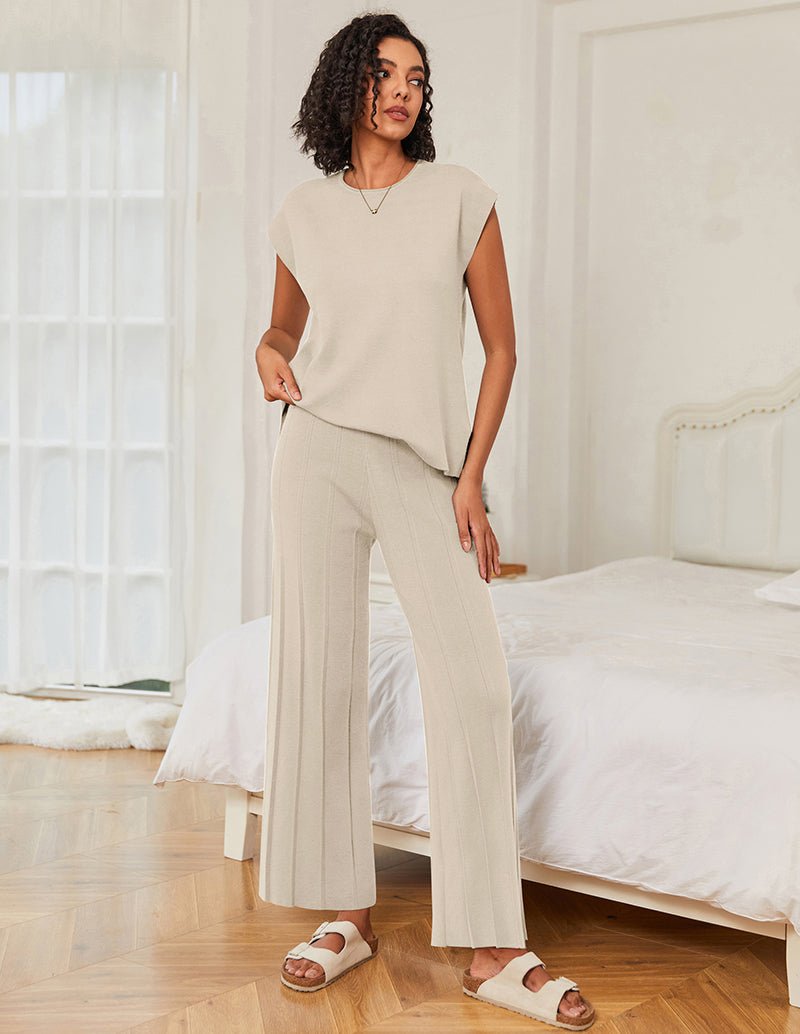
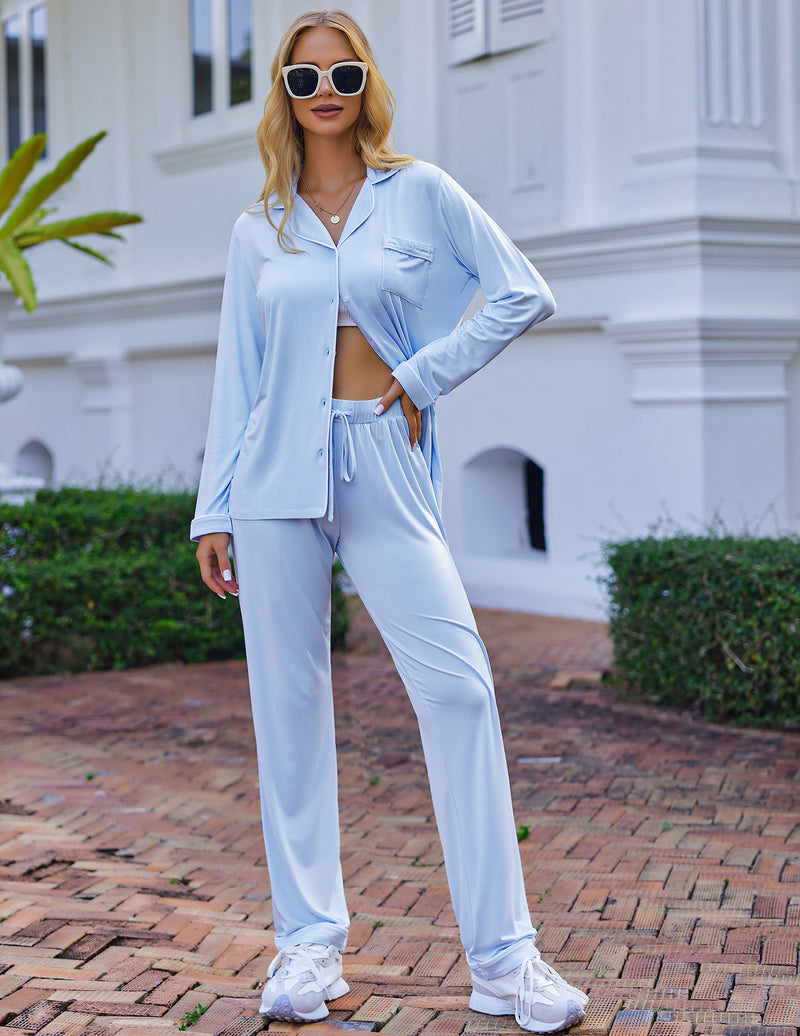
Bridesmaid Pajamas: How to Coordinate Your Whole Bridal Party (Without the Headaches)

Coordinating pajamas for a bridal party sounds simple until you're actually doing it — managing four different sizes, debating whether everyone should match exactly or just coordinate, figuring out whether robes or sets make more sense, and deciding how much to spend before you've even bought the flowers. Most brides underestimate how many decisions this involves, and most of those decisions have better and worse answers that aren't obvious until after the wedding.
This guide gives you a clear framework for all of it: color coordination, style choices, sizing logistics, and the one practical rule that determines whether your getting-ready photos look editorial or like everyone grabbed whatever they could find.
The short version: bride in ivory or soft white, bridesmaids in a complementary shade rather than identical pieces, same silhouette across the party, and order 4–6 weeks out. Everything else builds on those four decisions.
The Core Rule: Coordinate, Don't Match
The most common mistake brides make with bridesmaid pajamas is trying to get everyone in identical pieces — same style, same color, same everything. The result often looks less cohesive in photos than the alternative, because when everyone is visually identical, the bride disappears into the group.
What actually works, and what wedding photographers consistently recommend, is coordination rather than matching: the bride in one shade, bridesmaids in a complementary color, same silhouette across the group. The color differentiation makes the hierarchy immediately legible in photos — bride, then party — while the consistent silhouette creates visual cohesion.
Green Wedding Shoes, which covers bridal trends for a global audience of brides and wedding professionals, put the 2025–2026 getting-ready aesthetic plainly: "laid-back but styled," with coordinated sleepwear chosen deliberately rather than assembled at random. That aesthetic requires thought about color relationships, not just buying the same thing for everyone.
The practical implication: you need two decisions, not one. What does the bride wear, and what does the party wear? Those are separate questions with different answers.
Reddit brides frequently discuss this exact point. Many recommend coordinating rather than fully matching: the bride in ivory or a distinct shade while bridesmaids wear complementary colors in the same style for better photo hierarchy and cohesion.

Decision 1: What the Bride Wears
The bride's getting-ready outfit sets the visual anchor for every group photo from that morning. It should be:
Distinctly bridal in color. Ivory, champagne, soft white, or blush — these read as unmistakably bridal without requiring a "BRIDE" label. A bride in the same dusty sage as her bridesmaids disappears into the group in photos. A bride in ivory while her party wears sage is immediately identifiable in every shot.
Slightly more elevated in style. If bridesmaids are in a simple shorts set, the bride might choose the same style with a matching robe over it. If bridesmaids are in robes, the bride might choose a longer or more embellished robe. The style hierarchy doesn't have to be dramatic — a robe layer or a lace detail is enough.
Practical to remove after hair and makeup. Any top that doesn't open from the front creates real stress during the transition into the wedding dress. Button-down styles, tie-front camisoles, and robes solve this completely.

The Ekouaer Satin Pajamas Cami Nightdress with Robe works well as a bride's set: the cami layer handles close-up and candid shots, the robe adds visual impact for portraits and group photos, and both pieces open without needing to go overhead. The Ekouaer Boyfriend Style Sexy Silk Nightgown is the right choice for brides who want a more romantic, solo-portrait aesthetic — flowing, intentionally bridal, and especially strong in natural window light.
Decision 2: What the Bridesmaids Wear
Once the bride's look is set, bridesmaid coordination becomes a much simpler exercise: choose a color in the same warmth family as the bride's shade, and pick a consistent silhouette across the party.

Color Coordination That Actually Works in Photos
The key principle is warm family: warm-toned bridal shades (ivory, champagne, warm blush) pair with warm-toned bridesmaid colors. Cool-toned bridal shades (bright white, silver-white) pair with cool-toned bridesmaid colors. Mixing warm families — an ivory bride with cool dusty blue bridesmaids, for example — creates a subtle tension in photos that's hard to identify but makes the palette feel slightly off.
|
Bride's Shade |
Bridesmaid Colors That Work |
Colors to Avoid |
|---|---|---|
|
Ivory |
Blush, dusty rose, soft sage, champagne, lavender |
Bright white, cool grey, royal blue |
|
Champagne |
Dusty rose, terracotta, warm sage, burnt orange |
Anything cool-toned or bright |
|
Soft white |
Soft lavender, pale blue, silver-grey, blush |
Ivory (will look dirty next to white) |
|
Blush |
Dusty rose, mauve, soft lavender, champagne |
Deep jewel tones, cool whites |
The Ekouaer Half Sleeve Robe is available in neutral and soft colorways that work best for bridesmaid coordination — it photographs cleanly, layers over a cami set or pajama shorts, and has a versatile silhouette that bridesmaids will genuinely use after the wedding.
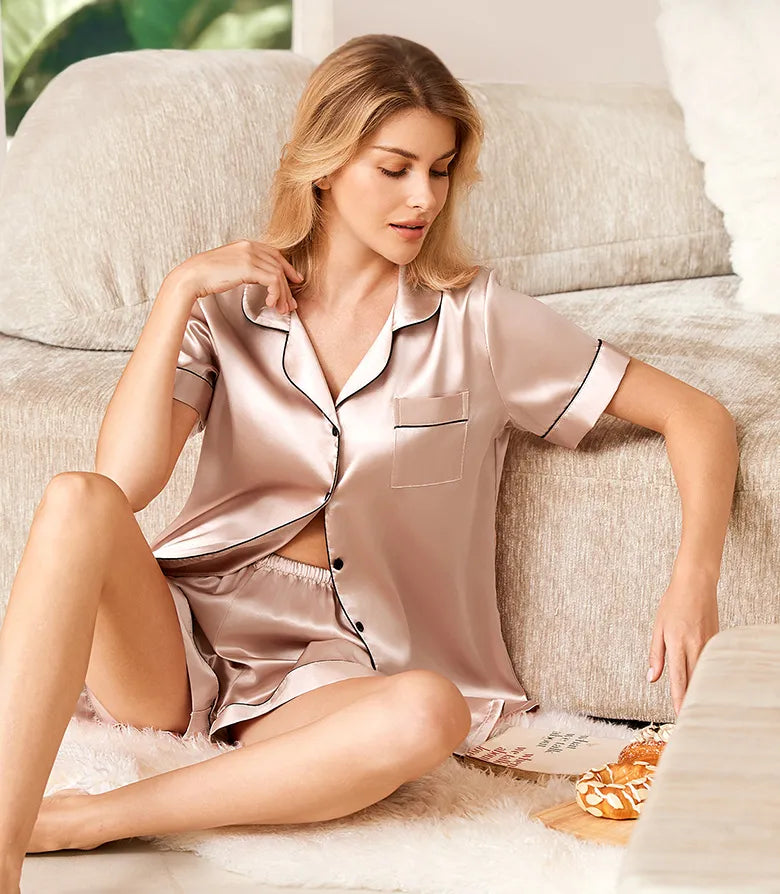
The Ekouaer Satin Pajama Set — Short Sleeve Silky PJ Short Set works well when the preference is pajama sets rather than robes — it has the smooth satin finish that photographs well, comes in neutral colorways, and is practical enough for everyday use post-wedding.

Robe vs Pajama Set: How to Choose
This is the question that comes up most in bridal forums, and it doesn't have a universal answer. It depends on what your getting-ready photos will look like and what your bridesmaids will actually use afterward.
Robes are more versatile and more photogenic in group shots. An open robe over a cami or sleep shorts creates visual layering that photographs with more dimension than a closed pajama set. Robes also work across a wider range of body types because the open-front silhouette is naturally flattering. After the wedding, a good robe gets used as a bathrobe, a layer for cold mornings, or a travel piece in a way that a specific pajama set sometimes doesn't.
Pajama sets are better as gifts and create a cleaner getting-ready aesthetic. If you're presenting the sets at a bridesmaid proposal or bridal shower, a coordinated pajama set in a gift box looks more considered than a robe. For the getting-ready aesthetic, matching sets create a visually cohesive look that reads clearly in photos even without a robe's dramatic silhouette.
The most flexible approach is a shorts set worn under an open robe — you get the visual depth of the robe for portraits and group shots, and the shorts set for candid and close-up moments. This is what most professionally photographed getting-ready suites use.
On Reddit and WeddingWire, real brides frequently navigate this exact debate. In one popular thread, responses ranged from “silk/satin looks better in photos, but jersey is what everyone actually keeps wearing afterward” to practical advice like “I just ordered from Amazon a week or two before and returned whatever didn’t fit.” This reflects how bridal party logistics actually work.
The Sizing Problem: How to Handle It Practically
Group sizing is the operational challenge that derails more bridal party pajama orders than any aesthetic decision. Here's how to handle it without a spreadsheet emergency three weeks before the wedding.
Collect sizes directly, not through approximation. Ask each bridesmaid for their actual size in the specific style you're ordering — not their general clothing size, because pajama sizing varies by brand and cut. Include a link to the size chart from the product page and ask for confirmation, not a guess.
When in doubt, size up. Satin and soft-knit sleepwear is designed with ease built in. A slightly roomy set is comfortable and wearable; a set that's too small is immediately impractical. This is especially relevant for robes, which are forgiving in oversized fits, and less so for fitted cami sets, where the sizing should be accurate.
Order one size up from what you calculate for anyone between sizes. Between-size fits are common, and pajamas are not the place to discover that someone needed a size larger than expected on the morning of the wedding.
Order at least 3–4 weeks early. This allows time for exchanges without the stress of a shipping deadline overlapping with wedding week. For the whole party, the risk of at least one sizing issue is essentially guaranteed — the question is whether you have time to resolve it calmly.
Note the style's specific characteristics before ordering for a group. A satin cami set fits differently from a button-down sleep shirt. Check whether the style runs true to size, runs small, or has a relaxed cut that accommodates a range. Read the product size guide before placing a group order rather than after.

Sizing logistics are a frequent topic on Reddit bridal forums. Brides advise collecting exact sizes with size chart references, sizing up when in doubt, and ordering 4–6 weeks early to allow time for exchanges.
Using Ekouaer's Bundle Discount for Group Orders
For orders of 4 or more pieces, Ekouaer's Wedding Season bundle pricing applies automatically at checkout:
-
2 pieces → 8% off
-
3 pieces → 12% off
-
4 pieces → 18% off
For a bridal party of 3–5 people — which The Knot's 2026 Real Weddings Study identifies as the most common bridal party size — this means most brides buying getting-ready sets for the whole group will hit the 4-piece threshold.
At an average of $50–$65 per set, a party of 4 reaching the 18% discount saves $36–$47 on the total — roughly the cost of one additional set, or the champagne for the getting-ready morning.
The discount applies to any combination of styles from the wedding collection, which means a bride can mix a nightgown for herself, a cami set with a robe for the maid of honor, and matching short sets for the bridesmaids — as long as the total reaches the threshold, the discount applies across all pieces.
Timeline: When to Buy and When to Distribute
Getting the timing right prevents the two most common logistical failures: pieces that arrive too late to exchange, and bridesmaids who receive their sets with not enough time to try them.
|
Timeline |
Action |
|---|---|
|
8–10 weeks before wedding |
Decide on style, color, and silhouette; confirm approach with bridesmaids |
|
6–8 weeks before |
Collect confirmed sizes from every bridesmaid; place order |
|
4–6 weeks before |
Distribute sets; allow time to try and flag sizing issues |
|
3–4 weeks before |
Resolve any exchanges; confirm everyone has their correct set |
|
1–2 weeks before |
Final check — everyone has their piece and knows where to pack it |
|
Wedding morning |
Lay sets out for photos before anyone gets dressed; brief your photographer |
The single most important window is the one most brides compress: 6–8 weeks out for ordering, not 1–2 weeks. Once you're inside 3 weeks before the wedding, exchange timelines from most retailers don't leave enough room for a clean resolution.
What to Tell Your Photographer
Your photographer can only capture what they know to look for. A brief conversation — or even a quick message — before the wedding morning makes a real difference in how the getting-ready photos turn out.
Tell them: the bride's color and style, the bridesmaids' color and style, and whether you want any specific shots (flat lay of all the sets together, group portrait in coordinated outfits, detail shots of lace trim, or a specific label). Most photographers are happy to work with a brief like this — it saves them time in the morning and gives you the images you have in mind.
Green Wedding Shoes describes the current standard for getting-ready photography as "editorial but natural" — which in practice means good light, coordinated outfits, and a photographer who knows what to look for. Two of those three are in your control.
FAQ
Q: Should all bridesmaids wear the same pajamas?
A: Not necessarily — Coordination is more effective than identity. The same silhouette in different colors, or the same color in slightly different styles, reads as more cohesive in photos than everyone in literally identical pieces. The bride should always be visually distinct from the party.
Q: What's better for bridesmaids — robes or pajama sets?
A: Both work, and the best answer depends on your priorities. Robes photograph better in group and full-length shots, are more versatile as gifts, and suit a wider range of body types. Pajama sets feel more like a gift, photograph cleanly in close-up shots, and give bridesmaids something specific to keep. A robe worn over a shorts set gives you the advantages of both.
Q: How do I handle different sizes across my bridal party?
A: Collect confirmed sizes from each bridesmaid directly — don't estimate. When anyone is between sizes, order up. Build in 4–6 weeks from order to wedding day to allow time for exchanges if needed. This is the most commonly compressed timeline in bridal planning and the most regretted.
Q: What colors work best for bridesmaid pajamas?
A: Stay in the same warmth family as the bride's shade. Ivory bride pairs with blush, dusty rose, soft sage, or lavender. Champagne bride pairs with warm dusty roses or sage. Soft white bride pairs with cool lavender, pale blue, or blush. Avoid mixing warm and cool tones across the bride and party — it creates a subtle visual clash in photos.
Q: How much should I budget for bridal party pajamas?
A: $40–$70 per set covers quality satin or soft-knit options in bridal-appropriate colorways. For a party of 4, the Ekouaer Wedding Season bundle discount brings the effective price down by 18% at the 4-piece threshold. Amazon Prime Day 2026 (confirmed for June) is worth noting if you're buying for a later-summer or fall wedding — sleepwear tends to see meaningful discounts, and buying the full party's sets during the sale reduces the total cost significantly.
Q: When should I give bridesmaids their getting-ready pajamas?
A: At the bridesmaid proposal, the bridal shower, or the night before the wedding. The bridesmaid proposal is the most meaningful context — it frames the set as part of asking them to be in the party. The bridal shower works well for a coordinated group presentation. The night before ensures everyone has their set for the morning, regardless of when they travel in.
Related Guides
-
What to Wear on Your Wedding Morning: The Complete Getting-Ready Guide — full timeline and outfit planning for the wedding morning, including hair and makeup logistics
-
Bridal Pajamas for Getting Ready: What Works in Photos — fabric and style choices for the bride specifically, with photographer's perspective
-
White Bridal Pajama Sets: What Color Actually Photographs Well — ivory vs champagne vs pure white compared for getting-ready photography
-
Are Silk Pajamas Worth It? — silk vs polyester satin for bridal sleepwear compared honestly
About Ekouaer
Founded in 2014, Ekouaer makes sleepwear and loungewear with an emphasis on functional design and fabric safety. All fabrics carry OEKO-TEX Standard 100 certification — independently tested to be free of harmful substances, meeting requirements for skin-contact textiles. Products have been featured in CNN Underscored, Forbes, and TODAY.com.
Ekouaer in the Press
-
Parade (May 2026): Amazon's Ekouaer 2-Pack Pajama Set Is a Must-Have — described as winning "on all counts" for comfort and value
-
OpenPR (March 2026): Ekouaer Wins Oprah Daily Editor's Choice and TODAY 2026 Sleep Award — two products recognized by Oprah Daily and TODAY in the same season
-
Parade (April 2026): Amazon's Ekouaer Ruffled Satin Pajama Set Is a Must-Have — shoppers call it "super cute" and say it feels "so luxurious," available in 13 prints
-
Parade (April 2026): Amazon's Ekouaer Matching Lounge Set Is a Must-Have — praised for breathability and versatility; available from $10