Cotton Pajama Sets for the Whole Household: How to Choose for Every Sleeper

Cotton pajama sets stay popular for a reason that has nothing to do with trend: they're the fabric that most people find most comfortable across the widest range of sleep temperatures, body types, and care routines. They feel soft, breathe well, get softer with washing, and rarely require special handling. That combination is why cotton remains the baseline most households return to even after trying other fabrics.
But choosing the right cotton set requires more specificity than "cotton is breathable." A lightweight cotton voile feels entirely different from a brushed cotton knit. A capri-length set suits a different body and sleep temperature than a long-sleeve pants set. And the man's sleeping preferences, often overlooked in household sleepwear decisions, are different enough from the woman's that they deserve their own consideration.
This guide covers how to choose cotton pajama sets for every sleeper in a household — women across different sleep styles and body types, men who need different cuts and coverage, and how to approach cotton sleepwear when buying for two. Browse Ekouaer's cotton sleepwear collection for current styles across the full household range.
Note on scope: This guide focuses on household cotton pajama buying — women's styles by sleep temperature, men's cotton sets, and how to coordinate both. For a solo deep-dive on women's cotton pajama options specifically, see our best cotton pajamas for women guide. For a direct cotton vs. flannel comparison, see our cotton vs flannel pajamas guide.
Why Cotton Is the Right Starting Point for Most Households
The science on sleepwear fabric and sleep quality is clearer than most people realize. A peer-reviewed study published in Nature and Science of Sleep (PubMed), conducted by researchers at the University of Sydney, found that cotton sleepwear produced significantly higher percentages of deep N3 sleep at warmer room temperatures (22°C / 72°F) compared to wool. The mechanism is straightforward: cotton's fiber structure allows moisture to absorb and air to circulate, which helps maintain the stable skin temperature that supports deep sleep.
A follow-up study from the same research group, also published on PubMed, confirmed that polyester sleepwear increased whole-body sweat evaporation rates compared to cotton at similar temperatures — meaning synthetic fabrics make you work harder thermoregulating through the night. For households where at least one person sleeps warm or lives in a climate without air conditioning, this distinction matters practically.
Cotton isn't universally better than every alternative — wool outperforms it in cold conditions, and modal blends offer superior drape for some users. But as a household default — covering different sleep temperatures, different care preferences, and different body types — cotton is the most reliably functional starting point.
The Sleep Foundation's temperature guidance identifies 65–68°F as the optimal bedroom temperature range for most adults. At that range, lightweight cotton performs well for most sleepers without requiring the heavier insulation of flannel or the moisture-management of technical fabrics.
Women's Cotton Pajama Sets: Choosing by Sleep Temperature
The single most important variable in choosing a women's cotton pajama set is sleep temperature — not style preference, not season, not price. Everything else is secondary.
For Hot Sleepers (Consistently Warm at Night)
Lightweight cotton construction, maximum ventilation, minimal coverage. This means short sleeves or sleeveless tops, shorts or capri-length bottoms, and fabric weight on the lighter end.
The Ekouaer Cotton Sleeveless Tank Top Night Shirts removes sleeve coverage entirely — the most effective single change for reducing overnight warmth. The sleeveless construction combined with cotton's natural breathability gives hot sleepers the most airflow of any cotton format.
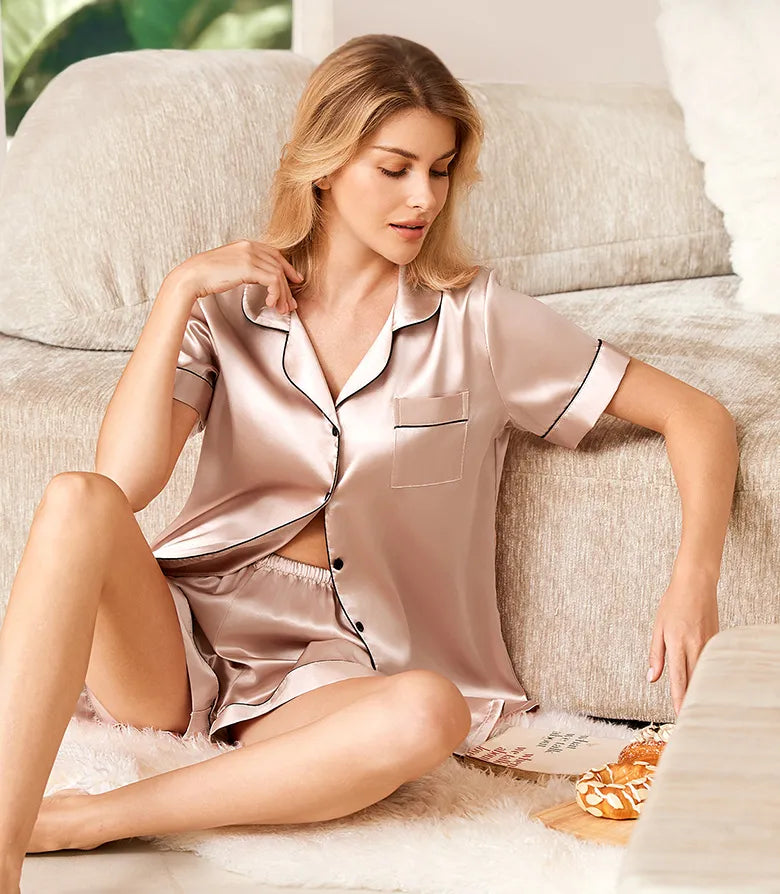
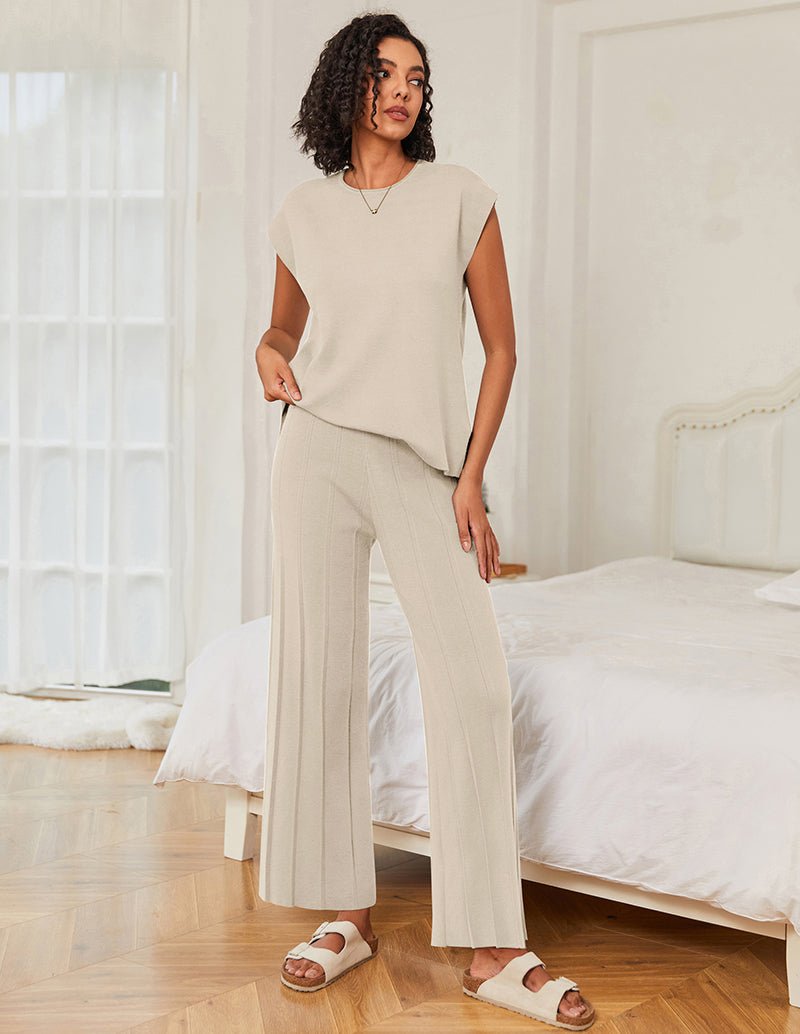
The Ekouaer Cotton Two-Piece Short Sleeve Summer Set is the most practical warm-weather option for women who want a complete set: short-sleeve top and shorts in lightweight cotton that works through summer nights and warm climates year-round.

What to look for: Lightweight cotton (avoid brushed or heavyweight jersey), relaxed fit through the body, wide leg openings for shorts, and a waistband that doesn't dig in during the night.
For Moderate Sleepers (Comfortable at Room Temperature)
The widest range of cotton styles work here. Short-sleeve with capri pants, short-sleeve with full-length pants, or a lightweight long-sleeve top with relaxed pants. The priority is comfort and versatility rather than maximum ventilation or maximum warmth.
The Ekouaer Cotton Pajamas Set Short Sleeve Top Capri is the most universally practical option — the capri length avoids the bunching-at-ankles problem common with full-length pants on shorter women, while the short-sleeve top provides comfortable coverage without warmth.
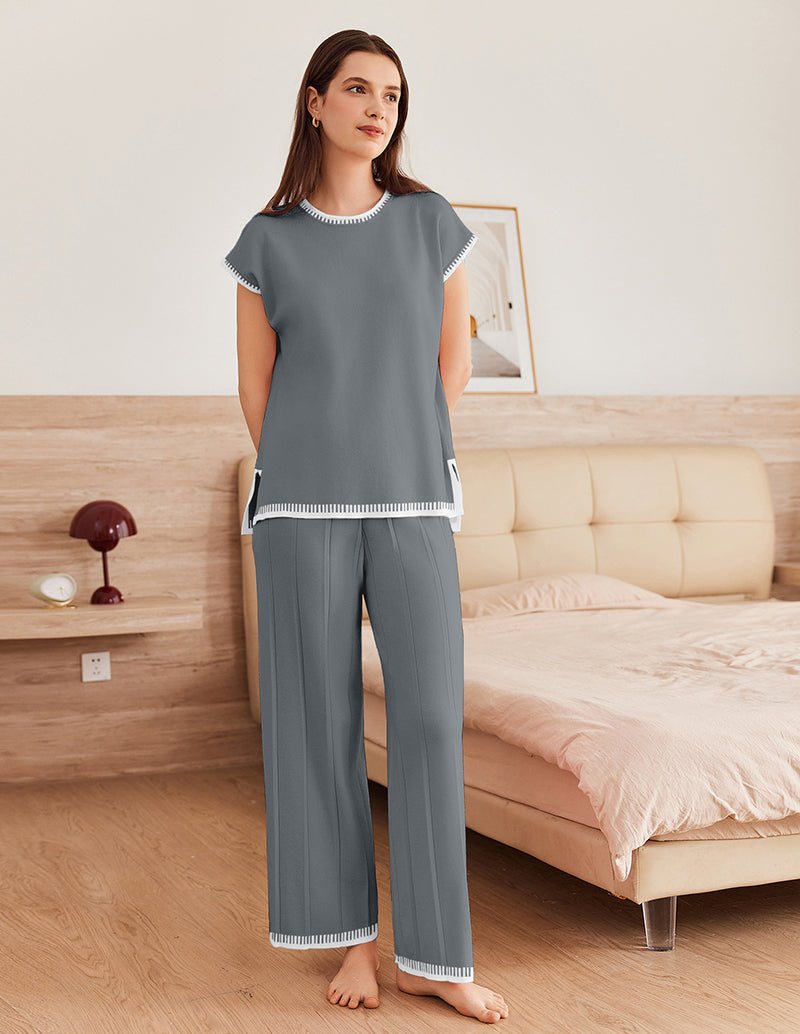
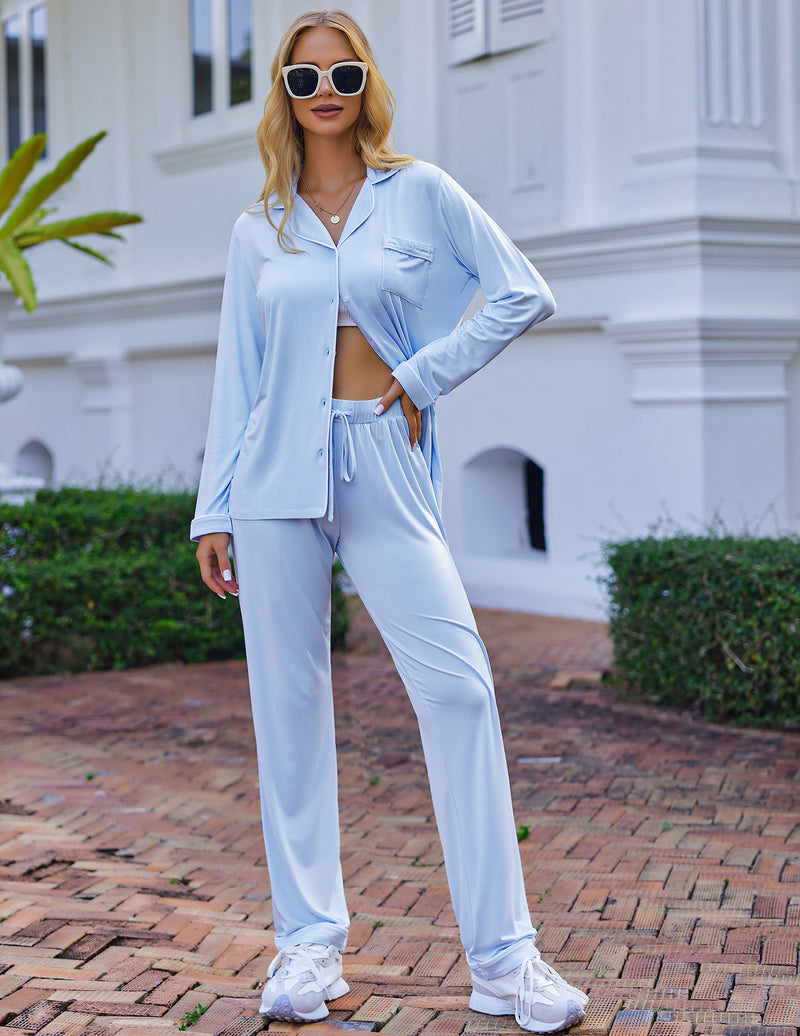
The Ekouaer Cotton Short Sleeve Pajama Set Long Pants offers more leg coverage for women who prefer full-length pants or sleep in cooler air conditioning — the short-sleeve top balances the added leg coverage.

What to look for: Medium-weight cotton jersey with enough stretch for comfortable sleep movement, an elastic waistband that sits level when lying down (not just when standing), and a top length that stays tucked in or doesn't ride up.
For Cool Sleepers (Often Cold at Night)
More coverage, slightly heavier cotton construction, longer sleeves. Full-length pants and long sleeves are the priority, but in cotton rather than flannel — for women who want warmth without the weight or the specifically "wintery" aesthetic of flannel.
What to look for: Long-sleeve top in a mid-weight cotton jersey, full-length pants with a secure waistband, and fabric that provides some insulation without feeling like activewear.
The Nightgown Alternative
Not every woman wants a two-piece set. For women who find waistbands uncomfortable overnight — a very common preference — a cotton nightgown eliminates the waistband variable entirely and often fits a wider range of body proportions without exact sizing.

The Ekouaer Cotton Full Length Nightgown Long Sleepshirt Short covers the spectrum: the full-length option provides maximum coverage for cool sleepers, and the shorter version suits warmer temperatures. Both in cotton that breathes well through the night.
The Ekouaer Cotton Nightgowns Short Sleeve Pleated Night Shirt adds a pleated construction that creates visual shape without a fitted silhouette — a good option for women who want more coverage than a tank-style nightgown but less structure than a two-piece set.
The Ekouaer Cotton Sleeveless Lace Night Gown Dress brings lace trim detail to cotton — more visual interest than plain cotton without sacrificing breathability, and sleeveless for warm sleepers who still want the one-piece silhouette.
Women's Cotton Set by Sleep Temperature: Quick Reference
|
Sleep Temperature |
Best Style |
Coverage |
Key Feature |
|---|---|---|---|
|
Consistently hot |
Sleeveless tank + shorts |
Minimal |
Maximum airflow |
|
Warm to moderate |
Short sleeve + shorts or capri |
Light-medium |
Balanced comfort |
|
Moderate |
Short sleeve + capri or long pants |
Medium |
Year-round versatility |
|
Cool |
Long sleeve + long pants |
Full |
Warmth without flannel |
|
Any (nightgown preference) |
Cotton nightgown |
Varies |
No waistband |
Men's Cotton Pajama Sets: What's Different
Men's sleepwear needs are genuinely different from women's in a few consistent ways that are worth understanding before buying for a household:
Coverage preference: Most men prefer a two-piece set over nightgowns or sleep shirts. A button-front top with matching pants is the most traditional format; short-sleeve top with pants is the most practical everyday option.
Fit priority: Men's pajama sets need more room through the shoulders and chest than women's equivalents. A set that runs small in the shoulders will pull and bunch throughout the night regardless of how well it fits elsewhere. Always check shoulder measurements, not just chest.
Temperature: Men tend to run warmer than women on average during sleep. Research on sex differences in thermoregulation (including studies in the Journal of Applied Physiology) shows men often have higher resting metabolic rates that generate more body heat. This means men may prefer lighter-weight or shorter-sleeve options even in the same room temperature that feels comfortable for their partner.
Care simplicity: Men's pajama sets get washed frequently and need to maintain shape across hundreds of cycles. Machine-washable cotton that doesn't require special handling is the practical default.

The Ekouaer Men's Short Sleeve Pajama Set Soft Cotton Sleepwear is designed with these requirements in mind: soft cotton construction, short-sleeve top for temperature management, full-length pants, and a relaxed fit through the shoulders and chest that maintains shape through regular washing.
Buying Cotton Pajamas for Two: Coordination Without Complexity
When buying cotton sleepwear for a household rather than an individual, a few practical considerations simplify the process significantly

Match fabric weight, not style. The most functional household approach is choosing the same fabric weight across sets — both in lightweight summer cotton, or both in medium-weight jersey — even if the styles, silhouettes, and sizes are completely different. This means both sets feel right in the same room temperature and wash together on the same cycle without one set being over or under-washed.
Coordinate color, not necessarily print. A matching color family — both in navy, both in black, both in gray — creates visual cohesion in a household without requiring identical sets. This works particularly well when one person prefers a nightgown and the other prefers a two-piece set.
Size independently. The most common household buying mistake is sizing the woman's set based on the man's size or vice versa, rather than checking each person's size chart individually. Cotton pajamas need to be sized for the individual — a men's medium and a women's medium are completely different garments.
Buy for the warmer sleeper first. If one person consistently sleeps warmer than the other, choose the fabric weight and sleeve length that works for them, then layer for the cooler sleeper with a robe or additional blanket. Choosing based on the cooler sleeper's needs often results in the warmer person being uncomfortable through the night.
Cotton Fabric Types: What the Differences Actually Mean
Not all cotton pajama fabric performs the same. These are the most common types you'll encounter in sleepwear and what each one actually does:
|
Cotton Type |
Weight |
Feel |
Best For |
Watch For |
|---|---|---|---|---|
|
Cotton Jersey |
Light-medium |
Soft, stretchy |
Everyday sleep, moderate temps |
Can lose shape if over-stretched |
|
Cotton Voile / Lawn |
Very light |
Crisp, airy |
Hot sleepers, summer |
Can be sheer in light colors |
|
Brushed Cotton |
Medium-heavy |
Soft, insulating |
Cool sleepers, winter |
Runs warm for hot sleepers |
|
Cotton Poplin |
Light-medium |
Crisp, woven |
Button-front sets, gifting |
Wrinkles more than knits |
|
Cotton-Modal Blend |
Light |
Extra soft, drapey |
Sensitive skin, loungewear |
Slightly less breathable than pure cotton |
|
Cotton-Spandex Blend |
Light-medium |
Stretchy, form-following |
Active sleepers, fitted sets |
May retain more heat than pure cotton |
For most households, cotton jersey in a medium weight is the best default — it works across a range of sleep temperatures, holds up through regular washing, and suits both the two-piece sets women prefer and the men's pajama formats that work best for male sleepers.

Care: Keeping Cotton Soft Across Hundreds of Washes
Cotton pajamas are easy to care for, but a few consistent habits make a significant difference in how long they stay soft and how well they hold their shape:
-
Wash in cold water — hot water contracts cotton fibers and causes shrinkage, especially in the first few washes
-
Gentle cycle for lightweight constructions — particularly important for voile, lawn, and lighter-weight jerseys
-
Low heat drying or air dry — high dryer heat accelerates the breakdown of cotton fibers over time
-
Remove promptly from the dryer — leaving cotton in a hot dryer after the cycle ends accelerates shrinkage and sets wrinkles
-
Wash with similar fabrics — avoid washing cotton pajamas with heavy items like towels or denim, which cause abrasion
-
Skip heavy fabric softener — it coats fibers over time and can reduce the natural breathability that makes cotton pajamas worth choosing
The American Cleaning Institute's laundry guide covers care label symbols and temperature guidance for cotton and cotton-blend fabrics — useful for decoding specific care labels before the first wash.
FAQ
Q: Why do cotton pajamas feel better for sleep than synthetic fabrics?
A: The fiber structure explains most of it. Cotton fibers absorb moisture rather than repelling it, which helps manage the natural perspiration that occurs during sleep. They also allow air to circulate more freely than polyester, which traps warm air against the skin. Research published in Nature and Science of Sleep on PubMed found that cotton sleepwear produced significantly higher percentages of deep N3 sleep at warmer room temperatures than synthetic alternatives — the mechanism being that cotton's breathability helps maintain the stable skin temperature that supports deep sleep stages.
Q: Is 100% cotton always better than a cotton blend for pajamas?
A: Not always — it depends on what the blend adds. Cotton-modal blends improve drape and surface softness without significantly affecting breathability. Cotton-spandex blends (usually 3–8% spandex) improve shape retention and recovery without substantially changing the thermal feel. Cotton-polyester blends improve wrinkle resistance but reduce breathability — worth avoiding if breathability is your primary reason for choosing cotton. Check the full fiber percentage, not just the primary fiber label.
Q: How do I choose cotton pajamas for two people with different sleep temperatures?
A: Choose fabric weight for the warmer sleeper and add layers for the cooler one. A lightweight cotton jersey set that's comfortable for someone who sleeps warm can be supplemented with a robe, heavier blanket, or additional layer for the cooler sleeper — the inverse doesn't work as well because a warmer sleeper in heavyweight cotton has no easy way to compensate. Matching the fabric weight means both sets can be washed together on the same cycle, which simplifies household laundry significantly.
Q: Do cotton pajamas shrink?
A: Yes, particularly in the first few washes, and particularly with hot water or high dryer heat. Pre-shrunk cotton has been treated to minimize this, but some shrinkage is normal in the first one to two washes regardless. Washing in cold water and drying on low heat reduces shrinkage significantly. If you're between sizes, sizing up slightly in a new cotton set accounts for first-wash shrinkage without the set becoming too large after it settles.
Q: What's the best cotton pajama style for men?
A: A short-sleeve top with full-length pants in a relaxed cotton jersey is the most practical everyday option for most men. The short sleeve accommodates the higher resting body heat that research on sex differences in thermoregulation associates with male physiology — men generally run warmer than women in the same ambient temperature. Full-length pants provide coverage and comfort through position changes during sleep. The most important fit detail for men is shoulder room — a set that's tight through the shoulders will be uncomfortable regardless of how well everything else fits.
Q: How many cotton pajama sets should a household own?
A: Two to three sets per person is practical for most households. This provides enough rotation for weekly laundry without running short, allows one set to be washed while the other is in use, and gives a seasonal option (one lightweight set, one medium-weight) without overfilling drawer space. For households with children or frequent laundry, three sets per person gives more flexibility. The goal is enough rotation that each set gets washed regularly — cotton that sits unwashed for weeks between uses degrades faster than cotton that cycles through regular washing and drying.
Q: Are cotton nightgowns better than two-piece sets for women?
A: It depends primarily on whether the woman finds waistbands comfortable during sleep. Many women find that waistbands — even soft elastic ones — create low-level discomfort during sleep that they've normalized without realizing it. A cotton nightgown eliminates this variable entirely and often accommodates a wider range of body proportions without exact sizing requirements. The trade-off is less versatility for lounging or public settings, where a two-piece set can pass as casual daywear more easily. For a detailed comparison, see our nightgown vs pajama set guide.
Related Reading
About Ekouaer
Founded in 2014, Ekouaer makes sleepwear and loungewear with an emphasis on functional design and fabric safety. All fabrics carry OEKO-TEX Standard 100 certification — independently tested to be free of harmful substances, meeting requirements for skin-contact textiles. Products have been featured in CNN Underscored, Forbes, and TODAY.com.
Ekouaer in the Press
-
BluFashion: Fabric engineering for optimized sleep comfort
-
The Fox Magazine: Flexible lounge packing strategies for variable climates
-
Urban Splatter: Styling tips for pre-wedding events and celebration mornings
-
Fashion Week Online: Wardrobe transitions and post-holiday lounge capsule planning