Nightgown vs Pajama Set: Which Sleepwear Is Actually Better for You?

Most people have a strong preference for one over the other — but can't fully explain why. This guide makes logic explicit.
The honest answer: nightgowns and pajama sets solve different problems. A nightgown performs better in specific scenarios — warm climates, hot sleepers, minimal-fabric preference, and ease of use. A pajama set wins in others — cold nights, moving around the house, versatility across multiple scenarios beyond just sleeping.
Choosing the wrong one doesn't just affect your sleep quality. It affects how you feel during your entire at-home morning and evening routine.
The short answer if you're in a hurry:
|
You should choose a nightgown if... |
You should choose a pajama set if... |
|---|---|
|
You sleep hot or live somewhere warm |
You sleep cold or want warmth options |
|
You prefer minimal fabric while sleeping |
You move around the house a lot before/after sleep |
|
You want to get in and out of bed easily |
You want to wear your sleepwear as loungewear |
|
You're postpartum or nursing |
You want matching top and bottom flexibility |
|
You want one-piece simplicity |
You want layering options |
What Actually Defines Each
A nightgown is a single-piece garment — typically knee to ankle length, sleeveless or short-sleeved, worn as a dress. It requires no coordination, has no waistband, and covers the body with a single layer of fabric.
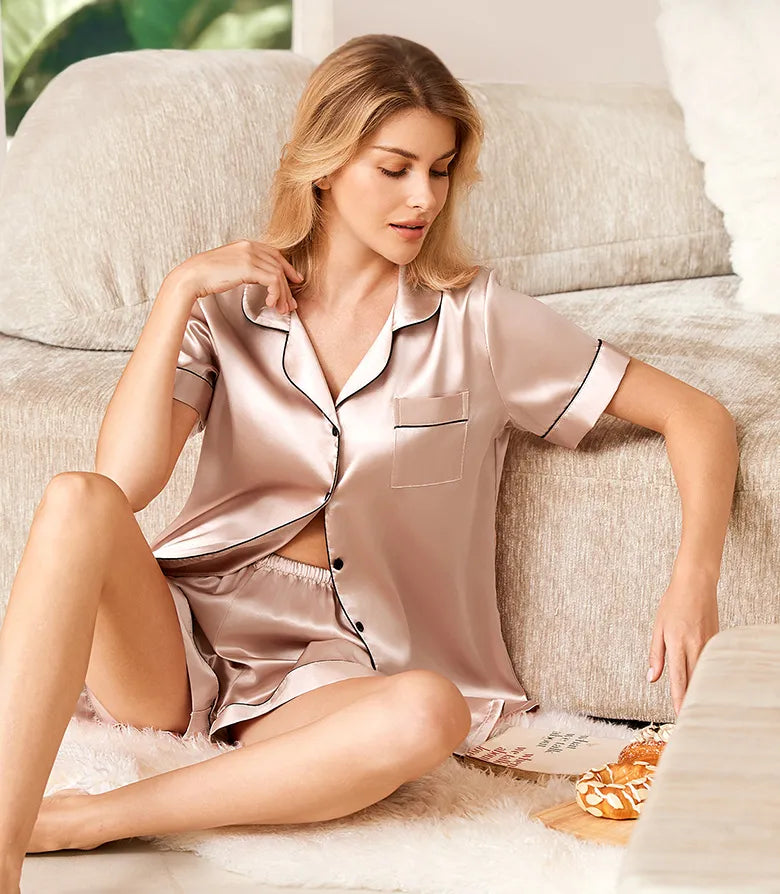
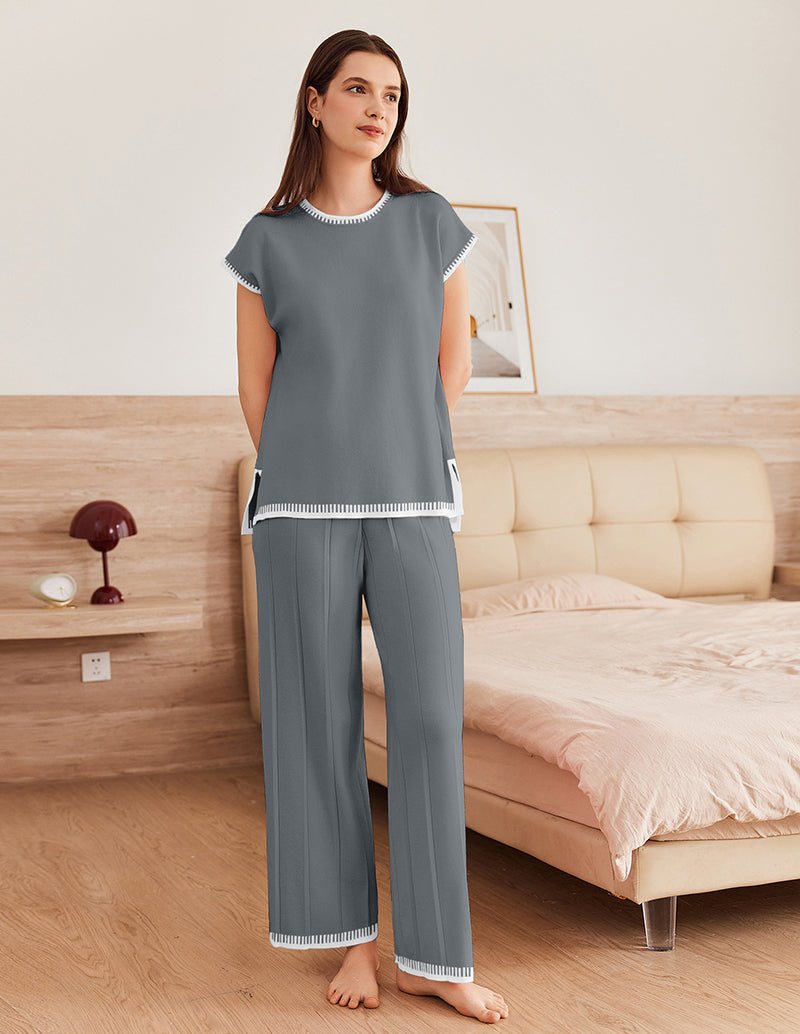
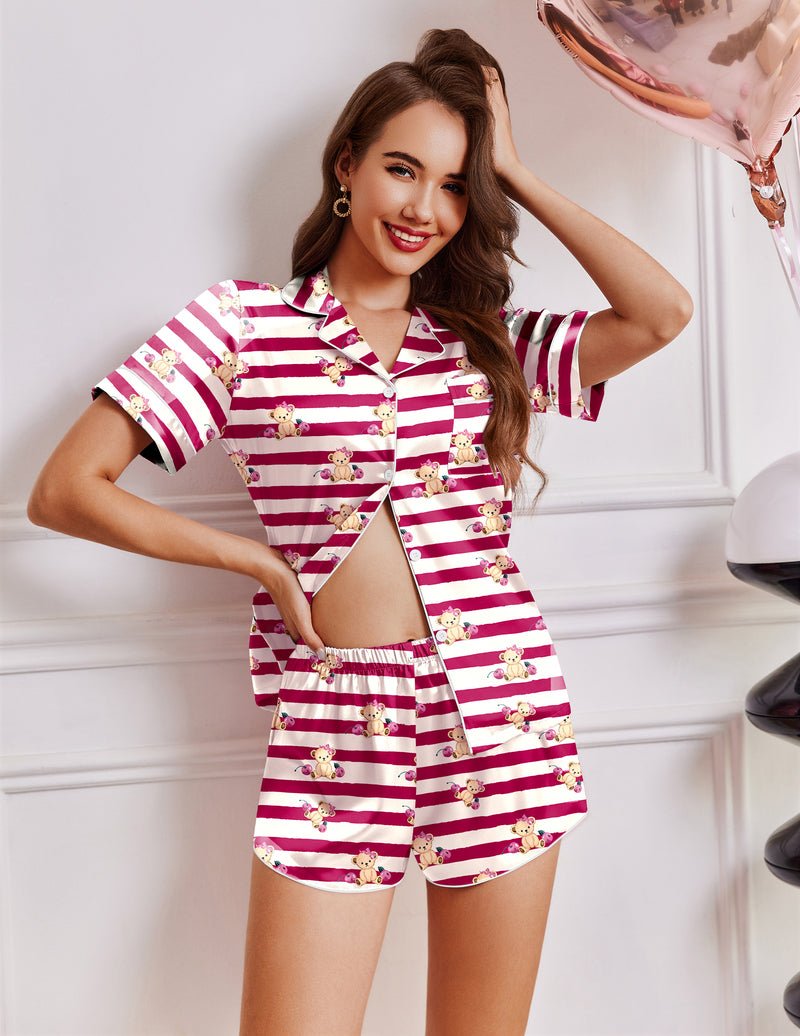
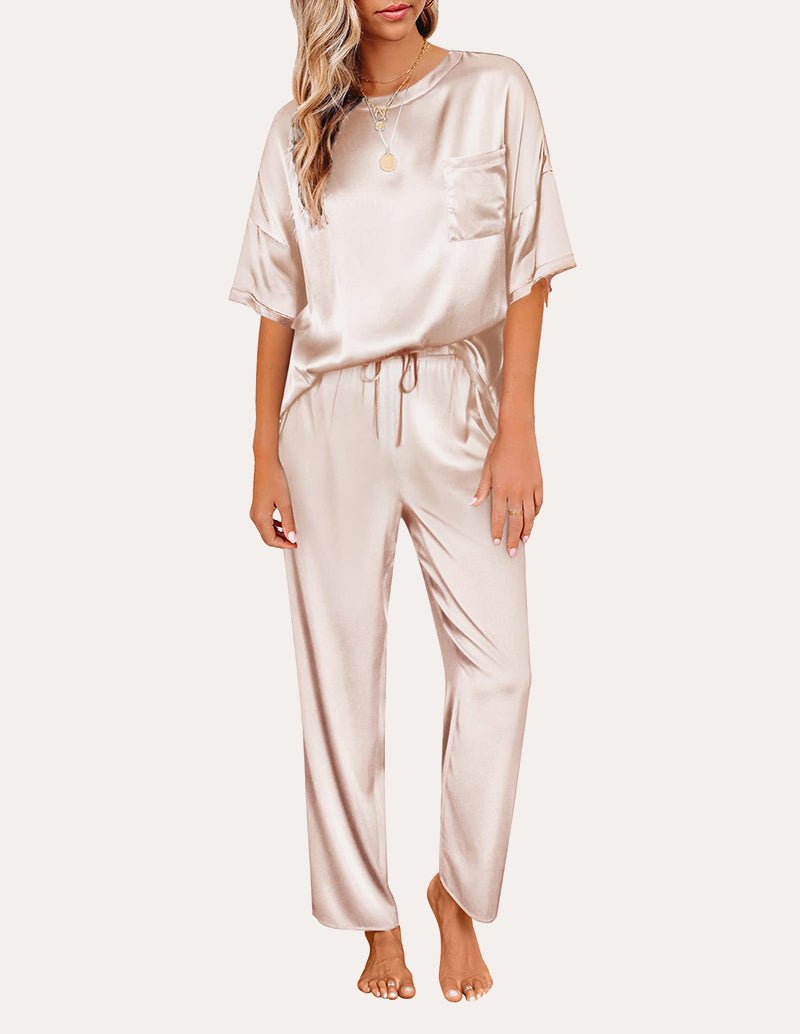
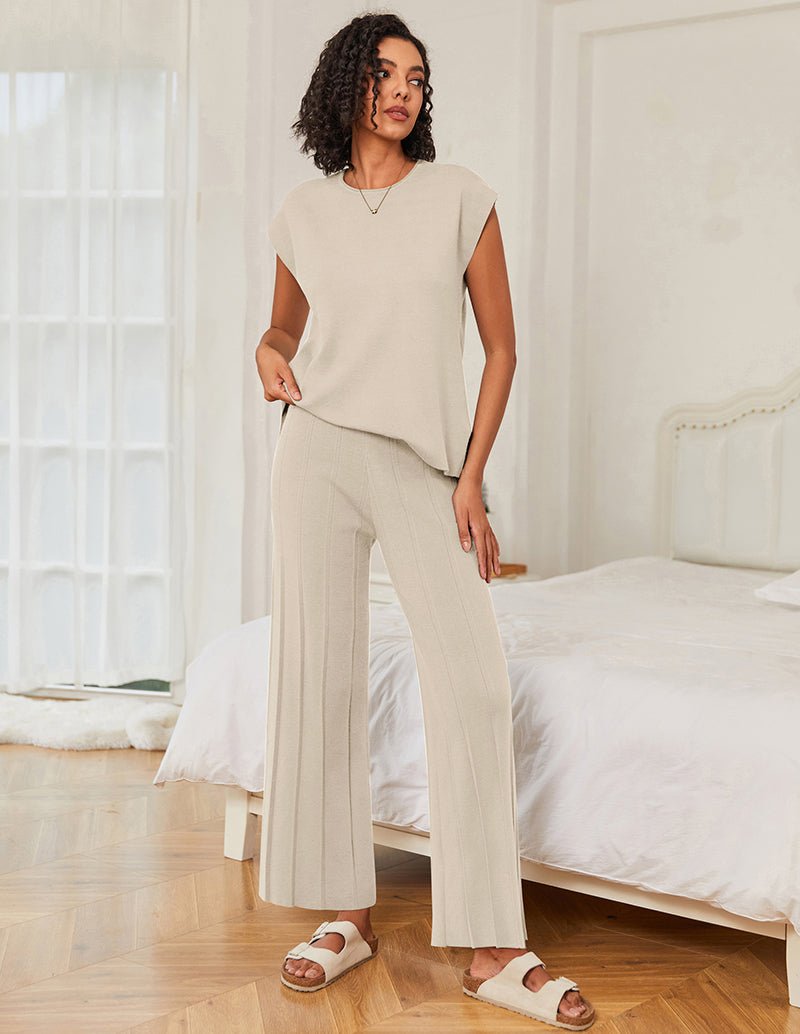
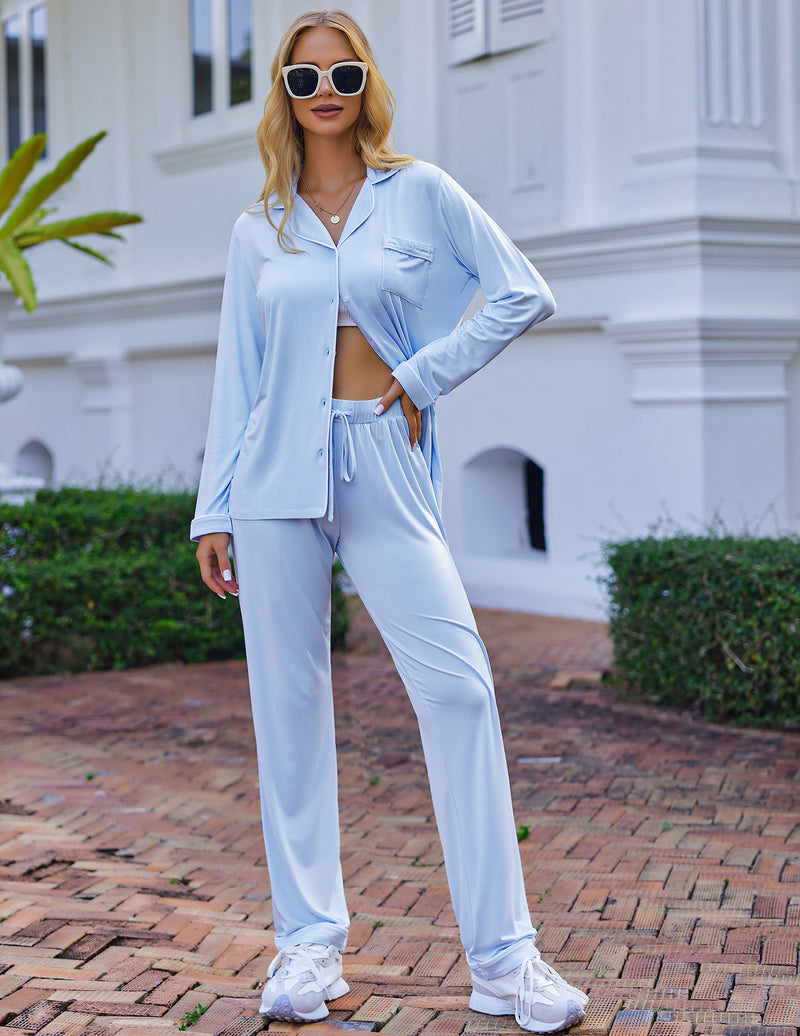
A pajama set is two pieces — a top and bottom (pants or shorts). The two pieces can be worn together or separately, layered over other things, or mixed with non-pajama items.
That structural difference — one piece vs. two — has more practical downstream effects than most people realize.
When a Nightgown Wins
Hot Sleepers and Warm Climates
A nightgown's single layer with no waistband creates less contact between fabric and skin than a top-and-pants combination. Less contact = better airflow and less heat accumulation overnight.
According to the National Sleep Foundation, the ideal sleep temperature for most adults is 65–68°F (18–20°C). If your bedroom runs warmer than this — or if you're a natural hot sleeper — reducing fabric coverage meaningfully affects sleep comfort.
If you run warm, a lightweight sleeveless nightgown in a breathable fabric (cotton, bamboo, or modal) will outperform a pajama set in terms of temperature regulation every time.
Real user experiences back this up. Many hot sleepers prefer nightgowns for better airflow: “I love my nightgown. I run hot when I sleep and always take my pants off anyway, so nightgowns are pretty perfect for me.”
Ease of Movement During the Night
No waistband means no pressure points when you shift positions. For stomach sleepers especially, the absence of a waistband makes nightgowns significantly more comfortable than pants.
For people who wake frequently during the night (light sleepers, new parents, anyone with a nursing infant), a nightgown's single-piece construction also means faster, less disruptive access.
Postpartum and Nursing Use
A nightgown with built-in nursing access — or a loose enough neckline and hem to allow easy feeding — is significantly more practical during early postpartum months than managing a separate top and bottoms while exhausted at 3am.

The Soft Sleeveless Ruffle Strap Nightgown addresses this directly — the sleeveless cut reduces heat buildup during night feeds, and the adjustable straps accommodate postpartum body changes week to week.
This is especially common among new mothers. Postpartum users often note that nightgowns make nighttime nursing much simpler compared to managing separate pajama pieces.
Visual Appeal and Getting-Ready Aesthetics
Nightgowns photograph significantly better than pajama sets for getting-ready content. If you're documenting a wedding morning, a bachelorette weekend, or any occasion where appearance matters, a well-cut nightgown creates a cleaner visual than separates.

Ekouaer's Lace Patchwork Night Dress is designed exactly for this overlap — functional enough to actually sleep in, polished enough to wear for a getting-ready morning where photos are involved.
When a Pajama Set Wins
Cold Sleepers and Cold Bedrooms
If your bedroom drops below 65°F overnight, a pajama set provides coverage that a nightgown can't match. Long pants eliminate exposed legs. Layering a top under a sleep hoodie is possible in ways a nightgown doesn't allow.
For winter months or genuinely cold climates, a long-sleeve pajama set in flannel or brushed cotton is warmer than any nightgown equivalent.
Wearing Sleepwear Beyond the Bedroom
This is where pajama sets have a real advantage. A well-fitted pajama set can function across multiple scenarios nightgowns can't: making coffee in the kitchen, working from home for a few hours, answering the door, and doing a quick errand.
A nightgown, by design, reads as "I'm in bed." A pajama set reads as "I might be in bed or I might not be." That flexibility has practical value for mornings when your home life and your visible life overlap.
Research cited in Ekouaer's 2026 brand study (Kurundata/Toluna, n=1,100) found that 43% of women's loungewear use extends into light exercise, home office, or brief outdoor errands — scenarios where pajama sets are significantly more functional than nightgowns.
Many women echo this advantage. In sleepwear discussions, pajama sets are frequently praised for being versatile as loungewear: users like wearing the top with jeans or using the full set around the house, while nightgowns feel more strictly “bed only.”
Mixing and Matching
With a pajama set, the top and bottoms can be worn independently. The top with jeans or shorts for a casual daytime look. The bottoms with a simple tee. This extends the functional wardrobe value beyond pure sleepwear use.

Ekouaer's Cozy 2-Piece Pajama Set is cut for exactly this kind of crossover — the top is relaxed enough to wear as a casual shirt, and the pants are structured enough to feel intentional rather than purely functional.
The Contrast Piping Pocket Pajama Set takes this further with the contrast piping detail — it's the difference between sleepwear that looks like sleepwear and sleepwear that could pass for intentional loungewear in casual contexts.
The Fabric Question: It Applies to Both
Regardless of whether you choose a nightgown or pajama set, fabric matters more than style for actual comfort. The same rules apply to both:
Cotton: Breathable, durable, gets softer with washing. The reliable all-rounder. Best for most sleep climates.
Bamboo / bamboo-modal blends: Exceptionally soft, naturally moisture-wicking, and temperature-regulating. Particularly good for hot sleepers, sensitive skin, and postpartum recovery. The National Eczema Association recommends soft, natural fabrics, including bamboo, for people with skin sensitivities.
Satin / polyester satin: Cool on first contact, smooth against skin, looks elegant. Not absorbent, which means not ideal for hot, sweaty nights — but excellent for cooler, drier sleep environments or occasional wear.
Modal: Lightweight, naturally silky without the synthetic feel, holds shape well. Good for warm-climate year-round use.
Flannel / brushed cotton: For cold sleepers and winter months. More warmth than standard cotton with a softer feel than fleece.

Length: How It Affects More Than Just Coverage
Nightgown length:
-
Mini/above-knee: Maximum airflow, best for hot sleepers, easiest movement
-
Knee-length: The practical everyday length — enough coverage to feel complete, not so much fabric that it wraps around legs at night
-
Maxi/ankle: Maximum coverage, best for cold sleepers, most traditional "nightgown" look
Pajama bottoms length:
-
Shorts: Best for warm climates and hot sleepers; the summer equivalent of a short nightgown
-
Cropped/capri: A middle option that works across more temperature ranges than either extreme
-
Full-length: Best for cold weather; maximum coverage
A note on personal fit: if you move around significantly in your sleep, longer nightgown hemlines can wrap around legs and create disruptive bunching. If you've had this problem before, a knee-length or a pajama set with separate bottoms will both solve it.
The Practical Comparison Summary
|
Factor |
Nightgown |
Pajama Set |
|---|---|---|
|
Hot sleepers |
✓ Better |
Less ideal |
|
Cold sleepers |
Less ideal |
✓ Better |
|
Stomach sleepers |
✓ No waistband |
Depends on waistband fit |
|
Moving around the house |
Depends on length |
✓ More practical |
|
Wearing as loungewear |
Limited |
✓ More flexible |
|
Nursing/postpartum access |
✓ Easier |
More steps |
|
Getting-ready aesthetics |
✓ More photogenic |
Depends on style |
|
Layering in cold weather |
Difficult |
✓ Easier |
|
Packing for travel |
✓ One piece |
Two pieces, more versatile |
What to Look For in Each
In a nightgown:
-
Fabric first: cotton or bamboo for warm sleepers; satin for cooler, drier conditions
-
Adjustable straps if you're between sizes or postpartum
-
Hem length that won't bunch at the knee during sleep
-
Side seams that don't create pressure points
-
Lace or decorative detail only if it won't scratch — check that it's sewn flat, not sitting proud of the fabric surface
In a pajama set:
-
Waistband type: drawstring adjusts, elastic-only is convenient but less precise, hybrid (elastic + drawstring) gives you both
-
Top length: should cover the waistband entirely when standing straight; a top that rides up is a common complaint
-
Fabric weight relative to your actual sleep temperature
-
Pocket placement: hip pockets are functional; side-seam pockets are less obtrusive but harder to access

Browse by Category
Looking at nightgowns specifically: Ekouaer's nightgown and sleep dress collection covers cotton, lace, satin, and modal options across lengths. The Full Slip Sling Nightdress is worth looking at if you want something minimal — the sling-cut eliminates shoulder straps for maximum airflow.
For pajama sets: the full pajama set collection is organized by fabric and style.
Frequently Asked Questions
Q: Is a nightgown or pajama set better for summer?
A: For most people, a nightgown edges ahead in summer purely because of reduced fabric contact. A sleeveless or short-sleeve cotton or bamboo nightgown in knee length creates less heat accumulation than even lightweight pajama pants. That said, pajama shorts with a lightweight top are functionally very close — the difference is real but not dramatic.
Q: Can you wear a nightgown as a dress?
A: A knee-length nightgown in a clean fabric (satin, modal, or well-constructed cotton) can function as a casual dress at home. Stepping outside in one is a different judgment call — most nightgowns lack the structural details (dart shaping, lined fabric, defined silhouette) that make a garment read as a dress rather than sleepwear in public.
Q: Which is better for nursing mothers — nightgown or pajama set?
A: For nighttime nursing, a nightgown with adjustable straps or a loose enough neckline tends to be easier — one less piece of clothing to manage when you're half-asleep. For daytime or semi-public nursing, a nursing-specific top (from a pajama set) with defined nursing clips or panels is generally more controlled. Many new moms keep both: nightgown for overnight feeds, nursing top and pants for daytime.
Q: Do pajama sets shrink more than nightgowns?
A: Shrinkage is a function of fabric and care, not garment style. 100% cotton shrinks more than cotton-modal blends regardless of whether it's a nightgown or pajama set. To minimize shrinkage in cotton: wash cold, tumble dry on low heat, remove slightly damp and lay flat to finish drying. The American Cleaning Institute provides detailed fabric care guidance by fiber type.
Q: What's the best nightgown fabric for sensitive skin?
A: Bamboo or organic cotton. Both are naturally soft, free of the synthetic surface coatings that irritate, and gentle enough for postpartum or eczema-prone skin. Avoid polyester blends if you have reactive skin — the synthetic fibers hold heat and don't breathe the way natural fibers do.
Q: Is satin pajamas or satin nightgown better?
A: Depends entirely on use. If you sleep with a partner and want a polished look without complexity, a satin nightgown is simpler and tends to drape more elegantly. If you want flexibility to wear the top as a light layer over other things, a satin pajama set has more range. Both are cool-contact fabrics best suited to cooler, drier sleep environments.
Q: Can pajama tops be worn as regular tops?
A: Yes, with the right cut. A pajama top in a clean, solid color or minimal print, with a straight or slightly relaxed fit, reads as casual loungewear rather than obviously as sleepwear. The details that mark something as pajamas — visible chest pocket, contrast piping, button placket all the way down — can actually add rather than detract from a casual daytime look depending on the context.
Related Reading
-
Womens Nightgown Style Guide 2026: Silhouettes, Fits & Trends
-
Bamboo Pajamas vs. Cotton Pajamas: Which One Actually Sleeps Better?
-
Best Matching Lounge Sets for Women: From Bedroom to Errands (2026)
About Ekouaer
Founded in 2014, Ekouaer designs sleepwear and loungewear with an emphasis on functional comfort and fabric safety. All fabrics carry OEKO-TEX® Standard 100 certification. Products have been featured in CNN Underscored, Forbes, and TODAY.com, and recognized with the Berlin Design Award and Mom's Choice Awards.