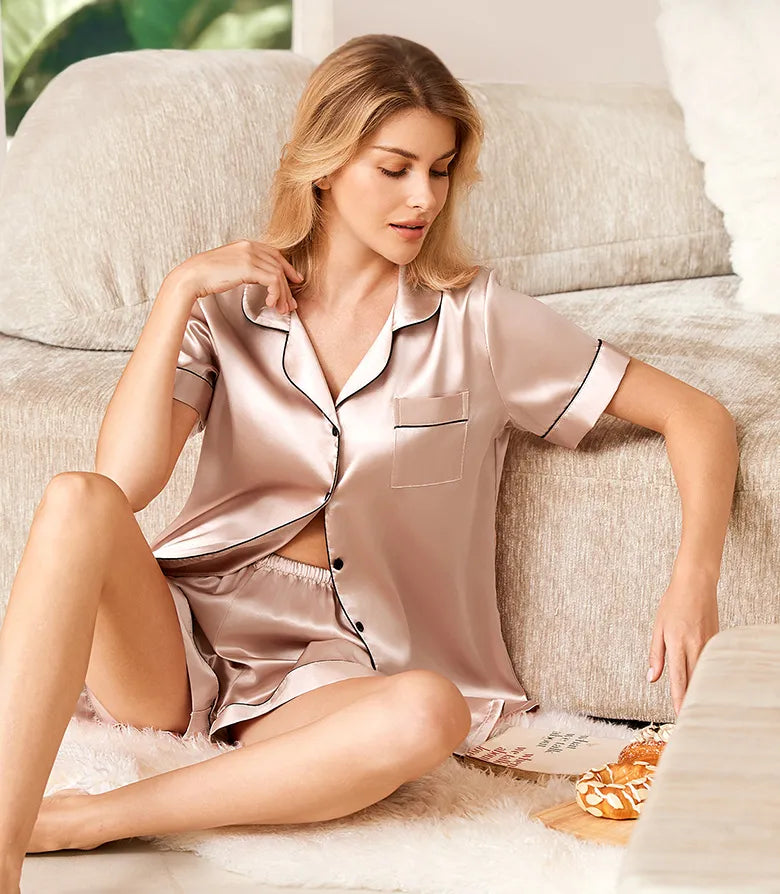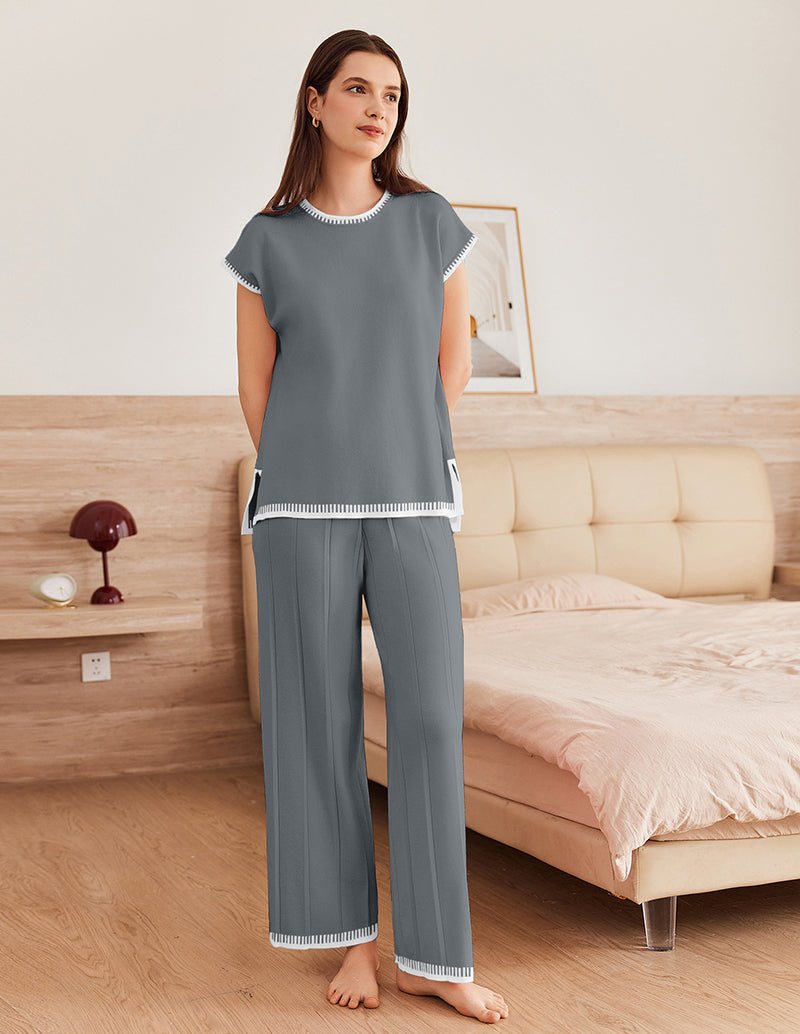
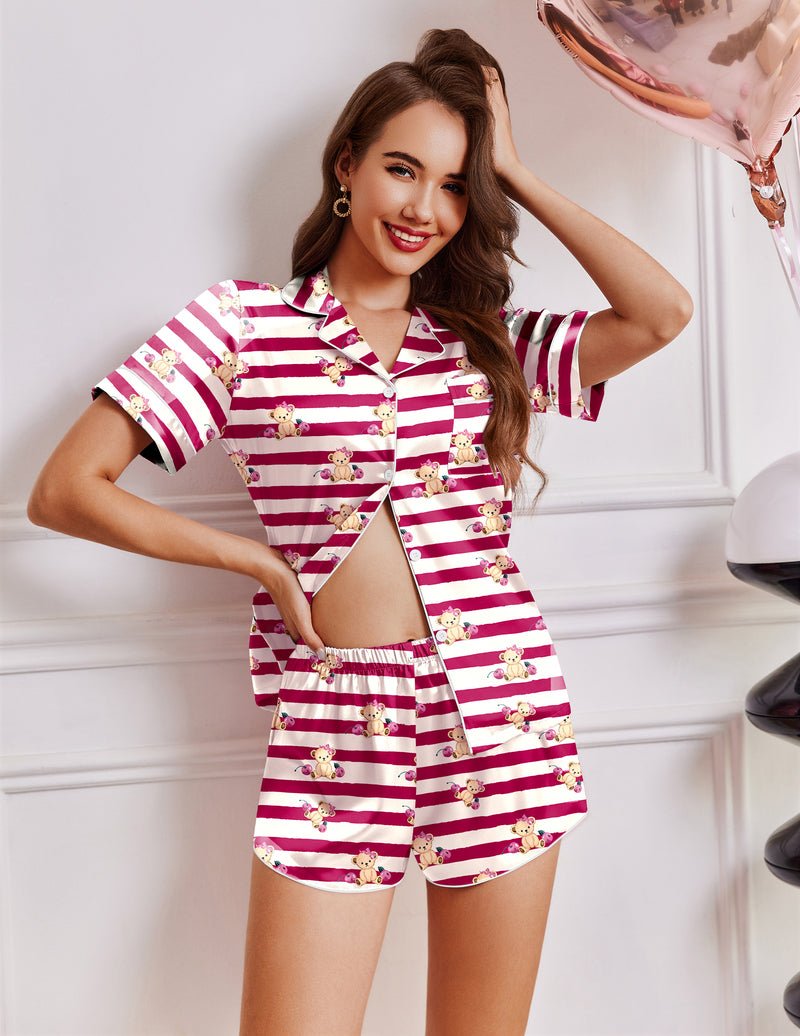
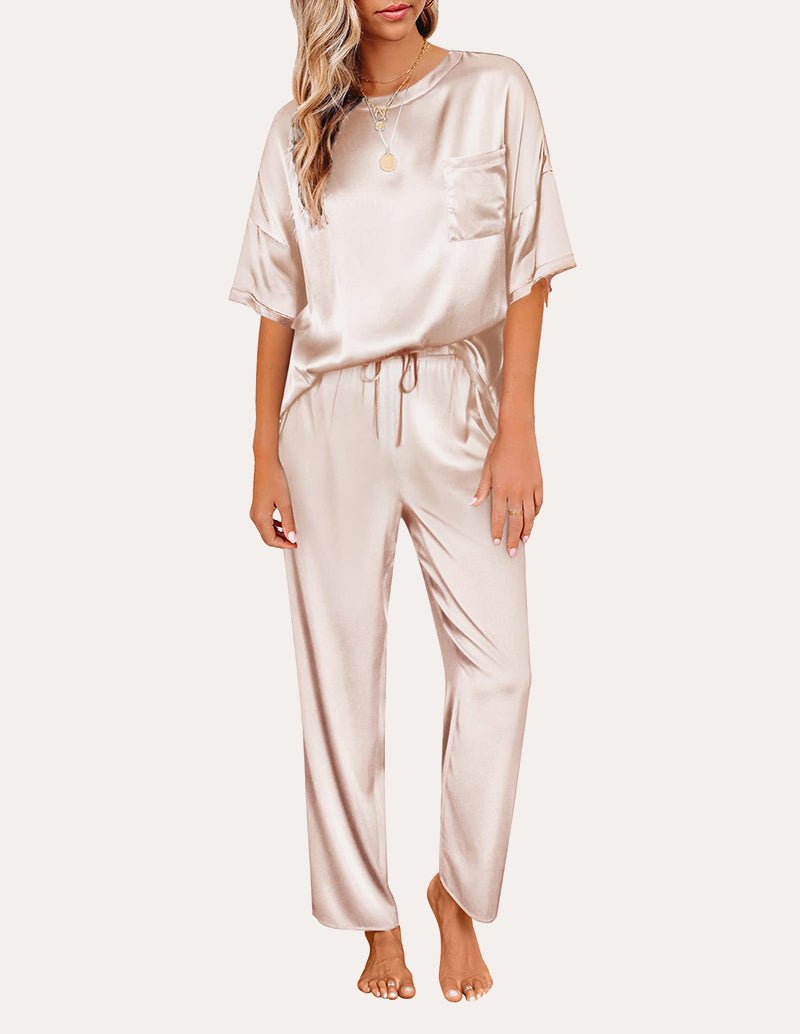
What Are Cooling Pajamas? How to Choose Sleepwear for Hot Sleepers

Informational/commercial investigation. The reader wants to know what cooling pajamas actually are, why some sleepwear feels cooler than others, which fabrics and construction choices matter, and how to pick a pair that suits a warm bedroom or a hot-sleeper body. The page answers the direct question "What are cooling pajamas?" first, then explains the fabric and construction principles that drive cool comfort, gives a practical selection checklist, and uses a small number of EKOUAER products as concrete examples - not as the central subject.
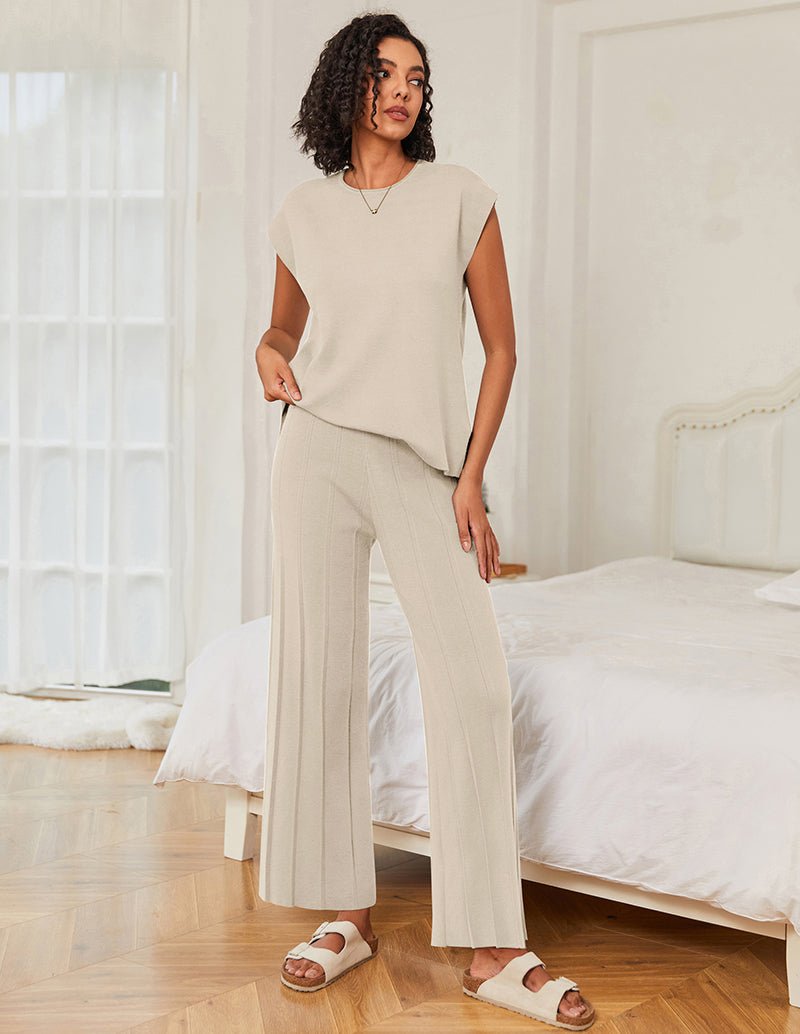
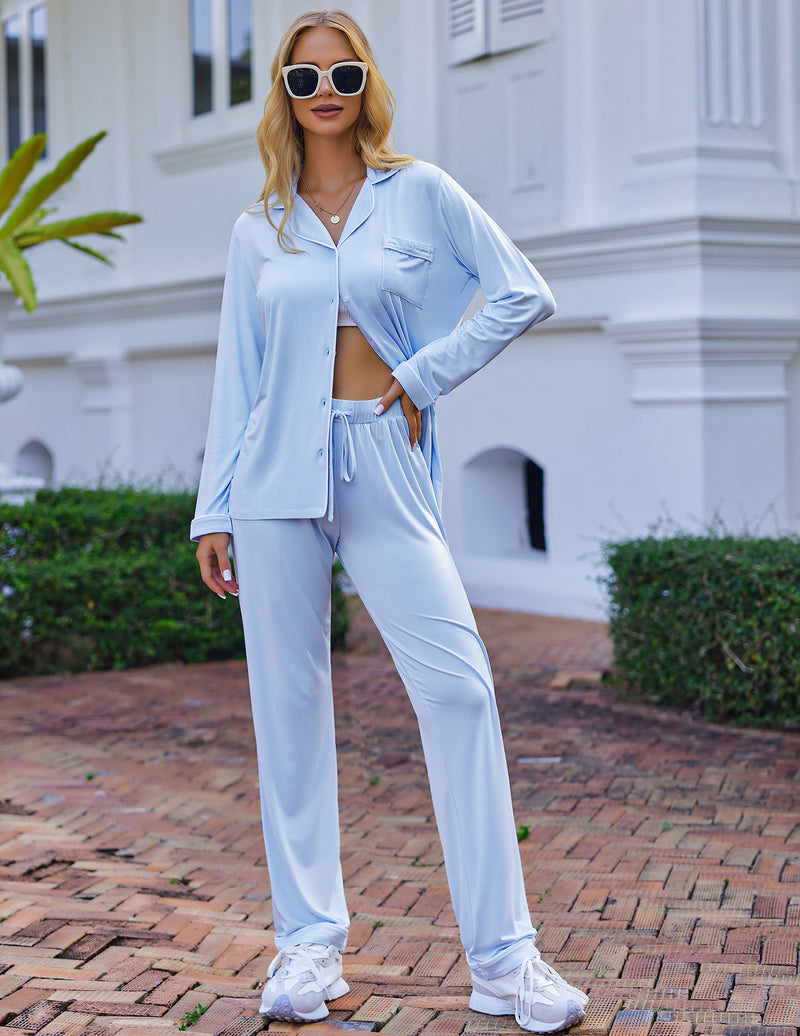
Cooling pajamas are sleepwear made to feel more breathable and lightweight than standard pajamas, with a relaxed cut that lets air circulate around the body. They typically use materials known for air permeability and moisture absorption, such as cotton, linen, bamboo-derived viscose, TENCEL or lyocell, and lightweight silk, and they are usually cut loose rather than close to the skin, so the fabric does not trap heat.
For people who run warm at night - often described as "hot sleepers" - cooling pajamas are one of the most practical things to change in a sleep setup, because sleepwear sits directly against the skin and can either allow heat to escape or hold it in. The Sleep Foundation describes cooling pajamas as made from "breathable, lightweight materials that absorb moisture," with a "relaxed or flowy fit" that prevents them from "clinging to the skin and providing too much insulation."
Key Takeaways
-
Cooling pajamas are breathable, lightweight, and relaxed. The framework covers fabric, fit, and construction together, not just the material.
-
Cotton, linen, lyocell, and lightweight silk are commonly used. Each behaves differently against the skin and on a warm night; no single fabric is "best for everyone."
-
Fit and construction matter as much as fabric. A loose cut, short sleeves, wide-leg pants, and breathable weaves all change how a pajama feels.
-
Cooling pajamas help comfort, not body temperature. Sleepwear can let heat escape and reduce trapped warmth; it does not actively lower core temperature.
-
For night sweats or hot flashes, sleepwear helps with comfort but is not a medical treatment. A cool room, breathable bedding, and clinical care matter too.
What Are Cooling Pajamas?
Cooling pajamas are sleepwear built around three qualities: breathable fabric, low fabric weight, and a relaxed fit. The Sleep Foundation, in its 2026 guide to "Best Cooling Pajamas for Night Sweats," describes them as pajamas "made from breathable, lightweight materials that absorb moisture and help keep your body at a comfortable temperature throughout the night" with "a relaxed or flowy fit, which prevents them from clinging to the skin and providing too much insulation."
That definition is a useful starting point because it separates three ideas that are often confused:
-
Breathable fabric means air can pass through the weave. Cotton, linen, and many lyocell and viscose fabrics breathe more easily than dense polyester, brushed knits, or thick flannel.
-
Lightweight fabric means the pajamas do not press heavily on the body. A thin cotton shirt feels different from a heavy cotton flannel shirt of the same fiber.
-
Relaxed fit means the garment is loose enough not to seal against the skin. A wide-leg pant lets air move around the leg; A slim-fit legging-style pajama traps it.
None of these qualities are about cooling the body down in an active sense. They are about not adding extra warmth or moisture on top of what the body already produces. For a hot sleeper, that gap - between what the body gives off and what the pajama allows to escape - is the difference between sleeping comfortably and waking up damp.
What Makes Pajamas Feel Cooling?
Beyond fabric and fit, a few general principles make sleepwear feel more breathable and lighter on the skin. These are useful to recognize whether you are looking at a product page, reading a label, or comparing two pajamas side by side.
Breathability and air permeability. A fabric that allows air to move through it - through the weave itself, or through a loose knit structure - lets the warmth your body releases dissipate rather than build up. Tightly woven or coated fabrics reduce that air movement.
Moisture handling. Bodies release some moisture during sleep, even when they are not sweating in a strong sense. Fabrics that absorb moisture from the skin and release it to the air - cotton and lyocell are commonly cited examples - feel drier than fabrics that hold moisture against the skin.
Fabric weight and thickness. Two pajamas made of the same fiber can feel very different if one is a thin voile and the other is a thick jersey. Lighter fabrics generally feel less insulating.
Surface feel. Smooth or slick surfaces can feel cooler to the touch than brushed or textured surfaces, especially at the start of the night. This is partly perception, partly physics, and it varies from person to person.
Cut and silhouette. Wide-leg pants, loose shirts, and roomy nightgowns allow more air circulation around the body than close-fitting cuts. Short sleeves and sleeveless cuts expose more skin to ambient air; long sleeves can feel more insulating even when the fabric itself is light.
Layering. A two-piece pajama set with a separate top and bottom gives you flexibility - you can wear just the bottoms on very warm nights. A one-piece nightgown is one continuous layer, but its open shape can offset that. The choice between them is about how you sleep and how warm your room is.
These are general principles drawn from how sleepwear is described and tested in consumer sleep guides. They are not specific to any single brand, and they apply whether you are choosing cotton, linen, lyocell, or silk.
Which Fabrics Work Well for Hot Sleepers?

The fabrics most commonly associated with cooling pajamas are cotton, linen, lyocell (often sold under the TENCEL brand), bamboo-derived viscose, and lightweight silk. Each has its own character; none is universally "the best." The Sleep Foundation's 2026 roundup cites cotton, silk, TENCEL, and linen as useful materials in this category.
Cotton. Cotton is the most widely available of these fibers. It is breathable, soft, and machine-washable. Lightweight cotton weaves such as voile, lawn, and percale feel airier than heavy cotton jersey or flannel. A simple cotton pajama set with short sleeves and shorts is a common starting point for hot sleepers because it is easy to care for and inexpensive to replace.
Linen. Linen is a bast fiber made from the flax plant. Its yarns are slightly thicker and more irregular than cotton, which gives linen fabrics a more open weave and a crisper hand-feel. Linen is often described as feeling airy in warm weather and as softening with repeated washing. It does wrinkle, which some people see as a feature and others do not.
Lyocell (TENCEL) and modal. Lyocell and modal are regenerated cellulose fibers. They are smooth to the touch and tend to drape softly. Lyocell is often cited in cooling-pajama guides for moisture handling; modal is similarly soft and is frequently blended with cotton or spandex for stretch. Both are common in modern sleepwear because they combine a smooth surface with the breathability of a cellulosic fiber.
Bamboo-derived viscose. Viscose made from bamboo is soft and drapey, similar in hand-feel to modal or lyocell. It is often marketed in cooling-pajama contexts, and Sleep Foundation's 2026 roundup includes bamboo-derived viscose pajamas among its top picks. As with modal, what is sold as "bamboo" sleepwear is usually a viscose or lyocell product - checking the actual fiber content on the label is more reliable than the marketing name.
Lightweight silk. Silk has a smooth, low-friction surface and a natural temperature neutrality that some sleepers find comfortable in both warm and cool conditions. Lightweight silk pajamas, often woven as charmeuse or habotai, can feel cool to the touch at the beginning of the night. Silk is more delicate to wash and more expensive than the cellulosic fibers above, which is why it is less common in everyday cooling sleepwear, even though the fiber itself can suit the purpose.
A few practical notes:
-
Fabric blends are common in sleepwear. A 95% cotton / 5% spandex pajama is still mostly cotton; a 50% cotton / 50% polyester pajama behaves more like polyester. Looking at the actual fiber content on a product page is more useful than the marketing description.
-
"Cooling" labels are not regulated. Cooling pajamas are a category described by consumer guides; no certification defines what counts. The word "cooling" on a tag refers to the same general framework above, not a separate technology.
Does Pajama Construction Matter?
Fabric alone does not decide how a pajama feels. Construction - cut, sleeves, neckline, waistband, and weight - changes the picture as much as the fiber content.
Silhouette and ease. Close-fitting designs can reduce airflow around the body and may feel warmer than relaxed silhouettes. A pajama that is cut with positive ease - a relaxed or oversized shape - lets that layer move away from the body. This is why the Sleep Foundation's definition specifically calls out "a relaxed or flowy fit" as part of what makes a pajama cooling.
Sleeves, neckline, and leg opening. Short sleeves, sleeveless cuts, V-necks, and wide-leg pants expose more skin or allow more air to move. Long sleeves and higher necklines generally provide more coverage, which can feel warmer depending on the fabric and room temperature. For warm-weather sleep, short-sleeve tops and shorts or wide-leg pants are usually a more comfortable starting point.
Waistbands and cuffs. Elastic waistbands that dig into the waist can create a warm band around the midsection. Loose elastic or drawstring waists feel lighter. Cuffs at the wrist and ankle can trap heat; open hems let air in.
Fabric weight in the garment as a whole. A loose pajama in a thick fabric can still feel heavy and warm. A close-fitting pajama in a thin fabric can feel cool. The interaction between weight and cutting matters as much as either one alone.
Buttons, plackets, and structure details. Buttons, placket ties, collars, and contrast trim can add small amounts of structure. For very hot sleepers, simpler cuts with fewer of these features can feel lighter.
How to Choose Cooling Pajamas

For someone shopping specifically for cooling sleepwear, the practical checklist is short. None of these items require specialized testing - they are checks that can be done from the product description or in hand.
-
Check the fiber content. Look for cotton, linen, lyocell, TENCEL, modal, bamboo-derived viscose, or lightweight silk. Be cautious with heavy polyester, brushed knits, and flannel - they tend to hold heat.
-
Check the fabric weight. If the product description mentions "lightweight," "voile," "percale," "waffle knit" (in a thin gauge), "charmeuse," or "habotai," the fabric is more likely to feel light. If it says "fleece," "flannel," "plush," or "thick knit," expect more insulation.
-
Check the fit. "Relaxed," "oversized," "flowy," "loose," and "wide leg" all describe cuts that let air move. "Slim," "fitted," "body-skimming," and "compression" describe cuts that hold heat closer.
-
Look at the sleeves and pant length. Short sleeves, sleeveless cuts, shorts, and cropped pants expose more skin and tend to feel cooler on warm nights.
-
Consider moisture handling. Cotton, linen, lyocell, and modal all absorb and release moisture to varying degrees. Synthetic fibers like polyester do not absorb as much; Performance knits can wick moisture but can also feel clammy in still air.
-
Consider the sleeping environment. A bedroom kept at 65 to 68 F (18 to 20 C) is in the range most commonly cited as comfortable for sleep. Cooling pajamas help within that range; They can not offset a very hot room on their own.
-
Avoid unnecessary layers. A two-piece set you can wear half of, or a nightgown with a single layer, is more flexible than a onesie or a layered set on hot nights.
The Sleep Foundation's 2026 roundup and similar cooling-pajama guides largely organize their recommendations around the same checklist: breathable fiber, light weight, relaxed fit.
EKOUAER as a Product Example
The principles above describe the cooling-pajama category as a whole, not any single brand. A small number of EKOUAER products illustrate how the framework shows up in real product pages. None of these are described as "cooling technology" on EKOUAER's site - the connection between breathability, weight, and fit is the framework used here, drawn from independent consumer sleep guides.
-
Lightweight cotton pajamas with pockets. A light, breathable cotton pajama set with pockets and a relaxed cut, such as the Ekouaer Cute Print with Pockets Pajama Sets, is a straightforward example of the cotton + relaxed-fit combination.
-
Soft cotton pajama sets. A super-soft cotton pajama set with a relaxed silhouette, like the Ekouaer Super-Soft Print Pajama Set, illustrates the cotton side of the same framework.
-
100% cotton nightgown. A flowy, 100% cotton nightgown such as the Elegant Flowy 100% Cotton Dress is a single-layer option with full cotton content.
-
Classic cotton pajama set. A traditional long-sleeve cotton pajama in a lighter weight, such as the Ekouaer Classic Cotton Pajama Set, is a common cotton option for cooler nights where breathability still matters.
-
Ruched cotton pajama set. A cotton pajama with ruching at the neckline and a relaxed fit, like the Ekouaer Ruched V-Neck Pajamas Set, shows how small design details can keep the silhouette loose.
-
Linen jumpsuit. A linen jumpsuit with a wide-leg cut, such as the Linen Boho Jumpsuit, shows the linen + wide-leg pairing for very warm environments where one-piece coverage is preferred.
-
Pajama sets collection. The broader pajama sets collection on EKOUAER includes cotton, modal, lyocell, and silk options across a wide range of silhouettes, which is useful for browsing by fabric and cut together.
The common thread across these products is not a single technology. It is the combination of breathable fibers, light fabric weight, and relaxed cuts, applied in different ways to different silhouettes.
What About Night Sweats and Hot Flashes?
This section is included for completeness, with the limits of what sleepwear can and cannot do made explicit.
Night sweats and hot flashes can be caused by hormonal changes (such as perimenopause or menopause), medications, infections, certain medical treatments, or other underlying conditions. Sleepwear can help with comfort - by being breathable, light, and loose - but it does not treat any of these causes. If sweating is new, persistent, or paired with other symptoms, a clinician should be the source of guidance, not a sleepwear product page.
For comfort specifically, the same framework applies: breathable fibers, light weight, relaxed fit, and a bedroom temperature in the range commonly cited for sleep. Sleep Foundation's 2026 guide to cooling pajamas for night sweats uses this framework directly, and it is also the framework used by general consumer sleepwear guides.
Conclusion
Cooling pajamas are a useful frame, not a certification. They describe sleepwear that is breathable, lightweight, and relaxed enough to let body warmth dissipate rather than build up against the skin. Cotton, linen, lyocell, bamboo-derived viscose, and lightweight silk are the fabrics most often associated with the frame, and loose cuts, short sleeves, wide-leg pants, and short hemlines are the construction features that support it. None of these qualities actively cool the body; they reduce the heat and moisture that sleepwear itself adds on top of what the body is already giving off. For a hot sleeper, that is the meaningful difference. For someone with new or persistent sweating, sleepwear is a comfort layer, not a treatment.
FAQ
Q: What fabric is best for hot sleepers?
A: There is no single best fabric. Cotton, linen, lyocell or TENCEL, bamboo-derived viscose, and lightweight silk are all commonly used in cooling pajamas. The right fabric depends on the sleeper, the climate, and how the pajamas are cut.
Q: Are loose pajamas better for hot sleepers?
A: Loose cuts generally feel cooler than close-fitting cuts because they let air move around the body. A relaxed silhouette is part of what makes a pajama "cooling" in the consumer-sleepwear sense.
Q: Do silk pajamas keep you cool? Silk has a smooth, low-friction A: surface and feels cool to the touch at the start of the night. Lightweight silk weaves such as charmeuse or habotai are breathable enough for summer in many climates. Silk is more delicate to wash and more expensive than cotton, linen, or lyocell.
Q: What should I look for in cooling sleepwear?
A: Look for breathable fibers (cotton, linen, lyocell, modal, bamboo-derived viscose, lightweight silk), light fabric weight (voile, percale, lightweight knit, lightweight silk), and a relaxed cut with short sleeves and shorts or wide-leg pants where possible.
Q: Are cooling pajamas good for night sweats?
A: Cooling pajamas can make night sweats feel more comfortable by allowing heat and moisture to escape. They do not treat night sweats, which can have medical causes that need a clinician's input. A cool bedroom, breathable bedding, and the right clinical care matter alongside sleepwear.
Q: What temperature should a bedroom be for hot sleepers? A: Most consumer sleep guides cite 65 to 68 F (18 to 20 C) as a comfortable bedroom range. Cooling pajamas work within that range; they cannot fully offset a much warmer room.
References
-
National Sleep Foundation - Best Cooling Pajamas for Night Sweats of 2026 - cited for the cooling-pajama framework (breathable + lightweight + relaxed fit), the inclusion of cotton / silk / TENCEL / linen among useful fibers, and the bedroom temperature range.
Related Reading
-
Cotton Pajamas vs. Flannel Pajamas: Which Is Warmer - and Which Is Actually Better for Sleep? - how cotton, flannel, and fleece compare for warm-weather and cool-weather sleep.
-
Ekouaer vs Eberjey: Which Pajama Brand Is Right for You? - how two sleepwear brands compare on fabric, fit, and care, with attention to breathable options.
-
Wearing Pajamas All Day: A 2026 Guide - how to wear sleep-first pieces outside the bedroom, including in warm weather.
-
The Nap Dress Guide - sleepwear silhouettes designed for both rest and casual daytime wear.
-
The Origin of Pajamas: A Short History of Sleepwear - how pajamas evolved from regional dress into a global sleepwear category.
About Ekouaer
EKOUAER is a global sleepwear and loungewear brand guided by the mantra “Comfort. No Compromise.” It explores the fusion of everyday comfort and elevated fashion through its premium collection, with Vanessa Hudgens serving as brand ambassador. Serving customers across over 180 countries, EKOUAER’s designs have been recognized by leading lifestyle and fashion media outlets.
Ekouaer in the Press
-
Oprah Daily - The Best Pajamas for Women (the Ekouaer Soft Sleep Pajama Set received Oprah Daily's Editor's Choice recognition)
-
HuffPost - The Best Cooling Nightgown For When It's Hot Out (an Ekouaer lace-trimmed cotton nightgown featured as a top cooling option for hot weather)
-
Parade - Amazon's Ekouaer Short-Sleeve Pajama Set: 20+ Prints Perfect for Hot Sleepers (the Ekouaer short-sleeve top and shorts set described as "perfect for hot sleepers" and "perfect for warmer nights")
-
People - I Live in Loungewear: Comfy Matching Sets Under $45 (the Ekouaer Ribbed Two-Piece Lounge Set and the Ekouaer Knit Lounge Set with Pleated Pants featured among summer-ready lounge sets)