What Is Luxury Sleepwear? A Guide to "The Hours That Are Yours"

Luxury sleepwear is sleepwear defined by materials, construction, and design intent rather than by price tag alone. It is the share of the sleepwear category built the way good ready-to-wear is built: long-fibre fabrics chosen for how they feel against bare skin, seams and closures engineered to sit comfortably at points of contact, and silhouettes designed to hold up across an entire evening — not only the hours in bed. Regular sleepwear is primarily designed around everyday sleeping comfort, while luxury sleepwear places additional emphasis on materials, construction, finishing, and design. This guide gives a direct definition of the category, breaks down the five dimensions that separate luxury sleepwear from regular sleepwear, and closes with one brand's concept — "The Hours That Are Yours" — as a case study in how those dimensions translate into a real product line.
Key Takeaways
-
Luxury sleepwear is a construction and materials category, not a price point. It is identified by fabric quality, seam and closure engineering, silhouette intent, wearing comfort, and finishing detail.
-
The five dimensions that separate it from regular sleepwear are fabric, craftsmanship, design, comfort, and finishing details — each one verifiable on the garment itself.
-
Expensive and luxury are not synonyms: a high price may reflect material and construction investment, but it may also reflect positioning or marketing — the garment itself is the test.
-
You can evaluate any sleepwear garment before buying with a short construction checklist — fabric content label, seam treatment, closure hardware, hem finishing, and print alignment.
-
"The Hours That Are Yours" is the brand concept behind EKOUAER Collection, one high-end line that applies these category principles — used here as the closing case study.
What Is Luxury Sleepwear? A Working Definition

Luxury sleepwear is the category of sleepwear designed with the material and construction care of tailored ready-to-wear rather than the production economy of high-volume basics. The broader sleepwear category covers garments worn for sleeping and around-the-home lounging; the luxury sub-category is the smaller share where three things happen at once:
-
The fabric is chosen for skin contact — long-fibre natural fibres and engineered cellulose blends, selected for hand-feel, drape, and thermal behaviour rather than for cost per yard.
-
The construction is engineered for extended wear — seam placement, closure design, and hem finishing are treated as comfort features, not just assembly steps.
-
The silhouette is designed to travel — the garment reads as presentable in a guest-room morning, a hotel-suite evening, or at the breakfast table, without a wardrobe change.
A useful test: luxury sleepwear holds up under inspection. Turn the garment inside out and look at the seams. Feel the closures. Check how the hem is finished. The difference between assembly and finishing is the shortest definition of the category.
What Separates Luxury Sleepwear From Regular Sleepwear
The distinction is best understood dimension by dimension, because each one is independently verifiable on any garment.
Fabric
Regular sleepwear commonly uses commodity cotton knits, polyester-satin weaves, and brushed flannels — materials often chosen for cost efficiency and easy mass production. Luxury sleepwear draws from a narrower set of fabrics, each with a distinct role:
-
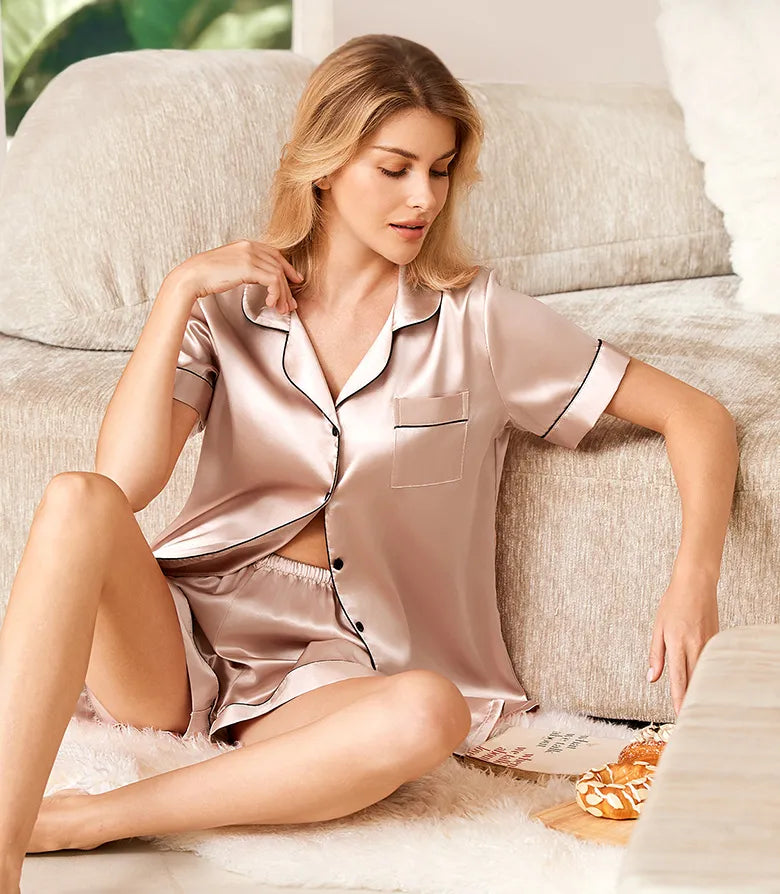
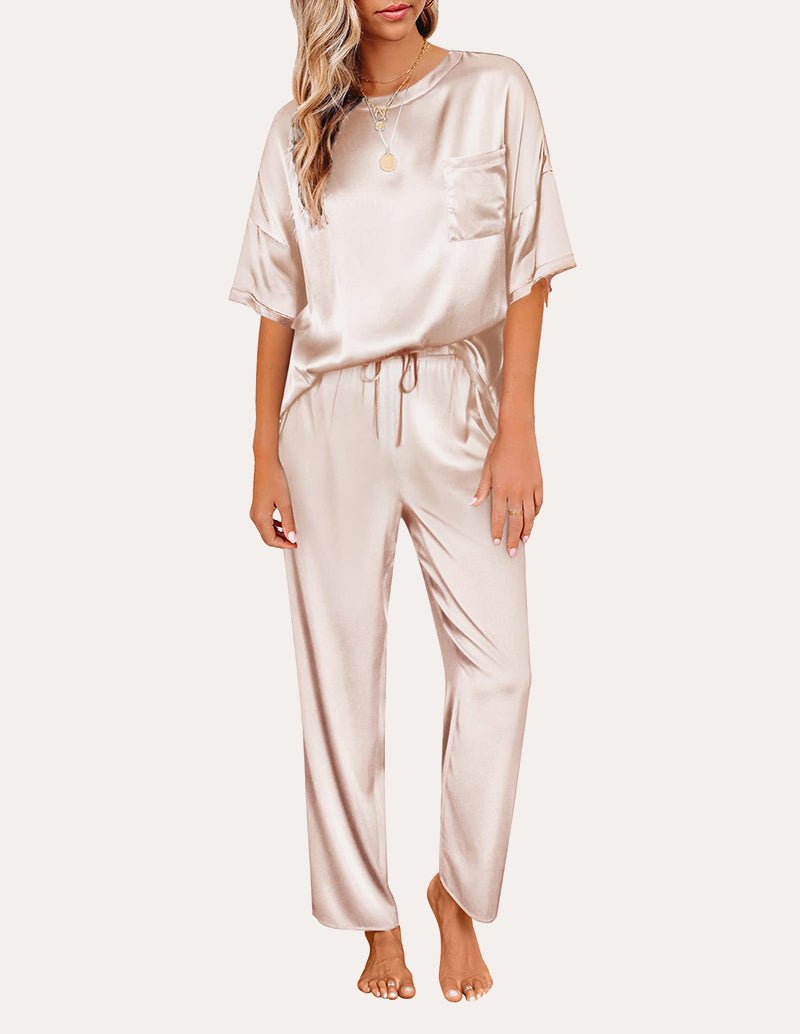
Long-fibre silk (mulberry silk) — the material most closely associated with the category, valued for its smooth low-friction surface, fluid drape, and thermal behaviour. For shoppers drawn to silk, EKOUAER's silk pajama set offers one example of how fabric choice can shape the feel and drape of a sleepwear piece.
-
Modal and modal-cotton blends — regenerated cellulose fibres with a soft hand-feel and strong moisture absorption, often blended with cotton and a small percentage of elastane for shape recovery.
-
Lyocell — another regenerated cellulose fibre, known for a cool hand-feel and fluid drape, typically blended with elastane in sleepwear applications.
-
Bamboo viscose and fine-gauge cotton knits — softer-ended options where quality is a function of yarn fineness and knit density rather than fibre rarity; EKOUAER's bamboo viscose sleep shirts illustrate how a cellulose-based knit can serve the same skin-comfort brief.
None of these fabrics is automatically "luxury" by name alone — a garment in any of them can be cheaply made. The fabric is the entry condition; what the construction does with it is what separates the categories. EKOUAER's high-end Collection, launching in October 2026, is one example of a line distributing fabric choice across all three positions above rather than defaulting to a single material.
Craftsmanship and Construction
This is the dimension regular sleepwear compresses and luxury sleepwear invests in. Construction choices to look for:
-
Seam treatment at skin contact — flat-felled, French, or bound seams at the neckline, armhole, and side seam, so the seam allowance never sits raw against the skin.
-
Closure quality — covered or fabric-wrapped buttons, fabric ties, and hidden snaps, rather than exposed plastic components that can press into the body during sleep. A classic front placket, like the one on EKOUAER's button-down sleepshirts, is one of the simplest places to see closure construction up close.
-
Hem and edge finishing — rolled hems, self-fabric binding, and faced openings instead of a single overlocked edge.
-
Stress-point reinforcement — bar tacks or backstitching at ties, plackets, and pocket corners so the garment holds shape through repeated wear and washing.
-
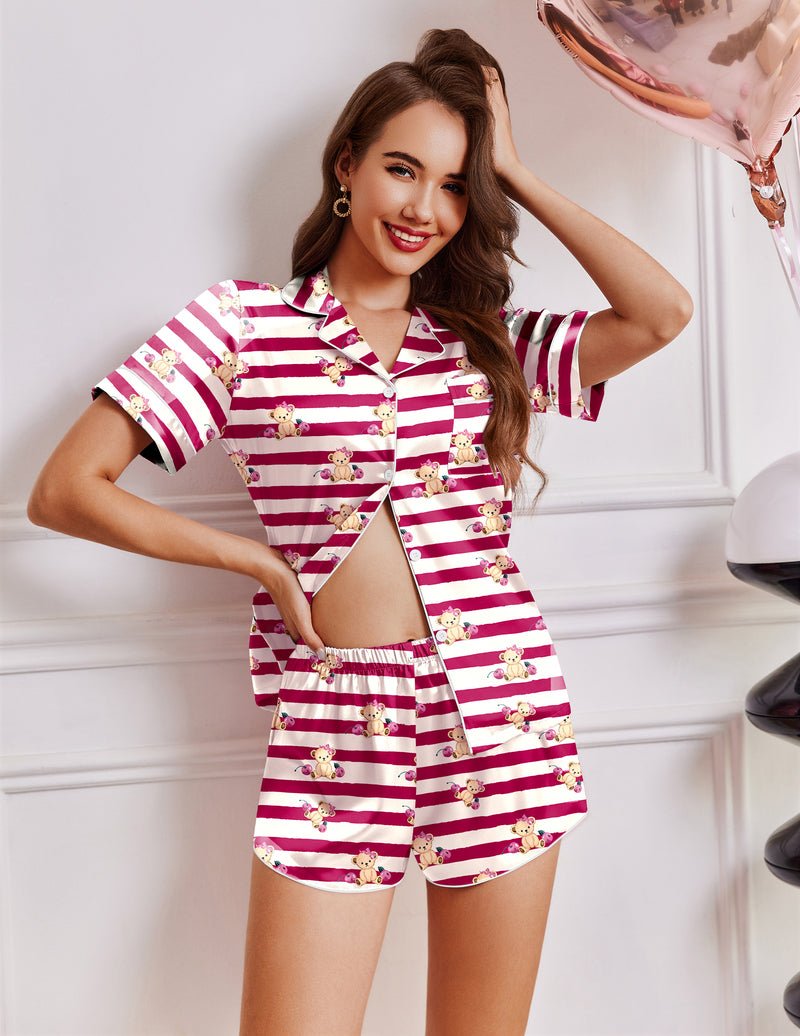
Print alignment — on printed pieces, whether the pattern matches across seams, plackets, and pockets — one of the fastest visual indicators of construction patience.
Closure design is also where construction choices become visible as design. EKOUAER's October 2026 Collection, for example, specifies fabric waist ties, placket ties, heart-shaped buttons, and smocked cuffs in its product descriptions — detail choices that sit at the intersection of construction and design, and that a shopper can check directly on the garment.
Silhouette and Design
Regular sleepwear design optimises for fit and coverage. Luxury sleepwear design adds versatility — the ability of one garment to work across the expanding radius of a relaxed evening: the bed, the sofa, the kitchen at midnight, the front door at 9 a.m. Three design decisions drive that versatility:
-
Drape-led silhouettes — wide-leg pants, column slips, and relaxed shirting that move like daywear because the fabric falls rather than clings.
-
Daywear-adjacent details — collar shapes, cuff treatments, and placket constructions borrowed from ready-to-wear shirting, which pull the garment visually out of the bedroom. A notch-collar nightshirt is a straightforward example of the borrowed-collar principle.
-
Considered proportion — the relationship between top and bottom, or between slip length and slit, engineered so the piece looks deliberate when worn outside the bed. Coordinated two-piece sets and layering combinations, such as a silk cami nightdress with a matching robe, show how proportion and layering extend a sleepwear wardrobe beyond single garments.
Comfort and Skin-Contact Design
Comfort in regular sleepwear is mostly a fit question. In luxury sleepwear, comfort is engineered at the level of skin contact and thermal behaviour:
-
Hand-feel — the immediate sensory quality of the fabric surface, which is why long-fibre and cellulose-based fabrics dominate this discussion; the way a silk nightgown falls against the skin is part of the product's function, not just its marketing.
-
Thermal and moisture behaviour — how the fabric manages body heat and perspiration across a full night, including breathability and the cooling sensation associated with lyocell and modal blends.
-
Motion comfort — whether closures, ties, and seams stay comfortable when the wearer changes position, sits, or walks.
-
Contact-point engineering — where labels sit (or whether they're printed instead of sewn), where seams fall relative to the shoulder and hip, and whether anything hard or scratchy touches the skin at rest.
This last group is the least visible from a product photo and the most noticeable after a week of wear — and it is where the construction investment in the previous sections pays off.
Finishing Details
The smallest dimension in scale and the largest in signal value. Finishing is everything done to the garment after it is assembled: bound edges, matched prints, covered buttons, consistent topstitching, evenly pressed hems, and trim applied with intention rather than as decoration — a lace-trimmed satin chemise shows how trim placement functions as a finishing decision. One further distinction belongs here: original print design versus licensed commodity patterns. Luxury lines tend to commission their own prints — which is why artist collaborations appear regularly in this category — while mass-market sleepwear often draws on stock pattern libraries. The print itself becomes a finishing-level signal of how much design attention the garment received.
Price vs. Value: Is Expensive Sleepwear the Same as Luxury Sleepwear?
Not necessarily — and conflating the two is the most common mistake in this category. A high price can reflect genuine material and construction investment, but it can also reflect licensing costs, marketing spend, or a brand's positioning strategy. The reliable way to tell them apart is to apply the dimensions above directly to the garment. A lower-priced garment may still contain construction characteristics commonly associated with luxury sleepwear, while a higher-priced one may not.
The practical implication for shoppers: the five dimensions are the value, and the price should be a consequence of them — extra fabric cost for long-fibre materials, extra labour time for seam finishing, lower production volume for original print work. When a price premium cannot be traced to any of those causes, it is paying for something other than luxury sleepwear.
How to Evaluate Luxury Sleepwear Before You Buy

A short checklist, usable on any garment in any store:
-
Read the fabric content label — look for specific fibre percentages rather than vague marketing terms.
-
Turn it inside out — inspect the seam treatment at the neckline, armhole, and side seams; run a finger along the seam allowances.
-
Check the closures — are buttons covered or fabric-wrapped? Do ties feel like the garment fabric or like generic trim?
-
Inspect the hem and edges — rolled, bound, or faced finishes indicate construction investment; a single overlocked edge does not.
-
On printed pieces, check pattern matching across side seams, plackets, and pockets.
-
Assess the silhouette in motion — does the drape work when you sit and stand, or only on the hanger?
-
Check the care requirements honestly — luxury fabrics often need gentler washing; the garment should fit your actual routine, not an imagined one.
Garments that pass most of these checks are delivering the category's substance, whatever the price point says. To see the range of options in one place, EKOUAER's pajama sets collection is a practical starting point for comparing construction and fabric choices side by side.
"The Hours That Are Yours": One Brand's Concept
"The Hours That Are Yours" is the brand concept behind the EKOUAER Collection, a high-end sleepwear line launching in October 2026. The phrase makes a simple argument: the hours between the end of the workday and the start of the next morning — the wind-down, the bedtime routine, the first slow moments of the day — are the wearer's own, and therefore worth dressing deliberately rather than by default. It is a positioning that applies the comfort and design dimensions from this guide to a specific slice of time, and it is the reason the Collection treats skin-contact construction and daywear-adjacent silhouettes as core requirements rather than extras. Vanessa Hudgens serves as brand ambassador for the line, with her same-style pieces documented on the brand's Vanessa Hudgens × EKOUAER page.
EKOUAER Collection: A Case Study in the Category
The EKOUAER Collection is a useful closing case study precisely because its structure mirrors the dimensions above. The line — nine styles in total for its 2026 launch — is built around three fabric positions: six styles in 100% mulberry silk, two in a 47% modal / 47% cotton / 6% elastane knit, and one in a 92% lyocell / 8% elastane blend, distributing material choice across use scenarios rather than defaulting to a single fabric. Design details do the daywear-translation work described earlier: contrast trim and waist ties on the silk sets, a high funnel neckline with a hem slit on the silk slip dress, sleeve ties, a shirting silhouette with heart-shaped buttons, and smocked cuffs on the lyocell piece.
The Collection also illustrates the finishing-dimension point about original prints: it carries four commissioned prints by Barcelona-based illustrator Lara Costafreda — Secret Garden, Spring Blossoms, Sea of Flowers Sea of Dreams, and Romantic Fairy Tales in Nature — applied across its silk and knit styles. The Collection's own product pages arrive with its October 2026 launch; in the meantime, EKOUAER's current range offers adjacent examples of the brand's sleepwear construction, including the half-sleeve robe and the satin cami nightdress with robe. The line competes in a segment that includes LAKE PAJAMAS (86–86–126), EBERJEY (158–158–298), LUNYA (218–218–298), and FISHERS FINERY ($249.99) — a price range in which the five dimensions above, rather than the logo, are what distinguish one line from another.
FAQ
Q: Is luxury sleepwear actually worth the price?
A: It is worth it when the price traces to the five dimensions — long-fibre fabric, seam and closure engineering, silhouette design, skin-contact comfort, and finishing. Use the evaluation checklist above; if a garment's premium cannot be traced to any of those causes, you may be paying for positioning rather than construction.
Q: What's the difference between silk and satin sleepwear?
A: Silk is a fibre — the filament produced by silkworms. Satin is a weave structure — a glossy surface finish that can be made from silk, polyester, or rayon. All silk sleepwear is not satin, and most inexpensive "satin" sleepwear contains no silk at all. In this category, fibre content is the substance and the weave is the surface.
Q: Should luxury sleepwear fit snug or loose?
A: Most luxury sleepwear is cut relaxed through the body, because drape is part of the aesthetic and thermal comfort depends on airflow. The fit precision shows up instead at the shoulder, the neckline, and the sleeve or pant opening — points where a well-engineered garment stays in place without gripping.
Q: How can I tell if sleepwear is well made without wearing it first?
A: Turn it inside out. Check the seam treatment at the neckline and armhole, the closure hardware, the hem finishing, and — on printed pieces — whether the pattern matches across seams. These checks take under two minutes and predict wearing experience better than the product photo does.
Q: What does "The Hours That Are Yours" mean?
A: It is the concept behind EKOUAER Collection, a high-end sleepwear line launching in October 2026. The phrase treats the hours between the end of the workday and the next morning as the wearer's own time — worth dressing deliberately with the materials, construction, and silhouettes described in this guide.
Related Reading
-
Vanessa Hudgens Style Explained: Boho, Satin, and the EKOUAER Loungewear Era
-
Luxury Sleepwear Care Guide: How to Wash, Dry, and Store High-End Fabrics
-
How to Style Silk Pajamas So They Look Intentional, Not Bedtime
-
What Is Quiet Luxury? A Guide to Understated, High-Quality Clothing
About Ekouaer
EKOUAER is a global sleepwear and loungewear brand guided by the mantra “Comfort. No Compromise.” It explores the fusion of everyday comfort and elevated fashion through its premium collection, with Vanessa Hudgens serving as brand ambassador. Serving customers across over 180 countries, EKOUAER’s designs have been recognized by leading lifestyle and fashion media outlets.