Best Plus Size Sleep Dresses for Women: Why One Piece Fits Better

The most common complaint about plus size pajama sets isn't the style or the fabric — it's that the top and bottom never fit at the same time. The waistband sits right, but the top rides up across the bust. The top fits but the pants gap at the back. It's a structural problem that stems from how most brands grade their sizing, and it's why so many plus-size women eventually land on the same solution: a sleep dress.
A well-fitted sleep dress eliminates the two-piece fit equation entirely. There's no waistband to dig in, no top to ride up, no separate bottom to bunch. One piece moves with your body because it's designed around your full silhouette rather than two separate measurements that may or may not correspond.
This guide covers why sleep dresses work particularly well for plus size bodies, what to look for in fabric and silhouette, and how to choose between styles for different routines and temperatures. Browse Ekouaer's full plus size collection for current options.
Note on scope: This guide focuses specifically on sleep dresses and nightdress styles for plus size women — the one-piece alternative to pajama sets. For a technical breakdown of plus size pajama set fit and grading, see our plus size pajamas fit and comfort guide. For a broader look at plus size nightgown styles, see our plus size nightgowns buying guide.
Why Sleep Dresses Fit Plus Size Bodies Better Than Sets
The fit problem with plus size pajama two-piece sets comes down to proportions. Most brands design pajama sets by scaling up a straight-size pattern — which means the top and bottom are graded proportionally together, even though plus size bodies often have a larger difference between bust, waist, and hip measurements than straight size bodies do.
According to research published by the Textile Research Journal, plus size fit satisfaction is consistently lower than straight size fit satisfaction across apparel categories, with the waist-to-hip ratio being the most commonly cited source of difficulty. A set that fits the hips may have four inches of excess fabric at the waist. A top that fits the bust may pull across the shoulders.
Sleep dresses sidestep this entirely. Because they're a single piece with no fixed waistband, they accommodate a wider range of proportions without requiring both measurements to fall within the same size bracket. An A-line or trapeze silhouette skims over the hips without clinging. A satin slip style drapes rather than compresses. A pleated construction adds volume where the body needs it.
This is why sleep dresses are disproportionately popular among plus size women specifically — not because they look better in a photoshoot, but because they actually fit more consistently across a wider range of body shapes.
The Four Sleep Dress Silhouettes Worth Knowing
Not all sleep dresses work the same way on a plus size body. Silhouette determines where the dress follows the body and where it skims past it — which matters more than fabric for fit comfort.
The Pleated or Gathered Silhouette
A pleated or gathered construction releases from a fitted bust or empire point into volume through the body. This is the most forgiving silhouette for plus size wear because it doesn't require the garment to follow any specific measurement below the bust — the fabric simply falls.
The Ekouaer Pleated Comfy Sleep Dress uses this approach: a relaxed gathered fall from the upper body means the dress accommodates a wide range of hip and waist measurements without adjusting. It's the most practical everyday sleep dress for women who want to put it on and not think about fit.

Best for: Women who want maximum comfort and minimum fuss. Works across the widest range of body proportions.
The Slip or Satin Drape Silhouette
A slip-style sleep dress in a satin or fluid fabric doesn't cling — it drapes. The key distinction is that satin and similar fabrics have enough weight to fall away from the body rather than following every curve. This creates a smooth, elongating line that works well for plus size bodies because the fabric moves with you rather than mapping to specific measurements.
The Ekouaer Full Slips Sling Nightdress is built on this principle: the sling construction and fluid fabric create a silhouette that skims rather than clings, and the full slip length means there's no hem riding up or coverage to manage during the night.

Best for: Women who prefer a sleek, smooth silhouette. Works particularly well for pear and hourglass proportions.
The Satin Set with Dress Styling
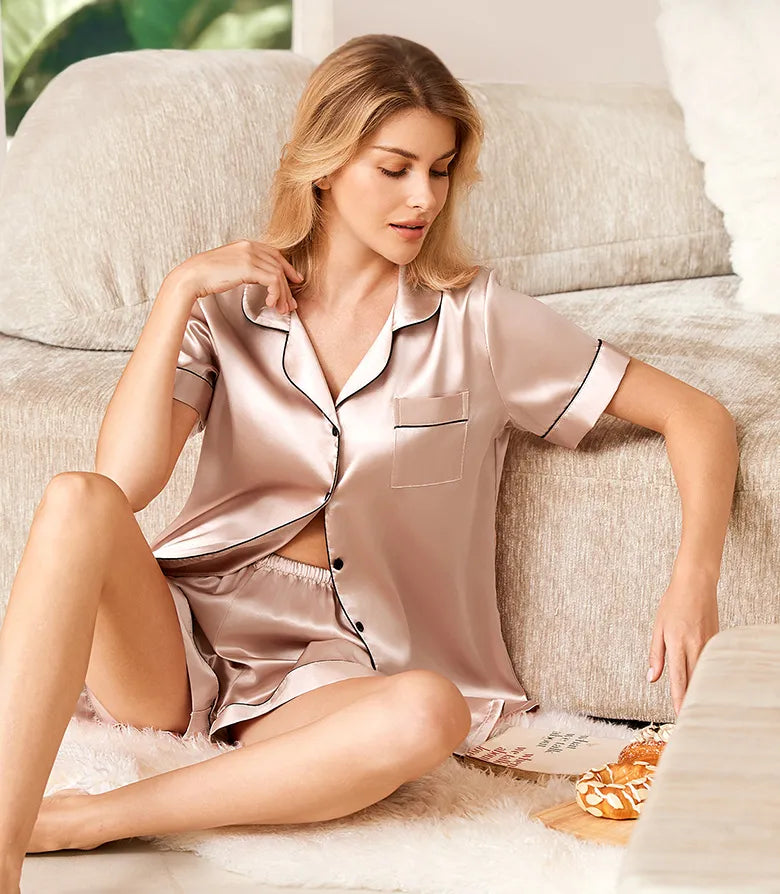
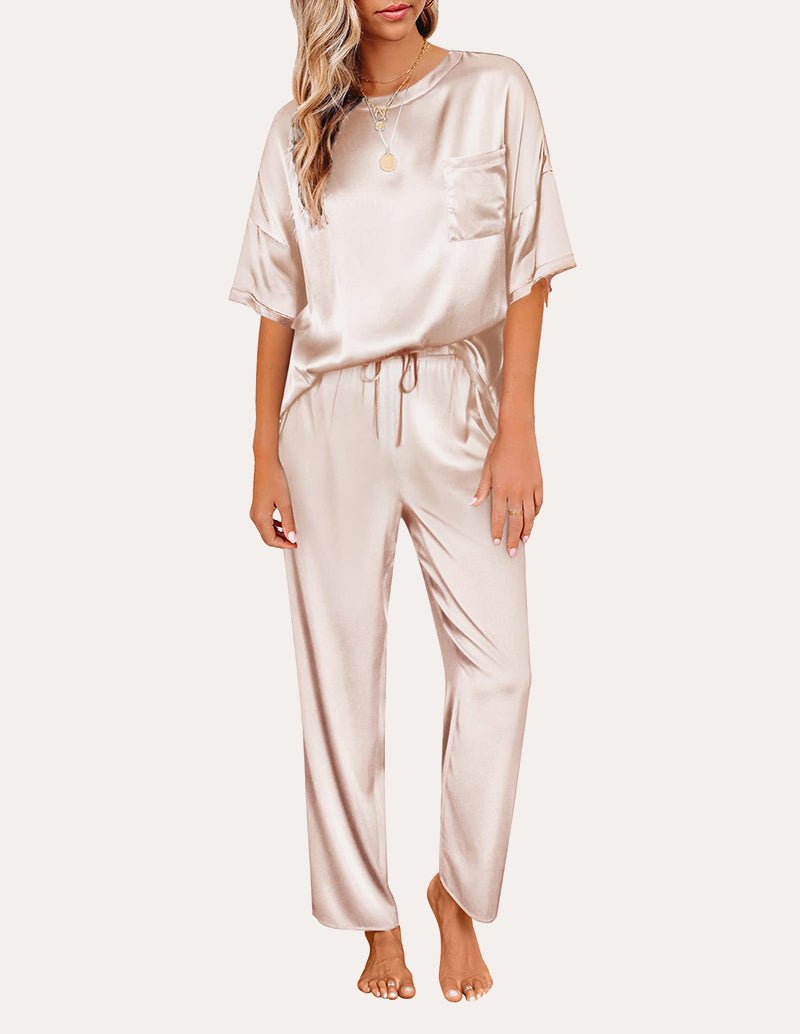
Some of the most versatile plus size sleep options sit between a dress and a set — a satin pajama-style piece that has the coverage of a dress with slightly more structure. The Feather Sleeve Satin Pajamas Set falls into this category: the feather sleeve detail adds a visual element at the shoulder that draws the eye upward, and the satin construction drapes cleanly without compressing.

Best for: Women who want something that feels more intentional — suitable for hosting, travel mornings, or occasions where a plain sleep dress feels too minimal.
The Contrast or Color-Block Sleep Dress
A contrast-color construction does something specific for plus size bodies: it uses color strategically to create visual structure rather than relying entirely on silhouette. Darker panels at the sides or a contrast waistband detail create a defined shape without compression.
The Stylish Contrast Color Cool Sleep Dress uses this approach — the color contrast creates a visual waist definition that flatters without any actual compression or fitted construction underneath. For plus size women who want a sleep dress that still looks intentional and shaped, this kind of detail work is more effective than trying to achieve the same effect through cut alone.

Best for: Women who want visual shape and structure without fitted or compressive construction.
Silhouette Quick Reference
|
Silhouette |
Fit Mechanism |
Best Proportion |
Key Benefit |
|---|---|---|---|
|
Pleated / Gathered |
Releases from bust into volume |
All proportions |
Most forgiving across measurements |
|
Slip / Satin Drape |
Fabric weight creates fall |
Pear, hourglass |
Smooth line without cling |
|
Satin Set Style |
Structured drape with coverage |
Most proportions |
Versatile for travel and hosting |
|
Contrast / Color-block |
Visual structure through color |
Apple, rectangle |
Defined shape without compression |
The most universally flattering starting point for plus size sleep dresses is a gathered or pleated silhouette in a soft knit or modal-feel fabric — it works across the widest range of body proportions and requires the least precise sizing to feel comfortable.
Fabric: What Works and What Doesn't for Plus Size Sleepwear
Fabric choice affects how a sleep dress behaves on the body throughout the night — not just how it feels at the moment you put it on.
Modal and modal-blend fabrics are among the best choices for plus size sleep dresses. Modal is exceptionally soft, has good drape, and — critically — doesn't cling when warm. According to the American Fiber Manufacturers Association, modal fiber is designed to maintain its softness and shape through repeated washing, which matters for a garment you'll wear frequently. It also doesn't create static, which can cause lighter fabrics to ride up on curvier body shapes.
Satin and satin-finish fabrics work well for plus size sleep dresses specifically because of their weight. A satin fabric is heavier than a thin jersey, which means it falls away from the body rather than following its contours. This draping quality is more flattering on plus size bodies than lightweight clingy fabrics.
Cotton and cotton blends are breathable and familiar but need to be in a relaxed enough construction to avoid pulling across the hips or bust. A tight jersey cotton clings; a looser woven cotton drapes. For sleep dresses specifically, look for cotton in a relaxed or flowy construction rather than fitted jersey.
Avoid: Thin polyester without weight (clingy and static-prone), fabrics with significant horizontal stretch but no vertical give (can roll up), and anything described as "body-hugging" or "fitted" — these constructions rely on specific measurements that plus size bodies are less likely to match uniformly.
Fabric Comparison for Plus Size Sleep Dresses
|
Fabric |
Drape |
Temperature |
Cling Risk |
Best Use |
|---|---|---|---|---|
|
Modal / Modal Blend |
Excellent |
Year-round |
Low |
Everyday sleep, warm climates |
|
Satin / Satin-finish |
Excellent |
Warm to neutral |
Very low |
Elevated sleep, travel |
|
Cotton Jersey (relaxed) |
Good |
Year-round |
Medium |
Casual everyday sleep |
|
Viscose / Rayon |
Good |
Warm climates |
Low-medium |
Lightweight summer sleep |
|
Polyester Jersey |
Poor |
Warm |
High |
Avoid for plus size sleepwear |
Fit Checklist: Before You Order
Plus size sizing varies significantly between brands. A 2X at one brand fits like an XL at another. These measurements matter more than the label:
Bust: Check the brand's actual bust measurement for your size, not just the size label. A sleep dress that's too tight across the bust will pull the entire garment up.
Length: Check the dress length against your height. Many sleep dresses are designed for a 5'5"–5'7" fit model. If you're taller or shorter, the hemline can land in an unflattering or impractical place.
Shoulder seam placement: On a sleep dress, the shoulder seam should sit at or just past the natural shoulder point. If it falls short, the dress will be too narrow across the back and bust.
Fabric stretch: Check whether the fabric has two-way or four-way stretch. A sleep dress with only horizontal stretch can roll up at the hem. Four-way stretch stays in place better.
Before buying checklist:
-
Does the bust measurement match your actual measurement (not just the label)?
-
Is the dress length appropriate for your height?
-
Does the fabric have four-way stretch or good drape weight?
-
Is the construction gathered, draped, or A-line (rather than fitted)?
-
Are care instructions realistic for frequent washing?
Styling Sleep Dresses Beyond the Bedroom
One of the underrated advantages of a well-chosen sleep dress is that it works beyond sleep. A satin slip dress or a soft modal nightdress can function as a beach cover-up, a lounging piece for slow mornings, or a comfortable base layer under a robe.
For women who work from home, a longer sleep dress under a cardigan or robe can pass as a comfortable daytime outfit without requiring a full outfit change. The Ekouaer Pleated Comfy Sleep Dress in a solid neutral reads as casual loungewear rather than obviously as sleepwear — which gives it more versatility across the day.
For travel, a satin-finish sleep dress packs flat, doesn't wrinkle significantly, and can double as a resort or hotel room outfit. The Feather Sleeve Satin Pajamas Set is particularly suited to this — the sleeve detail makes it look intentional enough for a hotel breakfast.
FAQ
Q: Why do sleep dresses fit plus size bodies better than pajama sets?
A: The fit problem with plus size pajama sets comes from the two-piece structure — a waistband and a top are graded together, but plus size bodies often have a larger difference between bust, waist, and hip measurements than straight size bodies do. A sleep dress eliminates that problem by removing the fixed waistband entirely. One piece can accommodate a wider range of proportions without requiring two separate measurements to align perfectly. Research in the Textile Research Journal consistently identifies waist-to-hip ratio as the primary source of fit dissatisfaction in plus size apparel — which is exactly the problem a sleep dress avoids.
Q: What silhouette is most flattering for plus size sleep dresses?
A: A gathered or pleated silhouette that releases from the bust or empire point is the most forgiving for plus size bodies — it doesn't require any specific hip or waist measurement and works across a wide range of proportions. A satin slip silhouette is a strong second choice for women who prefer a smoother line: the weight of the fabric creates drape rather than cling. Avoid fitted or bodycon constructions, which require precise measurements to look and feel right.
Q: What fabric is best for plus size sleep dresses?
A: Modal and modal-blend fabrics are among the best everyday choices — exceptionally soft, good drape, minimal cling, and they hold their softness through repeated washing. Satin-finish fabrics are excellent for their draping weight, which causes the fabric to fall away from the body rather than following its contours. Avoid thin polyester jersey without weight, which tends to cling and create static — particularly problematic on curvier body shapes.
Q: How do I know which size to order in a plus size sleep dress?
A: Don't rely on the size label alone — XL, 2X, and 3X vary significantly across brands. Measure your bust and check it against the brand's actual size chart measurement, not just the size range. For sleep dresses specifically, the bust is the most critical measurement because it determines where the dress sits and falls from. Also check the dress length against your height — many sleep dresses are cut for a 5'5"–5'7" fit point, which affects how the hemline lands.
Q: Can plus size sleep dresses be worn outside the bedroom?
A: Yes — the right style can function as loungewear, a beach cover-up, or a comfortable home outfit. A solid-color gathered sleep dress in a soft knit reads as casual loungewear rather than obviously sleepwear, especially paired with a cardigan or robe. Satin-finish styles are particularly versatile for travel — they pack flat, resist wrinkling, and look intentional enough for a hotel room or resort setting. The key is choosing a style with enough drape and structure to look considered rather than purely functional.
Q: How many sleep dresses do I need?
A: Three to four covers most routines practically: one lightweight option for warmer weather or hot sleepers, one mid-weight everyday option, and one slightly more elevated style for travel or occasions. A fourth in a different fabric or color gives you enough rotation for regular laundry cycles without running short. Start with one reliable everyday option and add from there once you know what works for your body and sleep temperature.
Q: How do I care for satin sleep dresses to keep them looking good?
A: Most satin-finish sleepwear is made from polyester satin or viscose satin rather than pure silk, which means it's more durable than it looks. Check the care label — many can be machine washed on a gentle or delicate cycle in cold water. Turn satin pieces inside out before washing to protect the surface finish. Avoid high heat drying, which can damage the fabric structure over time. Hang or lay flat to dry for best results. For general fabric care guidance, the American Cleaning Institute's laundry reference covers delicate fabric care symbols clearly.
Q: What's the difference between a sleep dress and a nightgown?
A: The terms are often used interchangeably, but there's a subtle distinction in common usage. A nightgown typically refers to a longer, more traditional style — often mid-calf to floor length, frequently in cotton or flannel, with a classic sleepwear aesthetic. A sleep dress tends to refer to shorter, more contemporary styles — often knee length, in softer or more modern fabrics like modal or satin, with styling that can cross over into loungewear. In practice, the most important difference is length and how the garment functions beyond pure sleep. For a full range of longer nightgown styles in plus sizes, see our plus size nightgowns guide.
Related Reading
About Ekouaer
Founded in 2014, Ekouaer makes sleepwear and loungewear with an emphasis on functional design and fabric safety. All fabrics carry OEKO-TEX Standard 100 certification — independently tested to be free of harmful substances, meeting requirements for skin-contact textiles. Products have been featured in CNN Underscored, Forbes, and TODAY.com.