

How to Sleep Better While Breastfeeding: A Practical Guide for Sleep-Deprived Moms

The exhaustion of the newborn period isn't a parenting cliché — it's a documented physiological reality. A study published in Frontiers in Nutrition puts real numbers on it: postpartum women average under seven hours of sleep a day, more than half report ongoing sleep difficulties, and the low point — measured in a large longitudinal cohort — lands right around day 42, before gradually improving over the following months and years.
Here's the part that surprises most people: breastfeeding itself may not be the villain it's usually made out to be. That same body of research found that breastfeeding mothers actually tend to sleep more than formula-feeding mothers in the early postpartum months — one study clocked the difference at roughly two and a half extra hours a day. Night feeds are real and non-negotiable in the early weeks, but the assumption that breastfeeding specifically is what's wrecking your sleep doesn't hold up as cleanly as it sounds.
This guide covers what actually makes breastfeeding-specific sleep disruption different, what's realistically fixed versus adjustable, and the strategies — including sleepwear from Ekouaer's maternity and nursing collections — that make the difference between a rough few months and a genuinely unsustainable one.
What Actually Makes Breastfeeding Sleep Different
A breastfed newborn typically needs to eat 10–12 times in a 24-hour stretch, and a good share of those feeds land overnight — partly because prolactin, the hormone driving milk production, runs highest at night. Breast milk also digests faster than formula, so the intervals between feeds stay short regardless of how much the baby takes at any one sitting.
But there are layers beyond the baby's schedule that most sleep advice skips:
|
Disruptor |
Why It Happens |
What It Feels Like |
|---|---|---|
|
Breast fullness |
Milk builds up between feeds/pumps |
Physical discomfort intense enough to wake you before the baby does |
|
Hunger |
Breastfeeding burns ~500–700 calories/day |
Waking from genuine hunger, unrelated to the baby at all |
|
Post-feed alertness |
Feeding requires real conscious attention, especially early on |
Lying back down but staying awake 30–40 minutes afterward |
|
Sleep–mood link |
Poor sleep and low mood reinforce each other |
Difficulty settling that isn't purely physical |
That last row matters more than it gets credit for: sleep deprivation in the postpartum period is tied to elevated risk of depressive and anxious symptoms, and some research links it to reduced milk volume too — so protecting your own sleep isn't a selfish afterthought. It's part of what supports the breastfeeding relationship itself.
What You Can't Change — and What You Can
Worth being upfront about what's genuinely fixed, because a lot of postpartum frustration comes from fighting something that was never going to budge.
Fixed, at least for the first 6–8 weeks: frequent night feeds. Newborns aren't physiologically built to sleep through the night yet, and forcing that timeline early carries real risk to supply. Any strategy promising otherwise in this window deserves a skeptical eyebrow.
Genuinely adjustable:
-
How efficient each feed is
-
How quickly you personally fall back asleep afterward
-
How the overnight load is split with a partner or support person
-
The physical sleep environment
-
The sleepwear and setup that determine how much conscious effort a 3am feed actually requires
None of these eliminate newborn-period sleep deprivation. Together, though, they're the difference between barely functioning and genuinely managing.
Protecting a Block of Sleep, Deliberately
Rather than grabbing sleep opportunistically and hoping it adds up, a more effective approach is picking one stretch of the day — usually overnight — and protecting it on purpose. In practice, that often means pumping ahead of time so a partner can handle one nighttime feed with a bottle, freeing up a four-to-six-hour block where you're not on duty at all. A single protected stretch that allows for a full sleep cycle tends to do more for how you feel the next day than the same number of hours scattered across several 90-minute fragments.
The other half of this is accepting help without guilt for anything that isn't the baby. A load of laundry, a dropped-off meal, an hour of someone watching an older sibling — it doesn't just free up time, it removes the mental tax of a growing to-do list hanging over the one window you actually have to rest.
Making Each Night Feed Faster and Less Disruptive
Every minute shaved off a night feed is a minute back toward sleep, and across several feeds a night, that compounds fast.
Set up a night feed station before bed — everything within arm's reach so you're not fumbling in the dark:
-
Nursing pads (a spare set, not just what's already on)
-
Water
-
Phone, if you're timing feeds
-
Burp cloths
Keep lighting dim. A full overhead light tells your brain it's morning; a small clip light bright enough to feed safely by doesn't send that signal.
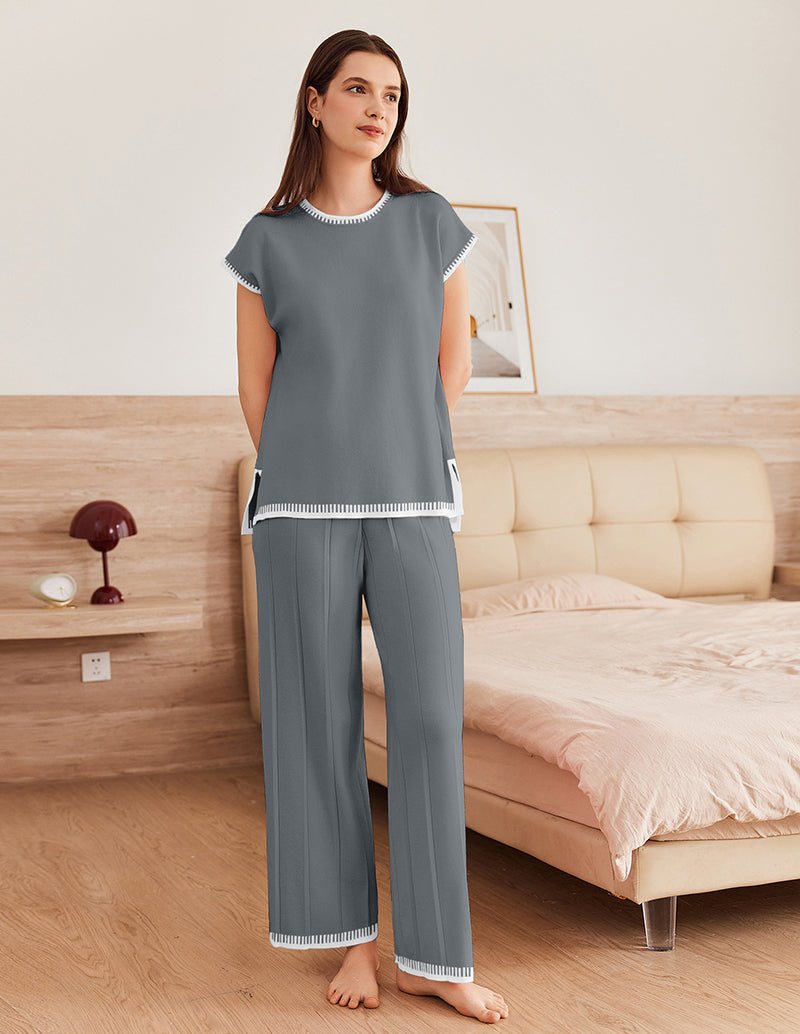
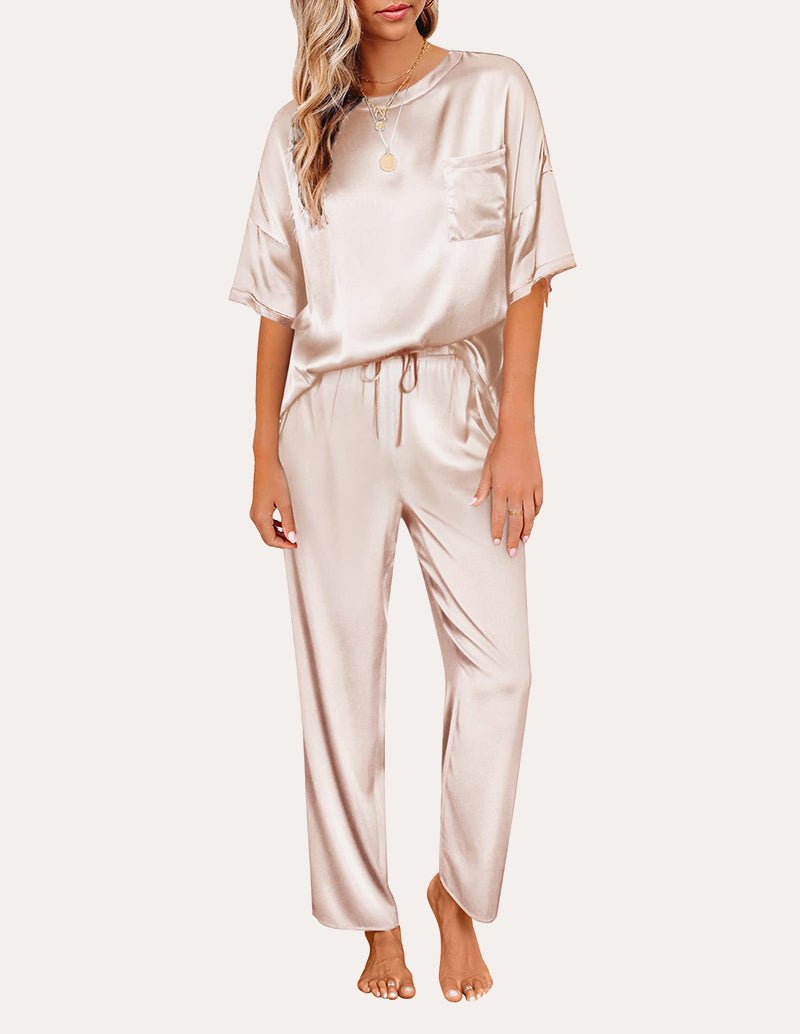
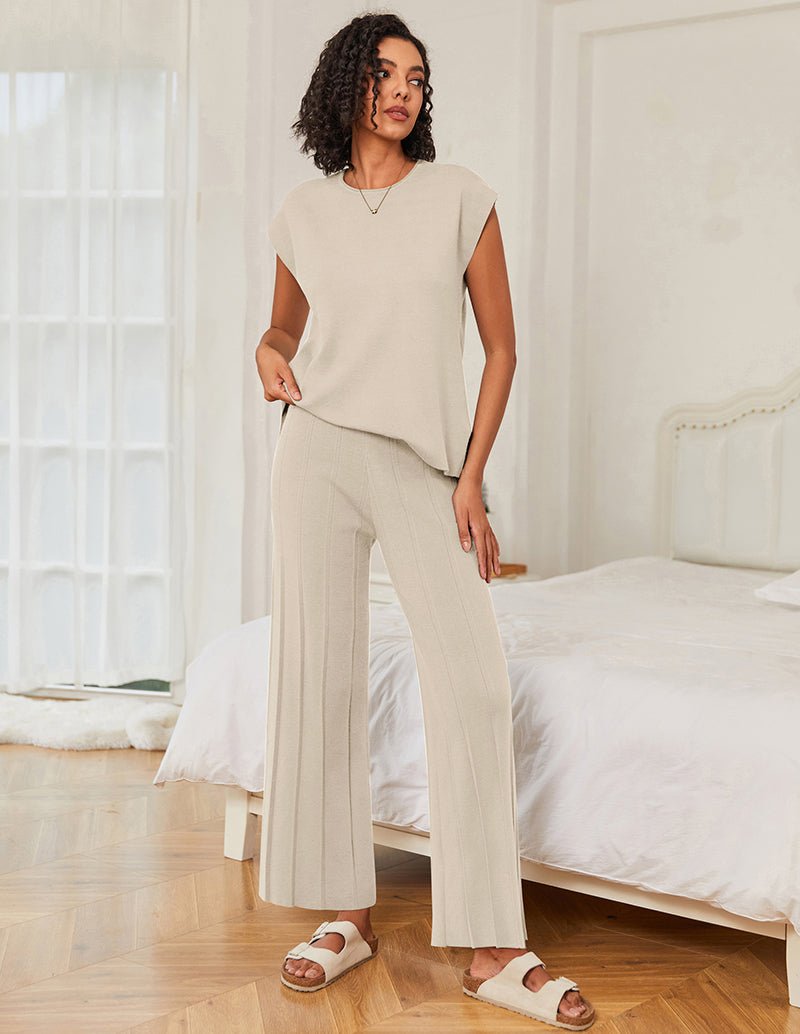
What you sleep in matters more than it sounds like it should. A nursing nightgown that opens with one motion — no clips to hunt for, no buttons to manage half-asleep — cuts real friction out of every feed. The Ekouaer Nursing Nightgown with Pockets is built around exactly this: a pocket keeps a spare nursing pad within reach so you're not getting up mid-feed, and the loose A-line cut means you just open the neckline and go. If nighttime leaking tends to overlap with feeds — which it usually does in the early weeks — the Ekouaer Soft Breastfeeding Nightdress handles both in one low-friction layer.
Learn side-lying nursing if you haven't already. Once it's established safely, some moms can nurse while staying nearly asleep themselves — a very different experience from sitting fully upright for every single feed.

Feeding More During the Day to Sleep Better at Night
Counterintuitive, but it's basic supply and demand: feeding roughly every 1.5–2 hours during the day, and gently waking a baby who's napped past the two-hour mark for a feed, shifts more of the baby's overall intake into daylight hours — which stretches out the overnight gaps in return. It's not instant, but this is typically what eventually produces the first real 3-, 4-, even 5-hour stretches, with longer runs becoming more common by around three months.
There's a biological reason nursing directly overnight (rather than a bottle of pumped milk) supports this too: breast milk isn't nutritionally identical around the clock. Morning milk carries noticeably more cortisol, the alertness hormone; evening and overnight milk carries more melatonin, which peaks around midnight. A baby nursing directly overnight gets milk that's chemically nudging them toward sleep, not away from it.
Getting Back to Sleep After a Feed
This is the piece most sleep advice skips, and often where the real sleep loss hides — not in the feed itself, but in the half hour afterward spent wide awake.
-
Keep the feed low-stimulus. No phone, no scrolling, no bright light — stay as close to a sleep state as possible rather than fully waking your nervous system and then trying to talk it back down.
-
Run white noise continuously through the night. It smooths over the small sounds that would otherwise nudge you back to alertness right as you're drifting off.
-
Use a short, fixed wind-down routine once you're back in bed — even a minute of slow breathing gives your brain a consistent cue to re-enter sleep rather than starting from scratch each time.
-
Address hunger directly with a protein-heavy snack before bed (cheese, Greek yogurt, a spoonful of nut butter) if that's part of what's keeping you up.
The Sleep Environment Itself
Because you're re-entering sleep multiple times a night rather than just once, the environment matters more here than for an average adult sleeper — every re-entry is a little easier when nothing's fighting you.
|
Factor |
Target |
Why It Matters More Postpartum |
|---|---|---|
|
Room temperature |
65–68°F / 18–20°C |
Postpartum night sweats often stack directly on top of feeding disruption |
|
Bedding |
Lightweight, easy to push off |
Full awakening from adjusting heavy blankets mid-sweat is avoidable |
|
Sleepwear |
Breathable, nursing-access |
One garment solving two problems (heat + feeding) beats solving them separately |
|
Light |
Blackout curtains or mask |
Losing early slow-wave sleep to a 5am sunrise is a bigger loss than it feels |
The fabric point is worth dwelling on: the Ekouaer Bamboo Viscose Sleep Shirt with Chest Pocket handles nursing access and thermal regulation in the same garment — which matters because for most breastfeeding moms in the first several weeks, night sweats and night feeds aren't separate problems. They're happening in the same three-minute window at 3am, and one bamboo nightgown covering both beats solving them twice.

The Part That Isn't Physical
There's a mental load to night feeds that no amount of environment-optimizing fixes. Research on postpartum depression has found that women with depressive symptoms sleep meaningfully less per night than women without — and the relationship runs both directions: poor sleep worsens mood, low mood makes sleep harder to get. The anxiety of wondering if the baby's getting enough, the isolation of a 3am feed alone, the dread of the next one before the current one's even finished — none of that shows up on a sleep hygiene checklist, but it's often the actual reason falling back asleep feels impossible some nights.
If that dread or low mood shows up more than occasional tiredness would explain, it's worth mentioning to your OB, midwife, or a lactation consultant. Postpartum Support International (postpartum.net) is a solid resource built specifically around this.
When It's Time to Ask for Help
An IBCLC can look at your specific feeding schedule and tell you honestly whether there's room to adjust it — whether supply is secure enough to stretch one overnight window, or whether the current frequency is more habit than necessity at this point. The Lactation Network connects breastfeeding moms with IBCLCs through insurance, including virtual visits, and it's a genuinely underused resource for exactly this kind of sleep-and-feeding question.
If the exhaustion has crossed a line — affecting your ability to drive safely, function during the day, or care for the baby — that's not just a parenting challenge to push through. That's worth a call to your OB or midwife.

Comfort as a Standard, Not a Compromise
Somewhere around week three, most exhausted moms stop trying to look like they've got it together and just want the version of comfort that actually helps them survive the night. That shift is the whole point.
It's the same idea behind Ekouaer's My Comfort Era campaign with actress Vanessa Hudgens — "Done proving. Ready for real comfort." Nobody needs to perform composure through a 3am feed. The right nightgown just makes the feed faster and the falling-back-asleep part a little easier, and that's enough.
(Follow the campaign: Instagram · Facebook · TikTok)
FAQ
Q: What's the single highest-impact change if I can only do one thing?
A: Protecting one 4–6 hour block, rather than trying to distribute rest evenly across the night. A full sleep cycle needs roughly that long to include deep and REM stages — a night broken into six 90-minute pieces, even if it adds up to the same total hours, is measurably less restorative than one protected block plus shorter fragments around it.
Q: Does breastfeeding actually cost you more sleep than formula feeding?
A: Not as clearly as most people assume. Several studies have found breastfeeding mothers sleep more than formula-feeding mothers in the early months — one found a difference of roughly two and a half hours a day. Breastfeeding involves more frequent wakings, but formula feeding brings its own disruptions (mixing, warming, washing bottles at 3am), and the research suggests the net effect on total sleep may favor breastfeeding rather than work against it.
Q: How long does the intense night-waking phase typically last?
A: Most families see meaningful improvement by around 3 months, as daytime feeding volume increases and babies naturally consolidate overnight sleep. That said, a well-documented "4-month sleep regression" — driven by a baby's sleep architecture maturing, not by anything going wrong — often temporarily undoes recent progress. It's normal, and it passes.
Q: Can I sleep train while breastfeeding?
A: With caution, and ideally with an IBCLC involved, and generally not before supply is well-established (around 6–8 weeks at the earliest). Gentler, gradual approaches tend to be easier to combine with an active breastfeeding relationship than rigid extinction-based methods, since abrupt schedule changes in the early months can affect supply. This is worth a specific conversation with a lactation consultant rather than a generic sleep-training book.
Q: Is it normal to feel like you genuinely can't function on this little sleep?
A: Feeling exhausted is expected. Feeling like you cannot function — unable to drive safely, unable to track basic tasks, persistent low mood alongside the tiredness — crosses from "normal newborn exhaustion" into something worth screening for. Postpartum depression and anxiety both commonly present first as sleep problems, so a conversation with your OB or midwife is reasonable if it feels like more than fatigue.
Q: What should I wear to bed while breastfeeding to sleep better?
A: Something loose and breathable with simple, one-motion nursing access, so a 3am feed doesn't require full alertness to manage. Bamboo viscose or lightweight cotton helps with the postpartum night sweats that often overlap with feeding in the early weeks — a single garment that handles both temperature and access beats switching between a nightgown and a separate cooling layer.
Related Reading
About Ekouaer
Founded in 2014, Ekouaer makes sleepwear and loungewear with an emphasis on functional design and fabric safety. All fabrics carry OEKO-TEX Standard 100 certification — independently tested to be free of harmful substances, meeting requirements for skin-contact textiles. Products have been featured in CNN Underscored, Forbes, and TODAY.com.
Ekouaer in the Press
-
Reuters: Vanessa Hudgens fronts the My Comfort Era global campaign
-
PopSugar: Strategic styling and adaptive lounge layers in the new fashion collection
-
Yahoo Shopping: Celebrity-backed comfort standards and lifestyle alignment
-
InStyle: Holiday travel capsule edits and functional holiday wardrobe packing templates