


Breastfeeding and Leaking at Night: What to Wear So You Don't Ruin Your Pajamas

Waking up to a soaked pajama top — or discovering it in the morning — is one of the most common but least-prepared-for experiences of the breastfeeding months.
The short version: Breastfeeding Basics' IBCLC-written guide states plainly that nearly all nursing mothers will experience breast milk leakage at some point — it's not a sign of oversupply, a latch problem, or anything that needs fixing. It's your body doing exactly what it's designed to do, at the time of night when it does it most actively: prolactin, the hormone that drives milk production, follows a circadian rhythm and peaks in the early morning hours, commonly cited as between 2am and 4am. The issue isn't the leaking — it's having the right sleepwear system in place to manage it without fully waking up or ruining another pajama set.
This guide covers why nighttime leaking happens, the three-layer sleepwear system experienced breastfeeding moms use, and which pajama and nightgown formats from Ekouaer's nursing collection actually work at 3am when you're half-asleep and don't want to think about any of this.
Why Breast Milk Leaks at Night — and Why the Early Morning Hours Are Worst
Understanding the mechanism makes the management less frustrating, because it clarifies that you're managing something physiological rather than preventing something that could be stopped.
Two hormones are at the center of this: prolactin stimulates milk production in the breast tissue, and oxytocin triggers the let-down reflex — the small muscles around your milk-producing cells contracting to push milk through the ducts. Oxytocin releases not only during feeding but in response to emotional and physical triggers, including simply thinking about your baby or hearing another baby cry.
Prolactin follows a distinct 24-hour rhythm, with levels significantly higher at night than during the day and peak concentrations typically occurring in the early morning hours — meaning your body is actively producing milk at its highest rate during that window, even if your baby isn't feeding at that time. The combination — peak prolactin production plus the uncontrollable let-down reflex, operating while you're asleep and not nursing — creates the overnight leak pattern most breastfeeding moms experience in the first weeks and months.
Breastfeeding Basics' IBCLC guide confirms the core fact plainly: "Leaking occurs when mother's milk 'lets down', due to the MER — Milk Ejection Reflex. You can't control this reflex."
Two specific nighttime triggers beyond hormones:
-
Full breasts when the baby sleeps longer. As babies begin sleeping longer stretches, the gap between feedings increases. When your baby skips a feeding or sleeps through a usual feeding time, your breasts can become overly full — and that pressure alone causes leaking, sometimes regardless of the let-down reflex.
-
Bilateral let-down. When let-down activates on one side — whether from the baby nursing or from a stimulus — oxytocin affects both breasts simultaneously, triggering let-down on the non-nursing side too. During sleep, this bilateral response means both sides can leak at once, doubling the volume that needs managing.
How Long Does Nighttime Leaking Last?
Leaking can happen at any stage of breastfeeding, especially when there's a change in your baby's feeding needs or schedule — but for most moms it follows a general pattern:
|
Stage |
What's Happening |
Leaking Pattern |
|---|---|---|
|
Weeks 1–6 |
Supply hasn't yet regulated to demand; hormone levels driving production are highest |
Most frequent and least predictable |
|
Weeks 6–10 |
Supply begins regulating to the specific feeding schedule |
Substantially reduced for many moms |
|
Month 3 onward |
Supply and demand have synchronized |
Often decreases or stops at night |
|
Any point |
Feeding schedule changes (longer sleep stretches, starting solids, illness) |
Temporary recurrence is normal |
Rowena Bennett, RN, RM, IBCLC, writing for Baby Care Advice, confirms the trend directly: "Leaking breasts are common in the early weeks of breastfeeding... Leaking usually decreases as your milk supply adjusts to your baby," with most mothers noticing breasts leak less by the time their baby is 6–10 weeks old.
The Three-Layer Nighttime System
Managing nighttime leaking well means addressing three levels simultaneously: the breast itself, the bra, and the sleepwear. Addressing only one or two means the third fails you at 3am.
Layer 1: Nursing Pads
Nursing pads sit inside the bra cup directly against the nipple, absorbing leaking milk before it reaches the bra fabric. Without them, a bra saturates quickly and then leaks through to the pajama top regardless of how good the sleepwear is.
|
Type |
Best For |
Trade-Off |
|---|---|---|
|
Disposable (e.g., Lansinoh, Medela) |
Heavy leaking nights; more absorbent per unit overnight |
Ongoing cost, daily waste |
|
Reusable (bamboo, cotton, organic) |
Sensitive nipple skin; no plastic backing |
Requires washing |
|
Silicone milk collectors |
Very heavy leakers who want to save collected milk |
Different mechanism — collects rather than absorbs |
For light leakers, or once supply has regulated and leaking is occasional rather than nightly, the Ekouaer Invisible Reusable Nipple Covers are a minimal-intervention option — worn directly against the nipple without a full bra-and-pad setup, reusable and skin-safe.

Layer 2: Nursing Bra
A nursing bra worn to sleep serves two functions: it holds nursing pads in place, and its light compression can slightly reduce leaking volume. Wearing a comfortable nursing bra overnight is a commonly recommended nighttime management strategy for exactly this reason.
The key for overnight use: no underwire. Underwire bras worn overnight can apply pressure to breast tissue and milk ducts, which over time may contribute to blocked ducts or mastitis. A soft, wireless nursing bra that holds pads securely without constricting is the right format.
The Ekouaer Nursing Bra — Wavy Breastfeeding Bra is wireless with soft stretch fabric and clip-down access for the night feeds that interrupt sleep alongside the leaking — it holds pads in place all night without the pressure points structured daytime bras create.

Layer 3: Sleepwear That Handles Leaking Practically
Most breastfeeding clothing guides stop at "wear a nursing top" without specifying what makes one format better than another for overnight leaking. The criteria that actually matter:
-
Dark or patterned fabric. White or light-colored sleepwear shows milk stains immediately and permanently if not washed promptly. Dark neutrals or prints absorb and conceal leaking until the morning wash rather than forcing a middle-of-the-night change.
-
Fast-drying fabric. Cotton absorbs moisture but holds it against skin, creating the damp, clammy sensation that wakes you fully. Bamboo viscose and modal wick moisture faster — even if leaking soaks a pad, the fabric moves moisture away from skin more quickly.
-
Front nursing access. When a leak is heavy enough to require changing, you need the top off and back on quickly in the dark. Front-opening or pull-down access means no overhead removal, no fumbling, no waking your partner.
-
Loose, non-fitted silhouette. A fitted top damp from leaking feels restrictive in a way a loose nightgown does not; loose fabric has more capacity to absorb without immediately feeling wet against skin.
Sleepwear Options That Work
Nursing Nightgowns
The nightgown format is the most consistently practical for overnight leaking management, combining easy nursing access, a loose silhouette that absorbs without feeling wet, and a single garment covering both the leaking site and the rest of the body.
The Ekouaer Nursing Nightgown — Maternity Sleepwear with Pockets adds the detail most nursing nightgowns skip: pockets. At 3am when you're reaching for a nursing pad, having a fresh one within arm's reach is meaningfully more convenient than getting up to find one. The loose A-line cut also handles bilateral leaking that soaks through pads with more grace than a fitted top.
The Ekouaer Soft Breastfeeding Nightdress is the option to reach for when fabric softness against sensitive postpartum skin is the priority — reducing friction against nipple skin that's already tender from frequent nursing.

Nursing Pajama Sets
Two-piece sets suit women who prefer a separated top and bottom — particularly useful in the first weeks postpartum when c-section incision clearance requires attention to waistband placement that a nightgown handles automatically. (See our c-section recovery wardrobe guide if that overlap applies to you.)
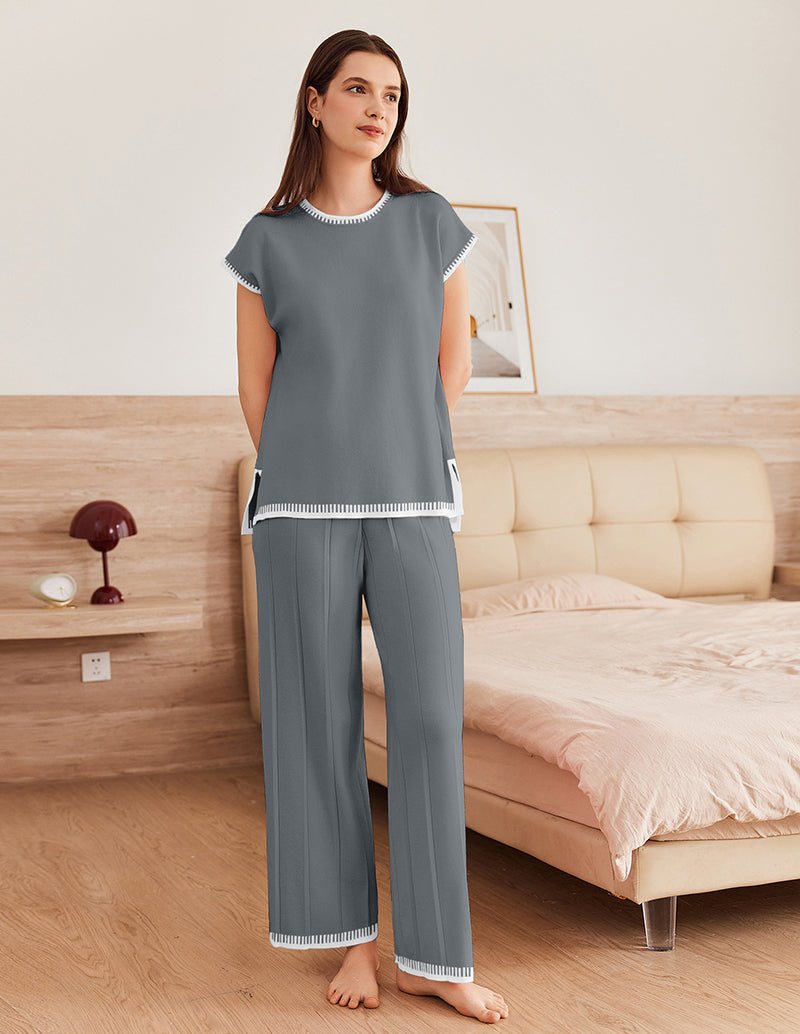
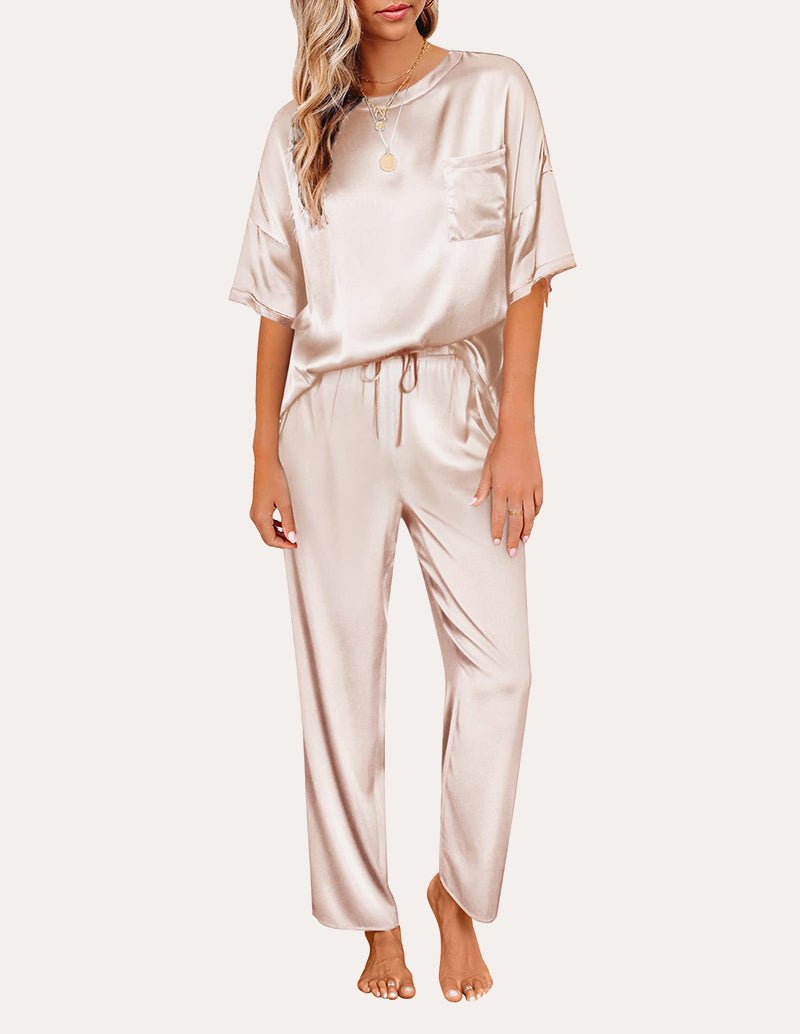
The Ekouaer Soft Pajamas Shorts Set covers warm-weather months when a full-length nightgown feels too warm alongside postpartum night sweats — shorts allow leg ventilation while the nursing top manages leaking at the breast.

Practical Strategies for Managing Nighttime Leaking
-
Nurse or pump one side just before bed. Reducing breast fullness immediately before sleep reduces the volume available to leak during the night's first long stretch.
-
Waterproof mattress protector. Even with the best sleepwear system, occasional soaking-through happens. Worth having in place from day one postpartum.
-
Keep a second set of nursing pads on the nightstand. The most common overnight scenario — waking at 3am to saturated pads — is much easier to handle without getting up to find a replacement.
-
Apply gentle pressure when you feel let-down coming. Pressing the heel of the hand firmly against the breast when you feel the tingling sensation that precedes let-down can temporarily halt leaking.
-
Dark bedding for the first months. The same logic that applies to sleepwear applies to sheets and pillowcases — a night of leaking doesn't immediately visually contaminate your entire bed.
When Leaking Is More Than Normal
While leaking is normal in the early weeks, certain patterns are worth raising with a lactation consultant: pain with leaking (which may indicate a blocked duct or the start of mastitis), leaking that increases rather than decreases over time, or leaking accompanied by breast redness or warmth.
A very regimented feeding schedule — as opposed to on-demand feeding — is also a common contributor to excessive leaking, since it creates predictable intervals where fullness builds to the point of overflow. If leaking is severe and you're feeding on a schedule, discussing a more demand-led approach with a lactation consultant may help.

Comfort as a Standard, Not a Compromise
Nighttime leaking isn't a failure of preparation — it's biology running on a schedule you didn't set. There's nothing to fix and nothing to prove; there's just a system worth having in place before you need it at 3am.
That's the idea behind Ekouaer's My Comfort Era campaign with actress Vanessa Hudgens — "Done proving. Ready for real comfort." Nothing about a body doing exactly what it's supposed to do needs to be managed with embarrassment or extra effort. The right sleepwear just quietly does its job so you don't have to think about it.
(Follow the campaign: Instagram · Facebook · TikTok)
FAQ
Q: Why does breast milk leak so much at night?
A: Prolactin, the hormone responsible for milk production, follows a circadian rhythm and peaks in the early morning hours — commonly cited as between 2am and 4am — meaning your body is producing milk at its highest rate during those hours, even when your baby isn't feeding. Oxytocin, which triggers the let-down reflex, also activates in response to emotional triggers that can occur during sleep, and the reflex itself cannot be controlled.
Q: How do I stop leaking at night while breastfeeding?
A: You can't fully stop it in the early months, but you can manage it: wear a wireless nursing bra with absorbent nursing pads, nurse or pump one side before bed to reduce fullness, and wear dark-colored nursing sleepwear that conceals staining until morning. Leaking typically decreases naturally as your milk supply adjusts to your baby's feeding pattern.
Q: What should I wear to bed when breastfeeding to manage leaking?
A: A loose nursing nightgown or nursing pajama top in a dark or patterned fabric, worn over a wireless nursing bra with nursing pads inserted. The three-layer system — pads inside a wireless bra inside loose, dark sleepwear — handles most overnight leaking without a full outfit change.
Q: How long does nighttime breast milk leaking last?
A: For most breastfeeding moms, leaking decreases substantially between 6 and 10 weeks as milk supply adjusts to the baby's needs. It can return at any stage when the feeding schedule changes, so temporary recurrence after longer sleep stretches begin is normal.
Q: Is it normal to leak a lot of breast milk at night?
A: Yes. Nearly all nursing mothers experience breast milk leakage at some point, and nighttime leaking is particularly common because of peak prolactin levels during the early morning hours. It's not a sign of oversupply or a problem that needs fixing — it's a normal part of early breastfeeding.
Q: Should I wear a bra to bed when breastfeeding?
A: A soft, wireless nursing bra — yes, for the early weeks when leaking is most significant. It holds nursing pads in position and provides light support that can reduce leaking volume during sleep. Avoid underwire overnight, since it can apply pressure to milk ducts. After supply regulates and leaking reduces, going bra-free overnight with only nursing pads or nipple covers is a practical option.
Related Reading
About Ekouaer
Founded in 2014, Ekouaer makes sleepwear and loungewear with an emphasis on functional design and fabric safety. All fabrics carry OEKO-TEX Standard 100 certification — independently tested to be free of harmful substances, meeting requirements for skin-contact textiles. Products have been featured in CNN Underscored, Forbes, and TODAY.com.
Ekouaer in the Press
-
Reuters: Vanessa Hudgens fronts the My Comfort Era global campaign
-
PopSugar: Strategic styling and adaptive lounge layers in the new fashion collection
-
Yahoo Shopping: Celebrity-backed comfort standards and lifestyle alignment
-
InStyle: Holiday travel capsule edits and functional holiday wardrobe packing templates