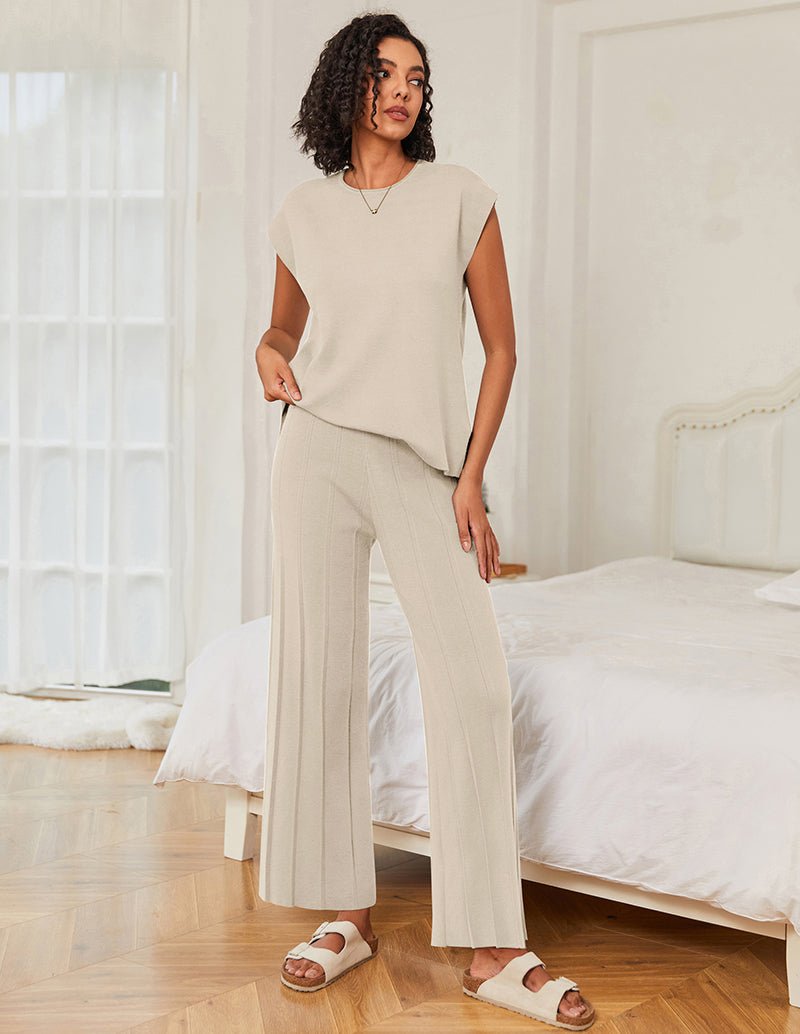
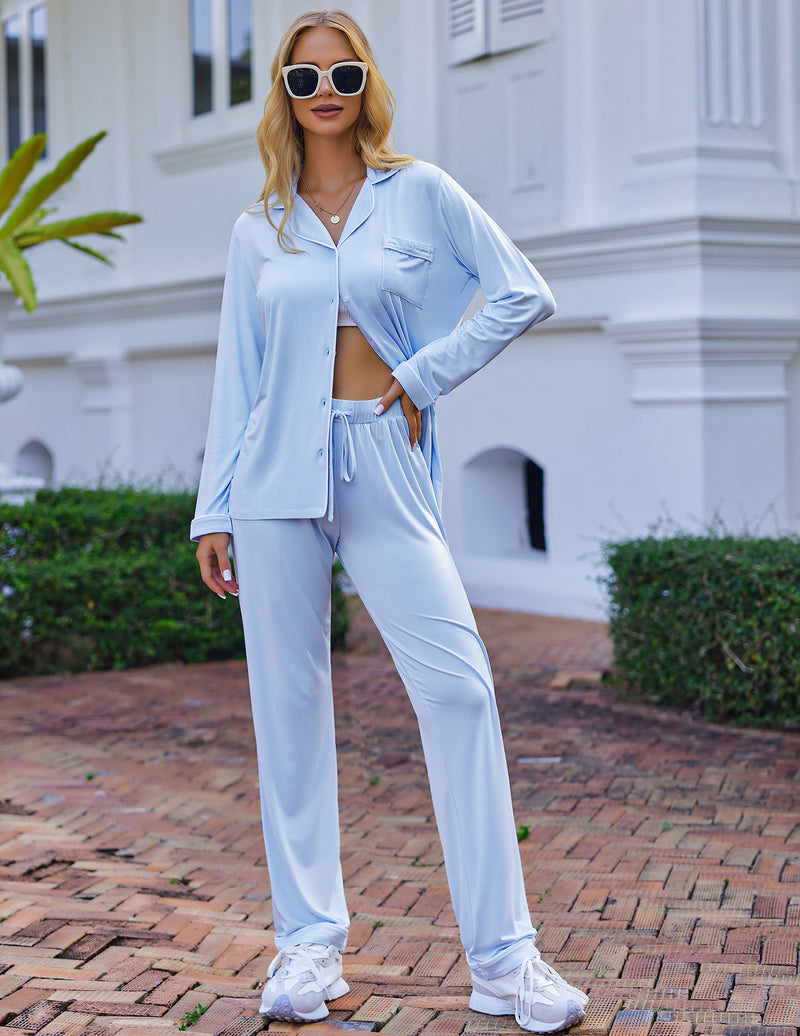
Pajamas for Sensitive Skin This Fall & Winter 2026: Fabric, Fit & Shopping Tips

A fall and winter home looks cozy from the couch, but for the skin on your body, the season is working against you. U.S. homes run forced-air heat from roughly October through April, and indoor relative humidity often drops below 30% in northern states, per the EPA's indoor-air guidance. Dry air pulls water out of the stratum corneum (the skin's outer layer), which weakens the barrier function and makes reactive skin — including acne-prone and eczema-prone skin — more vulnerable to whatever it touches for eight hours a night.
That is why pajamas for sensitive skin deserve the same scrutiny you give a moisturizer. Most shoppers focus on warmth and softness, but the fabric-to-skin mechanics of sleepwear matter more than people realize. A scratchy inner seam, a stiff woven-in label, or a sheet-slick polyester can turn a normal-feeling garment into a nightly irritant — the opposite of what most readers want when they search for pajamas that don't irritate skin. This guide walks through what actually drives irritation in cold-weather sleepwear, the fabrics that dermatology patient-facing resources tend to flag as friendlier, what to skip, and how to set up a wash routine that keeps even the softest pajamas gentle through a full season.
Key Takeaways
-
Fabric fiber matters more than initial softness. Combed cotton, modal, TENCEL™ lyocell, bamboo-derived viscose, and 100% mulberry silk are the fibers most patient-facing dermatology sources flag as friendlier to reactive skin.
-
Not all "natural" fabrics are equal. Carded (rough) cotton and traditional wool are common irritants; a wool allergy or simple fiber coarseness can flare itching on the chest, inner arms, and thighs.
-
Construction details trigger more irritation than most shoppers expect. Raised inner seams, sewn-in care tags, and stiff elastics are the silent offenders in otherwise "soft" pajamas.
-
Fit affects skin. Tight waistbands and cuffs create constant friction; loose, drapey silhouettes glide over the skin instead of rubbing it.
-
Wash routine decides whether the fabric stays gentle. Fragrance-free, dye-free detergents and an extra rinse cycle reduce residue-driven irritation, per the National Eczema Association's laundry guidance.
Why Fall-Winter Pajamas Irritate Sensitive & Acne-Prone Skin
Two things happen at the same time every fall and winter: indoor humidity drops, and things touching your skin for eight hours a day change. Either factor alone can be tolerable; together, they put normal skin into reactive-skin territory.
Dry indoor heat worsens skin sensitivity
Forced-air, radiator, and baseboard heating systems all lower indoor humidity. The EPA's guide on indoor air quality recommends keeping indoor relative humidity between 30% and 50% to limit both mold growth and dryness, but most U.S. homes sit below that range all winter. On the skin side, the American Academy of Dermatology's dry-skin guidance notes that low-humidity environments accelerate transepidermal water loss, which compromises the outer skin barrier. A compromised barrier reacts more strongly to friction and to chemical residue — two things pajamas expose you to all night.
Common sleepwear irritants: fabric, dyes, seams, tags
Reactive skin rarely reacts to "fabric" in the abstract. It reacts to specific mechanical and chemical inputs:
-
Coarse or short fibers in carded cotton and traditional wool scratch the skin's surface, increasing micro-inflammation.
-
Reactive dyes in dark or saturated prints can leave residue that irritates sensitive skin, especially in warm, humid micro-climates like under the breasts or along the waistband.
-
Raised inner seams — common in fast-fashion pajamas — sit on the same skin spot for hours and create pressure-point irritation.
-
Sewn-in care labels at the center-back neck or waistband are one of the most-cited irritants in patient-facing eczema resources. Tag-free or printed labels solve this.
-
Satin-feel polyester looks soft but does not breathe, trapping heat and sweat, which can aggravate acne on the back and chest.

Reducing nighttime mechanical friction and chemical residue is one of the easier wins for acne-prone and eczema-prone skin — but it is symptom management, not a cure for any underlying condition. The National Eczema Association frames clothing choices as complement to medical treatment, not a substitute for it.
Best & Worst Fabrics for Sensitive-Skin Pajamas (Fall-Winter)
This table covers the fibers patient-facing dermatology sources (NEA and AAD patient pages) tend to recommend for eczema- and acne-prone readers shopping for the best winter pajamas for eczema skin, plus the ones they consistently flag to avoid. Fabric weave, weight, and finish matter as much as fiber content, so two garments of the same fiber can still feel different on skin.
| Fabric | Best For | Feel & Traits | Pros | Cons |
| Combed cotton (100%) | Year-round base layer for sensitive or acne-prone skin | Smooth, cool, stable weave; short fibers removed during combing, leaving longer, softer yarns | Breathable, easy to wash, widely available, holds up over many cycles | Absorbs moisture (not ideal for hot sleepers); check for blended synthetics on the label |
| Modal / TENCEL™ lyocell | Sleepers who run hot but still want fall coverage | Silky drape, cool hand-feel, semi-sheen | Very smooth fiber surface, low friction, moisture-wicking, often made from sustainably sourced wood pulp | Quality varies by manufacturer; cheaper lyocell pills faster |
| Bamboo-derived viscose | Soft base layers and year-round pajamas for reactive skin | Buttery soft, drapey, slightly cool on first touch | Long fibers reduce surface scratch; widely sold as a "sensitive-skin" option | Manufacturing chemistry matters — look for OEKO-TEX certified producers |
| Mulberry silk (100%) | Cold, dry bedrooms and very reactive skin | Naturally temperature-regulating, smoothest of the natural fibers | Hypoallergenic in clinical-grade literature; smoothest hand-feel reduces friction on the face and chest | Highest cost; hand-wash or delicate cycle; needs a dedicated wash routine |
| Lightweight merino wool | Cooler bedrooms (under 65°F / 18°C); wool-tolerant skin | Fine, crimped fibers trap warmth without bulk; naturally moisture-wicking | Warmer per ounce than cotton; resists odor | Coarser merino and traditional wool are common irritants — super-fine gauge (under 18.5 micron) is the sensitive-skin option only |
| 100% polyester fleece (avoid) | None for sensitive skin | Plush surface, often fuzzy inside | Cheap, warm | Non-absorbent, traps heat and sweat, microfibers shed and sit on skin |
| Coarse brushed flannel (use cautiously) | Cool, dry bedrooms for non-reactive skin | Brushed nap traps warmth | Warm, classic look | Brushed surface sheds short fibers that irritate skin; better in a cotton-modal blend than a pure carded-cotton flannel |
| Cheap polyester satin (avoid) | None for sensitive skin | Shiny, slippery, low cost | Looks silky | Synthetic satin is non-absorbent; friction heat builds against reactive skin |

The "combed" in combed cotton is doing a lot of work. Combing removes short, uneven cotton fibers that would otherwise sit in the yarn and prick the skin's surface. Carded cotton skips that step, which is why two 100% cotton pajamas can feel completely different at hour six of wear. For sleepwear, look for "combed cotton" or "long-staple cotton" on the label, not just "cotton."
Fit & Construction Rules for Irritation-Free Sleepwear
Fit and finishing can override the benefits of a great fiber. Two patients wearing the same fabric can have very different outcomes based on these details.
Loose vs tight silhouettes for sensitive skin
Loose silhouettes are the default for sensitive-skin sleepwear because they minimize continuous friction. A fabric that floats over the skin does not abrade it; a fabric held under tension will. For acne-prone skin on the back and chest, loose fits also let air circulate, which keeps the skin cooler and drier.
Tight fits have a narrower role: cold bedrooms, layering under heavier loungewear, or under a heated blanket. If you prefer a closer fit, look for a four-way stretch knit (with spandex or elastane) rather than a non-stretch woven, and make sure the cuffs and waistband are wide enough to leave a visible gap of fabric when relaxed.
For pregnancy: Loose or gently draped silhouettes are easier on reactive skin because the body shape changes week to week; drawstring or full-elastic waistbands adjust without pinching.
What garment details you should avoid
This is the unglamorous checklist that separates an irritation-friendly pajama from a problem one:
-
Tag-free or printed labels. Sewn-in care tags at the center back are a top irritant. Tag-free (where the size info is screen-printed directly on the inside of the neckband) is the best fix.
-
Flat or covered seams. Covered seams lie flat against the skin; raised French seams or thick overlock edges are common friction sources.
-
Smooth, wide waistbands. Elastic that is encased in fabric (rather than exposed rubber) is far less reactive.
-
No hardware against skin. Snaps, zippers, and metal tips should sit on a fabric placket so the metal never touches skin directly.
-
Minimal lace or appliqué. Decorative lace on the front of a sleep shirt looks pretty but feels scratchy against the chest and shoulders during sleep.
-
Short or footless hems. Tight ankle cuffs trap heat and create a pressure ring; a longer, looser hem is friendlier.
Critical Laundry Tips to Keep Pajamas Gentle on Skin
Many of the "itchy new pajamas" complaints are actually laundry complaints. Even the softest fabric will react with the skin if it's sitting in detergent residue, fragrance, or fabric-softener coating.
-
Use a fragrance-free, dye-free detergent. "Free and clear" or "hypoallergenic" formulations skip the two most common textile-related irritants. The National Eczema Association's product guidance advises against fabric softeners and fragranced detergents on eczema-prone skin.
-
Skip fabric softener and dryer sheets. Both coat fibers with a film that reduces absorbency and is a common irritant trigger.
-
Wash new pajamas before the first wear. Manufacturing finishes, sizing chemicals, and dye residue sit on new fabric. One cold cycle before bed clears most of it.
-
Run an extra rinse. Detergent residue is a frequent silent trigger. Adding a second rinse cycle removes what the first leaves behind.
-
Wash in cool or warm water, not hot. Hot water sets fragrance and softener residue into fibers and can shrink cotton.
-
Tumble dry on low or hang dry. High heat breaks down elastic and roughens fibers. If you line-dry indoors during winter, run a humidifier to keep the bedroom from getting bone-dry.
-
Replace pajamas when the fiber breaks down. A pilled cotton shirt or a stretched-out waistband is no longer doing its friction-reduction job, even if the fabric itself is fine.
Shopping Checklist Before You Checkout
A five-point checklist you can use on any sleepwear listing:
-
Read the fiber content carefully. "100% cotton" alone is not enough; look for "combed cotton," "long-staple cotton," "100% mulberry silk," or "TENCEL™ lyocell." Avoid "cotton/polyester blend" if your skin reacts to synthetics.
-
Check for "tag-free" or "printed label" in the description. If the listing doesn't mention it, plan to cut the inside tag before wearing.
-
Scan reviews for "itching," "irritation," "scratchy," or "soft." A pajama with 50 reviews and zero mentions of itch is a more reliable bet than one with five glowing reviews.
-
Confirm the care label. Anything that requires hand-washing or dry-cleaning is harder to keep residue-free. Machine-wash-cold, tumble-dry-low is the practical sweet spot.
-
Size up one if you are between sizes. Loose fit is friendlier; You can always shorten a sleeve later, but a too-tight pajama cannot be loosened.
Ekouaer Picks for Sensitive-Skin Fall-Winter Pajamas
If you want a starting point, these are three Ekouaer sets built around fabrics that patient-facing dermatology sources typically flag as friendlier to reactive skin. They are not medical products, and they are not a treatment for any skin condition — they are simply lower-friction, soft non-irritating sleepwear options for a winter drawer that won't fight your skin barrier.
-
Classic Cotton Pajama Set — A 100% cotton long-sleeve pajama set in a relaxed silhouette, currently around $43.99 across sizes. A dependable entry point if you want a cotton pajama that is not carded or rough, and you can browse the wider women's cotton collection for cut and color options.
-
2-Pack Bamboo Viscose V-Neck Sleep Shirts — Bamboo-derived viscose has the long-fiber, low-friction hand-feel that reactive skin tends to tolerate. The two-pack format (about $50.99) means one can be in the laundry while you wear the other. The wider cool bamboo collection covers more cuts and weights.
-
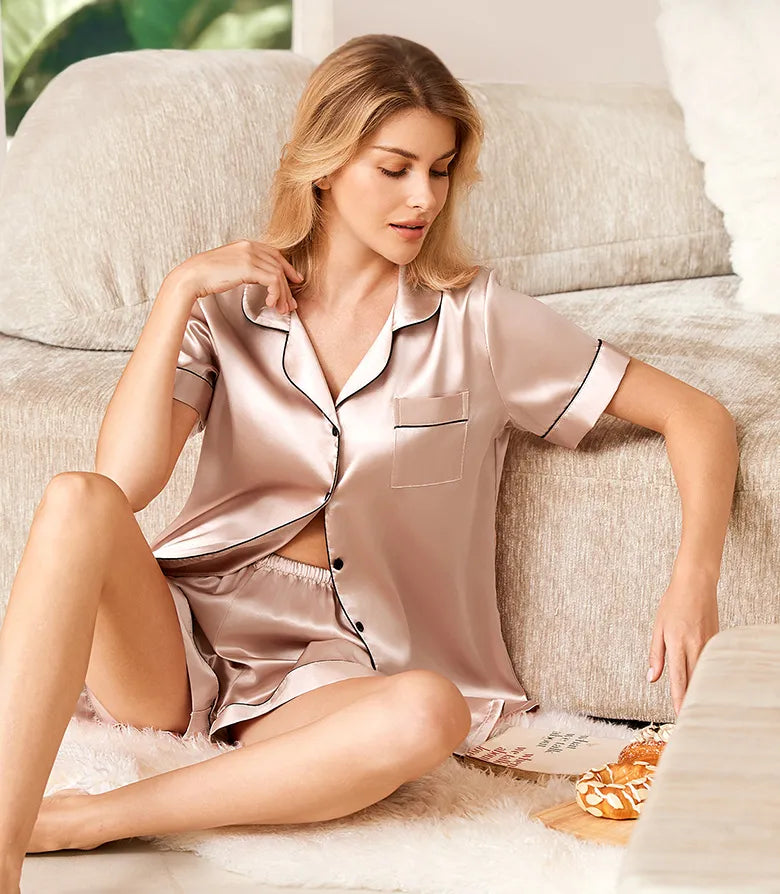
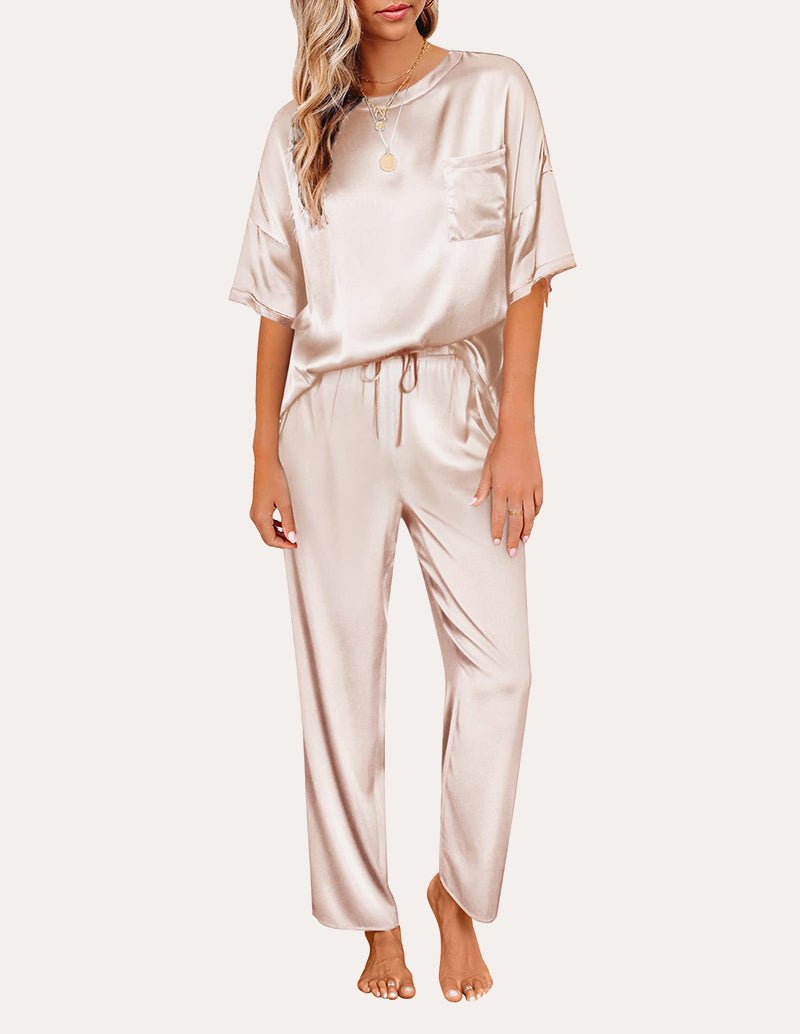
Classic Satin Pajama Set — A satin-finish long-sleeve set around $32.89, best suited as a light layer rather than a primary winter pajama. Satin glides rather than grips, which is helpful if your shoulders or chest react to rougher fabrics, but it does not breathe the way cotton or lyocell does.
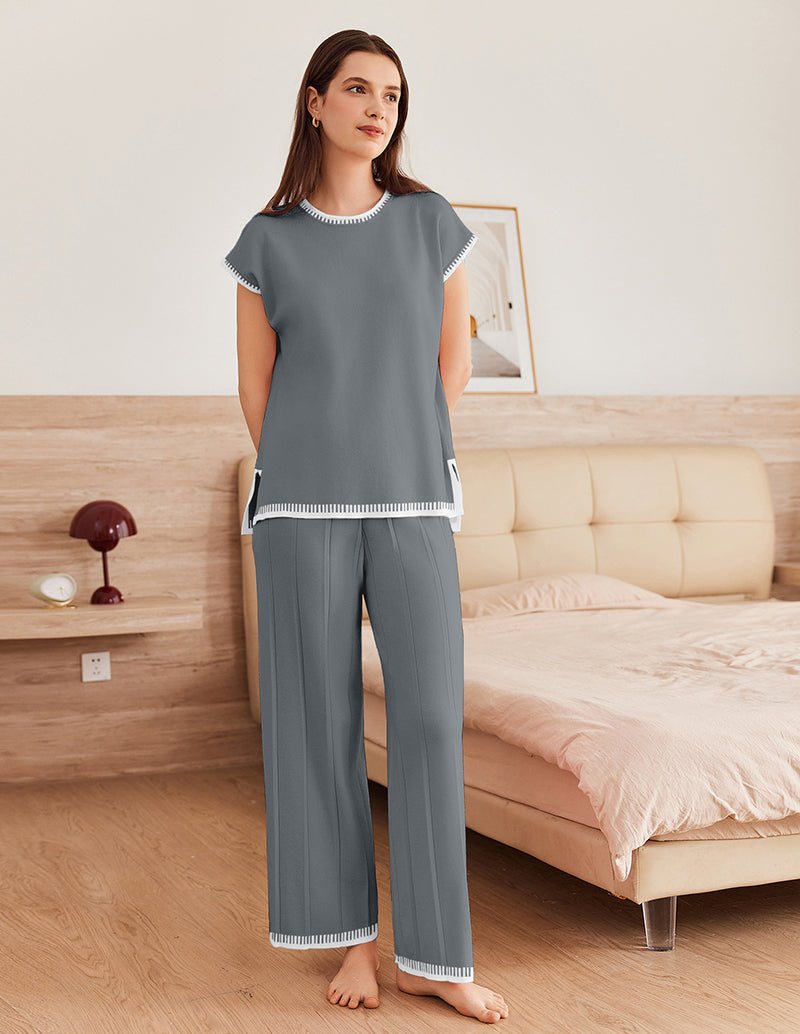
For pregnant readers, the maternity pajama collection uses stretch waistbands and longer tops designed to drape rather than press. For cooler bedrooms where you want a second layer, the knit loungewear collection and flannel collection are worth a look — flannel works best on non-reactive skin, while a knit modal layer under a flannel top sets up a cotton-layer-between-skin-and-anything-rough routine that dermatology resources consistently recommend.
FAQ
Q: What pajama material is best for sensitive acne-prone skin?
A: Combed cotton and bamboo-derived viscose are the two most-recommended fibers for acne-prone skin in patient-facing dermatology resources. Both are breathable, smooth, and washable, which reduces the friction and humidity that acne mechanica (acne triggered or worsened by rubbing) depends on. Avoid synthetic satin and brushed polyester, which trap heat and sweat.
Q: Is bamboo viscose good for sensitive skin pajamas?
A: Yes, in most cases. Bamboo-derived viscose has long, smooth fibers and a soft hand-feel that reactive skin tends to tolerate. Quality varies by manufacturer, so look for brands that publish their OEKO-TEX or similar safety certifications rather than just the word "bamboo" on the tag.
Q: Can merino wool pajamas work for eczema-prone skin?
A: Only the very fine gauges — typically labeled "ultrafine merino" (around 17.5–18.5 microns) — and only on skin that has tolerated wool before. Coarser merino and traditional wool are common irritants and should be avoided. The National Eczema Association's atopic dermatitis page recommends cotton and silk as the safer base layers for eczema-prone skin.
Q: Why do new pajamas irritate my skin?
A: New garments often carry sizing chemicals, dye residue, and finishing agents from manufacturing. A cold-water wash with fragrance-free detergent before the first wear removes most of that residue. If irritation continues after the first wash, the issue is the fiber or the dye rather than the finish.
Q: Are silk pajamas worth it for sensitive skin in winter?
A: Mulberry silk is one of the smoothest natural fibers you can sleep in, which is why it is consistently recommended for reactive skin in patient-facing dermatology resources. The trade-off is cost and care — silk needs a delicate wash routine and a mesh laundry bag to keep its fiber surface intact. For dry winter bedrooms, silk also does not wick moisture back onto the skin the way cotton does.
Related Reading
About Ekouaer
Ekouaer is a sleepwear and loungewear brand built around a simple idea: comfort should be something you live in, not something you save. Known for soft pajama sets, inclusive sizing, and approachable prices on the rise, the brand focuses on textured knits, breathable cotton blends, and coordinated sets that move from bed to couch to a quick errand without a costume change.