
Silk vs Satin Pajamas: Is Prime Day 2026 the Right Time to Upgrade Your Sleepwear?

Most women who search "silk pajamas" end up buying polyester satin — and most of them don't regret it. That's not a consolation prize. It's an accurate description of how the two fabrics compare for everyday sleepwear, where the practical differences between real silk and a well-made satin set are smaller than the price gap suggests, and where the trade-offs of real silk (hand-wash only, snags easily, costs three to five times more) matter more than they do in a fabric you wear for eight hours every night.
This guide gives you an honest comparison of both — what each fabric actually does, where silk genuinely outperforms satin, and why Amazon Prime Day 2026, from June 23-26, is a particularly good moment to buy a quality satin set if you've been meaning to upgrade but haven't yet justified the price.
What "Silk" and "Satin" Actually Mean
Before comparing performance, it helps to clarify what these terms actually describe — because they're frequently misused in sleepwear marketing, creating real confusion.

Silk is a natural protein fiber produced by silkworms. Real silk pajamas are made from this fiber, typically in a charmeuse weave that gives the fabric its characteristic smooth, lustrous surface. Genuine silk is expensive because the production process is labor-intensive: a single pound of silk requires roughly 2,000 to 3,000 silkworm cocoons. When a pajama listing on Amazon is priced at $25–$40 and labeled "silk," it is not real silk. It is almost certainly polyester satin.
Satin is a weave structure, not a fiber. Satin weave means the threads float over multiple other threads before interlacing, which creates a smooth, glossy face and a matte back. This weave can be applied to any fiber — real silk, polyester, acetate, or nylon. The overwhelming majority of "silk-feel" or "silky" pajamas sold at mainstream price points are polyester satin: polyester fiber woven in a satin construction. This is a perfectly good fabric for sleepwear. The problem is the labeling, not the product.
The practical implication: when comparing "silk vs satin pajamas," you're usually comparing natural silk fiber against polyester fiber in a satin weave. The fiber is what drives most of the meaningful performance and price differences.
Head-to-Head Comparison: Real Silk vs Polyester Satin
|
Factor |
Real Silk |
Polyester Satin |
|---|---|---|
|
Price range |
$80–$300+ per set |
$25–$70 per set |
|
Feel against skin |
Smooth, cool, slightly temperature-adaptive |
Smooth, slightly cool, consistent |
|
Thermoregulation |
Actively adapts to body temperature — warmer when cool, cooler when warm |
Consistent; less adaptive than silk |
|
Moisture management |
Absorbs some moisture; can feel damp longer than synthetic |
Wicks less actively; stays dry-feeling longer in mild conditions |
|
Durability |
Delicate; snags, pulls, degrades with rough handling |
Resilient; holds up to regular machine washing |
|
Care requirements |
Hand wash cold or delicate machine cycle; air dry; cannot wring |
Machine wash gentle; low heat dryer or air dry |
|
Pilling |
Doesn't pill but can snag and develop pulls |
Can develop minor pilling over time in lower-quality versions |
|
Photography / appearance |
Lustrous, deeply luminous surface |
Bright sheen; slightly flatter than real silk but still photographs well |
|
Hypoallergenic |
Yes — natural protein fiber, gentle on sensitive skin |
Generally, yes; check for dye quality with OEKO-TEX certified sets |
|
Environmental profile |
Natural fiber; biodegradable; complex supply chain |
Synthetic / petroleum-based; recyclable in some programs |
|
Value for everyday wear |
Lower — cost amortizes slowly over nightly use |
Higher — quality set at $40–$60 amortizes quickly with frequent wear |
Where Real Silk Genuinely Outperforms Satin
Being honest about this matters for a useful comparison. There are three areas where real silk has a real, not just perceived, advantage.
Thermoregulation. Silk's protein fiber structure is genuinely adaptive in a way polyester isn't. It responds to body temperature fluctuations by trapping more warmth when you're cold and releasing heat more efficiently when you're warm. The National Sleep Foundation notes that the body needs to drop its core temperature by 1–2°C to transition into deeper sleep stages — silk's thermal adaptability supports that process more actively than polyester. This advantage is most pronounced for women with significant temperature fluctuations during sleep, including those experiencing perimenopause or postpartum hormonal changes.
Real-user experiences on Reddit reflect this, too. Many women in perimenopause and menopause communities report that silk pajamas help manage night sweats and hot flashes better than synthetic satin, thanks to its natural thermoregulating properties. For example, discussions in r/Menopause highlight silk as a go-to fabric for temperature regulation during hormonal shifts.
Long-term skin feel. Real silk has a protein structure similar to human skin, which means it creates less friction against the skin surface during sleep movement than any synthetic fabric. For women with highly reactive skin or chronic skin conditions, reduced friction is clinically meaningful, not just a comfort preference. Dermatologists occasionally recommend silk specifically for patients with eczema or skin sensitivity.
Aging gracefully. Well-maintained real silk doesn't pill, doesn't develop the static cling that polyester can in dry conditions, and retains its luster over years of careful use. A quality silk set maintained properly can outlast several polyester satin sets — though the "careful maintenance" caveat is significant.
Real user experiences on Reddit support this. Many women in perimenopause and menopause communities report that real silk pajamas help manage night sweats and hot flashes better than synthetic satin, thanks to its natural thermoregulating properties.

Where Polyester Satin Is the Smarter Everyday Choice
For most women in most situations, a well-made polyester satin set is the better practical decision — not a compromise.
Durability under normal laundry conditions. Polyester satin can be machine-washed on a gentle cycle and dried on low heat. Real silk requires hand washing or an extremely delicate machine cycle, air drying, and careful storage away from sharp surfaces. The laundry anxiety that comes with silk pajamas is real and doesn't diminish with experience. Many women who own silk pajamas report reaching for them less often than intended because of the care overhead.
Consistent performance. Polyester satin feels the same in June as it does in October. It doesn't require seasonal rotation or special storage. It packs for travel without requiring a separate protective bag. It can be thrown in the laundry with the rest of your delicates at 11 pm without a second thought.
Appearance parity for most contexts. The visual difference between a quality polyester satin set and real silk is minimal in most lighting conditions, and essentially invisible in photos. Wedding getting-ready suites, travel photos, social media — the fabric reads identically. The difference becomes apparent only in prolonged direct handling by someone who knows what to look for.
Price that makes sense for nightly wear. A $50 polyester satin set worn five nights a week costs roughly $0.02 per wear after a year. A $180 real silk set maintained with the required care costs roughly $0.07 per wear over the same period. The math doesn't favor real silk for everyday sleepwear unless the specific performance advantages of silk are genuinely relevant to your sleep situation.
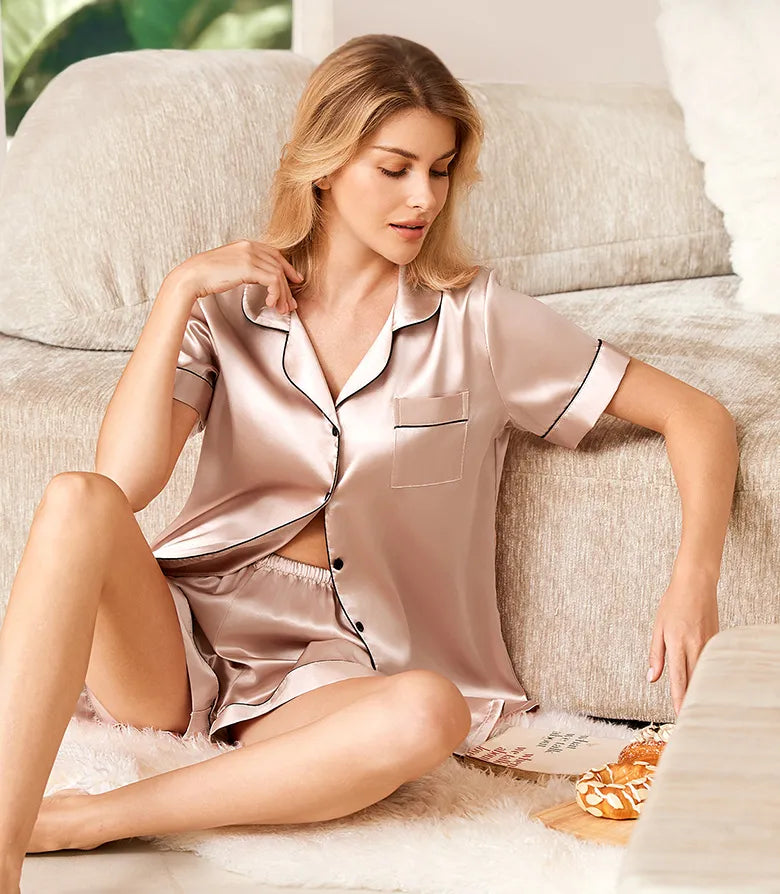
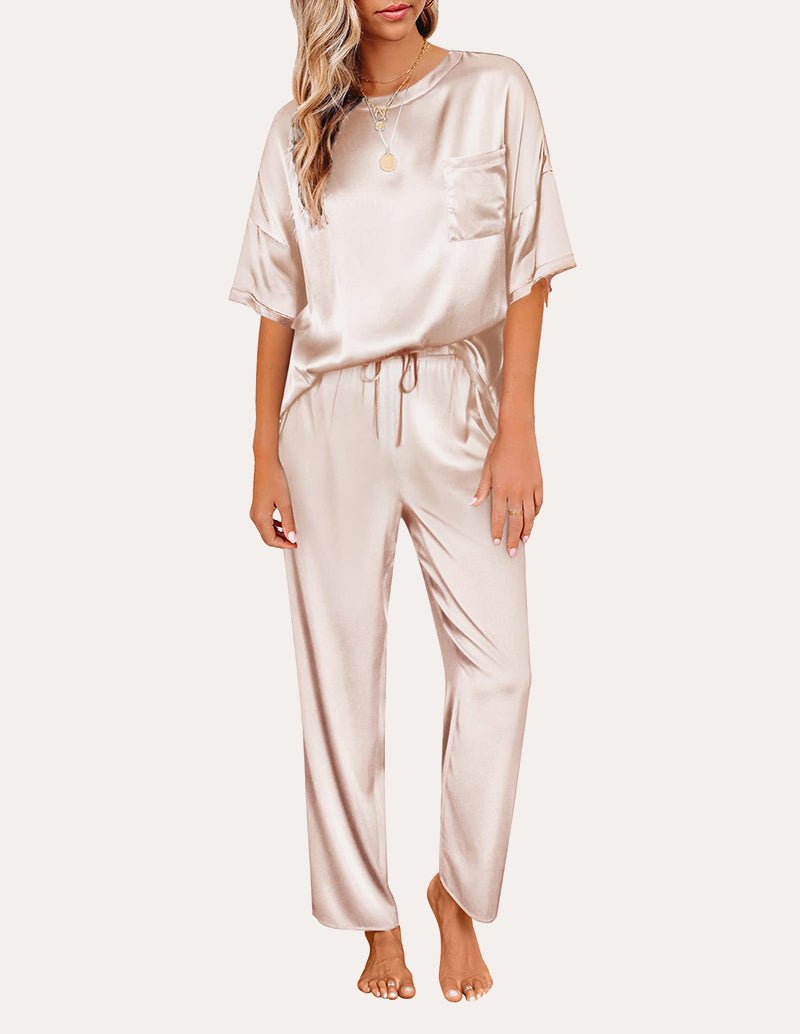
The Ekouaer silk-feel satin collection demonstrates what quality polyester satin looks and feels like at a mainstream price point — smooth surface, consistent drape, and the visual appearance of elevated sleepwear without the care requirements that make real silk impractical for nightly use.
This practical advantage is widely discussed on Reddit. Many users prefer polyester satin pajamas for everyday wear because they are durable, easy to machine wash, and don’t require the careful hand-washing that real silk demands.

What "Quality" Actually Means in Polyester Satin
Not all polyester satin is equal, and Prime Day is exactly the kind of sale environment where low-quality satin at a deep "discount" can look identical to genuinely good fabric in a listing photo. Here's how to tell the difference before buying:
Momme weight equivalent. Real silk quality is measured in momme (mm) — higher momme means more silk per square meter, which means heavier, more durable fabric. Quality polyester satin sets don't use momme labeling, but the fabric weight equivalent matters: lightweight satin (thin, almost see-through) pills and degrades faster than medium-weight satin with some body and drape. If the fabric description doesn't mention weight and the price is under $20, the satin is almost certainly lightweight.
OEKO-TEX certification. This is the most reliable third-party signal for fabric safety and quality consistency. It means the fabric has been independently tested to be free of harmful dyes and chemicals — relevant for sleepwear worn against the skin for extended periods. All Ekouaer satin products carry OEKO-TEX Standard 100 certification. Many low-cost satin sets don't, and the absence of certification is a meaningful quality signal.
Construction details. Quality satin pajamas have finished seams, elastic waistbands with real drawstrings rather than just elastic, and adjustable straps on cami styles. Shortcuts in construction — raw seam edges, single-layer elastic, fixed straps — indicate a manufacturer cutting costs throughout the product, not just in the finishing details.
Color accuracy in reviews. Satin's reflective surface means colors often photograph differently than they appear in real life, particularly champagne, ivory, and blush tones. Verified purchase photos in reviews are the most reliable way to see actual color before buying — listing photos for satin are routinely over-brightened or color-corrected.
Reddit discussions often highlight the importance of checking quality. Users warn against very cheap “silk” sets and recommend looking for OEKO-TEX certification and proper construction details in satin pajamas.
Is Prime Day 2026 the Right Time to Upgrade?
For polyester satin, yes — clearly. Amazon Prime Day 2026 is confirmed for June, timing it directly with the start of summer, when satin's lightweight feel is most relevant. Satin is one of the better-performing apparel categories during Prime Day because it photographs well in listing images, has strong repeat-purchase patterns, and sits at a price point ($35–$70) where a 20–30% discount is both meaningful to the buyer and achievable for the seller.
The specific case for buying satin rather than real silk on Prime Day is straightforward: quality polyester satin sets from reputable brands see genuine discounts during the sale. Real silk sets that appear at steep Prime Day discounts — especially anything over 40% off a listed "original price" — are usually either artificially inflated original prices, low-quality silk blends rather than pure mulberry silk, or polyester satin mislabeled as silk. The discount percentage on silk should trigger skepticism, not excitement.
If you've been considering a genuinely good real silk set and have identified a specific product from a reputable brand with a verifiable price history, Prime Day can be a valid time to buy it. But for most people doing routine sleepwear upgrades, quality polyester satin at a genuine 20–30% off is the better purchase.
How to Identify Fake "Silk" During Prime Day
This is worth addressing directly because it's the most common purchasing mistake in this category during sales events.

-
The burn test is the definitive test — real silk burns slowly, smells like burning hair, and leaves a crushable ash. Polyester melts, smells like burning plastic, and leaves hard beads. You can't do this test before buying online, but you can do it after receiving the product if you're uncertain.
-
The price test is the most practical pre-purchase filter. Real silk pajamas cannot be produced, shipped, and sold profitably at prices under $60–$80 for a full set. If a set is listed as "100% mulberry silk" or "real silk" at $25–$45, it is not what it claims to be. The economics of silk production don't allow it.
-
The fiber content declaration is legally required but not always accurate. Amazon requires sellers to list fiber content, but enforcement of accuracy is inconsistent. Look for "100% polyester" or "polyester satin" in fiber content as confirmation of what you're actually buying — this is honest labeling. Be skeptical of vague terms like "silk blend," "ice silk," "simulation silk," or "charmeuse" without a specific fiber percentage.
-
Brand accountability matters. Established brands with a track record of customer reviews across multiple years are significantly more reliable than new storefronts with a handful of reviews. Check when the seller account was created and whether the review history extends back more than one sales cycle.
What to Actually Buy: A Decision Framework
Buy quality polyester satin on Prime Day if:
-
You want sleepwear that looks elevated and photographs well
-
You travel and want pajamas that pack without care and anxiety
-
You're upgrading from cotton or knit to something more polished
-
Budget is a real consideration, and you want quality at a reasonable price
Consider real silk if:
-
You have significant night sweats or temperature fluctuations and want the best thermoregulation available
-
You have reactive skin that genuinely benefits from natural protein fiber
-
You've already verified the specific product's authenticity and price history
-
You're comfortable with hand-washing as a regular habit
Don't buy either if:
-
The "original price" looks inflated relative to what similar products cost year-round
-
The fiber content description is vague or uses marketing terms rather than specific fiber names
-
All the reviews are from within the last 30 days (indicates a new listing, possibly gaming review systems)
FAQ
Q: Is satin or silk better for sleeping?
A: For most women, a quality polyester satin set performs comparably to real silk for everyday sleep — it feels smooth, stays relatively cool, and handles normal movement during sleep well. Real silk has a genuine advantage in thermoregulation and skin friction reduction, which matters most for women with significant temperature fluctuations or reactive skin. For everyone else, the practical advantages of polyester satin (durability, easy care, accessible price) usually outweigh silk's performance edge.
Q: How can I tell if pajamas are real silk or polyester satin?
A: Check the fiber content listing for the specific fiber percentage. "100% polyester" is honest; "silk blend" or "ice silk" without a percentage is usually polyester. Price is also a reliable filter: genuine mulberry silk pajama sets cannot be sold profitably under $60–$80. Any set labeled "silk" under that threshold is almost certainly polyester satin.
Q: Is it worth buying real silk pajamas on sale?
A: Only if you can verify the product's authenticity and actual original price. Real silk sets at 40–60% off during Prime Day are almost always artificially discounted, low-quality blends, or mislabeled polyester. Genuine discounts on verified real silk are typically 15–25%, not dramatic markdown events.
Q: Do satin pajamas keep you cool at night?
A: Polyester satin feels cool against the skin initially because its smooth surface has low friction. It doesn't actively thermoregulate the way bamboo viscose or real silk does, but it performs reasonably well in moderate summer temperatures and doesn't trap heat the way knit fabrics can. For aggressive hot sleepers, bamboo viscose is a better choice; for moderate heat tolerance, satin is a practical option.
Q: How do I care for satin pajamas to make them last?
A: Machine wash on a gentle cycle in cool water with a mild detergent. Low-heat tumble dry or air dry. Avoid washing with items that have hooks or rough surfaces that can snag the fabric. Quality polyester satin — particularly OEKO-TEX certified sets — holds the drape and color well with these care practices across many washes.
Q: When is Prime Day 2026?
A: Mark your calendars! Amazon has officially confirmed that Prime Day 2026 will take place from June 23–26 — that's four whole days of retail therapy! Since the dates are locked in, it's worth adding items you're considering to your Amazon wishlist now so you're instantly notified when those prices drop during the epic blowout.
Related Guides
-
Are Silk Pajamas Worth It? — deeper dive into real silk performance, maintenance, and long-term value
-
Best Pajamas to Buy on Amazon Prime Day 2026 — fabric-first buying guide covering cotton, bamboo, satin, and linen
-
How to Wash Silk Pajamas — care guide for real silk and silk-feel satin sets
-
Nightgown Guide: How to Identify, Wear, and Choose the Right One — style and fabric comparisons including satin nightgown options
About Ekouaer
Founded in 2014, Ekouaer makes sleepwear and loungewear with an emphasis on functional design and fabric safety. All fabrics carry OEKO-TEX Standard 100 certification — independently tested to be free of harmful substances, meeting requirements for skin-contact textiles. Products have been featured in CNN Underscored, Forbes, and TODAY.com.
Ekouaer in the Press
-
OpenPR (May 2026): Ekouaer Memorial Day Sale 2026 — Official Debut on The Knot Registry — Ekouaer joins The Knot Registry platform ahead of wedding season, expanding bridal sleepwear reach
-
OpenPR (April 2026): Ekouaer at HEJ MATES Fashion Trend Press Day in Hamburg & Munich — latest collection received unanimous praise from European fashion editors and bloggers
-
OpenPR (March 2026): Ekouaer Wins Oprah Daily Editor's Choice and TODAY 2026 Sleep Award — two products recognized by Oprah Daily and TODAY in the same season
-
Parade (May 2026): Amazon's Ekouaer 2-Pack Pajama Set Is a Must-Have — described as winning "on all counts" for comfort and value