Pregnancy Night Sweats: Why They Happen and What to Sleep In

Waking up drenched in sweat during pregnancy is more common than most prenatal books mention. It's not a sign that something is wrong — it's your body responding to some of the most significant hormonal fluctuations of your life.
The short version: A 2013 study published in Fertility and Sterility, the primary research this entire field cites, followed pregnant women prospectively and found that over one-third experience hot flashes or night sweats during pregnancy and/or postpartum. Symptoms peak in the third trimester around week 30 — then, distinctly, peak again at around two weeks postpartum (roughly 20% of women), before gradually declining to 14% by 12 weeks and about 10% still reporting them a full year after birth. This is a two-hump curve, not a single event, and understanding why helps explain what to expect and when.
This guide focuses specifically on the hormonal mechanism behind pregnancy night sweats, how that mechanism differs from the third-trimester sleep disruption covered in our third trimester sleep guide, and — the part most guides skip — what happens to night sweats after delivery, with sleepwear from Ekouaer's maternity collection suited to each stage.
How Common Are Pregnancy Night Sweats?
More common than many women know before experiencing it, which is part of why it can feel alarming the first time.
Cleveland Clinic's clinical overview of night sweats places pregnancy explicitly alongside menopause as one of the primary hormonal causes, noting simply that hormone levels change a lot during pregnancy, and that change can cause night sweats. If you're experiencing it, you're not in an unusual minority — you're in roughly a third of all pregnant women.

Why Pregnancy Causes Night Sweats: The Mechanism
The cause is hormonal, and it works through a specific, well-understood pathway — this is the part that distinguishes pregnancy night sweats from the broader category of "pregnancy makes you hot," and it's worth understanding on its own terms.
Estrogen and progesterone transitions during pregnancy affect the body's ability to regulate temperature. Estrogen tends to lower body temperature by boosting the body's ability to dissipate heat — primarily through sweating. Progesterone, meanwhile, may simultaneously raise baseline body temperature. The combined effect is a thermoregulatory system being pulled in competing directions at once, and night sweats are the body's way of resolving that conflict.
These hormonal changes act specifically on the hypothalamus — the part of the brain that functions as the body's thermostat. When estrogen levels fluctuate, the hypothalamus can interpret a normal body temperature as too hot and trigger a cooling response through sweating. This is the same underlying mechanism behind menopausal hot flashes, which is why women who've experienced both often describe them as strikingly similar.
A second, non-hormonal contributor: blood plasma volume increases by up to 40% during pregnancy compared to pre-pregnancy levels. That excess fluid needs to be managed somehow, and sweating is one of the mechanisms the body uses — which is part of why night sweats don't stop the moment hormones start to normalize after birth.
Pregnancy Night Sweats vs. Postpartum Night Sweats vs. Menopause Hot Flashes
These three conditions share a mechanism (hypothalamic temperature misregulation triggered by shifting estrogen) but differ meaningfully in cause, timeline, and what to expect:
|
Pregnancy Night Sweats |
Postpartum Night Sweats |
Menopause Hot Flashes |
|
|---|---|---|---|
|
Hormonal driver |
Rising, fluctuating estrogen and progesterone |
Sharp estrogen/progesterone drop after delivery |
Declining, erratic estrogen over years |
|
Peak timing |
Third trimester, ~week 30 |
~2 weeks postpartum |
Variable, often years-long |
|
Typical duration |
Weeks to months (pregnancy-length) |
Resolves for most within 12 weeks |
Can persist for years |
|
Prevalence |
Over 1 in 3 pregnant women |
~20% at 2 weeks, ~10% at 1 year |
Up to 80% of perimenopausal women |
|
Extra contributing factor |
+40% blood plasma volume |
Prolactin suppressing estrogen (more prolonged if breastfeeding) |
Ovarian function decline |
The practical takeaway: if night sweats persist well beyond 12 weeks postpartum, breastfeeding-related prolactin suppression of estrogen is a common and normal explanation — not a sign anything is wrong.
When Are Pregnancy Night Sweats Worst? A Trimester Guide
|
Trimester |
Typical Pattern |
Key Driver |
|---|---|---|
|
First (weeks 1–13) |
Mild to moderate; warmth and occasional sweating |
Rapid progesterone/estrogen surge post-conception |
|
Second (weeks 14–26) |
Often improves; some continued warmth |
Elevated but more stable hormones |
|
Third (weeks 27–40) |
Most intense; peaks around week 30 |
Peak hormone levels + physical heat + +40% blood volume |
|
Postpartum weeks 1–2 |
Second peak (~20% of women) |
Sharp estrogen/progesterone drop after delivery |
|
Postpartum weeks 3–12 |
Declines to ~14% |
Hormones gradually normalizing |
|
~1 year postpartum |
~10% still report symptoms |
Often breastfeeding-related, prolactin-driven |
Normal Night Sweats vs. What Warrants a Call to Your Provider
Typical pregnancy night sweats: warmth that wakes you, dampness on skin or fabric, needing to remove a layer or adjust bedding. Mild episodes may not fully wake you; more intense ones can require a clothing or bedding change.
Cleveland Clinic notes that night sweats can occasionally signal an underlying condition, including infection or thyroid dysfunction — uncommon in the context of pregnancy specifically, but worth ruling out if sweating is severe or accompanied by other symptoms. Worth a conversation with your OB or midwife if night sweats come with:
-
Fever above 100.4°F / 38°C
-
Unexplained, significant weight loss
-
Sweating severe enough to prevent sleep altogether
-
Sudden onset late in pregnancy after not being present earlier
-
Any accompanying symptom that feels genuinely unusual for your pregnancy
The general pattern: normal sweats come and go with no other symptoms and track with known hormone shifts; concerning sweats are persistent, worsen over time, or arrive with systemic symptoms. In pregnancy, the threshold for mentioning something to your provider is lower rather than higher.
What to Wear: Fabric That Actually Helps
Since fabric choice is one of the few practical levers you have over a condition you can't eliminate, it's worth being specific about what actually makes a measurable difference — beyond the general sleep-environment advice already covered in our third trimester sleep guide.

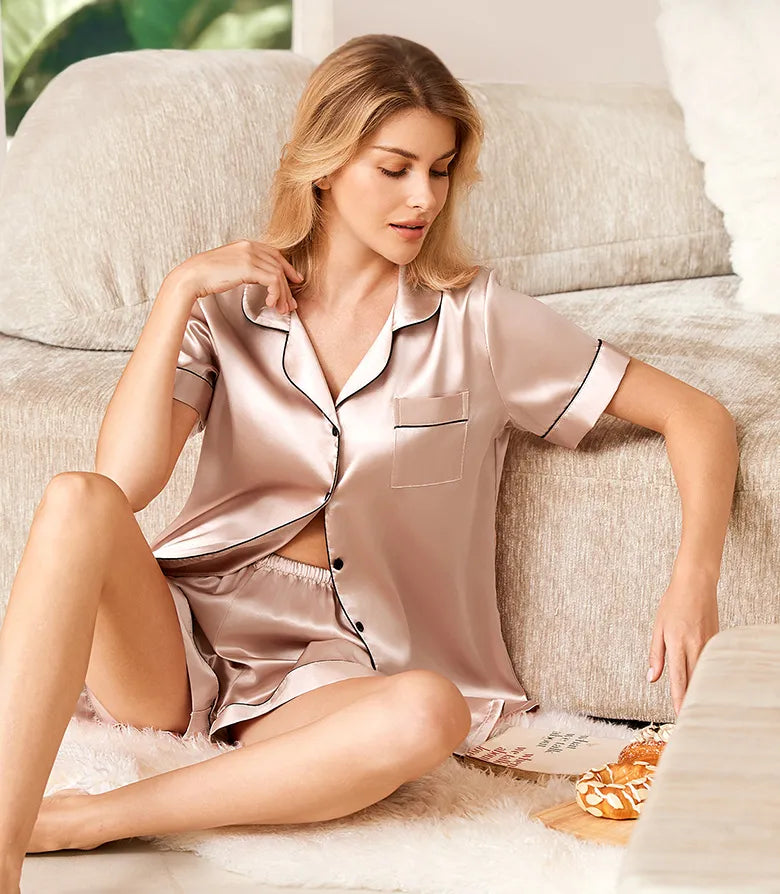
Bamboo viscose is the strongest fabric option specifically for active night sweats: it maintains skin surface temperature roughly 1°C lower than cotton and wicks moisture markedly faster. For a body experiencing genuine night sweats, that's the functional difference between waking up fully soaked and sleeping through a mild episode. The Ekouaer Maternity Breastfeeding Nightdress uses this fabric in a loose format designed to minimize total skin-to-fabric contact — important because a garment already tight across an expanding belly becomes genuinely uncomfortable once it's also damp.
Lightweight cotton (120–150 gsm) is a reasonable option for mild-to-moderate sweating — it absorbs moisture well, though in more intense episodes it holds that moisture against skin, creating the clammy sensation that makes falling back asleep harder. Weight matters more than fiber type here: a heavy cotton set traps more heat than a light one.
What to avoid entirely: polyester and synthetic knits, which trap heat and don't wick moisture away — they actively hold sweat against the skin, making episodes feel worse and longer. Heavyweight flannel and fleece are inappropriate for anyone experiencing night sweats regardless of season.

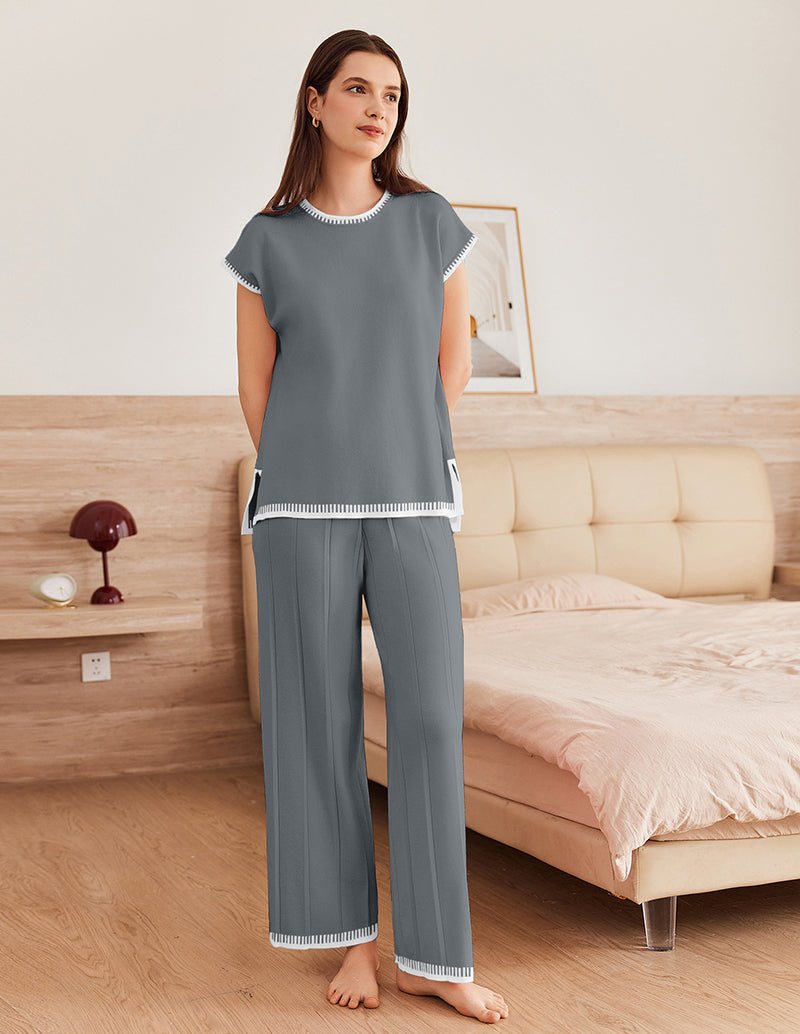
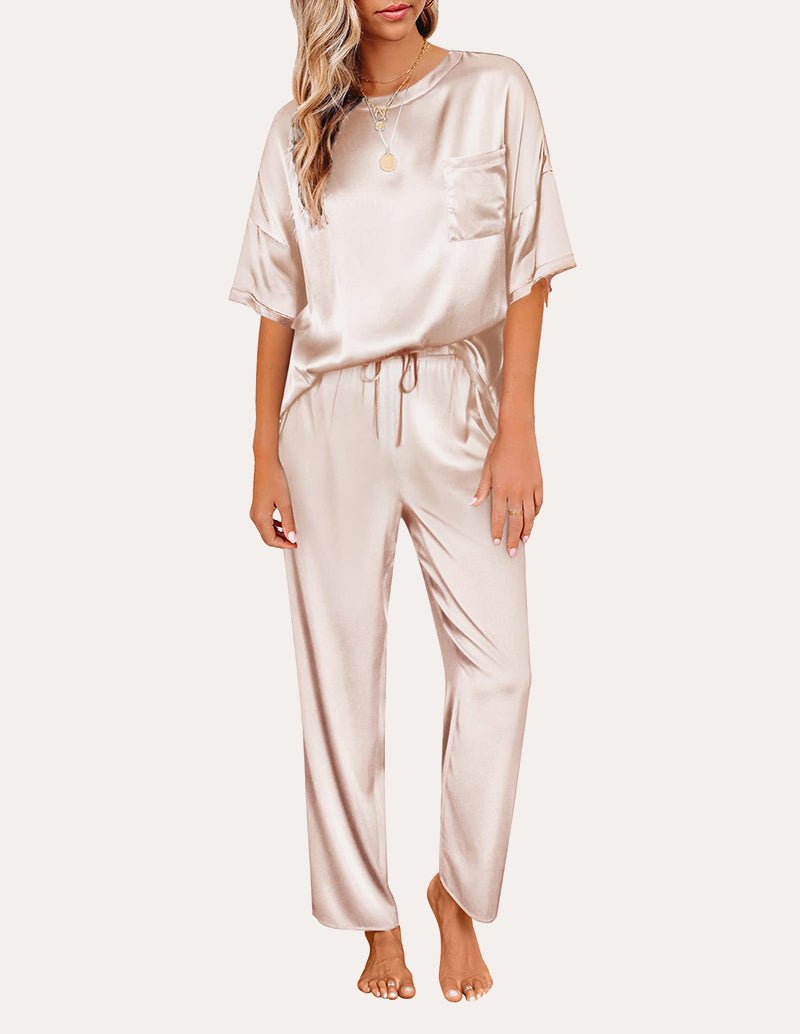
Format matters as much as fabric: a loose nightgown or sleep shirt with no fitted waistband, sleeveless or short sleeves to minimize total fabric contact, and no tight neckline or armhole bands that trap heat locally the way waistbands do at the midsection.
The Ekouaer Maternity Dress Nursing Nightgown and the Ekouaer 3-in-1 Labor Delivery Hospital Gown Nursing Dress both follow this format — loose, breathable, and functional across the third trimester into the immediate postpartum period, when the second night-sweat peak hits.

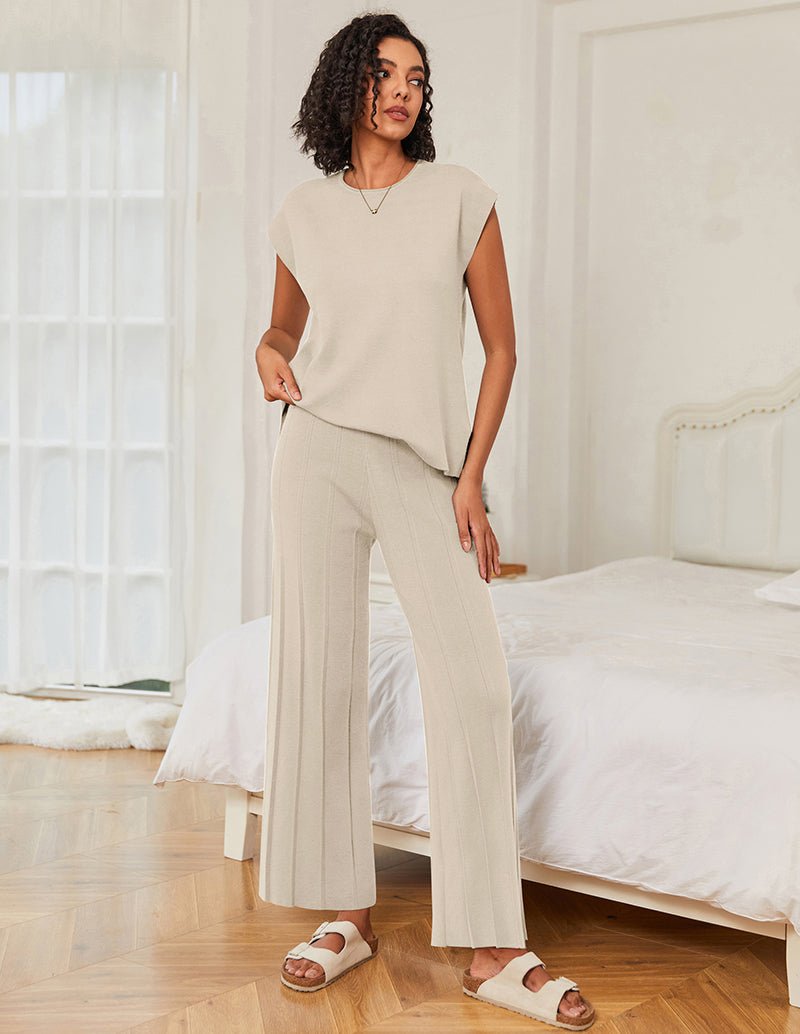
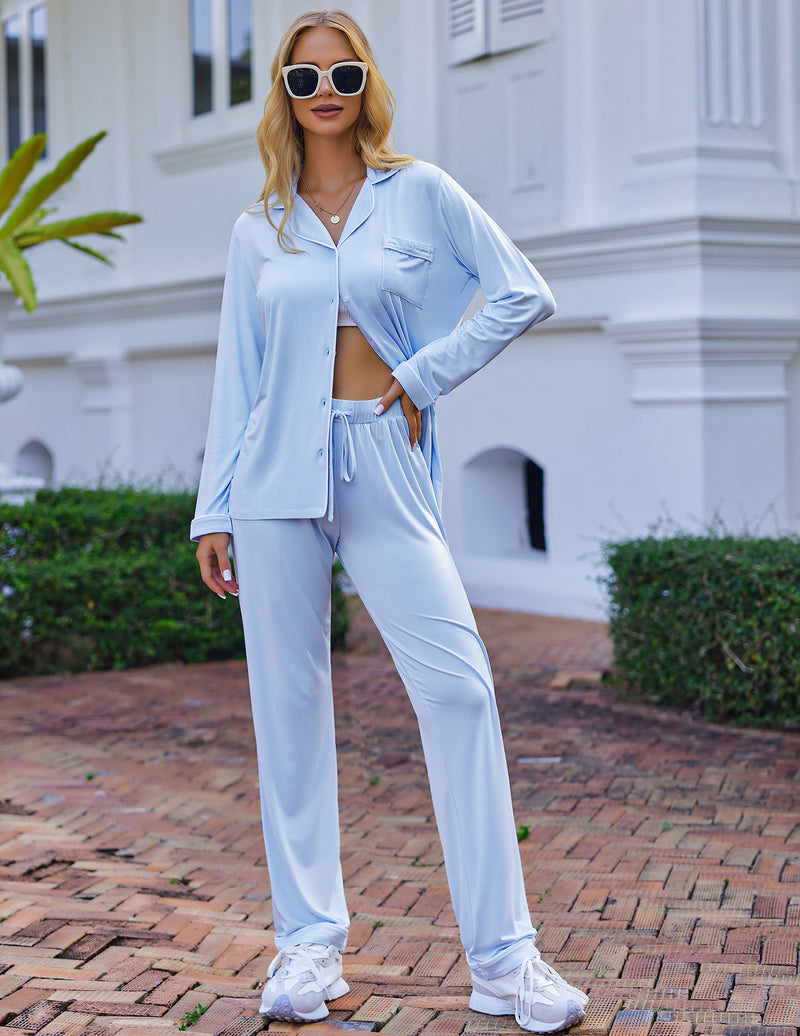
For the postpartum stretch specifically, when nursing is now part of the nightly routine alongside continued sweating, a two-piece format can be more practical than a single nightgown: the Ekouaer 3-Piece Maternity Nursing Pajama Set and the Ekouaer Maternity Nursing Pajama Set — Long Sleeve Top with Pants and Pockets both combine nursing access with breathable, lightweight construction for the weeks when both night sweats and night feeds are happening at once.

Comfort as a Standard, Not a Compromise
There's a specific kind of frustration in a body that seems to be working against you at 3 a.m. — not because anything's wrong, but because it's doing exactly what pregnancy and postpartum hormones ask of it.
That's the space Ekouaer's My Comfort Era campaign with actress Vanessa Hudgens speaks to — "Done proving. Ready for real comfort." A body running its own hormonal timeline doesn't need to be fought with heavy fabric and tight seams on top of everything else. The right sleepwear just works with it instead.
(Follow the campaign: Instagram · Facebook · TikTok)
FAQ
Q: Is it normal to sweat so much at night during pregnancy?
A: Yes. A 2013 study in Fertility and Sterility found that over one-third of pregnant women experience hot flashes or night sweats during pregnancy and/or postpartum. It's one of the most common but least-discussed symptoms of pregnancy, which is part of why it can feel alarming the first time.
Q: Which trimester is worst for pregnancy night sweats?
A: The third trimester, particularly around week 30, is when symptoms are typically most intense. They can start in the first trimester with the initial hormonal surge, often improve in the second, then peak again in the third as hormone levels and physical heat compound.
Q: Why do I sweat so much at night when pregnant?
A: Estrogen and progesterone transitions affect the body's ability to regulate temperature — estrogen lowers body temperature by triggering sweating, while progesterone may raise baseline temperature simultaneously. These changes act on the hypothalamus, the brain's thermostat, which can trigger sweating in response to a normal temperature it misreads as too high.
Q: What fabric is best for sleeping through pregnancy night sweats?
A: Bamboo viscose outperforms cotton for active night sweats — it maintains a slightly cooler skin surface and wicks moisture faster. A loose bamboo sleep shirt or nightgown in a sleeveless or short-sleeve format minimizes both heat retention and the clammy feeling that makes it hard to fall back asleep after an episode.
Q: Will pregnancy night sweats get worse after the baby is born?
A: They often continue and can temporarily intensify: research shows a second peak at around two weeks postpartum, affecting roughly 20% of women, before gradually declining to about 14% by 12 weeks and around 10% at one year — often longer-lasting in breastfeeding mothers, since prolactin continues to suppress estrogen.
Q: When should I talk to my doctor about pregnancy night sweats?
A: Night sweats alone, without other symptoms, are expected and don't typically need medical attention. Raise it with your provider if sweats are accompanied by fever, unexplained weight loss, or other symptoms that feel unusual — in pregnancy, the threshold for checking in is always lower rather than higher.
Related Reading
About Ekouaer
Founded in 2014, Ekouaer makes sleepwear and loungewear with an emphasis on functional design and fabric safety. All fabrics carry OEKO-TEX Standard 100 certification — independently tested to be free of harmful substances, meeting requirements for skin-contact textiles. Products have been featured in CNN Underscored, Forbes, and TODAY.com.
Ekouaer in the Press
-
Reuters: Vanessa Hudgens fronts the My Comfort Era global campaign
-
PopSugar: Strategic styling and adaptive lounge layers in the new fashion collection
-
Yahoo Shopping: Celebrity-backed comfort standards and lifestyle alignment
-
InStyle: Holiday travel capsule edits and functional holiday wardrobe packing templates